Archive for July, 2015

house of mirrors..,The rise of original British chamber musicals has been one of the most encouraging features of theatre in recent times. Apartment 40c showed enormous promise and The Clockmaker’s Daughter was simply wonderful, making this latest addition to the trend eagerly anticipated. However, the line between success and failure is a very thin one and the fervent wish to hail another triumph has to be countered by the need to be honest. Rob Gilbert and Eamonn O’Dwyer’s attempt to explore the darker side of human nature through musical theatre is bold, but their decision to shape their book in the form of old-fashioned melodrama rather than modern realism is perhaps their big mistake. Yes, melodrama has often been fertile territory for musicals in the past, but not where the underlying psychological themes are as deep as here. The house of the title is that of a mirror maker, whose mysterious death in his workshop is witnessed only by his older daughter, Laura. Flash forward several years and the teenage Laura (Grace Rowe) is withdrawn and refusing to reveal what she saw, her younger sister, 15-year-old Lily (Molly McGuire), is unruly and slutty and their mother Anna (Gillian Kirkpatrick) is an aggressive drunk. Their home is shaken up by the arrival of the studious young academic Nathan as a lodger; Anna and Lily compete to bed him, whilst he has eyes only for the retiring Laura. Jamie Muscato has little to do in the role of Nathan except for looking uncomfortable and Graham Bickley has even less to do as David, another lodger who has a habit of disappearing in the middle of conversations. The opening half hour moves slowly, but then the show springs to life when Anna extols the glories of the bottle, singing Something for the Pain whilst drinking herself unconscious. This is all that a song in a musical needs to be – stirring, witty, character-developing – and Kirkpatrick, giving it everything she has, gets the ovation that she deserves. However, it sets the bar high and every other number in the show struggles to match it. There is an overriding bitterness in O’Dwyer’s music, which, although suiting the show’s main themes, makes many of the songs very difficult to listen to. Only the recurring Secrets and Lies has a strong melody; otherwise, the score is lacking in contrasts. There are opportunities to introduce variations – when Laura and Nathan escape the oppression of the house, they hurl bottles into a lake, symbolising the removal of their shackles, but the music does not rise to match their carefree euphoria. Nathan is researching the life and works of an early romantic poet and O’Dwyer styles some of his lyrics as if they are taken directly from the poet’s work; this device makes songs seem stilted, when what they really need to be doing is expressing the characters’ own emotions. David Woodhead’s two-level set does a pretty good job of suggesting a neglected old house, but the awkward larger space at the Arcola presents challenges for a set designer and there is at least one key incident in the show that would not be visible from some positions in the audience. This is a musical without dance and Ryan McBryde directs a sombre, steadily paced production. With the one exception mentioned, the songs are the show’s biggest disappointment, doing little to develop characters or plot. They leave the story exposed and, as is always the risk with melodrama, it often often comes across as full of holes, rather ridiculous and trivialising issues that should be of profound concern. The show concludes with a denouement that is obvious from scene one and a “twist” that had been well-signalled an hour earlier. This is a work that can be applauded for its ambition, but it falls some way short of achieving its full potential.

Performance date: 7 July 2015
orson's shadow

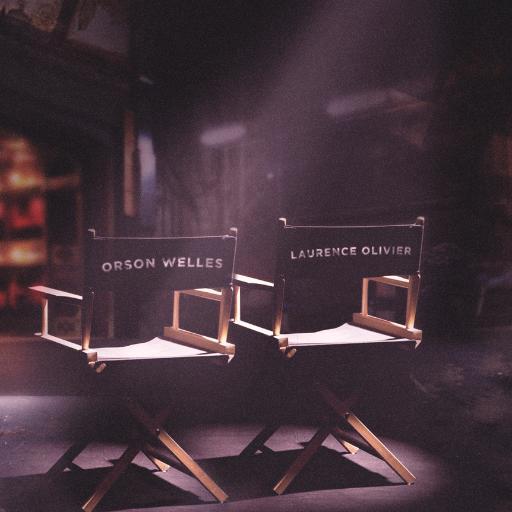
It takes a brave writer to interrupt his play just a few minutes in and tell the audience exactly what is wrong with it. Using the legendary theatre critic Kenneth Tynan (Edward Bennett) as a mouthpiece, Austin Pendleton chastises himself for writing stilted dialogue which serves no purpose other than to bombard the audience with facts. He is spot on. Thereafter, Pendleton carries on regardless, firing at us a myriad of details relating to the careers of his four thespian protagonists – Orson Welles, Laurence Olivier, Vivien Leigh and Joan Plowright. It seems that Pendleton is determined that no production, no date and no person that any of the four has worked with should be left unmentioned. The result is a play that often comes close to buckling under the weight of too much information. Yes, of course younger audiences may not be too familiar with these characters, but surely it is not necessary to relate near-complete life histories for anyone to get what the play is all about – actors with inflated egos, living their lives removed from reality. In 1960, Tynan acted as go-between to bring together Welles as director and Olivier as star for a production of Eugene Ionesco’s Rhinoceros at the Royal Court Theatre in London. There is very little sparkle in a first half recounting separate discussions which Tynan had firstly with Welles and then with Olivier, but the play ignites at the start of the second Act, when the two giants collide and rehearsals begin. Fretting over what to do with his hands during a scene, Larry seeks Orson’s advice and is told to do some dusting; “how do I do that?” Larry enquires, to which Orson replies: “How the Hell would I know?!” Delicious mischief such as this could fill an evening. Well padded (we presume), John Hodgkinson is an imposing Orson, with a booming voice and the arrogant air of a genius trying to escape from the shadow of his masterpiece Citizen Kane. Incapable of understanding why Hollywood studios refuse to back his latest art house venture, his reason for being here is to persuade the new National Theatre under Olivier and Tynan to provide finance. Adrian Lukis gives us a comic caricature of Larry, showing him to be a neurotic ditherer with deep inner doubts, but not projecting his charisma and outward authority. Pendleton leaves Joan as something of a blank, perhaps respecting the fact that the lady is, happily, still amongst us and gives Louise Ford little to work on. However, he goes to town with Vivien and Gina Bellman tears into the role. This is a real-life cross between Scarlett O’Hara and Blanche DuBois, shamelessly seducing Orson’s young assistant Sean (Ciaran O’Brien) whilst stricken with tuberculosis and manic depression. She knows that her marriage to Larry is over but refuses to face up to the fact and Bellman makes us believe that this really is a woman who would fit in sessions of electric shock treatment between nightly starring appearances on Broadway. When director Alice Hamilton’s in-the-round production is good, it is very good, but, after all the fireworks of the second Act, Pendleton returns to earlier form with a needless recital of what happened to everyone after the play ended. If only he could have focussed solely on the juicy drama and not tried to give us a lesson in theatre and film history, his play could have been a classic.

Performance date: 6 July 2015

As Is****+ (Trafalgar Studios 2)

Posted: July 4, 2015 in Theatre

As IsThis review was originally written for The Public Reviews: http://www.thepublicreviews.com

Snippets from radio broadcasts spanning 35 years precede the performance of Andrew Keates’ revival of William M Hoffman’s play, giving a perspective of how times have changed. An American voice reports solemnly that a “rare pneumonia” has struck the San Francisco gay community, followed immediately by Nigel Farage proclaiming that 60% of new HIV patients in the UK are foreign nationals. Tagged “the first AIDS play”, Hoffman’s work is set in New York in the early 1980s, a time when a diagnosis of HIV positive was viewed as a death sentence. In a sense, the play is “As Was”, but the disease has not been consigned merely to history or the Third World. HIV may be treatable, but it is not curable. It is preventable, but its spread is not contained. Keates, an HIV/AIDS campaigner, is linking his production to various initiatives aimed at raising awareness and encouraging preventative action. Looked at in the context of a health campaign, something dry and preachy could have been expected rather that what we actually get – a feast of irreverent comedy, generating more laugh-out-loud moments than it is reasonable to hope for in 70 minutes of theatre. Hoffman’s work can be summed up as a short, comic precursor to Angels in America, a series of very funny sketches joined together by scenes of serious reflection and emotion. The play begins with Rich (Steven Webb), a writer and Saul (David Poyner), a photographer parting company and dividing their joint assets, including the cat. Calling their relationship “a marriage” seems prescient, their decision to sell their Apple Corporation stock less so. Shortly afterwards, Rich develops the first symptoms of AIDS and, in a non-linear progression, the story tells us how the disease brings the couple back together. Webb gives a superb display of wavering defiance, moving from carefree playfulness to angry indignation, resigned despair and finally hope. Poyner’s Saul is equally heroic in his unfaltering devotion, rather resembling a pampering Jewish mother and advocating a solid, if boring, relationship as something to fall back on when times get hard. With mordant humour becoming their lifeblood, they make a convincing and touching odd couple. Jane Lowe as a whisky-swilling, sardonic hospice worker also stands out in a cast of eight. Keates uses the small space to good advantage, particularly in lively early scenes – a chaotic disco, a bath house orgy – demonstrating the promiscuity, fuelled by light drugs and alcohol, for which such a heavy price was paid. Later, two camp helpline workers (Dino Fetscher and Russell Morton) merge with the audience, dispensing advice to callers, along with hilarious, bitchy asides. Little separates tragedy from comedy in this play. Medical advances may have made this groundbreaking work look dated and led to it becoming unfairly overlooked. Here it gets the revival that it deserves in a production that is both funny and poignant.

Performance date: 3 July 2015

thepublicreview_hor_web copy

FullSizeRender-74

It is now almost two years since Christopher Sergel’s adaptation of Harper Lee’s classic 1960 novel first appeared at the Regent’s Park Theatre and it has been touring ever since. Fittingly, it returns to London in the month of publication of Go Set a Watchman, probably the longest awaited follow-up in literary history. Retaining the feel of its original venue, a large tree hogs the central position on the Barbican stage, with a plain background changing colours with the seasons. Timothy Sheader keeps his production as simple as the story he is telling – that of the widower Atticus Finch, a small town lawyer in the American Deep South, his two young children Scout and Jem and their friend Dill. The year is 1935 and racial segregation and prejudice dominate the life of the town and the justice system. Lee told her story from the perspective of the older Scout, seeing events through a child’s eyes and this production uses Scout’s narration, read directly from several editions of the novel, with members of the company taking turns. The device is amazingly effective, creating a strong sense of community and incorporating into the production the beautiful literacy of Lee’s original words. It is clear from the outset, that this is a production that is well bedded-in and I suspect that it has increased in confidence and power as it has matured. The roles of three children are played on a rotating basis, but the three that I saw were excellent. The central figure of Atticus is played superbly by Robert Sean Leonard (can it really be over 25 years since he was the troubled schoolboy in Dead Poets’ Society?) with calm authority. His wisdom, his passion for justice and his courage in taking on the defence of a black man accused of raping a white woman elevate him from dull father to hero in the eyes of his children. The greatest danger for any dramatisation of Lee’s novel has to be avoiding making it too schmaltzy and, although I have to confess that I could only see most of this version through eyes clouded by tears, it never feels as if we are being manipulated, rather that we are reacting naturally to the emotion in the story and the way that it is being told. The key messages in Lee’s work emerge here with perfect clarity and they are timeless – that nothing is ever as it may at first seem, that villains may really be heroes and that every new generation has the chance to do things better than the one that went before it.

Performance date: 2 July 2015

FullSizeRender-73

Children neglected and abused, social workers facing intolerable case loads, a failing department placed under outside management. This could be any inner city borough in the UK, but, in fact it is Iowa. Chicago-based writer Rebecca Gilman centres her play on Caroline, a social worker five years from retirement who is well aware of the limitations of her job, but still struggles to avoid becoming emotionally involved with her cases. It falls to her to take over the care of baby Luna Gale, born to drug-addicted teenage parents Karlie and Peter; she will investigate, formulate a care plan, report to the Courts and, effectively, determine the child’s future. Will the parents become fit to take Luna back or will Karlie’s “Crazy Christian” mother be allowed to adopt? Under Michael Attenborough’s direction, the first half suffers from a problem common to many issue-driven plays, in that it is worthy but rather dull; however, it builds to a second half of deeply affecting human drama in which Gilman takes the story in unexpected directions and brings in explosive topics. Much of this success is down to a finely-judged performance from Sharon Small as Caroline, exuding warmth, but wary of the rule book and of the perils of becoming too closely involved, as she is reminded when a former “client” comes back into her life. Rachel Redford and Alexander Arnold also give moving portrayals as the parents, helped by Gilman’s seeming determination not to make them stereotypical young junkies, and Caroline Faber is quietly chilling as Karlie’s religious zealot mother. Gilman’s writing sparks to life when she begins to pick at knots which tie child abuse to the Christian church, but the most striking aspect of her play is how, for much of it, she makes men almost peripheral figures, by focussing on the damage that women can inflict on each other. Original and thought-provoking, this is a drama as relevant here as in middle America.

Performance date: 1 July 2015

The Trial*** (Young Vic)

Posted: July 1, 2015 in Theatre

IMG_0235

There has been no shortage of dramatisations of Franz Kafka’s The Trial and I remember taking on the role of the accused Joseph K in an immersive version, trudging around the streets of Shoreditch and Hoxton a couple of years back. The premise of Kafka’s tirade against authoritarianism is simple enough – an ordinary man finds himself accused of he knows not what and is thrown into an unfathomable judiciary system in which there are no answers to any questions and no exit doors save the ultimate one. Nick Gill’s new adaptation, directed by Richard Jones, pulls out all the stops to create a surreal nightmare; it is staged on a conveyer belt, running the entire length of a performance space decorated primarily in orange and purple; on either side, the audience is banked, appearing to be behind desks, perhaps a jury or a panel of interrogators or a constantly watching police force. This is a conveyer belt with no cuddly toys, just a relentless flow of merely functional furniture – singe beds, desks, chairs filing cabinets – with JK walking against the direction of its movement just to stay on board. It stops for scenes of absurdist comedy, featuring a succession of grotesques who look as if they have wandered in off the set of a Coen Brothers movie and our hero gets progressively more entangled in a web from which there is no escape. Grappling with the bleakness and psychological complexity of Kafka’s original is challenging enough, but Gill throws in modern references which make the piece still more head-dizzying and then questions the very concept of presumed innocence with a chilling post script as the audience leaves the theatre. Rory Kinnear is about as convincing a modern Everyman as the theatre can offer and he is at the top of his game here, on the belt non-stop for the full two hours. Kate O’Flynn is wonderful as all the young women in JK’s life and Hugh Skinner (yes, Will from W1A), also shines, doubling as JK’s sharply-dressed fellow bank worker and a dog. Yet, for all the quality of the performances, Gill/Jones are too preoccupied with the surreal to give the audience a firm foothold in the real world, past or present; thus we are never able to share in JK’s outrage, sense of injustice and terror, only to see them. The imagery in this production is memorable, the play’s complex themes are stimulating intellectually, but overall, the entire experience is emotionally empty.

Performance date: 30 June 2015