Archive for December, 2024

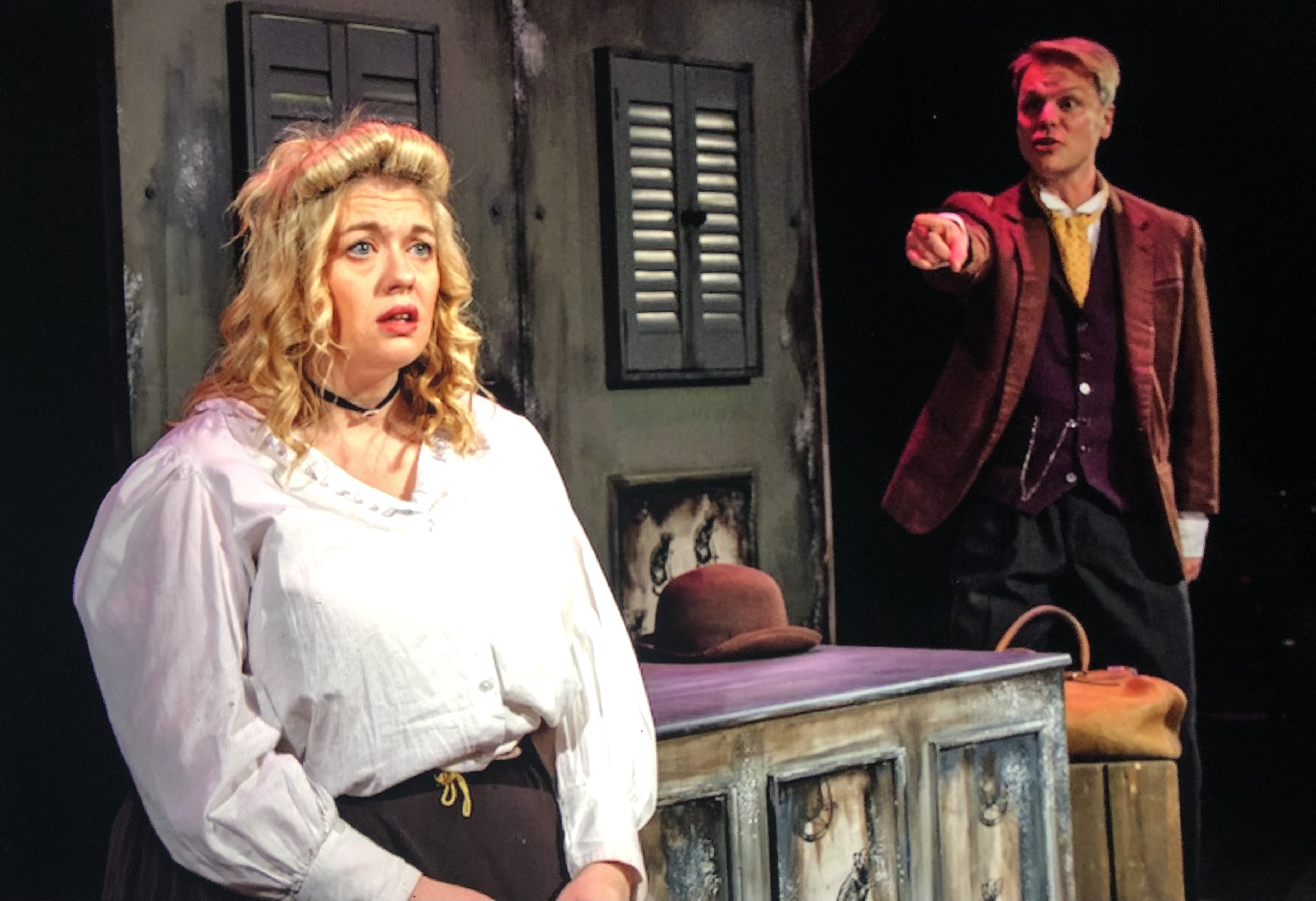
Photo: Tanya Pabaru

Writer: John Nicholson

Director: Kirstie Davis

⭐️⭐️

“Has anyone ever read Madame Bovary?” an actor asks the audience at the start of the show. Seeing very few hands go up, the actor responds “that’s more than I thought”. In that case, what is the point of mocking something when it is acknowledged that very few people will have the foggiest idea about what is being mocked?

“What is the point?” becomes a recurring question in this adaptation of Gustave Flaubert’s 1856 novel which turns a French tragedy into a French melodrama and then pushes it one stage further into the realms of French farce. Bearing in mind the season, perhaps it is meant to be seen as an adult pantomime, albeit one with a madame instead of a dame and no songs. In style, the show resembles a manic, absurdist Monty Python sketch, stretched out for an almost unbearable two hours (plus interval).

For the benefit of the assumed majority who are unfamiliar with the novel, Emma Bovary is the wife of a doctor in provincial France, bored with her drab life and her dreary husband. She embarks on a journey of serial adultery and extravagance, piling up debts and leading to eventual ruin. We are warned at the beginning of the show that the tragic ending will be cut in order to preserve the feel-good factor, but, as it stands, writer John Nicholson’s adaptation is hardly ideal for a kids’ Christmas show.

it is pointed out that Emma joins the likes of Anna Karenina and Cathy Earnshaw as one of the tragic heroines of 19th Century literature. However, there is little in Georgia Nicholson’s portrayal of her that draws sympathy for her as a symbol of female oppression. Instead, Nicholson turns her into a ridiculous figure, selfish and petulant. All the other roles are shared between Stephen Cavanagh, Ben Kernow and Darren Seed, leading to frantic entrances and exits and lightning-quick costume changes. The four actors earn ten out of ten for efforts, but it feels as if they try too hard to be funny and, eventually, their material defeats them.

When played straight, 19th Century melodrama can be entertaining, even funny, but playing it for laughs, as here, is simply taking the joke too far. In the season of good will to all, it would be too unkind to describe the mayhem of director Kirstie Davis’ production as a “massive tragedy”, better to sum up by returning to asking what is the point?

Performance date: 9 December 2024

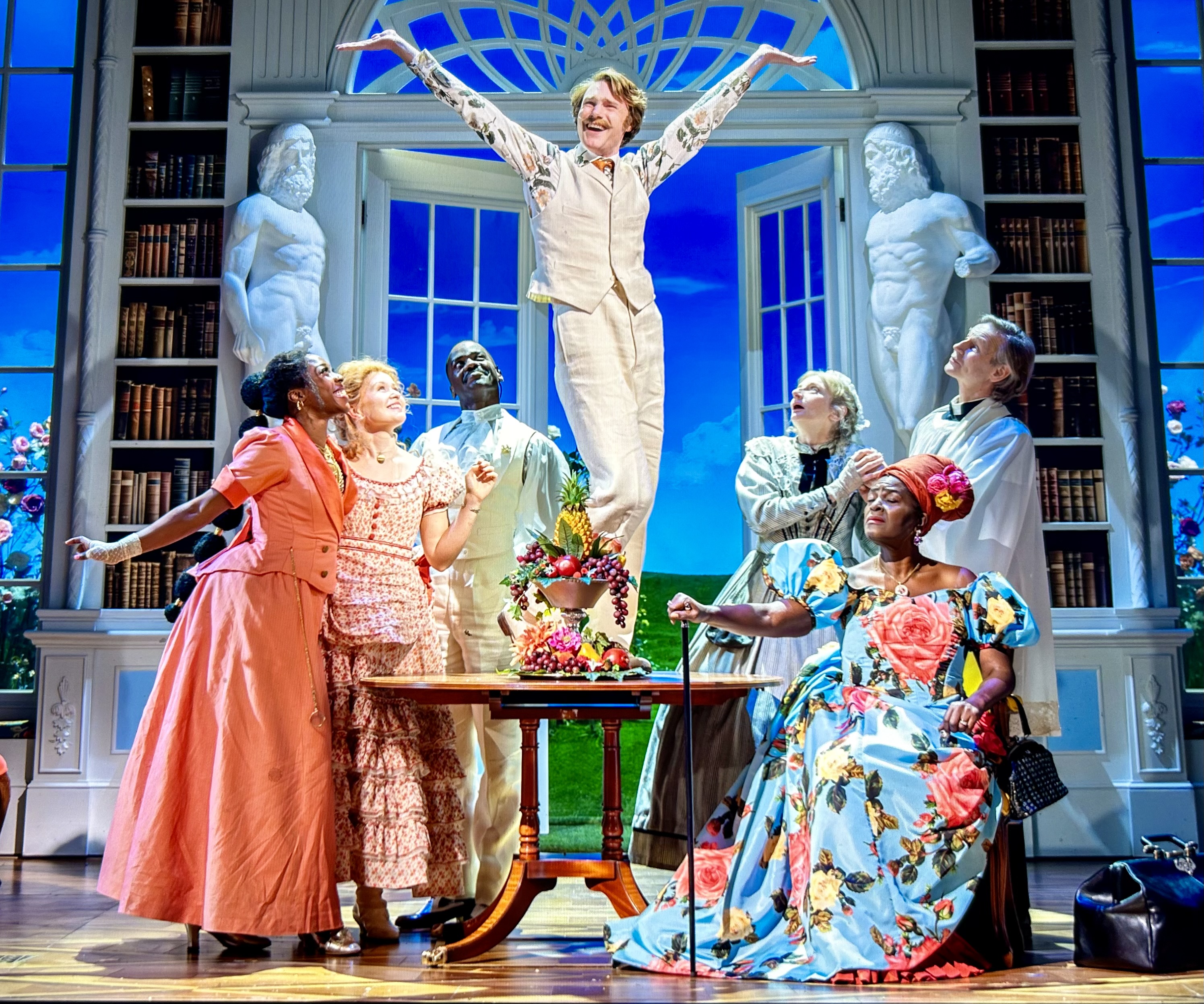
Photo: Marc Brenner

Writer: Oscar Wilde

Director: Max Webster

⭐️⭐️⭐️⭐️💫

St Valentine’s Day 1895 was both a happy and a sad day in the history of our theatre. Happy because it saw the opening of the irrepressible comedy The Importance of Being Earnest and sad because its writer, Oscar Wilde, was arrested after the first performance, his career being effectively ended. Wilde’s perceived crime was partaking in “the love that dares not speak its name”. Therefore, there is a satisfying irony in welcoming a revival in which the name, if not exactly spoken, is suggested very loudly indeed. It is all about as camp as it is possible to get away with while staying faithful to a plot that respects the social conventions of the Victorian age.

Apart from bizarre sequences at the beginning and the end, this revival strives to be traditional, as emphasised by a set that has a proscenium arch stage, complete with red velvet curtain, within the Lyttelton Theatre stage. Rae Smith’s set designs, not over-elaborate but dazzling, and her glorious period costumes provide a feast for the eye, while the ear is treated to a bombardment of Wilde wit, spoken with great clarity by all the actors. Much credit goes to sound designer Nicola T Chang for achieving this in a venue where acoustics can be a problem.

Television’s current Doctor Who, Nouti Gatwa, travels back in time to the late 19th Century, playing the upstart Algernon Moncrieff, who lives a double life, using his own name when in London and that of Bunberry when in the country. Gatwa does nothing to dowse the camp fire in director Max Webster’s jaunty production and his presence tests whether or not avid Whovians will become wild about Oscar. He possesses a natural air of impudence that is perfect for this role and he is equalled by Hugh Skinner as Jack (known in the country as Earnest) Worthing. who had been discovered as a baby in a handbag at Victoria Station.

Algernon has an eye for Jack’s ward, Cecily (Eliza Scanlen) and Jack for Algernon’s cousin Gwendolyn (Ronke Adékoluéjó), both ladies insisting that they could only become romantically attached to a man whose name is Earnest. Perhaps the play is best known for a two-word line spoken by Algernon’s aunt, Lady Bracknell, played here by the prodigiously talented Sharon D Clarke, an unforgettable Ma Rainey on this same stage. Sadly, she does not sing the line, but she drops it in with relish. Her regal appearances in the first and last scenes support this predominantly youthful production like sturdy bookends.

Revivals of this play in London and elsewhere are not exactly rare, but Webster’s sparkling version brings out all the cutting observations of an Irish outsider looking in on the absurdities of English society. It not so much revives a classic comedy as it refreshes it.

Performance date: 28 November 2024