Archive for the ‘Theatre’ Category

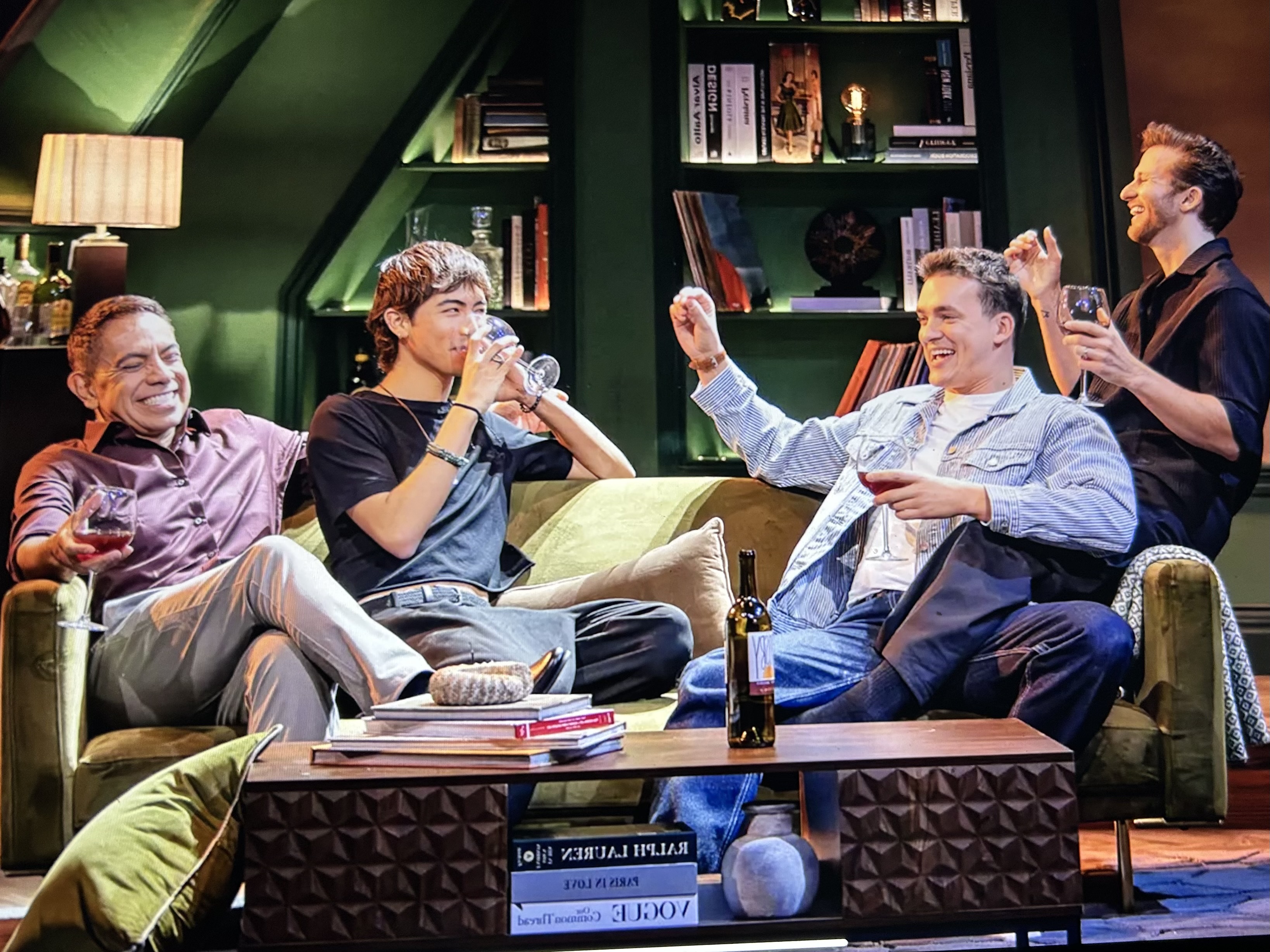
Daniel’s Husband (Marylebone Theatre)

Posted: December 13, 2025 in Theatre

Photo: Craig Fuller

Writer: Michael McKeever

Director: Alan Souza

⭐️⭐️⭐️⭐️

At a time when same sex couples have become able to get married in most Western territories, it seems that many others are losing interest in matrimony. This irony is not lost in American playwright Michael McKeever’s 2022 play, Daniel’s Husband, receiving its United Kingdom premiere here.

 The writer took a scalpel to the hypocrisy of Hollywood in The Code, seen in London earlier this year, and he now cuts just as deep to probe the institution of marriage, coming up with observations that should resonate regardless of gender or sexual orientation. 

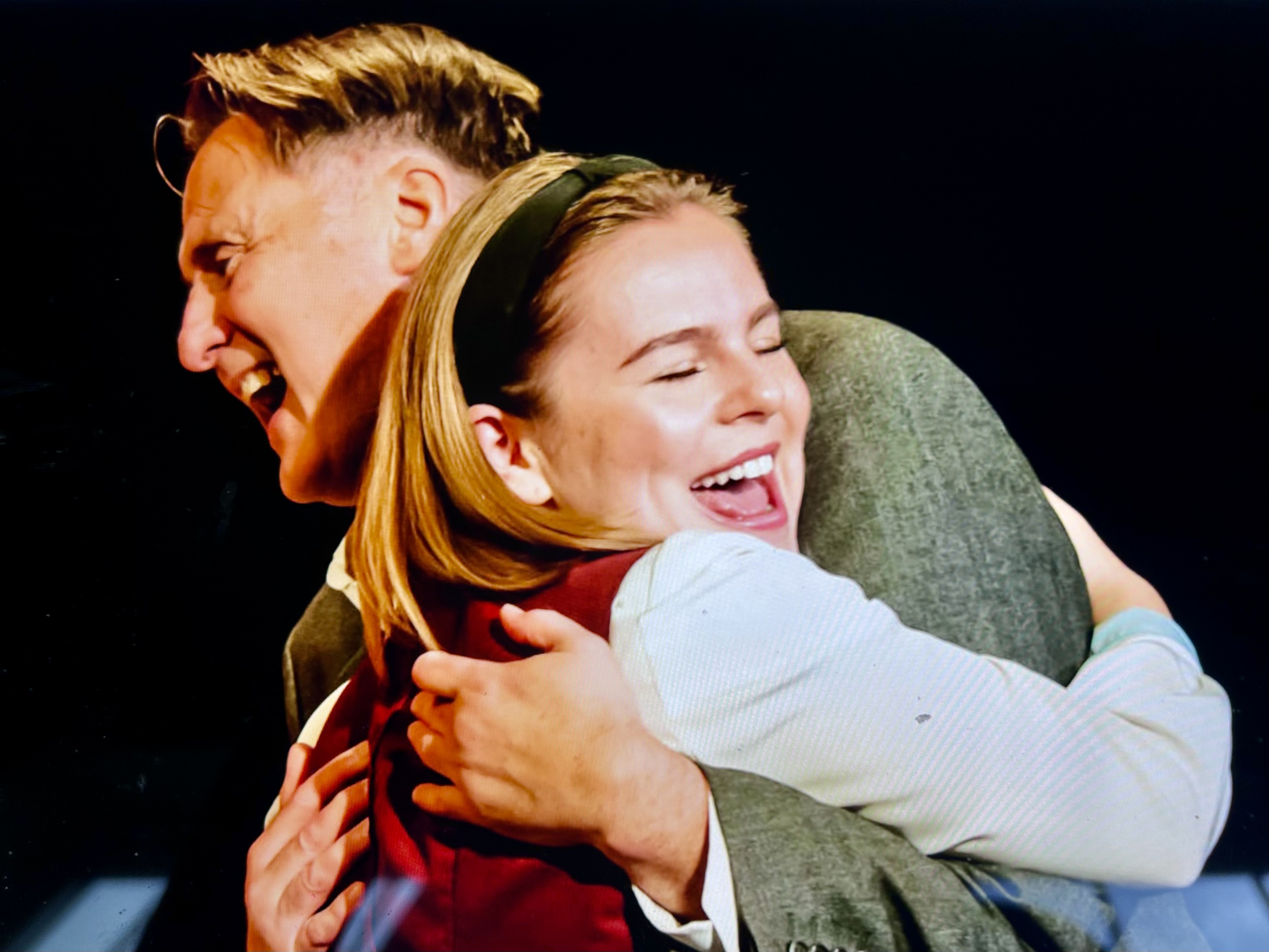
Daniel (Joel Harper-Jackson) and Mitchell (Luke Fetherston) have been together for seven years, living in Daniel’s spacious city apartment. They are, effectively, a married couple, except that Mitchell, a successful writer who has sold his soul to the dollar to churn out romantic fiction (“a gay Barbara Cartland”), does not believe in marriage. Daniel argues that getting married would honour the long fight by the LGBT+ community for equality, but Mitchell counters that being allowed to marry is not sufficient reason for actually doing it; in his view, leaving aside legal and tax considerations, marriage is nothing more than a meaningless piece of paper. 

The play begins with the couple hosting a dinner party for Mitchell’s literary agent, Barry (David Bedella) and the latest in his long line of much younger boyfriends, Trip (Raiko Gohara). Later, we are introduced to Lydia, Daniel’s overbearing mother; in a splendidly judged performance, Liza Sadovy walks the line between stereotypical comic mother and arch villain, as Lydia champions modern liberal values while, when she is put to the test, suggesting that she still harbours old prejudices.

In early scenes, McKeever keeps the audience gripped with witty small talk while, almost imperceptibly, building the characters and moving the play forward. The writer’s skill is then matched by an effortless shift in mood from light comedy to intense drams, which is accelerated by a sudden plot development in the middle of the play.

Justin Williams’ imposing set design for Daniel’s loft apartment suggests a warm and comfortable lifestyle. When, occasionally, the writer lays on the emotional stuff too thickly, director Alan Souza needs to apply the brakes to prevent his production drifting towards risible melodrama. He succeeds in keeping the drama intense and authentic, largely thanks to superb, impassioned performances by Harper-Jackson and Fetherston.

Daniel’s Husband offers 90 minutes of quality, thought-provoking theatre and McKeever reaffirms his growing reputation as a writer of significance.

Performance date: 9 December 2025

Photo: Helen Murray

Writer: Richard Greenberg

Director: Blanche McIntyre

⭐️⭐️⭐️

They say that Christmas begins earlier every year and, as if to prove the point, it has already arrived at Hampstead Theatre. American writer Richard Greenberg’s comedy The Assembled Parties, which premiered on Broadway in 2013,  centres around a New York family gathered together on two Christmases, 20 years apart. Much of the play’s humour draws from the irony of members of the Jewish faith (albeit npn-practicinh) celebrating a Christian festival.

The play opens in 1980, when Ronald Reagan has just been elected to serve his first term as United States President. In their Manhattan apartment, Ben (Daniel Abelson) and his wife, former actress Julie (Jennifer Westfeldt) play hosts; their elder son Scotty (Alexander Marks) has just graduated from university and is seeking direction in his life; he brings along old school friend Jeff (Sam Marks). The assembled party is completed by the arrival of Ben’s sister Faye (Tracy-Ann Oberman), her husband Mort (David Kennedy) and their daughter Shelley (Julia Kass).

Family members meet in pairs or groups to discuss politics, careers, finances, relationships and so on. James Cotterill’s impressive set design is dominated by a huge, fully decorated Christmas tree and a revolving stage ushers us from room to room. Director Blanche McIntyre’s solid production moves along briskly; it is all mildly  amusing, but rather inconsequential.

Act two jumps forward to 2000, when Bill Clinton has just entered the final month of his eight-year Presidency. The family, numbers now depleted, gathers again at Julie’s rented home. The Christmas tree is smaller, but the apartment is more spacious, expanding to the full width od the Hampstead stage. The focus now falls on Julie’s younger son Tim (also played by Alexander Marks), a college drop-out who works as a waiter and is involved in a secret relationship with a gentile woman. Introducing themes of loss and regeneration, the later stages of the play have added poignancy.

Greenber’s flair for feeding his characters with acerbic one-liners shines throughout and, with the lines being delivered with precusion by this highly accomplished cast, they become the main joy of the evening. Otherwise, there is nothing to dislike about The Assembled Parties, but nor is there much to rave about and, on this evidence, it is not easy to understand why the play received three Tony Award nominations. This comedy is a Christmas trifle, like a light dessert served without a main course.

Performance date: 23 October 2025

The Maids (Donmar Warehouse)

Posted: October 26, 2025 in Theatre
Tags: , , , ,

Photo: Marc Brenner

Writer: Jean Genet

Adaptor and director: Kip Williams

⭐️⭐️⭐️💫

“Everybody ought to have a maid” asserted Stephen Sondheim famously in song, but the great lyricist could well have had second thoughts after seeing French writer Jean Genet’s 1947 play The Maids, which is revived here. The tale of two mischievous, murderous chambermaids was originally seen as a parable about a crumbling class system, but adaptor and director Kip Williams packs it with up-to-date references and transforms it into a satire on the cult of celebrity worship.

When we first encounter the sisters Claire and Solange, they are stepping aside from their daily duties in the boudoir of their employer, “Madame”. They take turns to impersonate Madame, they wear her expensive clothes, they scheme to undermine her latest boyfriend, who  is facing trial on fraud charges, and they plot her murder. Madame is expected home soon and her fans are congregating on the street below; like them, the sisters adore Madame, but they also loathe her in equal measure.

Madame eventually arrives, frantically worried about the fate of her boyfriend, and she is every bit as ghastly as the sisters’ impersonations have warned us, cruelly taunting each of her maids in turn. The point is made that all three characters are essentially the same and confrontations continue in a similar vein, whichever two of the three are on stage. Herein lies the play’s chief problem – repetition. Almost every scene begins to feel like a re-run of the one that preceded it.

Williams never asks the audience to invest in the characters emotionally, sustaining a surreal feel to the drama throughout. Exceptionally forceful performances by Yerin Ha, Phia Shaban and Lydia Wilson energise the production and lift it out of the play’s most sticky patches. Together, the three young actors resemble a group of lovestruck schoolgirls forming a fan club for, say, a pop star, although it is always clear that evil lies on the horizon.

This is a very grand production of a very small play. one that, arguably, could have been staged just as effectively at a small fringe venue with no formal set. As it is, set designer Rosanna Vize pulls out all the stops with a stunning boudoir bedecked with all things beige. The opening scene is performed entirely behind net curtains, thereby mystifying (and irritating) the audience and giant mirrors double as video screens, playing their part in Williams’ assault on our senses. However, there are concerns that gimmicks are being used to divert attention from the play’s shortcomings and paper over obvious cracks.

There is much to enjoy in Williams’ radical re-working of Genet’s obscure classic, but 100 minutes of this weird and often anarchic spectacle is more than enough.  Nonetheless, the points that it makes about the dangers of modern celebrity culture hit home strongly.

Performance date: 22 October 2025

Blessings (Riverside Studios)

Posted: October 6, 2025 in Theatre

Phoyp: Lidia Crisafulli

Writer and director: Sarah Shelton

⭐️💫

Rather surprisingly, Sarah Shelton’s Blessings is a new play. It is a family drama that takes place in 1969 and its style feels even more dated than its subject matter or its time setting. Seeing the play performed in the modern fringe venue that is Riverside Studios brings the anachronism into still sharper focus.

The voice of Tony Blackburn telling us to turn off our ‘phones informs us that we are being transported back to the 1960s and snippets from familiar songs scattered throughout the play remind us of the fact. The Deacons are a respectable lower middle class family, living in a small English town. Patriarch Frank (Gary Webster) is the breadwinner, but he faces regular complaints that he withdraws from involvement in family affairs  and he finds solace at the local pub. Matriarch Dorrie (Anna Acton), a staunch Roman Catholic, is, seemingly, the rock that supports the whole family. Her support comes from the parish priest, who is accused of prying too deeply into family business.

Son Martin (Freddie Webster) has already flown the nest for London, but he shows determination to maintain family unity and respectability, particularly when faced with the news that his unmarried teenage sister Frances (Hannah Traylen) is pregnant. Other sisters, Penny (Milly Roberts) and Sally (Emily Lane) face up to their own problems. There is enough meat here for the writer to bite on to extract either comedy or drama, but, by packing the play with sub-plots, she is only able to scratch at the surfaces of both characters and storylines, leaving the actors very little to work with.

In structure and in content the play resembles a very long episode of, say, Eastenders, with a succession of short scenes bringing together characters who then disappear behind the screens which feature in Alice Carroll’s curious set design. The 1960s saw a new age of realism in British drama, but this is rarely reflected in this production and many of the dramatic flashpoints feel lacking in authenticity.

The writer should question the wisdom of directing the play herself. Perhaps a fresh pair of eyes could have added valuable perspectives to the drama and injected life into many leaden scenes. As it is, Shelton seems content for the characters to wander on and off stage and merely speak the lines that she has written. At times, her production looks amateurish, doing little justice to the commitment of six accomplished actors.

Shelton lays to rest the theory that a night out at the theatre should provide a contrast to a night in watching television soaps. Blessings is a mix of tired old plot lines. stilted dialogue and clunky staging. The biggest blessing is the shortish running time, which is under 90 minutes without an interval.

Performance date: 2 October 2025

Titus Andronicus (Hampstead Theatre)

Posted: September 26, 2025 in Theatre

Photo: Genevieve Girling

Writer: William Shakespeare

Director: Max Webster

⭐️⭐️⭐️⭐️💫

A tale of power struggles, treachery  and violent revenge, William Shakespeare’s “lamentable tragedy”, Titus Andronicus, offers little light relief as an alternative to the mighty news on television. Indeed, director Max Webster’s revival for the Royal Shakespeare Company, first seen at the Swan Theatre in Stratford-upon-Avon, has a timeless feel that invites audiences to draw comparisons with modern-day events.

John Hodgkinson, a late replacement for Simon Russell Beale, is commanding and compelling as Titus Andronicus, an ageing Roman general who has ended a ten-year campaign with victory over the Goths, He returns to Rome with the Goth Queen, Tamara (Wendy Kweh) as his prisoner. He rejects advances to become Emperor, instead supporting the previous Emperor’s eldest son, the capricious Saturnius (Max Bennett). When Titus orders the death of Tamara’s eldest son as revenge for his own losses, he sets in motion a cycle of retribution that engulfs the characters and the choice of Tamara to become Saturnius’ wife places a viperous presence at the heart of the Court. Titus asserts : “Rome is but a wilderness of tigers” and he is not wrong.

Surrounded by his sister Marcia (a particularly impressive Emma Fielding), a senator,  his daughter Lavinia (Letty Thomas) and his surviving sons, Titus is effectively at war with Rome’s rulers and striking performances by Kweh and Ken Nwosu as Aaron, Tamara’s lover, define his enemies. Out of this gathering of conspirators, traitors and assassins, Webster crafts a taut and vivid political thriller that is spiced with subtle humour. The director goes easy on explicit blood shedding, preferring to suggest violence with choreographed movement by shadowy figures in half light and the the sudden appearance of a chainsaw is enough to tell us the uses to which it will be put.

Joanna Scotcher’s plain, monochrome set design and nondescript costumes ensure that the focus stays firmly on the actors and their characters’ dastardly deeds. Creative lighting effects, designed by Lee Curan enhance the production’s visual impact. A square thrust stage encases the action, giving a claustrophobic feel of caged animals fighting to the death. The climactic banquet is visually stunning, leaving haunting and grizzly images etched on the memory.

Titus Andronicus is one of Shakespeare’s less frequently performed plays, possibly because the squeamish fear it. Webster’s top class revival goes some way towards correcting perceptions mainly by ensuring that the quality of the acting is the glory amid the gore.

Performance date: 22 September 2025

Photo: Manuel Harlan

Writer: David Lan

Director: Stephen Daldry

⭐️⭐️⭐️⭐️

The alleged removal of children from their family homes in Ukraine to Russia has been one of the most horrific features of the current war in Eastern Europe and it gives topicality to The Land off the Living, David Lan’s new play which tells of events during and after World War II.

In 1945, Ruth is a 20-year-old United Nations aid worker in a devastated German city. Thomas, a 10-year-old  Polish boy, comes under her care. He is one of thousands of children who had been taken from their homes in German occupied territories to be tested for “pure blood” and, if deemed suitable, to be re-homed with Nazi supporters. Ruth leads Thomas on a perilous journey across Europe, avoiding the grasp of the Soviets, and eventually to a new home in the United States. Thomas finds safety and prosperity, but he loses his sense of belonging, his language, his culture and his heritage. The play asks where Ruth was right to consign Thomas to this fate rather than to help him in finding his own birth family.

Lan tells the story in flashback from the perspective of a reunion in 1990 between Ruth (Juliet Stevenson) and Thomas (Tom Wlaschiha). Events are acted out on Miriam Buether’s extraordinary set, which runs the entire length of the Dorfman Theatre’s auditorium. At one end there is a domestic living area and at the other there is a grand library, the two separated by a polished wood walkway which appears to be mounted on a multitude of filing cabinets. It may not be entirely clear how any of this connects to the play, but Buether gives director Stephen Daldry what he needs most – the space to stage a production on an epic scale – albeit at the expense of this theatre’s most precious asset, its intimacy.

Daldry’s staging is, at many times, thrilling. The chaos of post-war Germany and the race across a hostile continent are realised vividly and imaginatively with a company of 15 adults and children. However, there are moments when it feels as if the production is at odds with the play, overwhelming it. Lan has realised that events pf such magnitude can only be dramatised by condensing them into the lives of individuals, but Daldry chooses to paint the bigger picture. It is significant that the play’s most moving and memorable scenes come when fewer numbers occupy the stage. Specially, Stevenson and Wlaschiha give astonishingly powerful performances that shine through all the spectacle that surrounds them.

A fractured narrative structure does little to add clarity to the storytelling and the production could be viewed as overblown, but The Land of the Living deals with issues of profound importance, both historically and still today.

Performance date: 18 September 2025

1536 (Almeida Theatre)

Posted: May 18, 2025 in Theatre

Photo: Helen Murray

Writer: Ava Pickett

Director: Lindsey Turner

⭐️⭐️😂⭐️

From the drama and intrigue of the Wolf Hall trilogy and A Man for All Seasons to the musical frivolities of Six, the reign of King Henry VIII continues to grip theatregoers. Playwright Ava Pickett follows this trend with 1536, the title referring to the year in which Anne Boleyn was executed. The play looks at historic events from a very different perspective; it is new writing, tackling age-old issues.

The place is a field in rural Essex, which, in Max Jones’ set design, is overgrown and dominated by the remains of a dead tree. This gives the production a bleak and unforgiving look. Before social media, television, radio and even newspapers, gossip spread far and wide and lowly folk were fascinated by the private affairs of the rich and famous, relating news to their own simper lives. Perhaps little has changed in almost 500 years. As word of Anne Boleyn’s imprisonment in the the Tower of London filters through, women talk of Henry’s Queen as a hapless victim, while men speak of “the great whore”, thereby highlighting the gender divide which Pickett sets out to explore thoroughly and thoughtfully.

Siena Kelly excels as the free-spirited and unapologetically promiscuous Anna. She is unable to resist the sexual advances of the duplicitous Richard (Adam Hugill), even though he is about to marry her best friend, the much more sedate Jane (Liv Hill). These two women meet in the field, along with community midwife Mariella (Tanya Reynolds), who is bitter after being  spurned by William (Angus Cooper). The women gossip and catch up on the latest news from London, all of it grim for Queen Anne.

From here, Pickett allows a soap-style plot to drive the play to its dramatic conclusion, leaving herself ample room to expose the cruel injustices of a male dominated society. Her focus is entirely on the three women and her writing includes no sympathy for the men whose actions are inspired by the behaviour of their role model, the King.

Kelly, Hill and Reynolds all give passionate performances, bringing out the individual plights of three very different personalities. They style themselves as modern day Essex girl stereotypes, encouraged by dialogue that is embellished by over-generpus sprinklings of the “f” word. In the play’s early stages, some of their banter is very funny on the level of a sitcom such as Blackadder, but, overall, this proves to be a minor distraction from the writer’s main purpose.

There is more than enough meat to sustain the drama for its 110-minute running time and performing it without an interval helps greatly in building up intensity. Under the assured direction of Lindsey Turner, 1536 moves effortlessly from inconsequential comedy to high drama, leading up to a climax that is memorably powerful.

Performance date: 13 May 2025

Photo: Manuel Harlan

Writer and director: Conor McPherson

⭐️⭐️⭐️

Taking its title from a poem by WB Yeats, Conor McPherson’s new play is here receiving its world premiere in a production directed by the writer himself. The Brightening Air fills the Old Vic with a distinct scent of Ireland and it feels something like becoming re-acquainted with old friends.

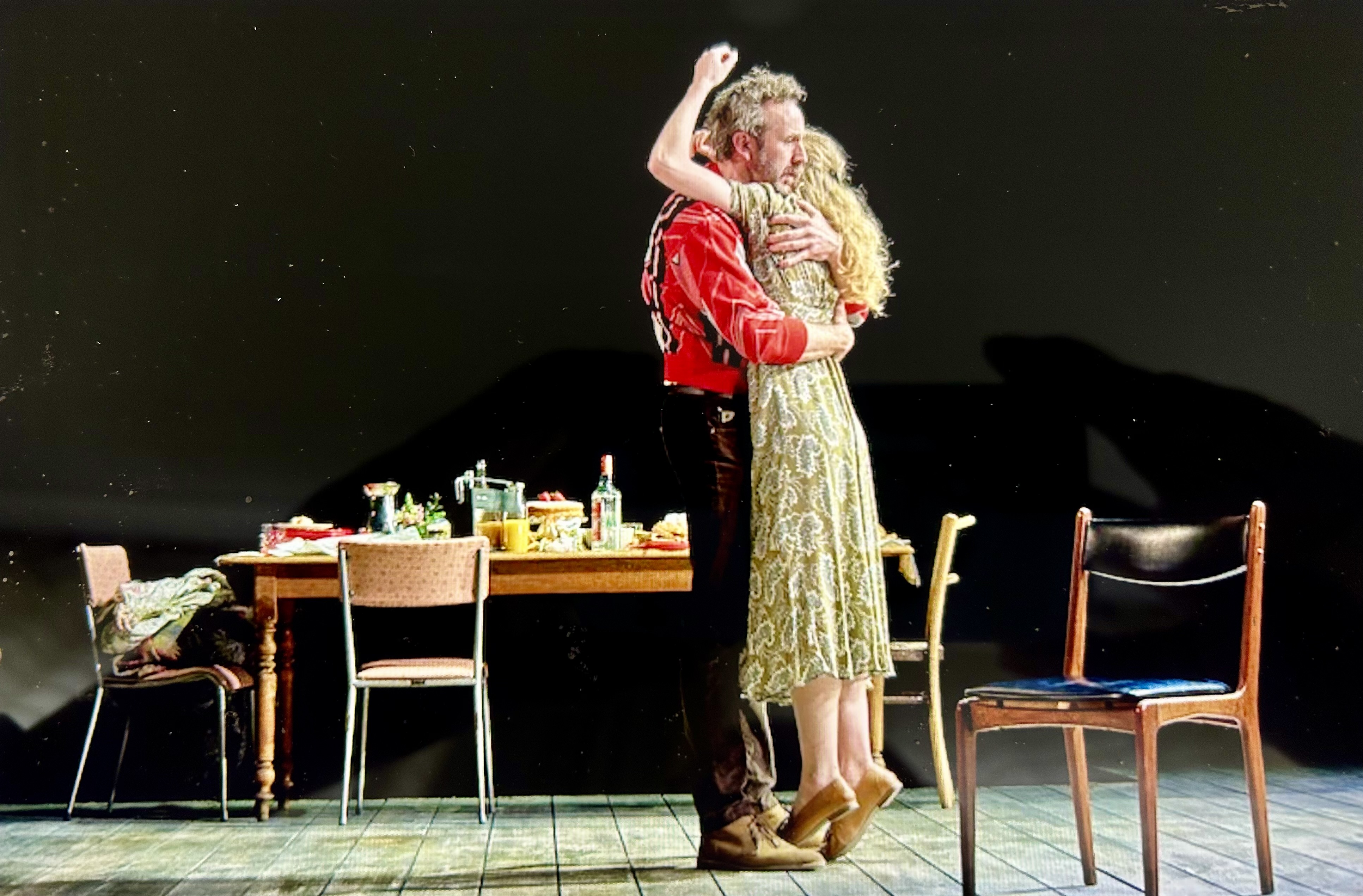
The setting is Sligo on the north-western Irish coast, the time is the 1980s. Stephen (Brian Gleeson) and his sister Billie (Rosie Sheehy) live together in what has always been their family home, a run-down farmhouse. Their wayward, dissolute brother Dermot (Chris O’Dowd) has long since flown the nest and is scornful of his siblings’ inertia. He turns up displaying his new 19-year-old girlfriend Freya (Aisling Kearns) in front of his still doting estranged wife Lydia (Hannah Morrish) and their children. 

Into the mix is thrown Uncle Pierre (a show-stealing turn by Seàn McGinley), a former priest who has big ideas for the house of which he claims part ownership by inheritance. From then on, there is minimal  plot in an inaction-packed piece that becomes almost entirely character driven. Drawing humour from the characters’ quirkiness, the writer explores how home means different things to different people and how the pursuit of personal goals can impact on others.

The absence of a formal set robs the drams of some of its flavour. Furniture is scattered around an often crowded open stage, against a darkened background, with characters wandering on and off, unhindered by doors. There is no sense of this being a family home and sometimes the action looks static, actors lined up like in a doctor’s waiting room. It is as if McPherson is trying too hard to dodge visual clichés that could have added  to the unavoidable ones in his play; his approach has created a production that may have been much better suited to an in-the-round staging.

McPherson and some other contemporary dramatists seem to see Chekhovian themes as linked inexorably to Irish life.  Here again we have unrequited passion, unfulfilled potential, yearning to break free and the unstoppable force of change. Characters loathe each other and resent their mutual dependence, filling the comedy-drama with rancour that is fuelled by the writer’s brittle humour. However, is any of this new, particularly in a rural Irish setting? McPherson’s play may promise breaths of fresh air, but it delivers too many gusts of déjà vu. 

Notwithstanding these reservations, there is much to savour. McPherson’s writing blends spiky wit with lyrical reflections and the characters are brought to life vividly by uniformly superb performances. We may have seen it all before, but we can feel content to experience it again.

Performance date: 24 April 2025

Rhinoceros (Almeida Theatre)

Posted: April 5, 2025 in Theatre
Tags: , , , ,

Photo: Marc Brenner

Writer: Eugène Ionesco

Translator and director: Omar Elerian

⭐️⭐️⭐️⭐️

Top marks for timing must be given to the Almeisa Theatre’s decision to hold the press performance of its revival of Rhinoceros on April Fools’ Day. Eugène Ionesco’s 1959 satire remains a classic piece of absurdism and, potentially, offers a feast for the fools in all of us. However, this is a play that parades itself as a folly and then asks to be taken seriously.

Romanian-born Ionesco thrived in a France that was still recovering from Nazi occupation, in which the literati of Paris had become infatuated with existentialism and absurdism. Breathing fresh life into a piece which, at first glance, seems horribly dated in style and content, presents a double challenge to Omar Elerian, who acts as both translator and director. By presenting his production as a play within a play, he invites modern viewers to see it with even more mocking eyes, assisted by a narrator (Paul Hunter), who also conducts audience participation.

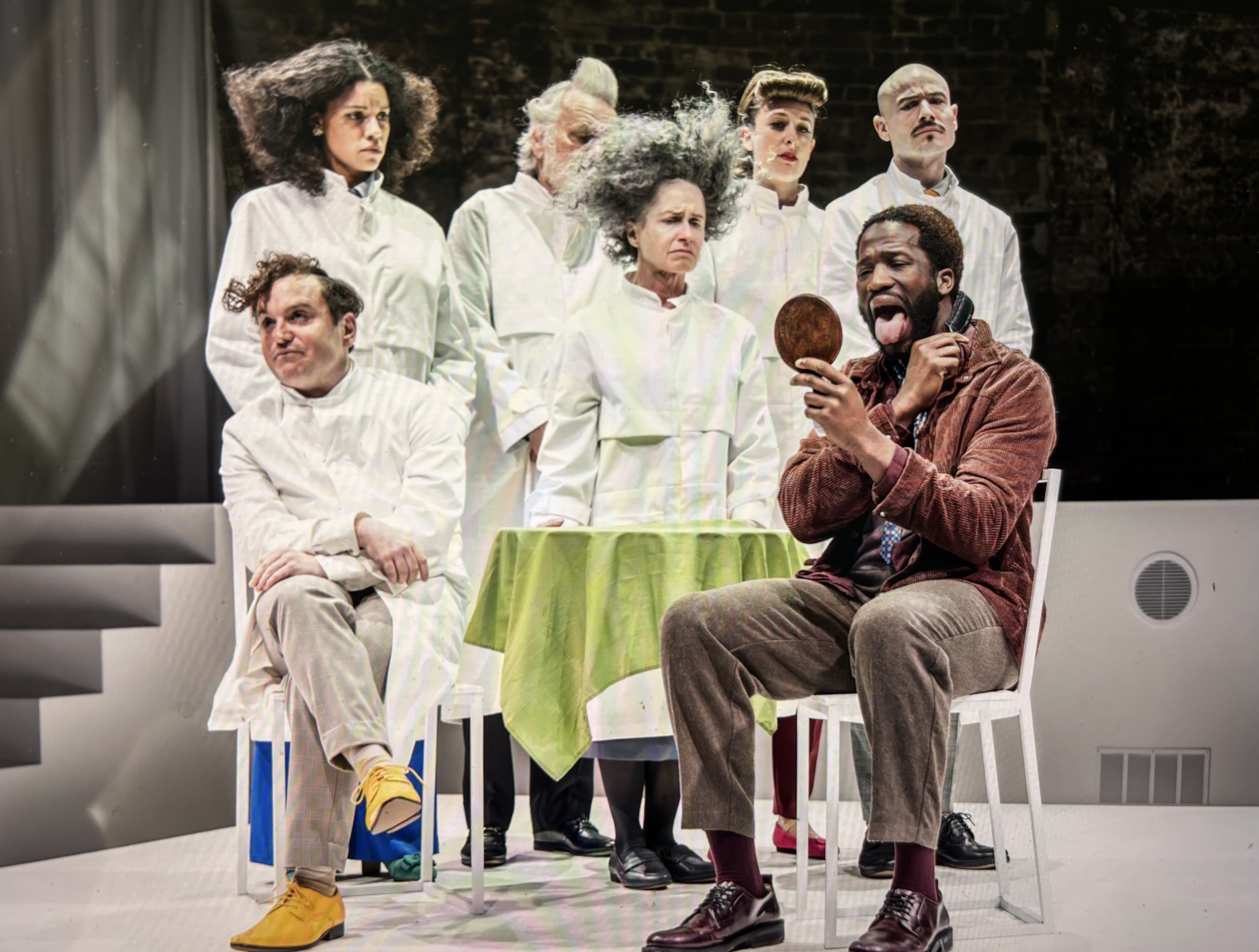
The play’s central character is Berenger, played with an air of puzzlement and growing conviction by Sopé Dìrísù. He is a depressed alcoholic who drinks as a way to find reality. In a French provincial town, he sits at a roadside café, chatting idly with his friend Jean (Josh McGuire), when a rhinoceros charges past them. Did it have one horn or two and would that mean it was African or Asiatic? They decide that it would be racist to speculate. Berenger’s prospective girlfriend Daisy (Anoushka Lucas) appears, carrying a dead cat, trampled on by a herd of rampaging rhinos. What is happening?

The action shifts to Berenger’s workplace, an office bossed by a fluttering M Papillion (Alan Williams) and a dithering M Dudard (John Biddle). Workers are ‘phoning in sick and confusion begins to reign as it seems that all the townsfolk are growing horns and turning into rhinoceroses. But Berenger stands firm, vowing that he will never join them.

The production is given a surreal look by Ana Inės Jabares-Pita’s all white set and (except for Berenger) costume designs, which become progressively darker as the play moves on. Ionesco’s depiction of one individual standing resolutely against an overwhelming majority represents a them common in 1950s drams, reflecting the politics of that era, but, here, it is made to be taken as a warning against present day trends in which populist movements appear to be gaining ground across Europe and elsewhere. Maybe the messages are put across crudely, but they are, nonetheless, effective.

Elerian takes as much licence as is needed to bring Ionesco’s preposterous pachyderm parable up to date and keeps his production fizzing with consistently inventive staging and impeccably timed ensemble playing. Yes, the translator/director succeeds in making this old play feel relevant to the modern world, but, far more importantly, he succeeds in making it fun.

Performance date: 1 April 2025

Photo: Manuel Harlan

Writer: Oliver Cotton

Director: Trevor Nunn

⭐️⭐️⭐️💫

Prepare to be transported back to the 18th Century. Having begun life in the Regency splendour of Bath’s Theatre Royal, Oliver Cotton’s 1747-set play, The Score, now finds a seemingly natural new home at the London equivalent, the Theatre Royal Haymarket. The question is whether or not the production, with veteran director Trevor Nunn at the helm, is destined to feel more than a couple of hundred years past its sell-by dare.

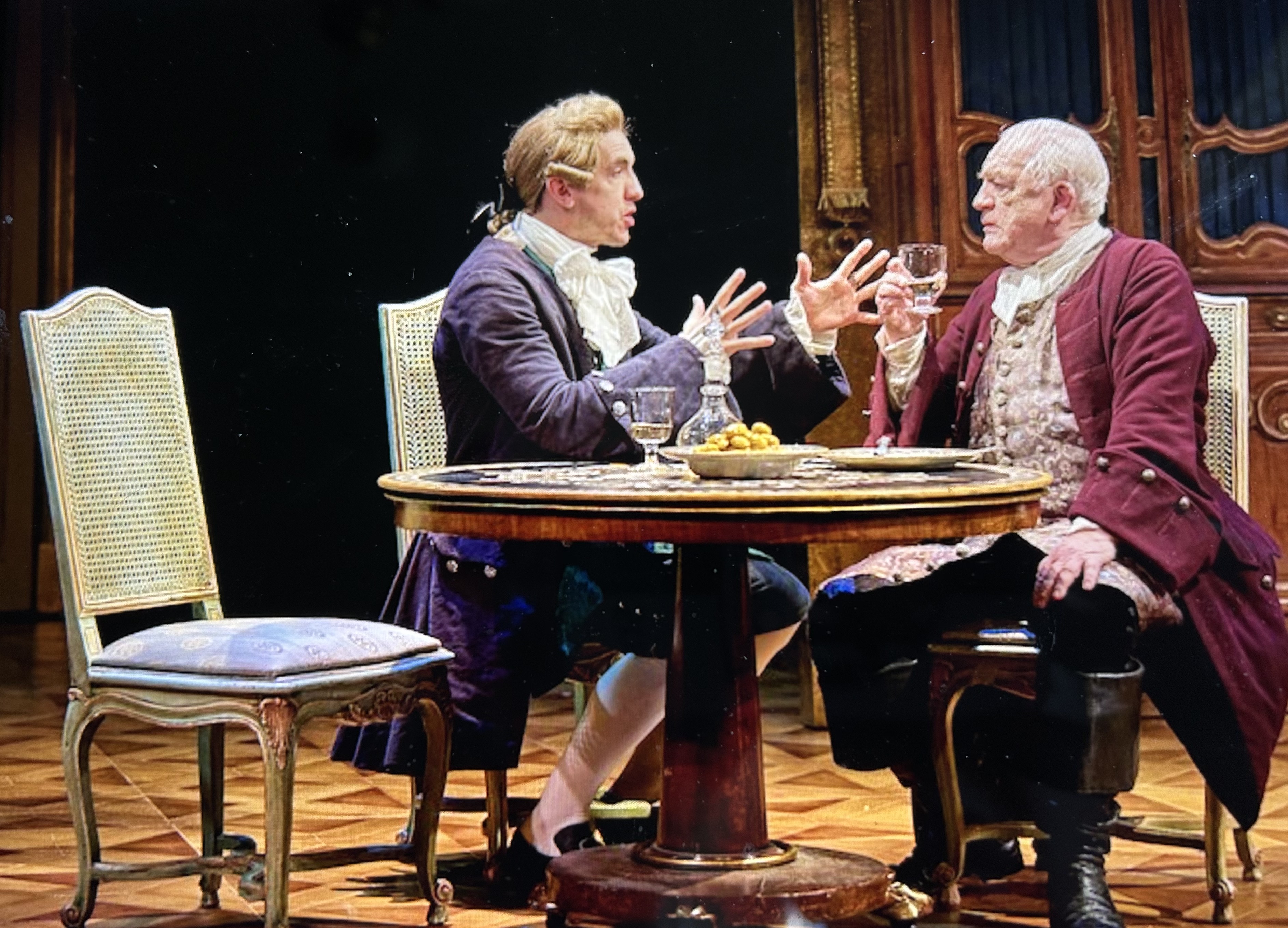
Contrasting the Earthly with the Heavenly, Cotton’s play revisits many of the themes of Peter Shaffer’s Amadeus. On this occasion, the composer is Johann Sebastian Bach, a 62-year-old with failing eyesight. He lives in Leipzig, a city recently overrun by Prussia, whose KIng, Frederick II, summons him to his court. Bach is devoutly religious and loathes warfare, while Frederick is an atheist  who, instinctively, leads armies into battle. They are opposites drawn together by a common love of music.

Brian Cox’s Bach barks loudly and often. The Scottish actor who  once played Hannibal Lecter seems born for this role and his commanding performance, inevitably, fights off all comers to grab centre stage and hold onto it. Stephen Hagan’s slightly effete Frederick is not the warrior King that the early dialogue leads us to expect, but his nonchalant air makes him a fascinating foil for Cox’s bellowing Bach.

Bach leaves behind his doting wife Anna (Nicole Ansari-Cox) in Leipzig and answers the KIng’s call to his court in Potsdam. There he is greeted by his young son Carl (Jamie Wilkes), who holds a position there, and by the friendly maid Emilia (Juliet Garricks), who recounts stories from Frederick’s past. The King’s constant companion is the French philosopher Voltaire, played in flamboyant style by Peter De Jersey. Nunn’s production is mounted handsomely, with Robert Jones’ unfussy set designs transitioning effortlessly between Bach’s humble home and the Royal Palace.

The play’s big flaw is a slow-paced first act in which it takes the two main protagonists four scenes and almost an hour to come face-to-face. The result is all talk and hardly any dramatic tension. Happily, things improve immeasurably after the interval when the writing becomes more eloquent and focussed and the acting more powerful. Frederick and his sycophantic courtiers bet against Carl that “old” Bach will not be able to improvise on a theme composed by the King; this brings a refreshing dash of fun to scenes that could have, otherwise, become too dry.

Bach argues that music emerges from divine intervention, even when it comes into the head of a non-believer such as Frederick. This belief provides the play with one of its central theses, the other being the morality of war and oppression. In this, Frederick can be seen as an arrogant autocrat who compares with certain modern day figures, but, otherwise, the play is little more than a dip into history, imperfect yet nonetheless entertaining.

Performance date: 28 February 2025