Archive for the ‘Theatre’ Category

The Coral (Finborough Theatre)

Posted: October 7, 2022 in Theatre
Photo: Marshall Stay

Writer: Georg Kaiser

Translater: BJ Kenworthy

Director: Emily Louizou

⭐️

With a new Prime Minister cutting taxes and calling for “growth, growth, growth” the debate which sets accumulating wealth against achieving social justice can seldom have been more topical in our country. So, can a German play which denounces the evils of capitalism, written during World War I, make a useful contribution to modern day arguments? The short answer is “no”.

Georg Kaiser’s The Coral, seen here in an uninspiring translation by BJ Kenworthy, centres around an unnamed millionaire factory owner (Stuart Laing) who exploits his work force and shows no regard for their welfare. His secretary (Adam Woolley) is also his doppelgänger distinguishable by a small piece of coral which, known only to a security guard, he always wears. Getting round obvious casting problems, the secretary wears a bright red face mask, matching the shirts, ties and socks worn by both he an his boss.

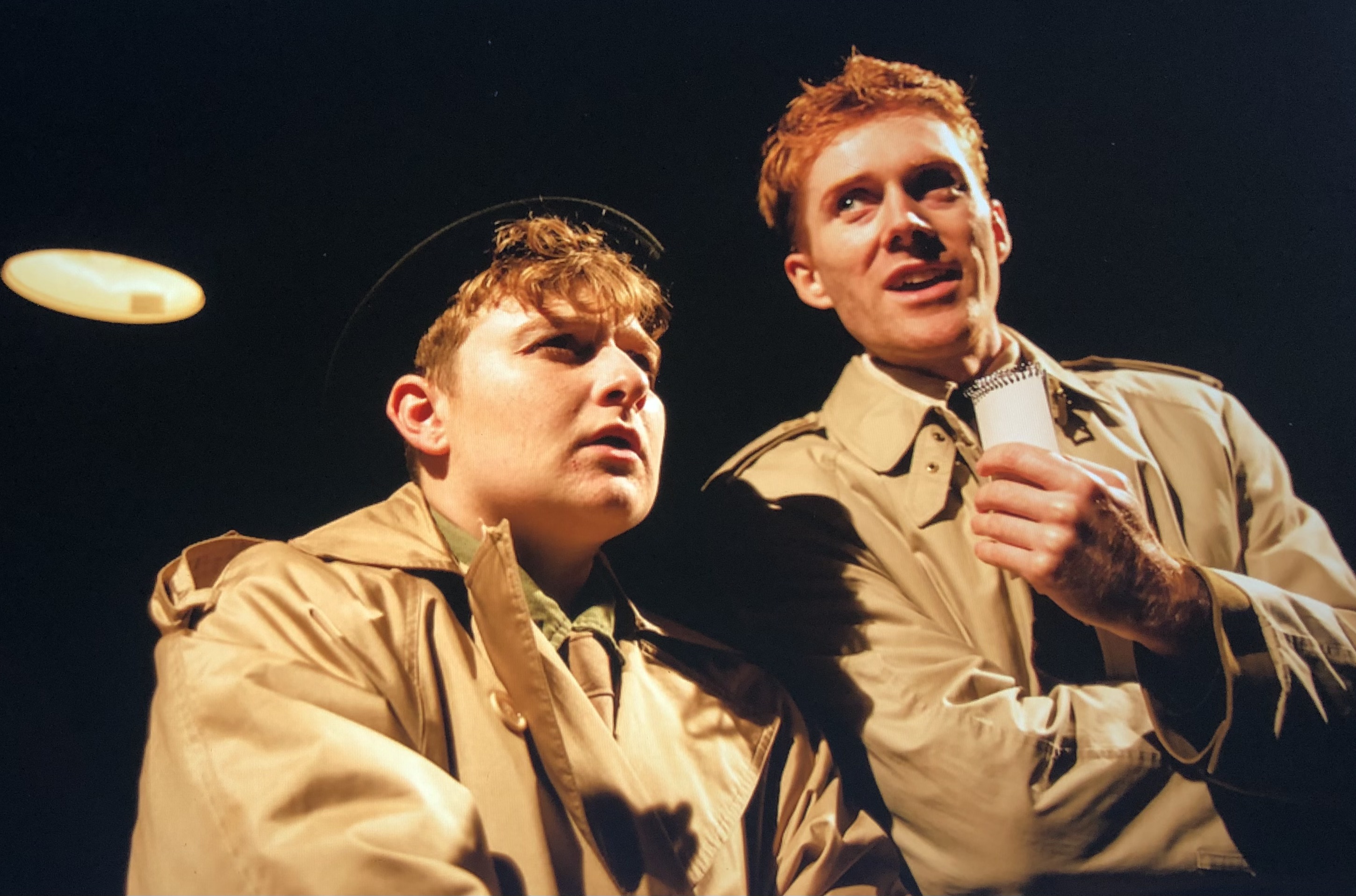
The millionaire has two daughters (Esme Scarborough and Joanne Marie Mason), both of whom loathe their father’s greed and callousness, lecturing him on the error of his ways repeatedly. A murder takes place and two bungling detectives arrive (we know that they are detectives because both wear Columbo-style raincoats). Characters threaten to outnumber the audience and much doubling-up of roles is essential, not helping the play to achieve clarity. The aforementioned actors, along with Arielle Zilkha, work hard, but they are fighting a losing battle against the text.

Director Emily Louizou’s bleak production seems unable to make up its mind as to whether it wants to be a surrealist nightmare or an absurdist comedy and it misfires on both counts. Designer Ioana Curelea offers little by way of sets, but an eye-catching collection of costumes (not necessarily relating to any specific period) are the stars of the show.

No doubt Marxism was very fashionable when the play was first performed in 1918, but its theories have become tarnished by several decades of being put into practice, resulting in the play’s sentiments feeling naive and not relevant to modern society. Kaiser is merciless in attacking the beleaguered millionaire and those of us who are consigned to lives of relative poverty are made to feel grateful for our good fortune.

The play’s first act is almost unfathomable and the second act, packed with inept comedy and turgid philosophising, is far worse, leaving the audience entitled to question whether the evening would have been more entertaining if the actors had simply recited extracts from Das Kapital. The Coral has not been performed professionally in London for close on 100 years and, if this revival serves any purpose at all, it is to explain the precise reasons for that omission.

Performance date: 6 October 2022

Photo: Jorge Lizard

Writers: Hamed and Hessam Amiri

Playwright: Phil Porter

Director: Amit Sharma

⭐️⭐️⭐️⭐️

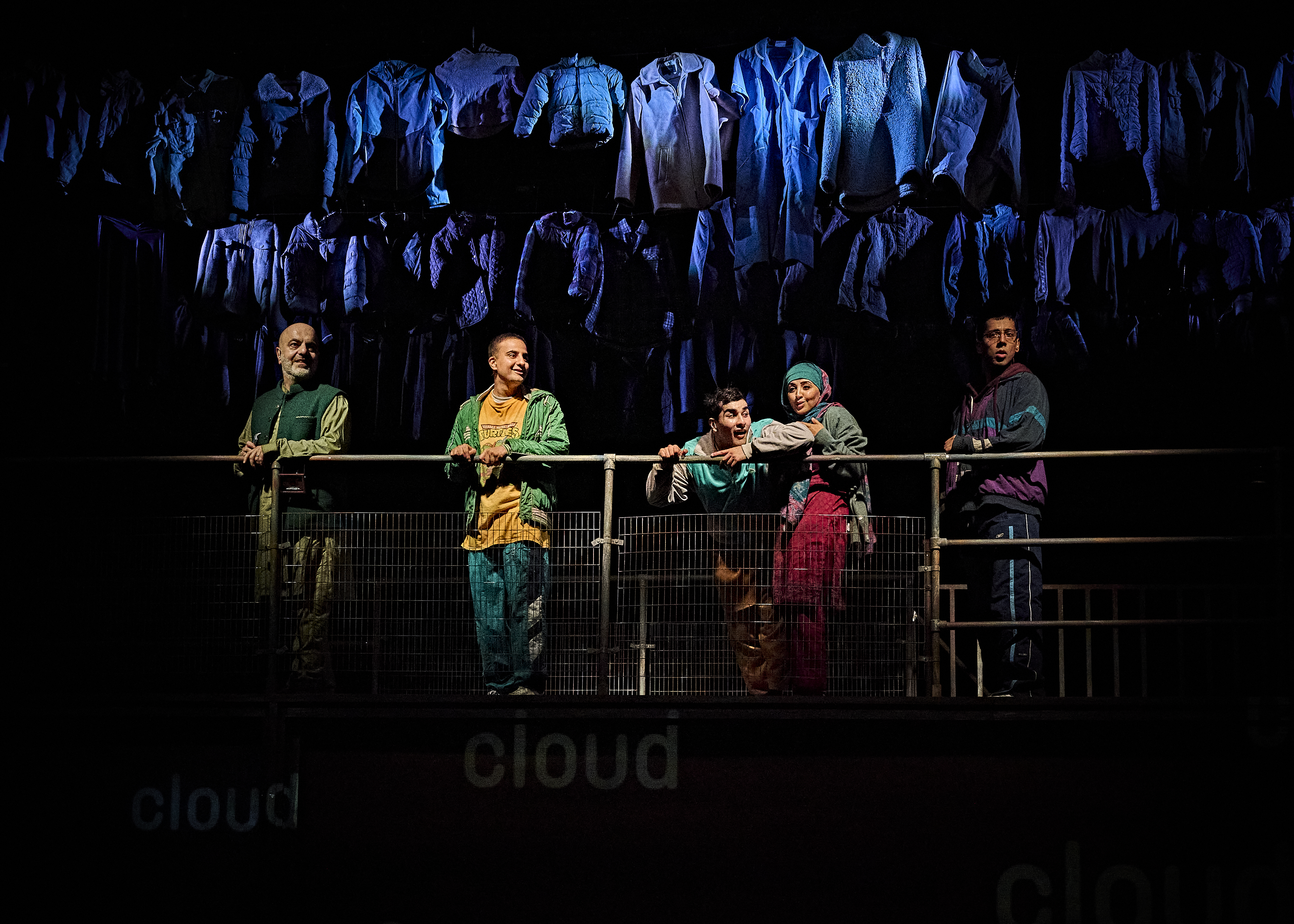
History may well regard the near 20-year Western occupation of Afghanistan as a brief interlude in which the Taliban was given a rest. The Boy with Two Hearts, a play by Phil Porter which is adapted from a factual book by Hamed and Hassam Ariri, goes back to the year 2000 when, as now, the Taliban ruled without compassion and women were denied the most basic human rights. The play was performed originally at Wales Millennium Centre.

Fariba Amiri (Houda Echouafni), a mother of three boys living in the city of Herat, has the courage to speak out publicly against the repression of women. Her husband, Mohammed (Dana Haqjoo), a sturdy patriarch, supports her, as do the boys, but word reaches the authorities and the family is left with no option but to flee the country, hidden in the boot of a car. They are not sure where they will end up, possibly America, but more likely the United Kingdom, where the youngest son could realise his dream of playing for Manchester United.

The journey is made more difficult, because the oldest son, Hussein (Ahmad Sakhi), suffers from a life-threatening heart condition. The younger sons, Hamed (Farshid Rokey) and Hessam (Shamail Ali), behave as if the hazardous journey is an adventure, as the family finds its way across Russia, on to Ukraine, through Germany and, despite repeated warnings to go nowhere near Calais, they find themselves in Calais.

The story plays out like a road trip movie, but it is real, made more so by five remarkably strong performances. The actors also step out of their main roles to play subsidiary characters and, rather than this becoming a distraction, it adds to the lightness and fluidity of director Amit Sharma’s engrossing production.

It could be that more recent horror stories of people smuggling, perilous Channel crossings and so on have numbed the senses, making this story less shocking than perhaps it should be. The writers tell us of the struggles and degradation endured by this family, but Sharma’s production falls short in making us feel their anguish and jeopardy, while it does not quite achieve the levels of suspense which the first act needs. However, the production more than compensates by allowing us to share the warmth of a family unit that is bonded together by love and humour.

The Dorfman’s stage is extended to its full width and height to accommodate Hayley Grindle’s split-level set design, which gives a darkened background to all the action and includes projections of smart graphics and surtitles. Sharma keeps the space busy throughout. Interspersed with the drama are songs in traditional Afghan style, composed and sung beautifully by Elaha Soroor.

The Boy with Two Hearts tells a story which resonates powerfully in a modern world in which people displacement only seems likely to increase. However, the play is primarily about the emotional journey of one family and its grip grows progressively stronger as the five characters become more finely drawn. The play is heartfelt and heartwarming, twice over.

Performance date: 5 October 2022

Photo: Robert Day

Writer: Georgina Burns

Director: Tessa Walker 

⭐️⭐️💫

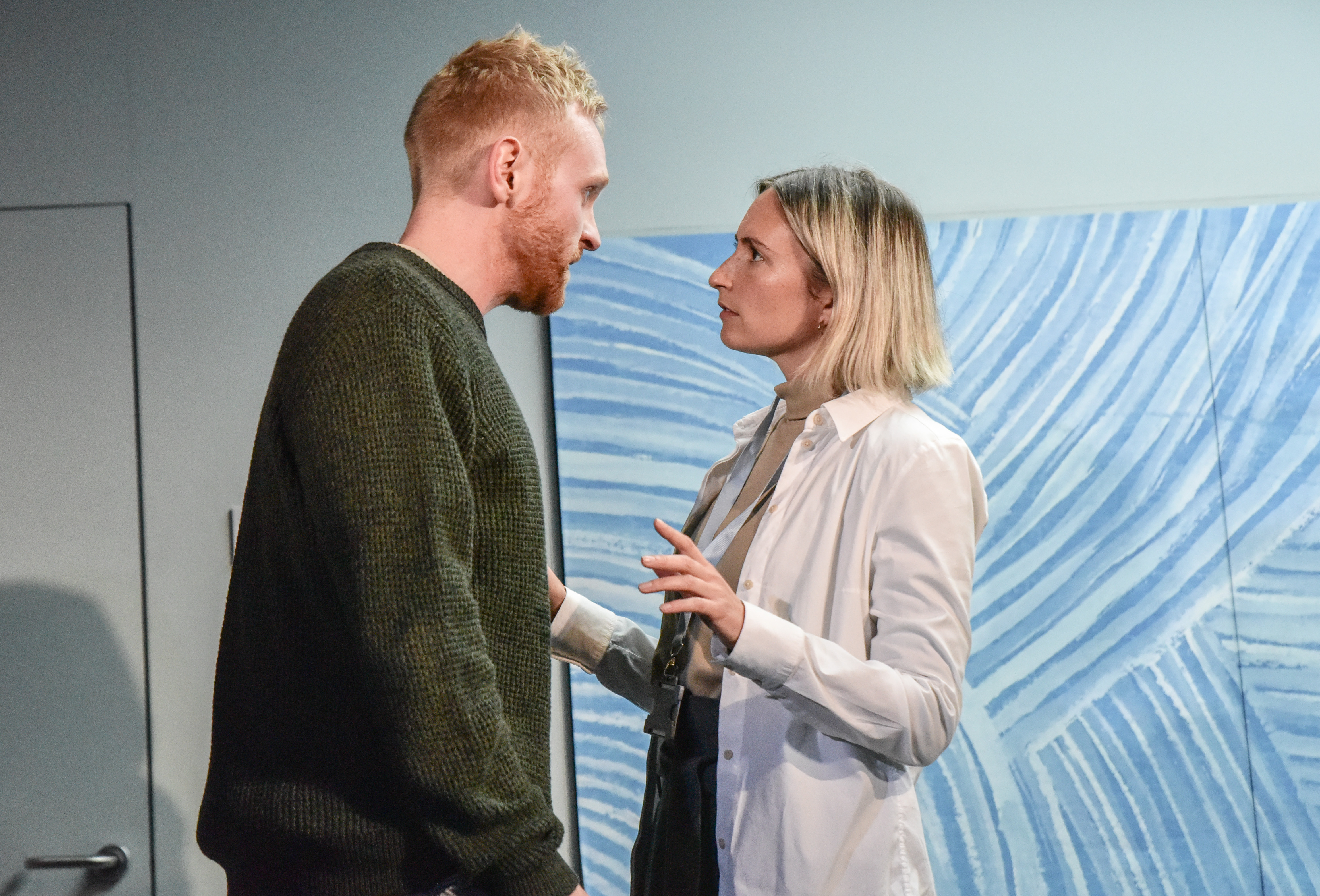
The problems of the National Health Service are rarely out of the headlines, so perhaps a drama about them can only expand on what most of us already know. Georgina Burns’ new one act play, Ravenscourt, sets out to dig beneath the news stories and investigate the reality, specifically in relation to mental health services. The play achieves stretches of intense drama, but covers over-familiar themes and frequently gets bogged down in its own worthy intentions.

The setting is the out patients wing attached to Ravenscourt, a psychiatric hospital. Lydia (Lizzy Watts) has been recruited from the private sector to work as a therapist alongside the unit manager, Denise (Andrea Hall) and Arthur (Jon Foster), both seasoned professionals who have learned how to combine compassion with cynicism. Lydia is full of enthusiasm and eager to make a difference, but she quickly grows to understand the scale of the challenges facing her.

Denise and Arthur have all but given up on Daniel, a “revolving door” patent who keeps being referred back for further sessions of therapy, so they decide that Lydia should take him on. The 33-year-old patient suffers from acute depression with bursts of anger and he has mother issues. Josef Davies’ performance as a man overpowered by controlled and uncontrolled rage, is the spark which ignites director Tessa Walker’s sometimes pedestrian production. The tormented Daniel is a compelling case study, finely drawn by both writer and actor, and the play leaves us wanting to know more about him than is possible when the main focus is on the provision of services to help him.

Debbie Duru’s simple but effective design adapts cleverly for set changes. Burns touches on some big issues, questioning the boundaries of ethical conduct as well as highlighting the shortcomings of a system which we should all know is under-funded and under-staffed. Her writing has admirable clarity, but little flair. with the result that her drama informs more consistently than it entertains.

Overall, the play’s impact is patchy. Its 90-minute running time breaks into three roughly equal parts: an unremarkable opening sets the scene and establishes characters; an intense middle section, focussing on the troubled patient, contains real meat; and a final section, turning to the tolls which their jobs take on professionals, feels like an anticlimax after what had been seen immediately before and it simply goes on for too long.

Performance date: 3 October 2022

SUS (Park Theatre)

Posted: September 23, 2022 in Theatre
Photo: Charles Russel

Writer: Barrie Keeffe

Director: Paul Tomlinson

⭐️⭐️⭐️💫

We look to the past to help us in understanding the present. Barrie Keeffe’s short (75 minutes), sharp and shocking account of the methods used by Metropolitan Police officers was written in 1979 and it is set in May of that year, on the night of Margaret Thatcher’s first election victory. The key question relating to this revival must be whether or not it sheds light on more recent controversies involving the Met and other forces.

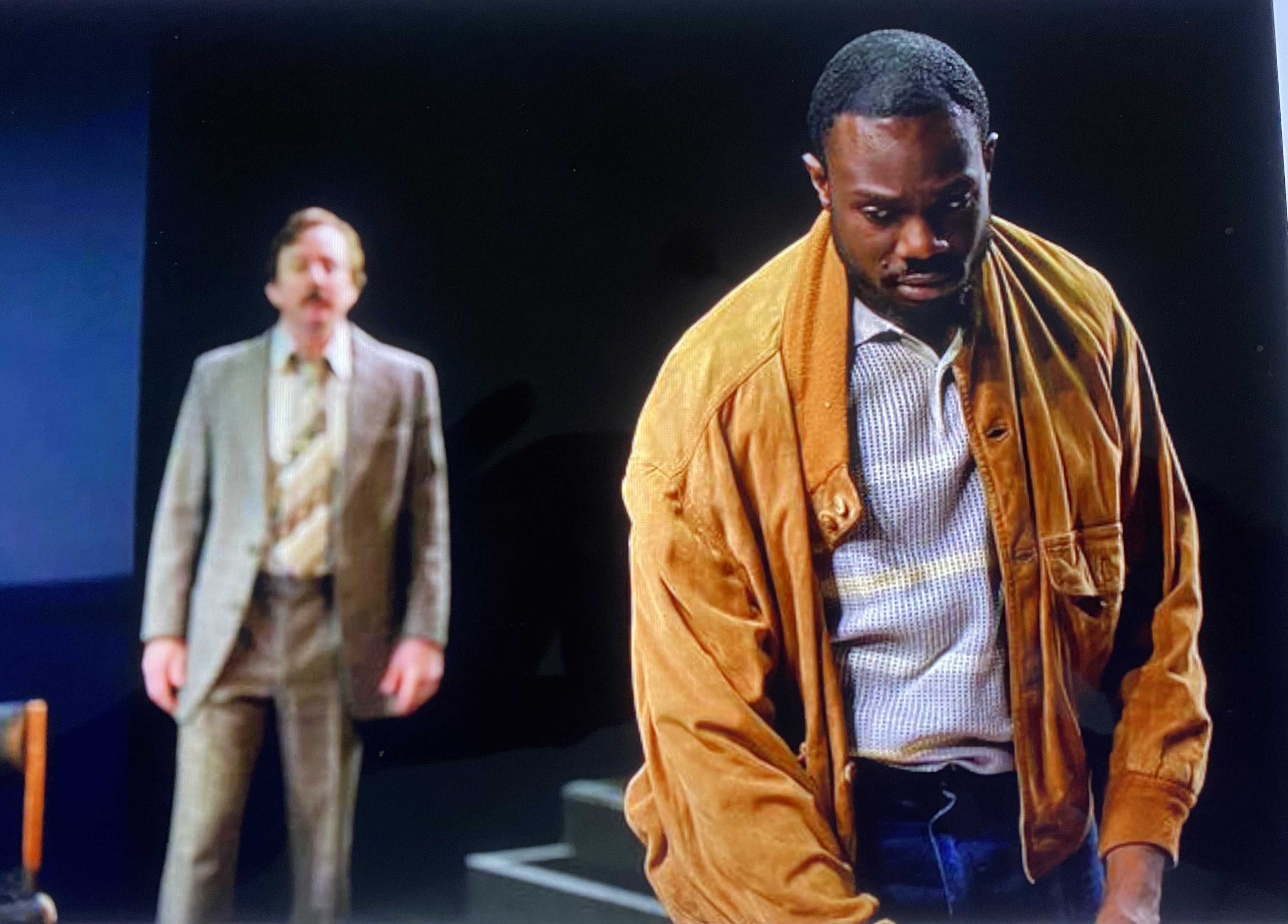
Director Paul Tomlinson’s production is performed in a small studio space on a traverse stage, giving the audience a sense of being flies on the wall of the interrogation room where the drama unfolds. The “sus” is Delroy (Stedroy Cabey), a black man who is well accustomed to being hauled in by the Police on suspicion of having committed a variety of offences. He has a confident air, because he has no doubt that, on this occasion as on all others, he will be released without charge.

The volatile interrogators are Detective Sergeant Karn (Alexander Neal) and Detective Constable Wilby (Fergal Coghlan), both delighted with way that the election results are going. They draw Delroy into sexist banter, debating which of the television newsreaders, Anna Ford and Angela Rippon, they would choose to bed; and then, after an hour, they inform him that his wife is dead and that he is suspected and presumed guilty of her murder.

In 1979, the phrase “institutional racism” had not come into common usage with regard to Police forces and it is difficult to assess how the racism, sexism and complete absence of compassion displayed by the officers, now so deeply offensive, would have been regarded by the play’s contemporary audiences. Would they have seen this neanderthal behaviour as normal and expected or would they have been as appalled as now? Time has changed much, but the abuse seen in the play, both verbal and physical, is made frighteningly realistic by superb acting.

Keeffe links the play closely to political developments, seeing the 1979 General Election as a watershed in United Kingdom history, which indeed it turned out to be. As expressed in the wishful thinking of Karn, the writer predicts a lurch in the direction of fascism. However, such politics are now less relevant than the questions which the play asks about policing. We are left wondering whether Keeffe exposed the roots of attitudes and practices which still prevail today.

Tomlinson’s unfussy production matches the tightness of the writing, but the language used and the period details seem likely to distance today’s audiences from the drama. This revival needs a modern day perspective in order to reinforce it as more than just a glimpse into our social history. Nonetheless, SUS remains a powerful indictment of those in whom we trust to protect us.

Performance date: 22 September 2022

The P Word (Bush Theatre)

Posted: September 21, 2022 in Theatre

Photo: Craig Fuller

Writer: Waleed Akhtar

Director: Anthony Simpson-Pike

⭐️⭐️⭐️⭐️⭐️

They say that we should not judge a book by its cover, but nor, perhaps, should we judge a play by its title. Waleed Akhtar’s new drama, The P Word, bears a title with such negative connotations that it is hard to believe that it could possibly be the cover for a tender and intimate bromance which frequently brings tears to the eyes.

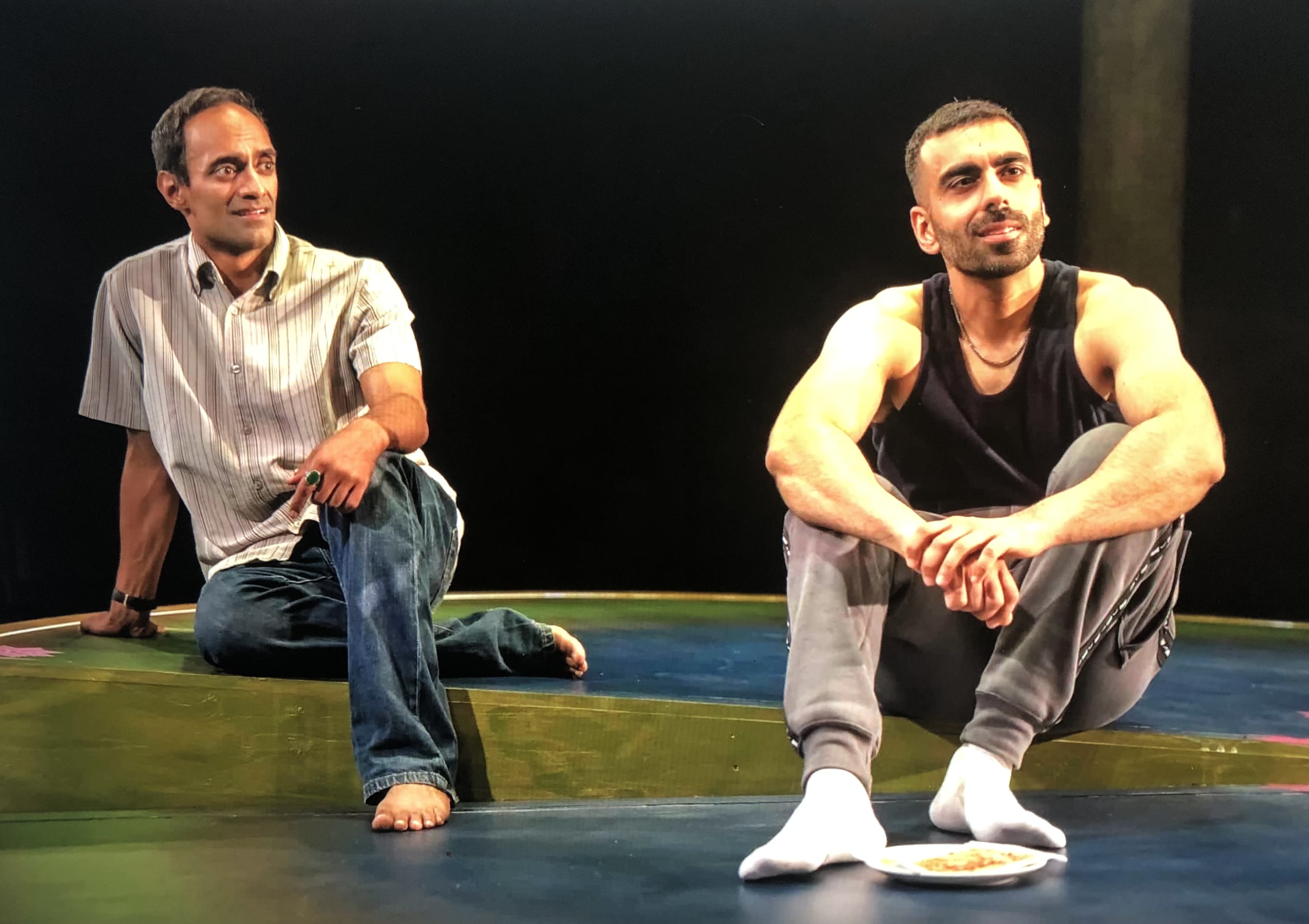
The play, an 80-minute two hander, tells the stories of two gay men, both of Pakistani descent. Bilal, who prefers to be known as Billy, is 31-years-old, second generation British and out to his parents, but largely estranged from them. He has a career, but suspects that racism could be holding him back. Played with a likeable swagger by the writer himself, Billy is comfortable with his sexuality, cruising the gay scene and using dating apps for casual hook-ups, but he senses a need for more meaningful connections, having little idea of how to change his lifestyle.

Zafar is slightly older and has been seeking asylum in the United Kingdom on the grounds of homophobic persecution in Pakistan. He has bean beaten and his male lover has been killed at the behest of his own father. He lives in Hounslow, which the play suggests is a no man’s land between Heathrow Airport and the real world. Esh Allandi’s Zafar is withdrawn and confused, but releases of his true, bubbling personality give this production some of its most joyful moments.

Director Anthony Simpson-Pike’s in-the-round staging has energy, warmth and, in a thrilling climax, urgency. Max Johns’ design, a revolving circular stage, draws the audience into the drama. 

When Zafar goes to a Gay Pride event in order to take photos to help prove to the Home Office that he is really gay, he is a fish out of water, but he meets a very drunk Billy and an unlikely friendship begins to form. They share a love for the work of fashion designer Alexander McQueen and for old Pakistani movies, but, in other respects, the things that they have in common – their national identity, their sexual orientation – are the things that threaten to keep them apart. Zafar has moved from a land where he was persecuted to another where homophobia, Islamophobia and racism still prevail, albeit in much diluted forms.

The progress of the two men confronting the challenges thrown up by modern Britain shapes a gripping narrative. They are set adrift, wholly or partly, from family, faith and cultural heritage, but they draw strength from each other. Social and political issues abound throughout the play, but Akhtar’s great skill as a writer lies in keeping them secondary to the unfolding human drama. The dialogue, as spoken in two marvellous performances, feels entirely natural, filled with wry observations and subtle humour. 

Do the two men drop the letter “b” from their bromance and do they triumph over adversity? No spoilers, but there can be little doubt that the play itself is an outright triumph.

Performance date: 20 September 2022

Handbagged (Kiln Theatre)

Posted: September 16, 2022 in Theatre
Photo: Tristram Kenton

Writer: Moira Buffini

Director: Indhu Rubasingham

⭐️⭐️⭐️

A few months after the death of Margaret Thatcher in 2013, Moira Buffini’s Handbagged, a satire on the relationship between the former Prime Minister and her Monarch, premiered at the Kiln Theatre (then named the Tricycle) and became an instant hit, later transferring to the West End. Sadly and purely by coincidence, director Indhu Rubasingham’s revival of her own production arrives immediately after the passing of Her Majesty Queen Elizabeth II.

Respectful satire, perhaps an oxymoron, is difficult to pull off in normal circumstances, but, at this time more than ever, the emphasis has to be on respect, thereby leaving Rubasingham with the trickiest of balancing acts. Given little time to come to terms with the new reality, the production achieves its goals without being noticeably restrained and it is unlikely to cause offence to anyone, except, perhaps, surviving hard core Thatcherites. 

The play’s premiere followed hot on the heels of Peter Morgan’s The Audience, which also examined HM/PM relationships, but veering further towards historical accuracy than is made possible by Buffini’s mocking style. Her play chronicles Mrs Thatcher’s period in office from May 1979 to November 1990; in those years, the Queen is played by Abigail Cruttenden and the Prime Minister by Naomi Frederick.

Buffini widens the play’s perspective with the very effective device of having an older Queen and ex-PM providing a commentary and distinguishing their versions of the truth from myths. Marion Bailey reprises her role as the older Queen, having played the Queen Mother in the Netflix series The Crown in the intervening years.  Kate Fahy is the older PM. The impersonations and characterisations are spot-on, matching popular perceptions of the two ladies perfectly. Her Majesty sits calmly at the top of the social ladder, striving to understand what is going on below and Mrs T is the arrogant and stubborn social climber who declares: “…I don’t notice I’m a woman”.

All four are on stage for almost the entire production, with Romayne Andrews and Richard Cant sharing all the male roles (plus that of a bearded Nancy Reagan) between them. They make a formidable comedy double act in their own right. Richard Kent’s set design has simple grandeur, with piled-high geometric shapes towering behind a white thrust stage..

The play has a serious core as the characters debate inner city riots, the Falklands War, the Miners’ Strike, Section 28, Apartheid, the Poll Tax and so on. In one corner, Mrs T defends her pursuit of strict dogma and, in the opposite corner, the Monarch pleads for compassion. We sense that Buffini is on the side of her Queen. When politics threatens to consume the play, as in the later stages of the first act, a liberal sprinkling of good jokes comes to the rescue and, by the end, we are left with the impression that a certain amount of strained affection came to exist between the two protagonists.

When it is funny the play resembles a decades old episode of Spitting Image. When it is serious, it revisits the issues of what is probably already the most talked over and dramatised decade in our country’s peacetime history. In consequence, dated humour and themes, along with over-familiarity were already working against this revival even before it was struck by the misfortune of bad timing, but it still raises a fair number of chuckles anyway.

Performance date: 15 September 2022

Who Killed My Father (Young Vic Theatre)

Posted: September 9, 2022 in Theatre
Photo: Jan Versweyveld

Writer and director: Ivo van Hove

⭐️⭐️⭐️⭐️

The absence of a question mark in the title gives a hint that Who Killed My Father is far removed from being a thriller in the Agatha Christie mould. The name of Ivo van Hove on the billing gives another. Returning to the venue of his first London triumph, the 2014 revival of Arthur Miller’s A View From the Bridge, the innovative Belgian-born director  brings his own adaptation and translation into English of a celebrated autobiographical book by French writer Édouard Louis. The production is staged by the Young Vic in association with Internationaal Theater, Amsterdam.

The play, a 90-minute monologue, at first takes the form of a one-way conversation between a man and his unseen, disabled father. The son is returning from his home in Paris to the industrial town in Northern France where he grew up. He begins to confront the son/father relationship by recalling incidents from his childhood and teenage years and connecting them to his father’s own upbringing.

Dutch actor Hans Kesting is a mesmerising presence as the son; immersed in 1990s pop culture, he craves for his father’s attention by dancing to Barbie Girl, while a glitter ball spits out light around a darkened room and he sobs through the film Titanic over and over again. The son is a homosexual, evident from an early age, and this brings about conflict with the father’s ingrained macho outlook; he believes that a man’s masculinity can be judged by the masculinity of his son.

The central relationship is complex and intense, a tangled web of love and loathing. This is not easy to put across to an audience, but van Hove’s total mastery of theatre craft and Kesting’s visceral performance illuminate even the darkest corners. As set and lighting designer, the director’s regular collaborator, Jan Versweyveld, creates an austere room with bare grey walls, into the darkness of which piercing shafts of bright light trespass. The atmosphere is grim as the son’s quest for resolution turns suddenly to outright rage.

In what comes close to being an astonishing coup de théâtre, van Hove switches tracks and turns a play that had been intimate and inward-looking into a forceful political diatribe against the suppression of the French working class. The darkness is lifted and Kesting’s demeanour changes as an introspective souls searcher becomes a public orator. The writer/director’s skill in pulling off this transformation inspires awe.

The play says “J’accuse” eloquently in words that should resonate as strongly on this side of the Channel as in France. Clearly, Who Killed My Father is not a whodunnit. It is ultimately a searing indictment of the known culprits of a crime. This is a sombre play for sombre times.

performance date: 8 September 2022

Silence (Donmar Warehouse)

Posted: September 7, 2022 in Theatre
Photo: Manuel Harlan

Author: Kavita Puri

Writers: Sonali Bhattacharyya, Gurpreet Kaur Bhatti, Ishy Din, and Alexandra Wood

Director: Abdul Shayek

⭐️⭐️

It is now 75 years since the partitioning of the Indian sub-continent as part of the process of gaining independence from the British Empire. A seemingly arbitrary line was drawn on a map to divide predominantly Hindu India in the south and predominantly Muslim West Pakistan and East Pakistan (later Bangladesh) in the north. 

Silence, premiering at the Donmar Warehouse prior to transferring to London’s Tara Theatre, is a 100-minute play based on Kavita Puri’s archive of interviews with some of those who experienced the transition and are still living in the United Kingdom. Working with four writers (Sonali Bhattacharyya, Gurpreet Kaur Bhatti, Ishy Din and Alexandra Wood), Puri has dramatised transcripts of those interviews for the stage, putting history into the context of modern British life.

The play is given a dramatic structure through the character of Mina (Nimmi Harasgama), who we take to be based upon Puri herself. Her father is ailing and she urges him to break his silence about the events of 1947. When he refuses, Mina’s determination to hear the testimonies of other survivors grows. Her aim is to provide a record from a generation that has remained largely silent, but is now dying out, so that succeeding generations of British South Asians can gain a clearer understanding of the traumas suffered by their forebears. Perhaps a secondary aim could be to prick the collective conscience of the former Imperial power. 

Worthy as Puri’s intentions undoubtedly are, turning the testimonies into verbatim theatre presents challenges which proves difficult to overcome. Six actors, playing multiple roles, tell the stories. The actors are: Renu Brindle, Sujaya Dasgupta, Bhasker Patel, Jay Saighal, Rehan Sheikh and Martin Turner.

They tell us of neighbours who are friends in the morning trying to kill each other in the afternoon, as a toxic combination of politics and religion wreaks mayhem. We hear of Hindus fleeing south of the dividing line to avoid persecution and Muslims fleeing north for the same reason. We hear of genocide without a single perpetrator, rape, mutilation and human suffering on a scale that is almost impossible to  comprehend.

Director Abdul Shayek strives to add dramatic tension and texture to the stories, but is thwarted by the limitations of verbatim theatre. A group of excellent actors struggles to create three-dimensional characters when the format offers little more than narration to work with. 

What we hear is truly shocking, but key elements of human drama are missing and the accounts heard are never as moving as we feel they should be. As one horror story follows another, repetition begins to drain the drama of its power, resulting in the intended climax, when Mina’s father eventually opens out, becoming the biggest disappointment of all.

Performance date: 6 September 2022

The Trials (Donmar Warehouse)

Posted: August 19, 2022 in Theatre
Photo: Helen Murray

Writer: Dawn King

Director: Natalie Abrahami

⭐️⭐️⭐️⭐️

The air conditioning inside the Donmar Warehouse is working perfectly, guzzling energy seemingly without conscience. Momentarily in this hottest of Augusts, it feels good to be part of a generation that is kicking the can down the road. However, by applying the standards set in Dawn King’s sobering play The Trials, first seen in Germany last year, all of us could eventually be held to account for compliance in such misdemeanours and face possible execution.

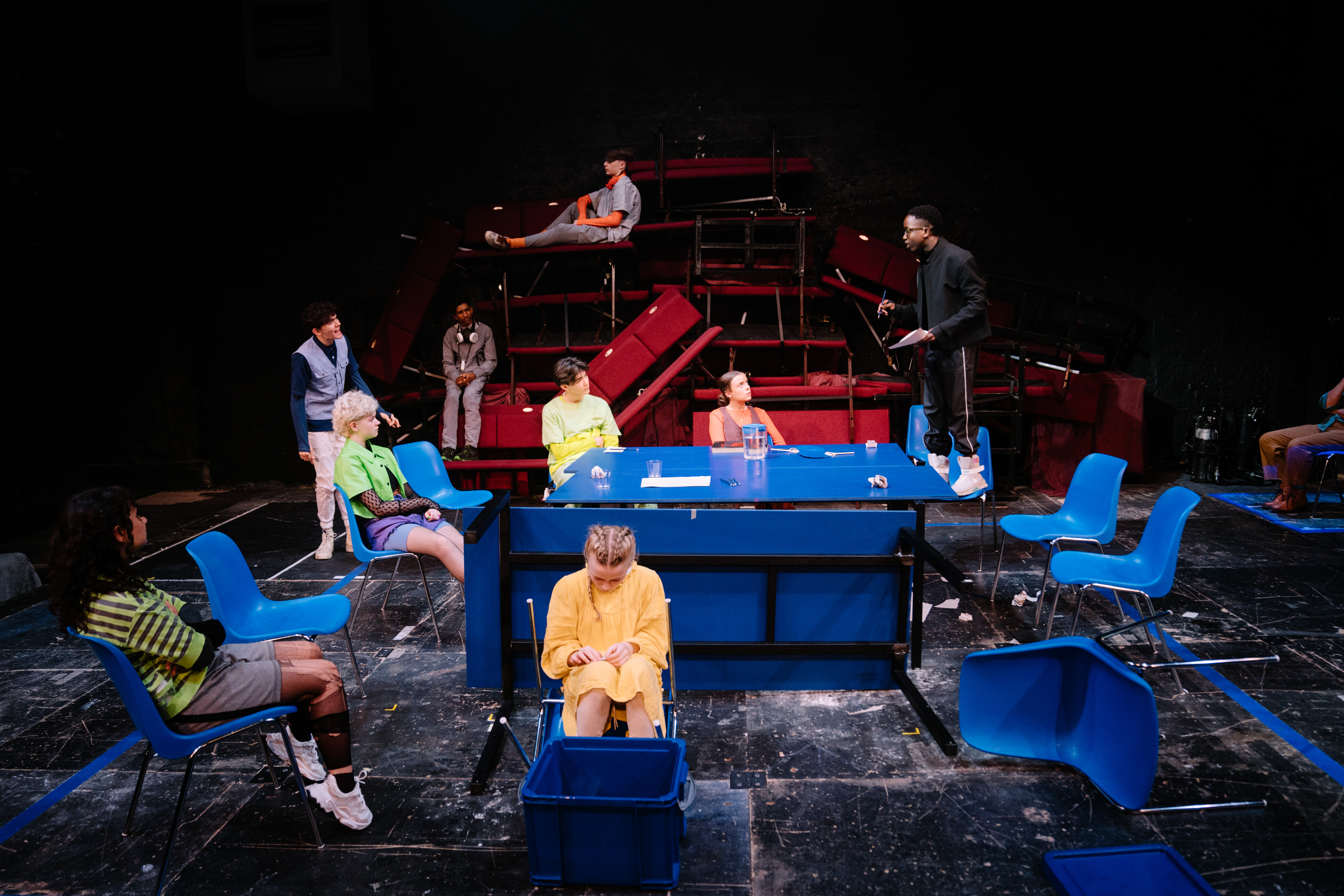
King imagines a dystopian near future in which the ravages of climate change have taken hold. In an authoritarian system that is almost as frightening as the impact of global warming itself, 12 young people are summoned to serve on a jury for proceedings which they liken to the Nuremberg trials in the wake of World War II. They meet in a room where the windows are sealed to keep out air that is too polluted to breathe.

The jury hears three cases from older generations and then deliberates: all are accused of contributing to the destruction of the environment in which later generations would have to live, despite being aware of the potential consequences of their actions or inactions. A successful businessman (Nigel Lindsay) pleads that he tried to limit his carbon footprint while carrying out his globetrotting job and travelled by train for holidays. A writer (Lucy Cohu) argues that she could do little to influence change. An oil company executive (Sharon Small) accepts guilt for promoting supposedly environmentally friendly products that were actually no more than “greenwashing”.

The play’s subject matter is depressing, but inspired casting of the jurors makes director Natalie Abrahami’s production of it a joy. Drawn from the Donmar’s programme for nurturing young local talent, the 12 actors are all new or relatively new to the stage. It is remarkable that such a range of clearly identifiable characters can emerge in a play that is only 90 minutes in duration. They are hawks, doves and don’t knows and it is their conflicts and alliances that give the drama its backbone.

Outstanding are: Francis Dourado as Mohammed, who reminds of Henry Fonda’s character in 12 Angry Men, swimming against the tide to argue for compassion and justice rather than revenge; and Joe Locke as the hawkish Noah, who sets the bar of innocence so high that even Greta Thunberg would have difficulty in clearing it. That said, enough singling out of individual, the director harnesses the energy of her youthful company to devise a production that is both exhilarating and engrossing.

The trap awaiting any playwright tackling an issue of topical urgency is preaching to the audience. King walks into the trap open-eyed and the delivery of her message is occasionally heavy-handed. Yet, somehow, this matters little, thanks to the performances of the young actors. This deliberating dozen should each have a bright future in the acting profession, assuming of course that there is any future to be had.

Performance date: 18 August

Writer and director: Jack Robertson

⭐️⭐️

Describing itself in publicity as “a most lamentable comedy” and “an unofficial and unwarranted sequel” to A Midsummer Night’s Dream, Jack Robertson’s 60-minute comedy, Demetrius Wakes, has set itself targets to live down to. While it would be difficult to make a sequel official more than four centuries after William Shakespeare’s demise, the jury is out over whether or not anything could warrant this flimsy extension to his classic and just how lamentable (or not) it is.

Brought to the stage by MediumRare Productions, the play explores how the dreams of two modern day married couples, drawn loosely from the Bard’s originals, turn into nightmares. It touches on the not uncommon dilemma of dealing with what happens when a joyful burst of romance is taken over by the gradual onset of familiarity and boredom.

Zander (or Lysander) is given a laddish swagger by Jacob Lovesick; he is married to Mia (Hernia), played by Megan Jarvie with a hint of sluttiness. They invite to their home for a wine and cheese party Demetrius, once Mia’s admirer, and his wife Helena. Both couples are celebrating 15 years of marriage.

It occurs to Demetrius (a continuously glum Jack J Fairley) that he fell asleep 15 years earlier and his marriage to Georgia Andrews’ dull Helena must have been a terrible dream. Freeze the action and in steps a highly camp Puck (Sam Harlaut, wearing the Devil’s horns and tight-fitting hot pants) to wreak havoc all round.

What follows resembles a swingers’ gathering without the car keys. Trial pairings of Demetrius with Mia, Zander with Helena, Demetrius with Zander and Mia with Helena come and go. Poor old Puck is left out of all the fun as the four release their pent-up frustrations and spit out venom at each other.

The performances in Robertson’s production of his own play are lively, but not sufficiently so to make the quartet that he has created interesting. The writer’s core idea could have had potential, but a sense of where to take it and develop it fully is not evident and the dialogue contains too little original wit to sustain the comedy even for just an hour.

Although far from lamentable, Demetrius Wakes hitches a ride from Shakespeare and its labours to become less tedious than its main characters are eventually lost.

Performance date: 5 August 2022