Set in rural Russia, Maxim Gorky’s 1905 play features a privileged middle class set, preoccupied with their own relationships and oblivious to the swelling revolutionary forces at their door. This is Chekhov, more direct and , therefore, less subtle, yet more welcome because it is not so familiar. However, some aspects of the translation are jarring, particularly the inclusion of very modern expressions, and the direction is uneven, moving uncertainly between comedy and tragedy. The set is lavish for a production that is otherwise too small for the Lyttelton’s huge stage and the climax is quite literally explosive.
Archive for the ‘Theatre’ Category
After 40+ years in London, a first venture inside the Hippodrome. Peter Stringfellow is long gone and the place is now a miniature Las Vegas style casino with a cabaret lounge and, arguably, the best men’s room in town. Velma Celli is the alter ego of musical theatre performer Ian Stroughair, who, decked in a flowing red wig, conjured up images of John Malkovich playing the lead in a live action re-make of “The Fantastic Mr Fox”. The first half consisted of a fairly predictable choice of numbers – four by Kander & Ebb, two associated with Shirley Bassey – performed with appropriate pzazz. The second half was mostly contemporary pop and Ms Celli gave way more often to other performers who were, to be quite frank, a lot better. Pretty average overall, but average entertainment becomes a lot more palatable when sipping cocktails, so who’s complaining? A fun evening.
The Victorian in the Wall*** (Royal Court – Jerwood Theatre Upstairs, 16 May 2013)
Posted: May 17, 2013 in TheatreThis review was originally written for The Public Reviews: http://www.thepublicreviews.com
Will Adamsdale came to prominence when he won the Perrier Award for Comedy at the 2004 Edinburgh Festival, but instead of following many of his contemporaries into arena tours, he has chosen the much braver option of exploring the potential for his brand of comedy in fringe theatre. The downtrodden little man, who is perplexed by the trappings of modern life to the point of near defeat, is a familiar persona for stand up comics, giving them a rich vein of targets to which audiences can easily relate. Here, Adamsdale places that persona into an amiable character called Guy, played by himself, who lives in a flat in a converted Victorian property, located in a soon-to-be-trendy gentrified part of old working class London. He is a struggling writer, suffering from writer’s block, and a serial procrastinator. Giving him one last chance to prove himself in a failing relationship, his girlfriend leaves him alone to supervise a knock-through from living room to kitchen and the creation of the dream of all aspirant couples – a breakfast bar. In the early stages, with Adamsdale taking centre stage as narrator/Guy and gags arriving on cue every 20 seconds or so, the script has the rhythm and feel of a stand-up routine and it is unclear why it is not being presented as such. However, as this type of observational comedy is well-worn and many of the jokes are no more than mildly amusing, the stimulus provided by expanding the format to introduce new characters is very welcome. Each of them brings an extra source of comedy that complements Adamsdale well, also providing texture and depth to the material. A few songs, strong on humour but weak on melody, add to the jollity. Events take a surreal turn when the knock-through reveals a Victorian named Elms (Matthew Steer) living inside the wall. As they introduce each other to their respective lifestyles Elms turns out to share many of Guy’s characteristics. He becomes transfixed by texting and daytime television, whilst Guy learns of the delights of collecting cigarette cards and attending music halls. This situation provides the opportunity for culture clash jokes, typical of time travel tales, but none of them particularly novel in nature. Although fantasy elements are included, this is never an absurdist comedy in the truest sense, because the humour is always rooted firmly in everyday reality. Other characters include a builder with a passion for ballet (Chris Branch), a Nigerian “orphan” (Jason Barnett) and a music hall performer (Melanie Wilson). The four supporting cast members all play several roles and they all worked with Adamsdale and co-director Lindsey Turner in devising the show, which is a collaboration between the Royal Court and Fuel. It is performed on an unfurnished set with the rooms marked out as a floor plan and, oddly, a backdrop of cardboard boxes and plastic bins that looks like a stockroom at Poundstretcher. Ultimately, it matters little that this show is styled more as an expanded comedy routine than a play, so long as it is funny, which, for the most part, it turns out to be. It is also intelligent and warm-hearted and the affability, exuberance and comic timing of all the performers make it highly entertaining.

This review was originally written for The Public Reviews: http://www.thepublicreviews.com
On 6 December 1989, Marc Lepine walked into a Montreal University, killed 14 women and then killed himself. This 90-minute monologue from Chewed Up Theatre attempts to get inside the mind of a mass murderer and explain what might seem to be inexplicable. The audience is seated men on one side, women on the other; this may start as a minor inconvenience to some, but its purpose becomes clear as the drama reaches its climax. The son of an Algerian Moslem father, who leaves the family during his childhood, and a devoutly Catholic French Canadian mother, Lepine is 5’6″ tall, slightly built and plagued by acne. His life is a series of rejections – by the Canadian Army, by academic institutions, by employers and by women; he blames the Government, authorities and feminists. Finally he is accepted for something – to be the holder of a gun licence. As the story begins to unfold, the initial fear is that Lepine will be depicted as nothing more than a self-pitying loner out to take random revenge on the world. However the writer, Adam Kelly Morton never resorts to simplistic explanations and we see a complex character emerge, one who attributes the blame for each of his rejections carefully and even rationally; he sees “the system” as being at fault and overlooks his own inabilities to conform with it. His warped philosophy is influenced by the two religions of his parents, although he adheres to neither, and he finds cultural inspiration from sources as diverse as the existentialist writings of Albert Camus and the bloody images of Coppola’s Apocalypse Now. Morton’s words are brought vividly to life by an astonishing performance from relative newcomer Felix Brunger. He has trained in Meisner technique (evolved from “method” acting) and, here, he inhabits his character completely. He chalks words, numbers and diagrams frantically on the walls and floors to reflect the turmoil of a chaotic mind; he stares pleadingly at the audience as if seeking vindication for his thoughts and deeds; he charms and jokes whilst always conveying an inner rage which eventually rises explosively to the surface; and he breaks our hearts when convincing us that all Lepine needs in his life is love, which he has come to believe he can never find. He is assisted by Tom Kitney’s very effective lighting, which underscores variations in tone and mood, and by Matthew Gould’s sharply focussed direction, which sustains interest throughout and diminishes the inevitable limitations of format and venue. Eventually, Lepine sees no option but to leave this world and to take as many others with him as possible, citing specific grievances against the feminist movement to justify his targets. He cannot accept the teachings of the religions of either of his parents on the consequences of suicide, because he is in Hell already. He orders the women who are at the mercy of his rifle to separate from the men and he glares at the female section of the already segregated audience. An icy chill descends across the small auditorium. This is a powerful and totally absorbing piece of work.
Conor McPherson’s play is set in a rural Irish bar in which four male regulars encounter a female newcomer to the area. For more than an hour, the five stand around telling each other spooky tales, drawing from Irish folk lore; whilst this is happening, the characters are developing, but the play is in desperate need of a stimulus to drive it forward and prevent it from becoming an infallible cure for the worst cases of insomnia. Then, miraculously, the tales become personal and the characters open out, climaxing in a final 30 minutes that is deeply moving, during which fine performances from Brian Cox and Dervla Kirwan begin to look like great ones. Peter McDonald, Ardal O’Hanlon and Risteard Cooper are also excellent, fleshing out their characters perfectly. This play is about belonging – to places and to people – and, ultimately it packs quite a punch. It is just a pity that it takes so long to get going.
This review was originally written for The Public Reviews: http://www.thepublicreviews.com
Coming in the wake of the Leveson Inquiry, a revival of this richly comic satire on London’s18th Century chattering classes could hardly be more timely. Sheridan paints a picture of a society dominated by idle gossipers and hypocrites to whom nothing matters less than the truth, a group that could easily be seen as the equivalent of certain sections of the modern media. Unfortunately, opportunities to highlight and explore these parallels are largely missed in Zoe Ford’s rather conventional interpretation for Turn of the Wheel Productions. Inexplicably the evening begins with flashing disco lights and a Eurythmics track blaring out, but, apart from this and some other curious music choices at scene changes, there are no attempts to update the play from its original period. The actors appear in splendid costumes and wigs and only the sparsely decorated sets suggest that this is a modest production. Grace Fairburn, as Lady Sneerwell and Alicia Bennett, as Mrs Candour, make excellent Queen Bitches and Sebastian Aguirre is suitably loathsome as their cohort, Joseph Surface. Sadly, the actor playing the key role of Sir Peter Teazle needed to withdraw at a late stage; replacing him, Rob Maloney was reading from the script in some scenes, but he has managed to capture the essence of a character that displays exasperated rage when confronting his wife yet is always a kind and honest man, capable of exposing the antics of the gossips. Playing Lady Teazle, Tabitha Becker-Kahn is the evening’s biggest comic delight, excelling as a country girl who has married a much older man and becomes intent on social climbing, only to face rejection by the elite gossiping circle. Sheridan is disdainful of the scandalisers and firmly on the side of their victims. He condemns those who take the moral high ground, seeking to profit from it, and he forgives those who may be guilty of minor aberrations but remain fundamentally decent. The production, which is is bound to improve once it has fully recovered from its unfortunate setback, occasionally sparkles and rarely falls flat. Maybe it could have brought more that is new to Sheridan’s work, but, nonetheless, it is always a joy to see this delicious classic revived.
It seems that Harold Pinter intended this 1958 play to be a Kafkaesque satire on authoritarianism and human rights violations, aiming it specifically at the Soviet Union. However, it comes across as more typical of Joe Orton than of the style that was to become Pinter’s trademark and, if there are indeed serious themes, they are well and truly submerged in Jamie Lloyd’s production, which is performed as broad comedy throughout. The establishment of the title is some sort of state-run rest home, managed by a ridiculous martinet (Simon Russell Beale) and his scheming lieutenant (John Simm). This clown/straight man double act dominates the production, squeezing every possible laugh out of a script which mixes verbal gymnastics with physical slapstick. It all has the feel of a very protracted sketch from “The Two Ronnies”; but that was a very funny show and, for much of the time, so is this.
This review was originally written for The Public Reviews: http://www.thepublicreviews.com
The City of York is described in this play as built on a graveyard above another graveyard and we are told that, whilst it was once famed for trains and chocolate, it is now known chiefly for its ghosts. The evening begins with the audience being ushered into a room above a pub where we encounter Mr Richard Baraclough sitting next to a small table, ready to sup a pint of Abbot’s ale. He appears a sombre figure, dressed in a black cloak and top hat, sporting a moustache and bushy sideburns. He admits to being a failed actor and an alcoholic and it transpires that he is a ghost hunter or, to be more precise, a tour guide showing visitors around locations in York where ghosts have reportedly been sighted. What we hear in this one hour monologue is eerie, but the creepiness is diluted by tongue-in-cheek scepticism. As a result, the tales Barraclough tells are all mildly amusing, sometimes gruesome but seldom particularly frightening. He tantalises us with early mentions of the ghost of George Pimm, a 19th Century ogre, before revealing the full story which forms his centrepiece. The structure of the monologue relies heavily upon repeatedly overturning expectations, so that a scary tale comes to a humorous end and a humorous tale turns scary. This device works in the beginning but it becomes much too obvious as the evening progresses. This production comes from Theatre of the Damned whose mission is to explore the “neglected world of the Theatre du Grand Guignol”. Playing Barraclough, Tom Richards makes piercing eye contact with every member of the audience individually and he fits the part well (this is not a backhanded compliment as he is clearly not a failed actor and probably not an alcoholic). However, the writer has miscalculated by putting his words into the mouth of a character who is, like most of us, dubious about the supernatural, as we did not come just to hear our views confirmed; what we really wanted was to be scared witless. The management of the Old Red Lion could also have made a big mistake by starting performance at 7.30 and thereby missing a trick to sell both more tickets and more beer. A 9.30 start would have allowed us to enjoy a couple of hours of merriment in the bar before wandering upstairs clutching our full glasses of Abbot’s to join Mr Barraclough and listen enthralled to his tales. Surely this is the context in which this monologue was meant to be performed. Unfortunately, making a sober judgement with things as they are, this does not add up to much of a night out at the theatre.
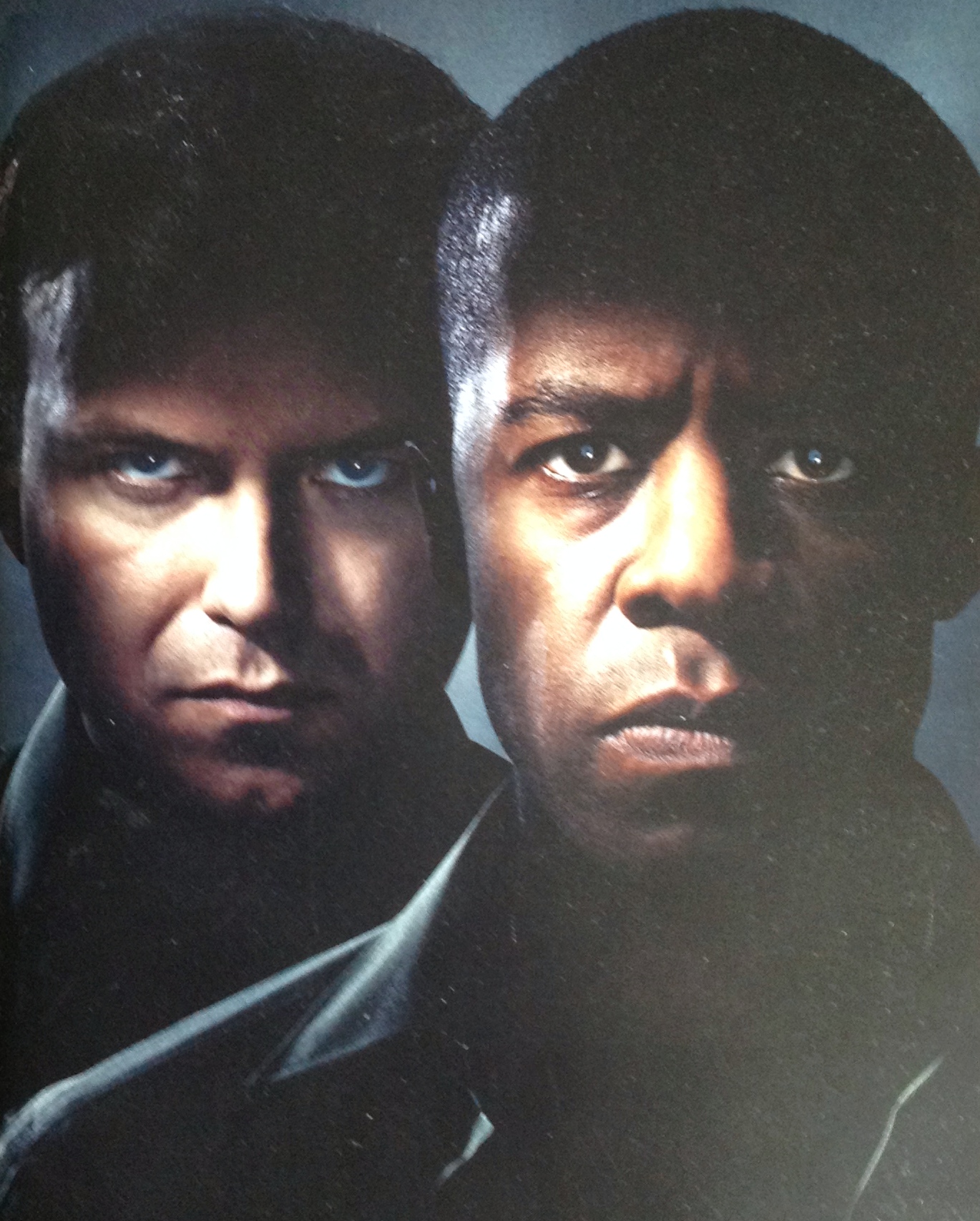 In Nicholas Hytner’s production, Cyprus becomes a modern day war zone looking something like Afghanistan and the chief protagonists are clearly defined by their class, Othello appearing as if a Sandhurst-trained officer, Iago a soldier from the ranks. Confined to an army base, the characters have little to do but idle time by gossiping, kicking around footballs by day and swilling beer by night; it is an environment in which it seems inevitable that petty resentments will fester and personal jealousies will be nurtured. Setting the play in this context proves to be a masterstroke as it gives greater clarity to all the plot developments and helps to throw light on the two great enigmas – Iago’s motivation and Othello’s gullibility. Preconceptions that Adrian Lester could be too lightweight for the title role are confounded as emphatically as suspicions that Rory Kinnear is turning into the finest Shakespearean actor of his generation are confirmed. As Iago, Kinnear gives a towering performance, smirking at his own duplicity, often standing front of stage plotting and scheming in collusion with the audience and lacing his words with sardonic humour; his delivery is so modern and true to character that it is often easy to forget that he is speaking the language of Tudor England. Relative newcomer Olivia Vinall is an endearing Desdemona, slightly built, tomboyish and vulnerable and the rest of the company is solid. There was a hitch with scenery at this performance which caused a five minute interruption near the beginning but, otherwise, the sets change smoothly from open exteriors to small claustrophobic rooms with fluorescent lighting. This is a production which exemplifies the National Theatre at the peak of its form.
Ruth Ellis, seems to have lost none of her fascination for dramatists almost 60 years after she became the last woman to be hanged in Britain. Many others, men and women, suffered the same fate, some of them even innocent, but few have stuck so firmly in public consciousness. After a slow and uncertain start, Amanda Whittington’s new play builds to a dramatic crescendo and is unequivocal in advocating that Ellis, although not technically innocent, was very much a victim. Beginning work as a hostess in a seedy Soho night club, Ellis appears as a bubbly if fragile young woman; we then see her gradually transform into a quivering neurotic, totally besotted with her secretly gay boyfriend, her body wrecked through beatings, miscarriages, abortions, drugs and alcohol. The murder she eventually commits is made to look more like an obligation than a crime, although, as the man she kills never appears in the play, we are not given the chance to understand the reason for her infatuation with him. This version of events becomes believable mainly because of a magnificent performance by Faye Castelow as Ellis. However, the play’s main weaknesses are its lack of balance and its failure to paint a wider picture of Britain at a time when rigid post-War morality codes were beginning to clash with the liberal era that was to follow. Without an understanding of the times in which the events took place, modern audiences may be bewildered as to how such a draconian sentence could have been imposed for an offence which, in the circumstances presented here, could result in little more than a reprimand in 2013.
 The Beast's Pen