A night at the circus (without animals thankfully), performed by the Nofitstate Circus group. The audience were allowed to wander around the performance area and watch trapeze artists, trampolinists, jugglers, rope climbers, tightrope walkers, etc strutting their stuff to live music. When it was well coordinated and choreographed, it provided an impressive spectacle, but, at times, the overall impact was less than the sum total of the individual efforts. Nonetheless an unusual and entertaining evening.
Archive for the ‘Theatre’ Category
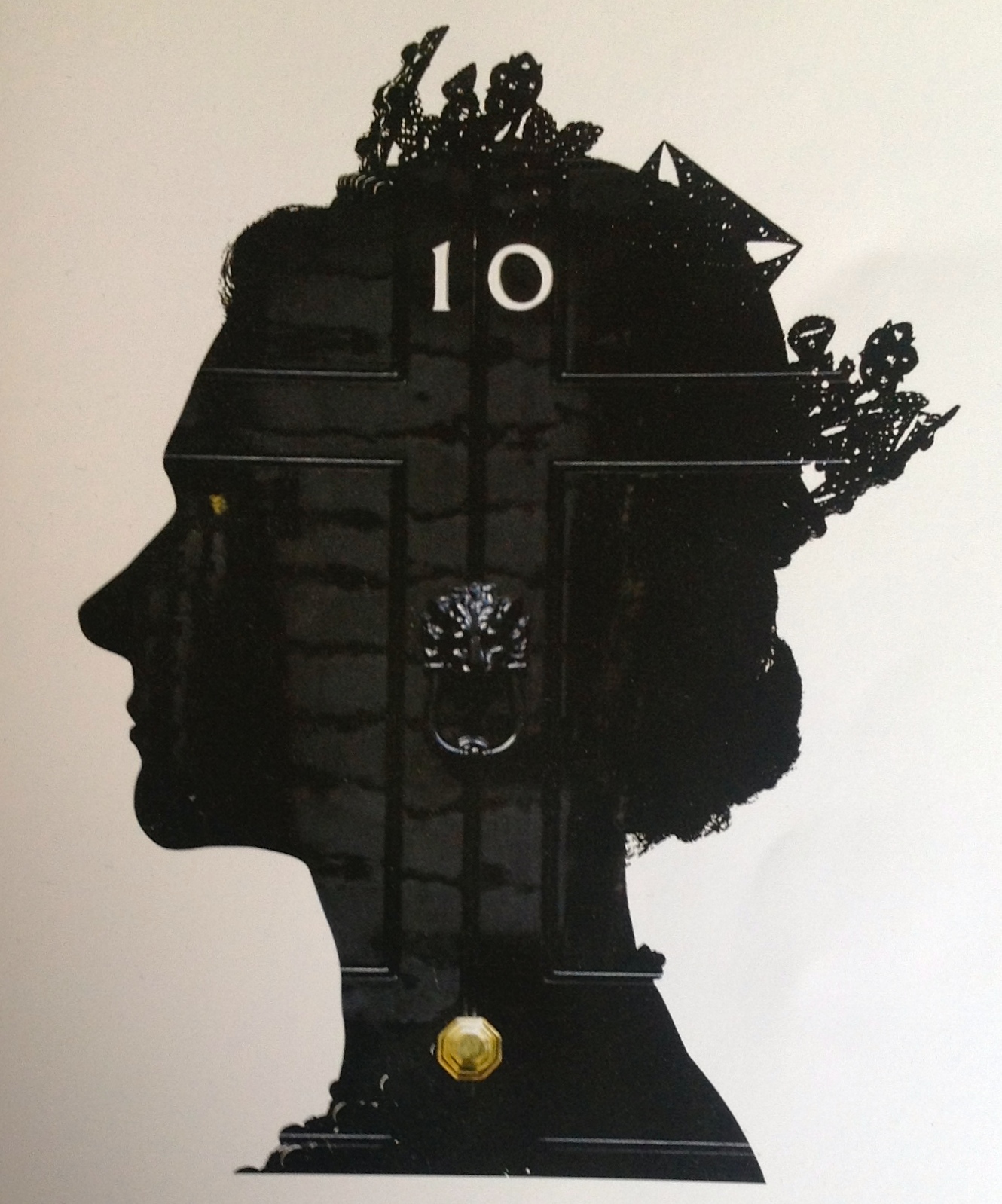 London’s hottest ticket of 2013 and it is worth at least ten times whatever price paid for the privilege of spending an evening in the company of HM (Helen Mirren) The Queen. Covering 60 years, Peter Morgan’s new play dips into the The Queen’s weekly audiences with her twelve Prime Minister (she calls them “the dirty dozen”). Not all of them appear, the most notable omission being Tony Blair who is only referred to and then with disdain. What a splendid and thoroughly deserved insult! We see Winston Churchill (Edward Fox) trying to bully the 26 year old Monarch and David Cameron (Rufus Wright) toadying to her at 86. Using many quick changes of costumes and wigs, Helen Mirren spans the ages effortlessly; but she is not offering a mere impersonation, rather an insight into the real person, showing us that she is “more than just a postage stamp with a pulse”. It is an extraordinary tour de force. The production, directed by Stephen Daldry is, at different times, mischievously funny, fiercely political and deeply moving. The comedy is largely at the expense of John Major and Gordon Brown who are caricatured by Paul Ritter and Nathaniel Parker respectively; the politics come in debates with Anthony Eden (Michael Elwyn) over Suez and Margaret Thatcher (Haydn Gwynne) over South African sanctions; the most touching scenes are those involving Harold Wilson (Richard McCabe), who is presented as the Queen’s favourite of the twelve. He is bumbling and nervous at his first audience, relaxed and playful on a visit to Balmoral and, finally, confused and distraught as The Queen becomes the first he tells that he has been diagnosed with Alzheimer’s Disease. More than just a fun evening, this is a genuinely great play that unravels the mystery of our Constitutional Monarchy, explaining to us and to the rest of the World how and why it works. The lingering thoughts after the curtain falls are how lucky as a nation we are to have Elizabeth II and how lucky the theatre is to have Helen Mirren.
This review was originally written for The Public Reviews: http://www.thepublicreviews.com
First performed in the early 1970s, this musical based on the Gospel of Matthew has become somewhat overshadowed in public perceptions by the Rice/Lloyd Webber Biblical musicals. The prospect of seeing a dated show revived by an amateur company is not normally something to set the juices flowing but, happily, this production confounds expectations on every level. Mainly this is due to the radical idea of setting it on the steps of St Paul’s Cathedral (little more than a stone’s throw from this theatre) during the Occupy London demonstrations over the Winter months of 2011/12. This new context may not be a perfect match with the show in all respects, but it enriches it with modern relevance and many delicious ironies. We see Jesus Christ as leader of a group which is challenging the Church that was founded in his name. At the time of the events, the Church was thrown into turmoil over whether its priority should have been supporting the poor and downtrodden or defending public order and its own property; this production resurrects that debate, coming down strongly in sympathy with the demonstrators. Ultimately, the constraints of the show limit the extent to which such issues can be emphasised, but they are always there as strong underlying themes. The evening begins with the set occupied by black-suited City traders who look as if they could have drifted in from one of the neighbouring bars. Gradually they are replaced by a more colourful group of demonstrators, waving their banners and the stage is strewn with garbage bins, leaflets, tents and, to stress the theme of capitalist excess, a giant monopoly board. The songs have worn surprisingly well; Day By Day is the best known, but Stephen Schwartz has adapted his lyrics and Beautiful City works particularly well in this setting. Performed with the accompaniment of a small rock band, the songs provide all the show’s high points. Godspell may have fallen out of favour because, unlike the other Biblical musicals from the same era, it is not sung through and, between musical numbers, the script often comes across like a very dreary sermon. This is a big obstacle for any director to overcome and Robert J Stanex has chosen to tackle it by harnessing the vitality and enthusiasm of his young cast to provide constant movement which distracts from some of the dullest patches. On the second night, there were a few breaks in continuity in the later stages, but, hopefully, these will be rectified as the run progresses. To have any chance of working, Godspell needs above all else to have a charismatic Jesus and Joe Penny proves well able to deliver. Skateboarding, skipping, hula-hooping and performing conjuring tricks, he leads the show with remarkable energy and his singing voice also has a pleasing tone. Dan Geller doubles as John and Judas. Many of the best performed songs are by the chorus, which harmonises well, but there are also a couple of knockout individual numbers from the supporting ensemble. To add a final irony, this production is from Sedos, a company founded by the Stock Exchange, the institution which is housed adjacent to St Paul’s Cathedral and was itself a prime target of the Occupy London demonstrators.

This review was originally written for The Public Reviews: http://www.thepublicreviews.com
Well we’ve all been there haven’t we? The dinner party from Hell! This revival of Moira Buffini’s black comedy, first seen at the National in 2002, allows us to squirm in horror at the ghastly food and even more ghastly conversation whilst staying sufficiently removed so as not have to experience it all directly; not too far removed though, as, in this small basement space, the audience is almost sitting around the table with the guests. The hostess is Paige who went to finishing school, pocketed an inheritance, married and thereafter has done nothing worthwhile; she describes the dinner party as her work of art and she presents herself like a cross between Nigella Lawson and Cruella de Vil. She is throwing the party for the friends of her husband Lars, a City trader turned philosopher, to celebrate the publication of his book, a pretentious self-help guide for the aspirational. In reality, the party is Paige’s last throw of the dice in a rapidly failing marriage, but a waiter (dumb obviously) has been hired and “surprise” dishes have been prepared for each course, so what could go wrong? The first sign of disaster is the arrival, unexpectedly alone, of Wynne, an artist who has just been dumped by her partner. She seems set on rekindling her past relationship with Lars and he is disinclined to resist. The other invited guests are Hal, a biochemist reluctant to reveal details of his work and his wife, Sian, a tv news presenter (or, as she contemptuously boasts, “thinking man’s crumpet”); this couple is also beset by marital difficulties and haunted by the spectre of Hal’s suicidal former partner. In the early stages, the hosts and all the guests talk pseudo-intellectual claptrap which is understood neither by the speaker nor the listeners, whilst they consume sufficient alcohol for us to know that they will regret it later. Gradually, both the party and the central relationships begin to fall apart. The catalyst comes with the arrival of Mike, a van driver who has crashed into the front gate in the fog. Has he just burgled the house next door or is he merely delivering cakes? We are never sure. However, he is different because he is perceived as from a lower level of society. In return, he looks at the others firstly with envy and eventually with disdain as he comes to see the superficiality of their lives. Wynne makes the hollow protest that something vague in her past makes her “almost working class”, the others view Mike as an amusing novelty. It is in this section that the play has its clearest focus, as it scrutinises the class structure of the post-yuppy generation and wittily lays bare many myths. The first production by the newly-formed Rose Bridge Theatre Company, this is an ensemble piece featuring actors who are all relatively new to their profession and they attack their roles with clear enthusiasm. They are Benedict Chambers, Lara Frances, Stephanie Hampton, Mickey Hope, Ben Lewis, Felicity McCormack and James McGregor. Adam Morris’s direction is fluid, making excellent use of the confined space. The script is packed with very funny lines, but the play covers what has become familiar territory in the decade or so since it was written and, for this reason, it may have lost some of its edge. The characters come across as more stereotypical and the situations more predictable now than perhaps they did in 2002 and the conclusion which, as Paige bemoans, comes before the cheeseboard, seems contrived and lacking in purpose. However, this is an entertaining 90 minutes, a night out that is much preferable to attending one of these events for real.
Vanessa and Virginia*** (Riverside Studios Hammersmith, 28 March 2013)
Posted: March 29, 2013 in TheatreThis review was originally written for The Public Reviews: http://www.thepublicreviews.com
Virginia Woolf has been the subject of many books, plays and films. She was a gifted writer who nurtured progressive thoughts in her own day, but it is more her inner turmoil that continues to intrigue us now. Elizabeth Wright’s play, adapted from a novel by Susan Sellers, examines Virginia’s relationship with her older sister Vanessa Bell, herself a painter of considerable note. Both were members of the influential Bloomsbury Group. It is produced by Moving Stories, a company founded in 2010 by Emma Gersch, who is the play’s director. As played by Kitty Randle, Vanessa is the more practical of the two, loving and protective of her sister, but capable of misguided jealousy. Alice Frankham’s Virginia is, at times, childishly capricious, aware and boastful of her writing talent but, at other times, stricken by depression. The sisters are bound together inextricably but they cannot connect fully with each other and they are never in complete harmony. Vanessa paints a portrait of Virginia and notices that the expression on her face is blank; she then realises that this is how she actually sees her. The events in the play span some 50 years from the sisters’ childhood to late middle age and they encompass three wars, many family bereavements, marriage, and mental illness. Vanessa has an open marriage but is tormented by her lovers’ infidelities, whilst Virginia laments that her mental health bars her from motherhood and restricts her freedom. The two characters appear in scenes together and reading correspondence to each other when they are apart. Other characters are referred to frequently but they never appear, many events are described but not enacted. This gives the advantage of ensuring that the focus stays firmly on the sisters, but it also imposes a structure which limits the play’s dramatic impact. When the sisters are together, there is chemistry that yields real tension, but when they are apart, there is no drama, just words and it stretches the considerable talents of these actors to hold the attention of the audience at these times. Kate Unwin’s set uses pastel coloured curtains as a backdrop and creates a Bohemian feel with beads, parasols and assorted trinkets overhanging the stage and the audience. Jeremy Thurlow’s piano music complements the play, being melodic but unobtrusive. This is an accomplished production of a play that provides an interesting and, for the most part, absorbing insight into two fascinating lives.
This review was originally written for The Public Reviews: http://www.thepublicreviews.com
Staged by the Huddersfield based Dark Horse company, a leading vocational trainer of actors with learning disabilities, this new family comedy with music is written by Vanessa Brooks. The family in question is a single mother with two grown sons; the older, Kit, faces a career crisis and the younger, Spencer, has learning disability and defines himself by his inability to sing. The family is extended by a neighbour, Bonnie, who is infatuated with Kit and dedicated to her mission of teaching Spencer to sing. The play centres on Spencer, who is on stage almost throughout, staying calm and rational as he observes the others tackling the crises in their lives. His life is depicted as much simpler than the others and we see the story unfold through his eyes as he strives to achieve his personal goal of singing in a talent contest at the Royal Albert Hall, judged by Amanda Holden. Spencer is played by Joe Sproulle who (we are told) himself has learning difficulties. He exudes charm and he certainly knows how to work an audience. He also has superb comic timing and generally gives a confident, very professional performance, showing no signs of buckling under the pressure of this huge role. The three non-learning disabled actors, Alwyne Taylor, Heather Dutton and Richard Maxted, provide excellent support. The set is colourful and brightly lit, whilst a back screen shows old photographs and amusing computer-generated images. The title is drawn from that of the hit radio programme of the 50s and 60s, and tunes of the sing-along variety from that era and earlier provide the music for the show. The songs are simple and so too is the script, never challenging the audience even though the production often challenges our preconceptions. However, simplicity is its greatest asset as it serves to remind us how we all tend to make our lives much more complicated than they need to be. This show is warm and joyful, a real pleasure.
This production originated in Leeds, so staging it within a mile of Shepherd’s Bush really is the equivalent of taking coal to Newcastle. The show consists of four episodes from the tv series, embelished with some rather weird dance routines to 60s pop songs. Some considerable effort seems to have been put into it, the set is admirable whilst Mike Shepherd as Albert and Dean Nolan as Harold are both true to the originals, without resorting to outright impersonations. However, it all seemed pointless and completely unfunny to the extent that it became difficult to understand why the tv show was ever a success. Maybe it is just the passage of time that has made scripts that were once thought brilliant come across as so feeble. Or maybe it only ever worked because of the chemistry between the tv actors. In any event, I could not connect with it on any level and left at the interval. For the sake of those who stayed, I hope that the second half was better.
 In 1931, Peter Llewelyn Davies, in his mid-30s, met an 80 year old Alice Hargreaves (nee Liddell). Both were soured and disillusioned by tragedies in their lives, but they had one other thing in common. As children, they had been the inspirations for great fictional characters, Peter Pan and Alice in Wonderland. Drawing from this real life meeting, John Logan’s achingly beautiful new play expounds on the themes of adulthood and childhood, ageing and staying forever young, reality and fantasy. The two leading roles seem as if they could have been written for Ben Wishaw and Judi Dench, both are so perfect and so utterly magnificent. In flashback sequences, Derek Riddell (as JM Barrie) and Nicholas Farrell (as Lewis Carroll) are also excellent. Michael Grandage’s production is slick, the sets find Neverland in an Edwardian theatre and Wonderland in a vast library. It is an evening of superb writing, wonderful acting and visual splendour. West End theatre does not get much better than this.
On the surface, this American play by David Auburn is written to the template for the perfect Broadway hit; two hours long, one set, four actors, slightly intellectual but not too challenging, dashes of romance and sentimentality, etc, etc. In fact, it is in many ways much too perfect, being so neatly structured that it reaches the point where it feels too contrived to ever be really convincing. Dealing with a woman who inherits a genius in Mathematics from her father who had also suffered from mental illness, it is nowhere near as clever as it seems to think it is. That said, this is a fairly solid production which includes an electrifying performance from Mariah Gale. So the evening is gripping and entertaining while it lasts but there is not much to think about afterwards. Like a chocolate souffle, tasty but lightweight.
This review was originally written for The Public Reviews: http://www.thepublicreviews.com
Neither tragic nor comic and only loosely a history play, this has become one of Shakespeare’s least performed works and it is more than a little surprising to find it above a pub with a cast of only five. The Pistachio Choice company has already staged Pericles and now turns to this as the second in its “lost and found” season, describing it as the Bard’s “most famous unknown play”. Set in what seems like a farm cottage, the production has a rural feel which suits the text. The plot concerns an ancient British King, Cymbeline whose daughter, Imogen has secretly married Posthumus, whilst his wicked Queen is plotting for her son by a former marriage, Cloten to accede to the throne. Tricked into believing that his wife has been unfaithful, Posthumus sets off for Wales, pursued by Imogen, and encounters Cymbeline’s two long lost sons. Similar to The Winter’s Tale, the play starts out as heavily dramatic but mellows considerably as it progresses. Inevitably each actor plays many roles, sometimes cross-dressing, using nothing more than changes of jackets, hats or accents to distinguish between them. With a plot that is more than a little convoluted, any struggle to recognise characters ought to have made the production utterly incomprehensible yet, strangely it has exactly the opposite effect and there is more clarity than might often have been achieved by a 30-strong company at, say, Stratford. There are even unexpected bonuses; when Imogen mistakes the dead body of Cloten for that of her missing husband, it is totally believable because both are played by the same actor. Once the audience has got over early problems with identification and embraced the actors’ swift character changes, it all becomes rather fun, to the point that an actor can be playing two characters in the same scene without impairing the impact of the drama. Very considerable acting skills are needed to pull all this off. Those responsible are: Ruth Rogers, Jerome Thompson, Caitlin Thorburn, Scott Wilson-Besgrove and Tim Wyatt. Shakespeare’s plays have survived for 400 years and are still providing entertainment and still proving relevant to modern life. This vibrant production exemplifies the benefits of re-imagining the plays and adapting them to new surroundings and lifestyles. They do not need to be seen only on the grandest stages with huge companies; pared down, as here, they are all about story-telling and glorious language, qualities that will be equally valued in another 400 years. At the end, Cymbeline looked rather a good play and it seemed curious that it should have become neglected. For Pistachio Choice, this is mission accomplished.
 The Beast's Pen