Archive for the ‘Theatre’ Category

Book, music and lyrics: Kevin Murphy and Laurence O’Keefe      Director: Andy Fickman

⭐️⭐️⭐️⭐️

When Veronica, the 17-year-old heroine of Heathers The Musical, gets trapped in a cow field, confronted by two threatening thugs, we feel inclined to ask why she does not pick up her mobile ‘phone. But this is 1989 and we quickly realise that curses can also be blessings. At least Veronica’s school life of intolerable peer pressure and savage bullying is not being made infinitely worse by social media.

Technology aside, nothing much in school life seems to have changed in the near 30 years since the release of Heathers, the cult hit film on which this musical is based. At Westerburg High School (“home of the Rottweilers”) in deepest Ohio, good-hearted Veronica is taunted, by the three “popular” girls, all named Heather. She decides at first to ingratiate herself with their clique, but, when a new kid, brooding, damaged Jason “JD” Dean, arrives, he becomes her boyfriend and they combine to adopt a different approach. They poison the principal Heather, making it look like suicide, and embark on a killing spree to take out the other school bullies.

The show, first seen in New York, is an audacious cross between Grease and Arsenic and Old Lace, making the audience root for the killers against the bad guys, their tormentors. As in all the best black comedies, there are long spells which leave little room for raising moral questions. The fact that Kevin Murphy and Laurence O’Keefe are credited jointly with the book, music and lyrics signals a unity of purpose in the show’s creation which is confirmed when the elements are seen to knit closely together, the song lyrics propelling the story and the music underpinning it all. Andy Fickman’s inventive, fast-paced direction and Gary Lloyd’s fun-filled choreography complement their work perfectly.

Most of the actors playing the school kids may have only distant memories of being 17, but we must pass over that, because this superb company is bursting with raw energy. Carrie Hope Fletcher is dynamite as Veronica and Jamie Muscato, both romantic and sinister as JD, matches her all the way as he transforms from sociopath into psychopath. The three Heathers (Jodie Steele, T’Shan Williams and Sophie Isaacs) are as malevolent as anything in Macbeth, with their All-American male equivalents (Christopher Chung and Dominic Andersen) imposing a reign of terror and looking splendid in their matching underpants.

David Shields’ split-level set design is simple enough, but his costumes brighten up the show, made even more garish by Ben Cracknell’s lighting. Everything needs to be in the worst possible taste, including the big song and dance sequences, which are built around, for example, the reading of a suicide note and an attempted gang rape. As the show becomes more and more outrageous, it becomes more and more inspired and the interval arrives with the audience yelling for more.

The second half begins in a similarly irreverent vein with a bereaved dad (Jon Boydon) defying homophobic jibes and belting out I Love My Dead Gay Son! in the style of a Baptist preacher, supported by a rousing gospel choir. However, soon after this, the show starts to back-pedal and the bubble around the story’s warped vision bursts, punctured by conventional morality. Now JD becomes recognisable as the type of gun-wielding menace that has, in reality, plagued American communities for decades. Once such thoughts have been allowed to enter our heads, what  had been a delicious black comedy edges towards insensitivity and the still lively musical numbers feel like sugar coating for a cyanide pill.

Loss of nerve in the final quarter is, of course, a flaw inherited from the show’s source material, but this does not need to detract too much from the deadly delight of what has gone before. With several shows scheduled for closure, the West End currently needs a new smash hit musical and this could well be it.

Performance date: 10 September 2018

This review was originally written for The Reviews Hub: http://www.thereviewshub.com

Wasted (Southwark Playhouse)

Posted: September 13, 2018 in Theatre

Music: Christopher Ash      Book and lyrics: Carl Miller      Director: Adam Lenson

⭐️⭐️⭐️⭐️

If the gentle sounds of Chopin would fit well with the novels of Jane Austen, what would suit the Brontés? Iron Maiden? The proposition is carried forward in this new musical, telling the story the Bronté siblings and setting it to a pulsating rock score which reflects the harshness of life in Victorian Yorkshire, struggles against poverty and disease and an unforgiving moorland backdrop.

There is already an established link between the Brontés and the rock world and Siobhan Athwal’s appearance playing Emily, with wild dark hair and eccentric movements, makes a reference to it that seems unlikely to be coincidental. 40 Years ago, when Kate Bush was recording Wuthering Heights, a show like this might have been developed as a concept album and, now in 2018, we could have been seeing a concert performance of that album. Perhaps director Adam Lenson had this thought in mind for his staging, the four performers, dressed in drab period costumes, all using hand-held microphones on a wooden platform with the audience on three sides of them and a four-piece band on the fourth.

Natasha Barnes gives a powerhouse performance as the gritty Charlotte, last survivor of the siblings and narrator of the story. “F*** off, I’m writing Jane Eyre” she yells at Anne, signalling her determination to succeed as a writer. Yet even she is forced to marry a lowly curate, the very thing that she would not allow the heroine of her most famous novel to do. Athwal’s Emily is a brooding, tormented genius who insists “no one must know that Emily Bronté writes anything”. Molly Lynch’s Anne is quieter and more sensible, fretting over the impossibility of finding a husband and thereby escaping the family’s parsonage home in the town of Hawarth. Their father, curate Patrick Bronté is not seen in the show.

There is comedy and pathos in Matthew Jacobs Morgan’s portrayal of Branwell, the only brother. A failure as an artist, unable to hold down a job, a drunkard and a womaniser, he has sad delusions of grandeur, likening himself to Napoleon. “Branwell Bronté had sisters; who would have known?” he proclaims, seeming to recognise the irony in the words as soon as he speaks them.

Carl Miller’s book and lyrics are more concerned with establishing and developing characters than with driving forward a strong central narrative and each song becomes the heart of an episode in the story. Christopher Ash’s throbbing hard and soft rock score demands a second hearing (bring on that concept album) and, even if some of the singing is uneven, Joe Bunker’s band does full justice to the music, with himself on keyboards, Kat Bax on bass, , Nathan Gregory on drums and Isabel Torres on guitars.

As was common in the 19th Century, the three women writers all adopted male pseudonyms. Talk of “the tyranny of patriarchal Britain” occurs repeatedly and an overlong ending emphasises the story’s feminist themes, leading into the title song which bemoans lives wasted – Branwell’s obviously, but also, implicitly, those of oppressed and undervalued women everywhere. The songs give the show a thrilling energy and even if this is not yet a fully-formed musical, it is certainly not an evening wasted.

Performance date: 12 September 2018

This review was originally written for The Reviews Hub: http://www.thereviewshub.com
Writer: Jo Clifford      Director: Paul Miller

⭐️⭐️

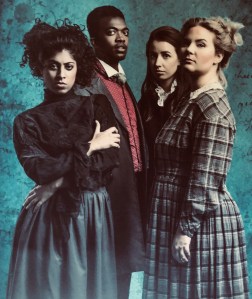
Marrying the styles of restoration comedy and 1950s absurdism, Paul Miller’s revival of Jo Clifford’s Losing Venice is a curious venture that feels out of place and out of time. The play premiered at the 1985 Edinburgh Fringe Festival, where, perhaps, it passed as frivolous fun, but, put under harsher scrutiny here, it comes up as fatally overblown.

Clifford picks the timeless targets of macho posturing and futile imperialism for her satire and sets the first part of the play in a shambolic dukedom during Spain’s Golden Age. The Duke’s resident poet, Quevedo (Christopher Logan) pens verse that no one ever reads or hears, while his lusty servants Pablo (Remus Brooks) and Maria (Eleanor Fanyinka) make love in the open air for lack of any inhabitable private rooms on the estate. In contrast, the Duke himself (Tim Delap) is unable to consummate his marriage to the Duchess (Florence Roberts), but then her pink wig, shaped like a chimney brush, could crush any healthy man’s libido.

Not to worry, there are other ways in which the Duke can prove his manhood. “It is peace…that underlies our ills…a woman’s invention. Peace rots the soul…” he proclaims before seeking out the King to solicit a mission of overseas conquest. Clifford’s humorous writing combines original wit with tired innuendo and flashes of lyricism. The first act may be flimsy, but it is kept afloat by some adept comedy and a vague sense of purpose.

When the Duke, Quevedo and Pablo arrive in Venice, via an encounter with pirates, at the beginning of Act II, a sinking feeling sets in and what follows becomes entirely shapeless. Clifford muddies the waters further by throwing in mystical elements, almost as if she has run out of ideas for where to take the action. Eventually, the Duke declares to an empty stage: “I have saved Venice. Doesn’t that mean something?”, thereby highlighting the irony in the title. At 90 minutes plus interval, at least the production is mercifully short.

Miller is a director who can usually be relied upon to extract strong ensemble performances and this gift provides the production with its biggest consolations. Delap’s boisterous nobleman, Logan’s prissy poet and Brooks’ put-upon manservant are all highly entertaining and David Verrey, first as the reeking Spanish King and then as the exhausted Venetian Doge, steals scenes in both acts. They are all worth better than this

Performance date: 11 September 2015

This review was originally written for The Reviews Hub: http://www.thereviewshub.com

Dust (Trafalgar Studios)

Posted: September 8, 2018 in Theatre

Writer: Milly Thomas      Director: Sara Joyce

⭐️⭐️⭐️

A report produced in August 2018 by the charity The Children’s Society found that 22% of 14-year-old girls in the United Kingdom admitted to having self-harmed. Alice in Milly Thomas’s play, a 75-minute monologue, was a little older, but her body still shows the scars from self-inflicted wounds as it lies on a slab in a morgue.

Dealing with suicide, Dust is far removed from the idea of James Stewart teetering on the brink and deciding that he has a wonderful life after all. When the play begins, there is no way back for Alice, she has already been dead for three days. In the afterlife, she looks down on the shell that she once inhabited, still obsessing over body image and she sees her father hugging her corpse with the affection that he had never shown to her when she was living.

Thomas herself plays Alice as a rebellious, outwardly assured young adult who views her impending death as an adventure as well as an escape. Almost every word is tinged with sarcasm as she looks critically at her life from the perspective of an outsider. She sees herself lying in bed in the early hours scrolling through Instagram, she drinks, takes anti-depressants and recreational drugs and partakes in meaningless sex acts. Her family is typically, rather than exceptionally, dysfunctional, but Thomas’s point is that it is the fact that there seems so little out of the ordinary about Alice is what makes her story so alarming.

As writer and performer, Thomas has to work hard to prevent the play from coming across like a Government health warning. She does this with a constant flow of gentle, occasionally morbid humour, particularly strong when Alice finds fault with her own funeral. “Think of coffins like wedding dresses” insists an insensitive, fashion-conscious aunt, image being paramount until the end and even after it. 

Thomas points to no single cause for Alice’s mental health problems, the issues emerging as jumbled from her tangled mind. Low self-esteem, peer pressure, social media, declining moral standards and lack of human warmth all come into the frame as her solitary figure is reflected in three full-length mirrors in Anna Reid’s simple set design.

Director Sara Joyce’s production has a jerky, nervous feel, underpinned by throbbing music, and Jack Weir’s stark lighting helps to project the image of a life in torment and an afterlife in solitude. The play offers little solace and, for all its humour, Dust cannot avoid being a discomforting experience.

Performance date: 6 September 2018

This review was originally written for The Reviews Hub: http://www.thereviewshub.com

Photo: Richard Southgate

This article was originally written for The Reviews Hub: http://www.thereviewshub.com
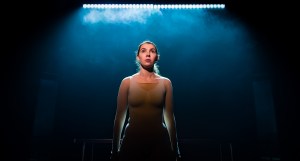
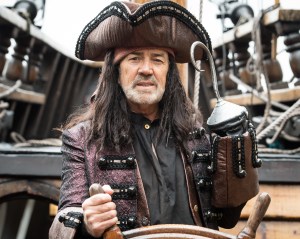
With Summer barely over, plans are already underway at Richmond Theatre for their annual Christmas extravaganza, which, this year, will be Peter Pan with television sitcom favourite Robert Lindsey as Captain Hook and rising musical theatre actor Harry Francis as Peter. Coming straight from a photoshoot on the Golden Hind, the two stars took time out to chat with The Reviews Hub’s Stephen Bates.

Harry is part of the Francis acting dynasty. Grandfather Raymond was Detective Chief Superintendent Lockhart in hugely popular television police dramas of the ‘50s and ‘60s and father Clive has had prominent roles on stage and screen for several decades. “I still haven’t worked with my dad, I would love to…” he says, smiling ruefully. After a year in the West End in The Book of Mormon, he spent last Christmas playing Tom Thumb in the Menier Chocolate Factory production of Barnum. This year, he is looking forward to spending what little time he has off work at his family home near Richmond.

Asked if he has taken flying lessons in preparation for playing Peter Pan, he replies: “I haven’t for this, but I have flown a few times before. This is the second time I’ve played Peter…in panto nine years ago… and also, as a child I did Chitty, Chitty, Bang, Bang and, aside from flying in the car, I had a moment when I flew solo…I love it, it’s so much fun..you do really feel like you’re flying after a while, the more you lose the fear of it. That and sword fighting are the things I can’t wait to do again”.

Harry claims that the little boy who didn’t grow up is “completely me; there are photos of me as a kid in the park in a Peter Pan outfit and I grew up with the Disney cartoon and with  Hook, which is a fantastic movie, I was obsessed for a while, it’s just such a magical story; I remember my parents taking me to the National Theatre to see the play, it must have been Daniel Evans playing Peter…I think panto is fantastic…the best thing about it is that it’s the first chance for many children to come to the theatre…” Harry enthuses, adding “nowadays when children are introduced to their mobile phones from early on and they have i-pads…to have someone there and talking directly at you…it’s so important”.

Robert’s popularity springs largely from the television sitcoms Citizen Smith and My Family, but his other television work includes the gritty dramas of Alan Bleasdale, playing Edmond opposite Laurence Olivier’s King Lear and even an appearance as Tony Blair. In theatre, he has two Olivier Awards and one Tony Award to his credit, with roles ranging from the leads in musical comedies to Hamlet and, before heading to Richmond, he is starring at the Theatre Royal Bath in Terence Rattigan’s In Praise of Love. 

Sitting back in a comfortable armchair, being interrupted by calls from his wife about a missing dog (happily later found) he recalls: “as an actor, when I was at RADA, I made the decision that I was going to be as diverse as I possibly could; we’re all pigeon-holed, all actors; when you do a sitcom for a long, long run, like I did on (My Family)…it was very comfortable, it enabled me to do all the theatre jobs that I wanted to do, but it’s slowly slipping out of people’s consciousness now; I’m just thrilled (about the panto), it’s the perfect pantomime, the perfect theatre, the perfect cast”.

For all the diversity in his work, Peter Pan, will mark Robert’s panto debut. “People seem to think that pantomime is some kind of down level from things that you normally do” he explains, adding “well I’m a great admirer of people that do pantomime; if they do it well, it’s brilliant, it’s a great British tradition and it ain’t easy, it’s graft. I used to go and watch my wife who was a principal boy” he remembers and jokes “I fell in love with a boy!”

Does he see panto as important for introducing children to theatre? “Yes, oh my goodness and also for adults to have a Christmas treat” he replies and then expresses concern about the controversy which erupted last year over a panto thought too lewd. “That’s the danger” he warns, “I went to see one last year when I felt exactly that, a lot of the jokes were going over the kids’ heads”.

“The reason I’m doing this is that it is Peter Pan and I just love the story and also…” he points to the line on the poster that shows Great Ormond Street Hospital as a beneficiary and adds: ”they saved my daughter’s life when she was..four, the most amazing place, so I just feel that it’s a nice thing to be doing at Christmas”. He recalls “when I was ten, I went to see (a panto) at Nottingham Theatre Royal, I think it was Harry Worth; I love variety, I’ve always admired people who can get up and sing, dance, somersault and so on”.

With a swashbuckling Captain Hook under his belt, Robert’s phenomenally diverse career will have taken yet a further turn. So what next? Bearing in mind that Ian McKellen went from playing dame in pantomime to his current King Lear in the West End, can we expect a Lindsey Lear at some time in the future? He smiled, but refused to be drawn on that one.

Photos: Craig Sugden

Composer and lyricist: Howard Goodall      Writer: Nick Stimson      Director: Bronagh Lagan

⭐️⭐️

Some shows have no luck at all. In the same week that the arts pages of the national press have, along with The Reviews Hub, been heaping extravagant praise on the National Theatre for its groundbreaking pro/am musical version of Shakespeare’s Pericles, along comes a youth company with another new musical based on one of the Bard’s plays. It is often said that Winter follows too soon after Summer.

The showcasing of emerging acting and singing talent is always a good thing and, on the whole, Youth Musical Theatre UK delivers in that respect. Their problem is the material which they have to work with. If we are being asked  to judge Howard Goodall and Nick Stimson’s adaptation of Shakespeare’s The Winter’s Tale as a work in progress, then, on the evidence of this production, it’s chances of progressing further look slim.

Stimson’s book transfers the action to the former Soviet Union in the Cold War era, a place that is at least more wintery than Shakespeare’s Sicilian setting. Beyond that, his simplified, prosaic and sweetened version does a no better job than did the Bard in making sense of the plot, a violent tragedy which turns into a romantic comedy. Here, in the first act, Governor Leon (Will Hopkins) erupts in a jealous rage at the perceived infidelity of his wife Comrade Ekatarina (Izzy Mackie) and comes close to destroying all around him.

To begin the second act, the action switches to a ‘60s hippy commune and designer Libby Todd’s austere sets, adorned only by dark red banners, are replaced by a a bright orange drape, with the company appearing in multi-coloured costumes. We are now on the way to reconciliation and redemption, culminating in a scene more ludicrous than in the original, including, in a departure from Shakespeare, Leon’s son rising from 16 years on his sick bed, looking exactly the same as before.

The performances are inconsistent, the best actors not being the best singers and vice versa. Hopkins is not the first actor to have fallen at the hurdle of making the erratic actions of Leon (or Leontes) credible, but he is a decent singer. Mackie comes closer to ticking both boxes and, as the story unfolds, Ines Mazdon-Elas (as Perdita) and Alistair Oakley (Luka) make an appealing pair of young lovers, possibly helped by being close to their characters’ ages.

Goodall’s score is melodic, filled with either joy or melancholy, but its failing is that there is too little variety for a story which has the sharpest of contrasts. In the first half, the music carries no sense of the fury and injustice that the drama demands. Goodall’s compositions work best for chorus singing, at which the YMT singers excel, as in the splendid second act opening, but, even then, the song is one that could have come from almost any musical, with little direct relevance to this story.

Perhaps most disappointing is the feeling that so much of Bronagh Lagan’s production lacks life, not helped by Phyllida Crowley-Smith’s dull choreography, some of the dancing resembling a village hall aerobics class. It pains to dishearten young performers, but YMT deserves better than this.

Performance date: 30 August 2018

This review was originally written for The Reviews Hub: http://www.thereviewshub.com

The Goons Take to the Road

Posted: August 30, 2018 in Theatre

This article was originally written for The Reviews Hub: http://www.thereviewshub.com

In the days before television gained its grip on popular culture, British families would gather around their wireless sets and listen to programmes such as The Goon Show. It is said that Prince Charles was an avid fan. Now, well over half a century later, a new version of that show has just been launched and is about to embark on a 32-venue United Kingdom tour. The Reviews Hub’s Stephen Bates went along to the launch at the Museum of Comedy in London to find out more.

The 263 episodes of The Goon Show ran between 1951 and 1961, spanning an era of bleak post-War austerity during which laughter was a much valued commodity. John Osborne was writing serious plays about Britain’s crumbling class system and its dying empire, but against the same backdrop, the Goons were turning out vintage comedy that would lighten the gloom and influence succeeding generations. Their distinctive brand of anarchic, surreal humour struck a chord with listeners in the era in which it originated, but strong traces of it can be detected in Monty Python and other landmark comedies since.

The touring show is made up of three classic episodes, using original scripts written by Spike Milligan, also one of the three main original performers. Norma Farnes, Milligan’s assistant for 36 years and this production’s Producer, spoke movingly of him at the launch and related anecdotes about the show’s origins. She had compiled a shortlist of what she believed to be Milligan’s favourite Goon Show episodes and director Julian Howard McDowell chose his personal favourites, coming up with remarkably similar results. This made the choice of episodes for the show an easy one.

Like Milligan, other Goon Show stars were to become national treasures. The jocular Welshman Harry Secombe will be played by Clive Greenwood and Peter Sellers, the great film comedy actor who was perfecting his craft before being lured away to Hollywood, will be played by the director himself. Farnes claims that she was moved to tears when she first heard Colin Elmer’s voice as Milligan. Tom Capper will play the lesser known Wallace Greenslade and musical interludes on the tour will be provided by the duo Java Jive.

Although the show will not deviate from the original scripts, McDowell is keen to stress that he aims to make it a unique theatrical experience, transporting the audience back to the Camden Theatre, from which the original shows were aired. He will be adding a strong visual element, based upon stories from the day and will be finding much fun from the bizarre sound effects, such as the famous sock full of custard. The tour promises to provide a trip down memory lane for the older generation and a hilarious eye-opener for the rest.

Pericles (National Theatre, Olivier)

Posted: August 27, 2018 in Theatre

Writer: William Shakespeare      New version: Chris Bush      Music: Jim Fortune      Director: Emily Lim

⭐️⭐️⭐️⭐️⭐️

Pericles, Prince of Tyre is not William Shakespeare’s best play, nor his best-known play and, according to many scholars, it is not wholly his play at all, but here, in the unlikeliest of circumstances, a case can be made for it being one of his most entertaining plays.

The production is the inaugural work of Public Acts, “a nationwide initiative to create extraordinary acts of theatre and community”. To bring it into being, the National Theatre has reached out into the community to find present and future theatre enthusiasts from all sections and nurtured them to perform on the hallowed boards of the Olivier stage alongside professional actors. Cast numbers run well into three figures. Old and young, fit and disabled and a wide range of ethnicities are represented, resulting in a show that is thrillingly diverse, wonderfully inclusive and entirely exhilarating.

Unfortunately, a malfunctioning flying maypole caused a 20-minute interruption to the opening performance, bringing an on-stage apology from Rufus Norris. If the loss of momentum disheartened the performers, they failed to show it, picking themselves up and carrying on like the true pros that some of them are.

“A nation’s worth is how they treat strangers…” Chris Bush’s adaptation tells us as her script misses no opportunities to pick up on and highlight themes that are relevant to modern Britain. The young Prince Pericles (Ashley Zhangazha) feels that he has outgrown his home island of Tyre and sets sail, arriving first in Tarsus, where he divests himself of his wealth to the impoverished people. He moves on, surviving a shipwreck, to Pentapolis where he meets and marries Princess Thaisa (Naana Agyei-Ampadu). Their daughter, Marina (later played by Audrey Brisson) is born at sea and the story follows Pericles’ journey back to his home in Tyre and to fulfilment.

Bush’s version condenses and streamlines the original play considerably, adopting the style of a book for a big musical, which is exactly what the show becomes. The simplicity of the storytelling, the lyrics and Jim Fortune’s lovely melodies frequently brings reminders of the hit Rice/Lloyd-Webber show Joseph and the Amazing Technicolour Dream Coat. Audiences can be assured that there is no more need to be afraid of Shakespeare than of the Old Testament. Of necessity, this huge production has only a limited run, but surely the show will have a life beyond it.

The stage is often full to overflowing and awash with colour. Some of Fly Davis’ costume designs would not be out of place in Mamma Mia!, while director Emily Lim and choreographer Robby Graham must have had nightmares over potential traffic jams. The very nature of this production could have led to expectations of something makeshift and rough around the edges, but what we actually get, maypole excepted, is a show that is as slick and spectacular as any in the West End, rich in quality and with flat-out, storming production numbers staged to near-perfection. Extraordinary theatre indeed!

Performance date: 26 August 2018

This review was originally written for The Reviews Hub: http://www.thereviewshub.com
Writer: Cora Bissett      Director:Orla O’Loughlin

⭐️⭐️⭐️⭐️💫

Sugar and spice and all things nice? In this case, not exactly; once a rock ’n’ roll singer, Cora Bissett looks to be made more of grit and graft and sheer resilience as she crashes into the rocks, rolls with the punches and always bounces back to get on with her life.

Bissett, now an actor and theatre maker of repute, was born in Glenrothes, Fife and her account of her teenage years is triggered when she is clearing her parents’ loft in 2015 and rummaging through memorabilia. She asks herself what she is made of, how she has become what she is today and she takes us with her on her journey of discovery. Her story, told with humour and in mildly self-deprecating style, begins in 1992 when she dreams of emulating Patti Smith and nears its end over 20 years later when her father, now suffering from dementia, mistakes her for Dolly Parton. 

The young Cora answers an ad to become lead singer in a rock band and gets whisked away to London, receiving her free in-flight bottle of wine with glee. She becomes prey to sleazy management, parties wildly, tours with a then little-known band named Radiohead (“…so goddamn…posh…I don’t think they’re goin’ anywhere”) and brushes with Blur.

Director Orla O’Loughlin keeps the production simple, having Bissett front-up a four-piece band made up with Susan Bear, Simon Donaldson and Grant O’Rourke, who play the instruments and share all the supporting roles. Bissett’s music enriches the story, ranging from angry rock anthems to soulful ballads of yearning. Many will leave the show with the pressing question on their lips: “when is the album due out?”

The joys and heartbreaks of Bissett’s private life are not overlooked and there were times during this performance when she was, understandably, overcome with emotion. We share her feelings. We have heard stories of rises and falls in the music business many times before, but never quite like this, never so personal nor with such endearing honesty and raw passion. 

Performance date: 8 August 2018

This review was originally written for The Reviews Hub: http://www.thereviewshub.com
Writer and performer: David William Bryan

⭐️⭐️⭐️⭐️

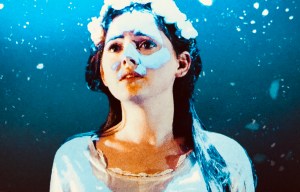
here are too many stories of heroism in past wars for us to take in. We know that the true cost of all conflicts can only be counted in terms of lives lost or damaged, but, in most cases, the individual endeavours of ordinary men and women caught up in them can only be related by passing them down through generations within families. It is such a family connection that gives David William Bryan’s account of the wartime experiences of his great uncle “Joe” its potency.

Young Arthur (familiarly known as Joe) Robinson is just starting work as a packer in 1941. when German bombing of Merseyside docks destroys buildings near his Birkenhead home and takes the life of a close friend. His immediate response is to join up, leaving behind a close-knit family and the girl who is the apple of his eye, regretting that he had not been able to summon up the courage to ask her to dance..

Joe is attached to a Reconnaissance unit, sailing the globe in relatively peaceful waters until, fatefully, he arrives in Singapore at the exact time of the Japanese invasion. He is taken as a prisoner of war, to be deployed in the infamous construction of the Burma Railway. Most of us have seen The Bridge on the River Kwai at some time, so tales of the unbearable suffering of British captives contain nothing new, but Bryan’s athletic and heartfelt performance as Joe makes them freshly engrossing.

This is a story of great courage and of friends and family. Joe’s unlikely friendship with George, a well-educated toff is made moving and real and his family’s devotion touches the heart. His mother’s attempts to get some news of her son’s whereabouts from the War Ministry are thwarted because she gives them the name Joe rather than Arthur, typifying the touches of comic irony that permeate the story. It is the sobering thought that Joe is just one of many ordinary working class heroes, with nothing particularly special about him, that makes this show so special.

Performance date: 6 August 2018

This review was originally written for The Reviews Hub: http://www.thereviewshub.com