Archive for the ‘Theatre’ Category

Emilia (Globe Theatre)

Posted: August 16, 2018 in Theatre

Writer: Morgan Lloyd Malcom      Director: Nicole Charles

⭐️⭐️⭐️💫

The grand library that stretches across the back of the Globe’s stage is unlikely to include any works by the writer Emilia Bassano Lanier, whose long life is being celebrated in an epic production on a scale commonly associated with the plays of her contemporary, William Shakespeare. Unlike him, she is overlooked by history, but, then, she is a woman

Morgan Lloyd Malcolm’s new play is part biography, part 16th/17th Century romp and part feminist tract, speaking directly to a modern audience. The different forms do not always sit comfortably together. On a stage extended forward to embrace the standing part of the audience, Emilia’s story unfolds, performed by an all-female cast, dressed in lavish costumes, designed by Joanna Scotcher. Nicole Charles’ expansive production works well in drawing in the audience, but an inability to settle on whether the play is a historical drama or a roaring comedy proves costly.

Three actors – Leah Harvey, Vinette Robinson and Clare Perkins – play Emilia at different ages, all three hovering on stage for most of the evening. She was born in London in 1569 and the play’s action takes us through her education and introduction to Court. Always a misfit, she spurns the opportunity to marry, opting instead to be the mistress of Lord Henry Carey (Carolyn Pickles), because such an arrangement will give her the freedom to write. “I will never be at peace so long as I have no voice” she declares later.

Becoming pregnant by Carey, she enters into a marriage of convenience with the gay Alphonso Lanier (Amanda Wilkin) and then meets Will Shakespeare, who seduces her and plagiarises her writing. Possibly, she is the Dark Lady of his Sonnets and she sees in him the opportunities that her gender denies her. Charity Wakefield’s screeching Bard goes straight from witnessing childbirth to writing Love’s Labours Lost. Some of the jokes in the play are better.

Emilia’s life story is fascinating, but diversions into broad and often repetitive comedy become increasingly irritating. Running at just under three hours, the production often feels painfully drawn out and it is the comedy scenes that most need trimming. When the play becomes darker in its later stages, fatigue has already begun to set in, but accounts of Emilia’s efforts to educate and empower abused women from the wrong side of a Thames bridge are still moving.

If we are to believe that Emilia and her cohorts are fighting a real battle for their voices to be heard, the play needs to give them real opponents. Here, the men are all written and wildly overplayed for comedy as if they are a bunch of clowns and, on the evidence that we see, the women would have had them well beaten 400 years before modern feminists came into the picture. This typifies how the play’s inconsistency of tone often undermines its serious purpose, which is to make an impassioned plea for gender equality.

When the play reaches its more solber final act, the tone becomes more constant, building up to a closing speech which has a shuddering impact. Perkins shouts out into the night sky above the River Thames an eloquent denunciation of female suppression over the centuries, her voice filled with fiery anger. Even if much of what has gone before becomes quickly forgettable, this ending will live long in the memory.

Performance date: 15 August 2018

Photo: Helen Murray

This review was originally written for The Reviews Hub: http://www.thereviewshub.com


Meek (Traverse Theatre, Edinburgh)

Posted: August 14, 2018 in Theatre

Writer: Penelope Skinner      Director: Amy Hodge

⭐️⭐️

“The play is translated from an imaginary Scandinavian language” we are told in the introduction to the printed text and it seems fitting that playwright Penelope Skinner’s solitary dash of humour should be one that is not heard during the 70 minutes performance time. The play is set we know not where and its story is triggered by a song that we are not allowed to hear. In her preoccupation with making her writing oblique, Skinner forgets the we may need some help in connecting with the characters and sympathising with their dilemmas.

The story is a reworking of Saint Joan for the internet age. The army that our heroine Irene (Shvorne Marks) raises is not of soldiers, but of eight million Facebook likes and the ultimate penalty that she faces for dissent in the totalitarian state in which she lives is not burning at the stake, but being stoned to death. The state is Christian fundamentalist and the song that Irene writes and performs in a café is an affront to the principles dictated by its rulers.

A large illuminated cross hovers over the stage as a threatening symbol at the beginning in Max Jones’ dark, minimalist set design. Most of the scenes take place in Irene’s prison cell, her visitors being devoted friend Ann (Scarlett Brookes) and her lawyer Gudrun (Amanda Wright). Skinner challenges totalitarianism and the extremities of faith, asking whether martyrdom can be justified in pursuit of the cause of freedom of expression. The themes are worthy, but they are not new and Skinner seems content to go no further than discussing moral issues, when we want her to do more to delve into the characters’ inner emotions.

Amy Hodge’s direction is efficient, but she does little to bring the play closer to the audience. This cold and unwelcoming piece prompts the suggestion that a title more apt than Meek would be “Bleak”. 

Performance date: 10 August 2018

This review was originally written for The Reviews Hub: http://www.thereviewshub.com

Revenants (Pleasance Dome, Edinburgh)

Posted: August 14, 2018 in Theatre

Writer: Nichola NcAuliffe      Director: Patrick Sandford

⭐️⭐️💫

The fascination of screen and stage writers with all things House of Windsor shows no signs of abating, so there is little surprise in finding that a central figure in Nichola McAuliffe’s new play is our present Queen’s grandmother. Much more surprising is the discovery that the key themes of this account of Queen Mary’s picnic in the woods in the later years of World War II are homophobia and American racism.

McAuliffe herself takes on the role of the haughty Queen, playing her as wiser and kinder than the cold fish the we are used to seeing in historical dramas. She is accompanied by Ernest Thesiger (Peter Straker), a closeted gay actor who had appeared in the film Bride of Frankenstein and Walcott (Kevin Moore), her Jamaican British chauffeur. The conversation in the opening scene gives us a potted history of the first half of the 20th Century, during which the Queen dwells on her regret that she and her husband, King George V, had refused requests to help the Romanovs to escape to exile following the 1917 Russian Revolution.

When the conversation drifts repeatedly to figures – Wilde, Coward, Mountbatten and the Queen’s own son, the late Duke of Kent – who were or are thought to have been gay, we get a first hint of the direction in which the play is going. And then, the calm is broken by a young rifle-bearing American soldier, GI Monk (Tok Stephen), who is defecting from the black barracks of a nearby base. Monk educates Her Majesty on the racism that he has to endure both in the military and back home in the Deep South.

This is interesting stuff and well played, but Patrick Sandford’s production has a very old-fashioned feel and the stage design looks makeshift. More significantly, the writer’s aim to give her themes a modern context seem ham-fisted, particularly in an awfully misjudged epilogue which assesses continuing discrimination through to 2018. McAullife has enough experience in theatre to know that, if a story is told well enough, audiences can be trusted to work out such things for themselves.

There are no doubts that Revenants has its heart in the right place. In fact, it shows the makings of a very good play, but it is not there yet and both the script and the production need a lot more polishing.

Performance date: 9 August 2018

This review was originally written for The Reviews Hub: http://www.thereviewshub.com

Writers: Robert Khan and Tom Salinsky      Director: Tom Salinsky

⭐️⭐️

With the Westminster Parliament in recess, things have gone a little quiet regarding everybody’s favourite subject – Brexit – so, for those showing withdrawal symptoms, here we have an antidote until things hot up again.

When the United Kingdom as a whole overrode the wishes of Scotland and London among others in June 2016, a seemingly unstoppable course was set for us the exit the European Union. Robert Khan and Tom Salinsky’s satire takes a crystal ball to look into the not too distant future and sees chaos, with a governing party split down the middle and a main opposition party sitting resolutely on the fence. Well yes, but isn’t that exactly what we have already? The writers’ problem is finding a way to satirise something that is already an utter farce.

The play begins with the duplicitous Adam Masters (Timothy Bentinck) having just taken over from “Matron” as Prime Minister. He urges his election campaign manager Paul Connell (Mike McShane) to accept a job as his senior adviser, knowing that he will need a scapegoat when things go wrong and appoints to his cabinet to do much the same job  two politicians with diametrically opposing views: Simon Cavendish (Hal Cruttenden) is so fervently anti-EU that he has I Vow to Thee My Country as his ringtone and he is to be Trade Secretary; Diana Purdy (Pippa Evans) an equally fervent Remainiac is to be Brexit Secretary.

Masters also subscribes to a political doctrine, which is to do absolutely nothing, and he plans to continue with transitional arrangements with the EU in perpetuity. At one point, he thinks that things might die down so that the UK could quietly rejoin and suggests this to EU negotiator Helena Brandt (Jo Caulfield). When she advises him that joining the Euro would then be mandatory, seeing the frozen look of horror on Bentinck’s face is almost worth the ticket price on its own.

The play has some good jokes scattered here and there and a quintet of top-class comedy actors makes it all palatable, but we are still left questioning what is the point. Satire is supposed to magnify and expose absurdities, but all we have here is a rather limp comedy that feels uncomfortably real.

Performance date: 9 August 2018

This review was originally written for The Reviews Hub: http://www.thereviewshub.com

Creators: Jennifer Kidwell and Scott R Sheppard with Lightning Rod Special      Director: Taibi Magar

⭐️⭐️⭐️⭐️

The small town of Hanover sits on what was, during the American Civil War, the Union side of the Mason-Dixon line. Over on the Confederate side, black slaves would enter the “underground railroad” to escape to freedom through Hanover and, hopefully, onward to Canada.

In the modern day, two teachers, a black woman, Caroline (Jennifer Kidwell) and a white man, Stewart (Scott R Sheppard) are teaching history at Hanover Middle School and we, the audience, are their students. To play the game, we are divided equally between the Union and Confederate armies, the objective of the former being to assist escaping slaves and of the latter to capture them. The army with the most slaves wins. The game provides the loose structure for the humorous entertainment which follows, a series of sketches jumping between the Civil War days and 2018. The powerful tool of riotous comedy is deployed to explore the lingering legacy of slavery through to the present.

The show is bold and provocative, brandishing the “N” word like a sharp-edged sword. It is hilarious and horrifying in equal measure as it exposes how mid-19th Century attitudes and values still prevail today, the concept of the mastery of one race over another continuing to infiltrate everyday life in often devious ways. Most daring are segments which explore the nature of inter-racial sexual attraction. After seeing Caroline and Stewart begin to date as supposed equals, we are taken back for a startling scene of master/slave intercourse and then brought back to an equally startling scene with the balance of power having changed.

Inevitably, with a show as fragmented as this, there are segments which work less well than others, but it is at its strongest when it abandons subtlety in favour of full-out, in-your-face comedy, intended to shock and inform. This is not the sort of lesson that most of us will remember from our own schooldays.

Performance date: 9 August 2018

This review was originally written for The Reviews Hub: http://www.thereviewshub.com

Writer: David Ireland      Director: Gareth Nicholls

⭐️⭐️⭐️⭐️⭐️

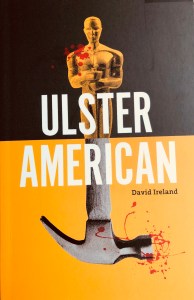
Have you heard the one about the Englishman, the Irish woman and the American? Yes, any jokes beginning similarly have long been branded politically incorrect, but all the rules of PC are put through the shredder in David Ireland’s brutal, excoriating and blisteringly funny black comedy.

The Englishman is theatre director Leigh (Robert Jack), who is hosting a meeting on the eve of the start of rehearsals for his production of a new play by Ulster writer Ruth (Lucianne McEvoy). The star is to be American Oscar winner Jay (Darrell D’Silva) who is the first to arrive. The setting is Leigh’s London flat, which becomes what Monty Python would have called the room for an argument, a long one that goes on unabated for close to 90 minutes.

The hero of Ruth’s play is a terrorist with the Ulster Volunteer Force. Jay is of Irish Catholic descent, possibly with associates who had funded the IRA and with no understanding of what the Irish troubles had been about. Leigh stands in the middle, aware that Ulster is part of the United Kingdom, but not seeing it as British. Ruth is definitely British and definitely not Irish. Before she arrives Jay asks feminist sympathising Leigh the blunt question: if forced at gunpoint to rape someone, who would he choose? Jay boasts of advances in American civil rights to Leigh, who thinks that James Baldwin is one of Alec’s younger brothers.

In Gareth Nicholls’ relentlessly aggressive production, all the accepted values of modern life are challenged and overturned. Sectarianism, nationalism, feminism and racism are in the firing line, latent prejudices and misunderstandings are exposed and gaping wounds are reopened. Can it be that the liberal codes that we thought to be set in stone are no more than paper covering deep cracks in society? Can these be the cracks that led to the vote for Brexit or the election of Trump? Possibly, but we can mull over the serious stuff afterwards as there is little time to do so between the laughs while the play is going on.

The acting is splendid. D’Silva’s bullish Jay has the arrogant swagger of an egotistical Hollywood star, practicing his “Belfast Dick van Dyke” accent and always carrying his Oscar with him to prove his credentials and, maybe on this occasion, use as a weapon. He meets his match in McEvoy’s fiery feminist, right wing Ruth, more concerned with ensuring that her play reaches the stage unchanged than with being at her sick mother’s bedside. In the middle, Jack is a particular joy, his slightly camp and panic-stricken Leigh, staring like a rabbit in the headlights as horror after horror unfolds and trying to act as arbiter while always making things worse.

Ireland’s hilarious play makes us laugh until it hurts, but it also asks us to question exactly why we find it so funny and the answers could be disturbing.

Performance date: 7 August 2018

This review was originally written for The Reviews Hub: http://www.thereviewshub.com


Writer: Christopher Reid      Director: Jason Morell

⭐️⭐️⭐️

As a suited middle-aged businessman walks from his Bloomsbury office, he muses that things are not what they used to be. The boozy lunches of the 80s and 90s are now history and nothing in the streets along which he walks is quite the same. He is heading for his once favourite lunchtime haunt, Massimo’s Italian restaurant in Soho, to meet his old flame from long ago.

Christopher Reid’s verse comedy is gentle and melancholic. Robert Bathurst as the businessman has the tired look of a man that is only just coming to realise that he is past his prime, regretting missed opportunities, but quietly accepting the hand that fate has dealt him. His published book of poems only just achieved sales in three figures and his demeanour suggests that he has also failed at most other things in his life.

When she arrives at Massimo’s, the woman (Rebecca Johnson) is smart and confident, close to arrogant. She is married to a successful novelist. Poetry has been abandoned in favour of prose. Inevitably, the lunch goes badly and the businessman consumes at least one bottle of wine too many, bringing back memories of the good old days. “You are out to lunch at your own lunch” the lady informs him.

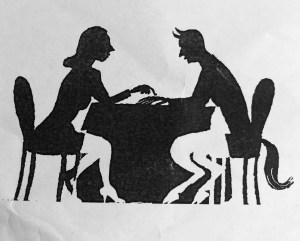
The 50-minute play is slight, but Bathurst is a master of light comedy and he carries it with ease. Jason Morell’s production features animated drawings by Charles Peattie, in the form of silhouettes projected onto a back screen and these add a surreal feel which complements the verse. The play is small, but perfectly formed.

Performance date: 7 August 2018

This review was originally written for The Reviews Hub: http://www.thereviewshub.com


Writer: Ian Kershaw      Director: Raz Shaw

⭐️⭐️⭐️💫

The script generously points out that the play’s title invites a two-word review. Can the writer mean “it isn’t”? Well true, it isn’t, but this charming piece of romantic whimsy from the husband and wife team of writer Ian Kershaw and actor Julie Hesmondhaigh is still worth a look.

The play is about loneliness, the Cosmos, shoes, Carl Sagan, two Toms and several Sara(h)s. It takes place at 4.40am one morning on Preston Road, somewhere in Northern England. Directed by Raz Shaw, Hesmondhaigh acts as narrator of the story and sole performer, with shelves stacked high with shoe boxes behind her. She takes down shoes to represent some of the characters in her story and she borrows shoes from the front row of the audience for others. She is so charismatic and warm that no one could ever dislike this production even if was rubbish. And it isn’t.

We hear of Tom, a 31-year-old bachelor who lives on one side of Preston Road and Sara, a single woman who does not believe in hurricanes and is just moving into a house on the opposite side. Tom is writing a play (guess what it is called); he is not the nosey type, but he cleans his front windows in a rhythmic motion an awful lot. The union of the pair seems written in the stars, maybe even literally. Beyond this, no more plot spoilers.

Kershaw’s style taps into the legacy of the late Victoria Wood, using the language of ordinary northerners and observing the minutiae of their lives. His humour does not quite have the sharpness to keep the play fresh for any more than its scheduled 70 minutes, but his imagination runs free.

Performance date: 7 August 2018

This review was originally written for The Reviews Hub: http://www.thereviewshub.com



Writer and Presenter: Gyles Brandreth

⭐️⭐️⭐️

Until recently, when he and two other members of his family shared all the roles in a production of no less than Hamlet on the London fringe, few would have associated the name of Gyles Brandreth with the art form of theatre. The former doyen of Countdown’s Dictionary Corner and, for five years, Conservative Member of Parliament for Chester has, of course, done many things in media, but theatre? Anyway, here he is with an hour-long collection of anecdotes supposedly about that very subject.

Brandreth begins with a rendition of Noél Coward’s Don’t Put Your Daughter on the Stage Mrs Worthington which suggests that he may not be considering a move into musicals. What follows prompts the question as to whether “Break a Leg” in the show’s title could be more aptly replaced by “Drop a Name” as Brandreth claims (and there is no reason to doubt him) to have met an extraordinary number of thespians, past and present. Entertaining Sir John Gielgud at the House of Commons on the great actor’s 90th Birthday, he expressed pleasure that he chose to be there and received the response: “well all my friends are dead”.

Of the jolly anecdotes in the hour, around half actually relate to theatre, including mentions of Larry, Sybil, Ralph, Judi and Maggie. The show concludes with I Remember it Well, touchingly duetted with the recorded voice of Dame June Whitfield, a lady primarily associated with television/radio and not theatre. Many of the stories may have been told before, but the chief attraction is Brandreth himself who takes to this form of entertainment like a duck to water. His quick wit, timing and connection with the audience are the equal of a top comedian. Maybe this Jack of all trades missed his true vocation.

Performance date: 7 August 2018

This review was originally written for The Reviews Hub: http://www.thereviewshub.com


Writer: Frank Skinner      Director: Polina Kalinina

⭐️

Established for many years as a top comedian and television game show host and with a recent UK (perhaps excluding Scotland) number one hit in the pop charts, it would seem that Frank Skinner is close to having it all. That said, there have to be some worries for him if the real women in his life are as truly ghastly as the two horrors seen in this, his debut play.

The affable cheeky chap from the Black Country begins by asking whether it is possible for a couple to remain friends after they have parted and he answers with a secondary question – why ever would they want to? As played by Jessica Clark, Nina is dominating, manipulative and wholly self-centred. Rob Auton makes her ex, Chris, seem like the only man on Earth who would be fool enough to hang around Nina long enough for her to dump him; he comes across as an ineffectual, prematurely ejaculating jerk who still has visions of Nina’s private parts and even wants her back. Added to the mix is Nina’s obstreperous friend Vanessa (Breffni Holahan) who seems to take a contrary view on every issue just to start an argument.

Stringing together a succession of lewd wisecracks may work for a stand-up routine, of which we assume that Skinner has written many, but it is not enough to make a play. Even the gags dry up halfway through and Polina Kalinina’s static direction offers little to revive the piece as it drifts into babble about testing for genuine friendship. So what is Nina’s news? Well, she has discovered that she can levitate, although, sadly, her powers do not seem strong enough to take her crashing through the glass dome here and into outer space. For good measure, Vanessa reveals that she has X-ray vision. Poor Chris never stands a chance.

Whether this is a gentle comedy about relationships or the hoped-for beginning of an X-Women franchise, the writer seems unable to decide. There is just one piece of good news – the running time is only 50 minutes. For the rest and, for Skinner in particular, the news is all bad.

Performance date: 6 August 2018

This review was originally written for The Reviews Hub: http://www.thereviewshub.com