Archive for the ‘Theatre’ Category

🌟🌟🌟

This review was originally written for The Reviews Hub: http://www.thereviewshub.com

Sometimes known as “glossolalia”, the term “speaking in tongues” relates to the use of words that have no meaning to the speaker. In Andrew Bovell’s two new plays, such words could form lies or they could be part of mindless ritual behaviour, but the proposition is made that ill-considered verbal communications can undermine trust and damage lives.

Staged by Doughnut Productions in the Green, an inflatable igloo on the outer reaches of the Pleasance Courtyard, the production seats the audience on swivel chairs within the circular space, the actors performing all around the circumference and through the middle. The Lies and The Truths are separate (two tickets required), but run consecutively on the same evening, with a 15 minute break between them.

Leon (Phil Aizlewood) is married to Sonja (Kate Austen). Peter (Ben Elder) is married to Jane (Georgina Periam). When Leon meets Jane in a bar and Pete meets Sonja in another bar, their banal conversations are all but identical, spoken over each other to emphasise the point. It is as if both pairs are caught up in unstoppable mating rituals, speaking in universally recognisable clichĂŠs, but not pausing to consider what they are saying. It makes little difference that one pair consummates the flirtation and the other does not, because the seeds of doubt have been sown and the corrosion to their marriages has begun.

Bovell’s writing and Kathleen Douglas’ direction are crisp and precise, matched by well-judged performances. The writer dwells on the theme of people drawing in lovers only to reject them instinctively, a trait shown by both women in The Lies and, later, in stories that develop therefrom, by Sara (Periam) who is counselled by Valerie (Austen), herself a borderline sociopath. The Truths centres on Valerie’s mysterious disappearance and police officer Leon’s interrogation of her less then candid husband (Elder). Now the blurring of lines between deceit and honesty takes on darker significance as lack of trust becomes still more pervasive.

More naturally, this work could become a single two-act play. The Lies, running for one hour, just about stands alone, but it contains elements that set up the second play and, therefore, leaves loose ends. Less focussed and 15 minutes shorter, The Truths feels incomplete, tailing off before arriving at the right destination. Overall, the dramas are elevated by the unconventional staging. Confronting each other from the extremes of this confined space, the characters spin a web of unbreakable mistrust that entangles the audience as it tightens around them.

Performance date: 7 August 2017

⭐️⭐️⭐️⭐️⭐️

Scientists may like to think that they can find a solution to every problem, but making sense of human behaviour is something that always seems to prove beyond them. Lucy Kirkwood’s new comedy/drama takes a scattergun approach to a wide range of scientific studies – finding the Higgs Boson particle, preventing diseases. safeguarding the internet and so on – concluding that, whatever course is set, it can all still be fouled up by man (or woman). Her play sees one family’s dysfunction as an example for proving the Chaos theory and, even though she falls some way short of achieving such a lofty objective, she gives us as good an evening of theatre as any around right now.

Kirkwood uses the same trick as did Nick Payne in Constellations. She blinds us with unfathomable science and leaves us wide open to taking emotional sucker punches. In Geneva, 42-year-old Alice is a leading physicist developing the Large Hadron Collider and she is as close as she can get to being certain that her work will not lead to a black hole in Switzerland. Back in Luton, her “stupid” 38-year-old sister Jenny dithers over allowing her baby to have the MMR jab, with tragic consequences. Their mother Karen, who had been forced to abandon an outstanding academic career to take up her domestic duties as a wife, faces the onset of dementia and incontinence, without seeking medical advice because it would provide scientific certainty of her conditions. Alice’s confused 17-year-old son, Luke, deeply unhappy at school and ignored by his workaholic single mother at home, dabbles with the internet and cyber hacking , falling victim to social media bullying and revenge porn.

The characters collide as Rufus Norris’s slick in-the-round production flashes, bangs and sizzles on Katrina Lindsay’s futuristic set design. White-coated scientists mill around and The Boson himself (Paul Hilton) lectures us on the five (or is it six?) routes to Armageddon. Many things concern and confuse us, not least of them how British television drama can possibly survive for several months without the services of the wonderful Olivia Colman, whose understated magnetism transfers intact from screen to stage. Her chain smoking, bewildered Jenny is locked into a love-hate relationship with her smart older sister, Olivia Williams’ fraught and anxious Alice.

Drama and comedy are balanced with precision in Kirkwood’s witty, insightful writing. A running gag sees the beleaguered Luke gifted a giant Toblerone by everyone who passes through an airport and his sexual initiation becomes an hilarious disaster, Joseph Quinn bringing out the character’s adolescent awkwardness to touching effect.  Amanda Boxer’s Karen is much more than a cantankerous old crone; she is embittered and frustrated, but still determined to show off her scientific prowess as a last throw of the dice. Perennial dilemmas of the young and the old are thrown into Kirkwood’s heady mix, along with a dash of feminism.

Packing in perhaps too many complex ideas and themes, Mosquitoes may be a mess, but it is a brilliant one that addles the brain and punctures the heart. The characters bicker, row and get on each other’s nerves and still the family bonds are always abundantly clear. As Kirkwood’s boffins declare that love is only the 12th most powerful force in the Universe, the stage here becomes awash with it.

Performance date: 28 July 2017

Yank! (Charing Cross Theatre)

Posted: July 31, 2017 in Theatre

⭐️⭐️⭐️⭐️

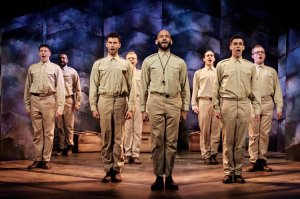
With Trump sounding off again about transgenders in the American military, this musical from off-Broadway reminds of us that, long after some battles are won, the wars of which they form part still rage on. In essence, the show is a formulaic tale of doomed wartime (WWII) romance involving US service personnel. The twist is that, back in the days when “gay” still meant “jolly”, the lovers are both male. That said, it would be a great shame if the show is just to be filed in the “gay theatre” pigeon hole and then forgotten, because what really distinguishes it from many others is that it is really rather good.

Writer David Zellnik (book and lyrics) gives the story a modern perspective by framing it in flashback, with a current day figure finding a handwritten journal in a secondhand bookshop and acting out the role of its writer, Stu, an 18-year-old conscript to an army squad in training. Stu (Scott Hunter), a misfit for reasons that he does not yet understand, finds a friend and protector in the older Mitch (Andy Coxon) and their relationship develops into a romance. They are parted when Stu is lured by photographer, Artie (Chris Kiely) to join him and work as a journalist on the American forces’ newspaper Yank, but reunited later on the battle front.

Yes, it is a plot that calls for more than a single box of Kleenex, but the writer structures it cleverly, breaking up the soppy stuff with slices of rich humour. The three guys in the stenographers’ room, all posing as female characters from Gone With the Wind, are a hoot, while Hunter and Kiely delight in what could be the most suggestive tap dance routine ever. Going from green rookie to war-hardened soldier, Hunter acts, sings and dances like the best and he could be a star in the making. Coxon shows the torment of his closeted lover and Kiely makes a snappy snapper, adept at surviving in a system that works against him and his kind. Directed by James Baker and choreographed by Chris Cuming, this is a production that has heart and zing.

Most enjoyable of all is Joseph Zellnik’s excellent score (the collaborators are brothers), which ranges from lush romantic melodies to big band tunes. The feel of the 1940s is perfect, with reminders of the Andrews Sisters, Peggy Lee and more being evoked in frequent appearances by Sarah-Louise Young as singers of the era and the chorus number Your Squad is Your Squad might not have been out of place in South Pacific. Young also appears as Louise, a formidable lesbian officer who tells a suicidal Stu: “if you don’t live, you’ll never be able to make a difference”. Indeed, without the likes of Stu, a show like this may never have been able to reach the stage.

Performance date: 26 July 2017

Twilight Song (Park Theatre)

Posted: July 22, 2017 in Theatre

⭐️⭐️⭐️⭐️

When he died in 2014, Kevin Elyot left a legacy that ranges from several camp adaptations for television of Agatha Christie novels to My Night With Reg, a masterpiece of gay (and all other) theatre. His final work, getting its premiere here, is a 75-minute melancholic comedy assessing more than half a century of social change.

Setting the play in 1961, 1967 and the present day, Elyot is inviting comparison’s with Alexi Kaye Campbell’s play Pride and there are many similarities. At the earliest date, two fusty old gentlemen – Harry (Philip Bretherton) and Charles (Hugh Ross) – hide their true feelings in fear of prosecution or blackmail. In the modern day, Barry (Paul Higgins), unemployed and skulking at home in a zip-up cardigan, does likewise to avoid displeasing his censorious mother. Repeatedly in this work, Elyot seems to be telling us that, when so much has changed, so much has stayed the same.

Another comparison must be with Terence Rattigan whose upper middle class England is inhabited by the characters here. The infidelity of Barry’s mother, Isabella (Bryony Hannah) reminds of Hester in The Deep Blue Sea, her refined, orderly existence being intruded upon rudely by sexual desires and unfamiliar passion. Again, Elyot could be inviting this comparison with a tirade against the theatre of John Osborne that uses words that Rattigan himself might have written or spoken. Anthony Banks’ simple yet elegant production emphases further how past and present intertwine, with only the electrical equipment in James Cotterill’s drawing room set being different.

Elyot specifies that Barry and his father must be played by the same actor and the same for a gardener in the 1960s and an estate agent in the present day (both Adam Garcia), offering the teasing suggestion that the latter could be the son of the former. Such devices give the play symmetry and dark irony. All Eliot’s characters are suffocated by social pressures and yearning for what is, for them, unattainable. This short but rich work is a bitter-sweet, rueful reflection on the world that its writer has sadly departed.

Performance date: 20 July 2017

⭐️⭐️

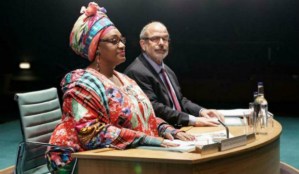
What is the point of dramatising real life events? Well, it could be to educate, explain, expand, dig beneath the surface or throw light on the characters involved. However, the most notable feature of this production, an edited verbatim account of a single session held by a House of Commons Committee, is that it does none of these things. Instead, it sets the proceeding to music. So what could be the point of doing this? Well, it could be to mock or satirise, but it does neither of these things either. Apart from the singing, this is a straightforward rendering of what the full-length title states, telling nothing more than could be seen on the BBC Parliament channel or read in Hansard. Surely the show’s creators could not be aiming to demonstrate that something serves no purpose by emulating it. No, let’s dismiss that thought.

Edited and adapted by Hadley Fraser and Josie Rourke and directed by Adam Penford, the show re-enacts the Committee session at which oral evidence was heard from charity chief Camila Batmanghelidjh and trustee Alan Yentob. Dressed in familiar flamboyant robes and matching turban, Batmanghelidjh is played by Sandra Marvin, who looks and sounds like Dianne Abbott. Yentob is played by Omar Ebrahim, who comes across a bit like a singing John Major. The Committee is chaired by Bernard Jenkins MP, played by Alexander Hanson, who both looks and sounds a lot like John Major, and it includes Kate Hoey MP, played by Rosemary Ashe, who looks and sounds very much like Kate Hoey MP.

The hearing focuses on one of the critical dilemmas of our times – how we balance the needs to support an increasingly disadvantaged underclass and to control costs – but this dramatisation adds nothing to the discussion.  The music, in classical opera style, composed by Tom Deering, makes very easy listening and there is not much to dislike during 80 minutes that pass quite quickly. However, that still leaves unanswered the central question – what is the point?

Performance date: 19 July 2017

⭐️⭐️⭐️⭐️⭐️

The sight of a fellow human being disintegrating before our eyes is not something that should be enjoyed, so perhaps the 105 minutes of Heavenly pleasure that Lady Day… gives ought to be accompanied by a feeling of guilt. Lanie Robertson has written this musical play from a personal account that he heard of a gig performed by Billie Holiday in 1959 at the Philadelphia club in the show’s full title. Aged 44, she was in the last year of her life and her singing career was as much on the rocks as the spirits in the glass clutched in her hand.

With the front half dozen rows of seating at Wyndham’s removed to be replaced by tables and a few audience members on stage, Audra McDonald reprises her Tony Award winning role as Holiday, directed by Lonny Price. She is accompanied by piano, bass and drums, with pianist Shelton Becton acting as MC. Holiday’s pet Chihuahua Pepi (played by Tilly) make a fleeting appearance late on when the singer is barely sober enough to carry her.  Set in an era when the American Civil Rights movement had still to gain momentum, Holiday’s anecdotes tell of segregation, her mother, her yearning for a child, time in “the slammer”, drugs, booze and worthless men, all of them reflected in the timeless songs, many written by Holiday herself. The lady does not sing the Blues, she insists, rather jazz.

We feel all Holiday’s pain through McDonald’s mesmerising performance and her faultless velvety tones. Songs such as Crazy He Calls Me, and God Bless the Child are familiar, others are little heard these days. The extraordinary Strange Fruit soothes us and, at the same time, chills us to the bone. If only this show and indeed Billie Holiday’s life could have gone on for longer!

Performance date: 19 July 2017

⭐️⭐️⭐️⭐️

This review was originally written for The Reviews Hub: http://www.thereviewshub.com

Hollywood studios are usually keen to point out that no animals are harmed during the shooting of their films, but harming children could be another matter. Steve Brown’s searing drama is a reminder that, for every Jodie Foster or Christian Bale who makes the transition from child to adult stardom, there is a…well, no need to be unkind.

Brown’s play takes place in Inglewood, the downmarket end of Hollywood, known as “City of Champions”. It is a play that scrapes away the glitter from La La Land‘s City of Stars and exposes the sleaze, a world of alcohol, drugs and sex abuse. Developed over three years, this is the first production to be brought through from scratch as part of Ray Rackham’s London Theatre Workshop Lab project.

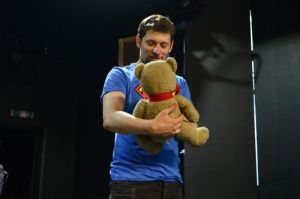
We first meet Laurie Munro (Joel Arnold) in his ramshackle bedsit, waking from his slumbers in mid-afternoon. Empty beer bottles are scattered around and he emerges in his underwear, odd socks on his feet. He is 38, but his trusty teddy bear is always close at hand. At the age of 14, he had starred in the hit film “The Red Hot Popsicles”, which still has enough devoted female followers to give him all the bedmates he needs, but his career has been on a long downward slide and occasional tours in Grease and Hairspray have been interrupted by long spells in rehab.

Laurie has an on-going bromance with his former co-star Lonnie Drake (Joe Southall), himself a reformed alcoholic, but now married to Amie (Ellie Ward) and able to offer his friend some stability and a room at his home. The teen stars’ story is one of lost childhood innocence, of being dazzled by the illusion of stardom and of being left at the mercy of sexual predators such as the director James Hudson Phillips (Ian McCurrach). Laurie’s ambitious mother, Barbara (Maggie Robson) had driven her young son to screen tests and left him unchaperoned, effectively turning a blind eye to what could be happening inside.

With knowledge of cases of historic child abuse in show business that have come to light in recent years, nothing in Brown’s play feels far-fetched and his dialogue also has the ring of authenticity. Credibility is helped further by Arnold, who is terrific, giving Laurie the charisma and swagger of a movie star as well as the despair of a man who is damaged deeply inside. His plea for his body to be his own and no longer public property is heartbreaking, but, despite finding solace in the arms of another former co-star, Mary-Celeste (Amy Burke), a way forward eludes him.

In the second act, separate confrontations which Phillips has with Laurie and then Lonnie give the play its fire as the full horror of what had occurred emerges. McCurrach’s louche Phillips has a sickening air when he is revealed to be an unrepentant paedophile and Southall’s Lonnie gains in stature as he comes to accept the futility of continuing to conceal the truth and the conspiracy of silence begins to unravel.

Brown explores how the irresistible lures of fame and fortune can lead to lives being destroyed when those with malign intent are allowed to exploit the vulnerable. His play is overlong at just under three hours (including interval) and the closing scenes need to be tighter, particularly when unfitting sentimentality creeps in, but, overall, it packs a heavy punch as it makes us think about what could lie behind the making of the films that we all love.

Performance date: 20 July 2017

Photo: Rosalind White Photography

Disco Pigs (Trafalgar Studios)

Posted: July 19, 2017 in Theatre

⭐️⭐️⭐️⭐️

This review was originally written for The Reviews Hub: http://www.thereviewshub.com

The word “disco” may have been falling into disuse in the last couple of decades, but Irish writer Enda Walsh’s coming of age play Disco Pigs looks as sharp and relevant as ever in this 20th Anniversary revival.
 
Runt (Evanna Lynch) and Pig (Colin Campbell) were born at exactly the same time in the same hospital ward and have been almost inseparable up to the their 17th Birthdays, when their cocooned world is destined for a head-on crash with reality. Walsh pulls the Disney trick of placing human characteristics into animals and then he reverses it by making the animals people again. Runt and Pig snort and eat from a trough (accompanied by music from Tchaikovsky’s Swan Lake), as the play follows their adventures and misadventures until they come to realise the nature of the daunting challenges that lie ahead.
 
Runt and Pig are foolishly brave and oblivious to danger, bound together by an unspoken agreement that was forged when they emerged from their mothers’ wombs. Growing up in a world where Terry Wogan rules the airwaves, Jackie Charlton rules in Football and Baywatch is the not-to-be-missed television treat, the pair’s ultimate paradise lies inside the Palace disco, a treasure trove of colour, flashing lights and pulsating rhythms. It is here that fantasy and reality eventually collide. High energy performances make these pigs fly and Lynch and Campbell should be able to cut back on gym session for quite a while.  
 
The comic escapades are underpinned by Walsh’s firm understanding that childhood never slides neatly into adulthood and the writer finds the play’s most poignant moments from the pieces that do not fit. Pig was programmed almost at birth to be Runt’s protector, but now he feels overwhelmed by grown-up instincts that he struggles to comprehend. Runt is torn between wanting to welcome Pig’s friendship and needing to fend off his amorous advances. “I want the tide to take me out of myself” she murmurs wistfully as she stares at the sea and both actors bring to fruition such moments of tenderness and internal conflict with immense subtlety
 
Running for 75 minutes, John Haidar’s production makes no concessions to London audiences, allowing a strong Irish dialect to prevail throughout. Runt and Pig’s private coded language puzzles further, yet, perversely, the fact that many specific words and phrases are indecipherable enriches rather than diminishes the lyricism in Walsh’s writing, much as can happen with Shakespeare. Superb lighting, designed by Elliot Griggs enhances both the disco sequences and the tones of other scenes in this exhilarating revival of a lively, inventive and moving play.

Performance date: 18 July 2017

Photo: Alex Brenner

Gloria (Hampstead Theatre)

Posted: July 19, 2017 in Theatre

⭐️⭐️⭐️💫

American playwright Branden Jacobs-Jenkins is on a roll in London this year. His An Octoroon caused quite a stir at the Orange Tree recently and now this caustic satire of work place life does much the same here. The primary setting is the New York offices of a literary magazine, a haven of calamitous disharmony where all the staff go round in separate orbits, almost oblivious of each other until they intersect and feel the friction. It is a tale on disconnection, although not much of the actual tale can be told for fear of spoilers; sealed pages in the programme endorse the message and, indeed, this is a play best enjoyed without too much foreknowledge.

Dean (Colin Morgan), an unsuccessful writer, arrives late with a hangover to be interrogated by office busybody Ani (Ellie Kendrick). Kendra (Kae Alexander) then arrives very very late and snaps at everyone around before departing on the first of her many daily trips to Starbucks. Conscientious head fact checker Lorin (Bo Poraj) raises his voice to complain about the noise from constant rowing and temporary graduate placement Miles (Bayo Gbadamosi) watches on incredulously, but hears little over the music from his headphones. Making up the numbers is the quiet misfit Gloria (Sian Clifford).

Lizzie Clachan’s realistic, detailed set designs help to make the play feel relevant and director Michael Longhurst’s production scores by allowing the performances to shine through. Alexander’s super bitch Kedra is memorably horrible – the workmate from Hell, but the company all pick up on the nuances in Jacobs-Jenkins’ writing, making their characters much more than just the words that they speak. As the play progresses, the writer introduces a secondary target for his satire – the obsession of publishers and, by inference readers, for the inane personal stories of nonentities. This duality of purpose perhaps blunts the play’s cutting edge and prevents it from holding completely together, but, otherwise, this is an entertaining production that has a lot of meaningful things to say.

Performance date: 10 July 2017

The God of Hell (Theatre N16)

Posted: July 14, 2017 in Theatre

⭐️⭐️⭐️

This review was originally written for The Reviews Hub: http://www.thereviewshub.com

Sam Shepard calls Wisconsin “America’s dirty land” and the action in his hour-long play revolves around the consequences of a plutonium leak, but this absurdist allegory has little to do with ecology and a lot to do with pollution of modern American minds.

On their Wisconsin dairy farm, Frank (Craig Edgley) who “lives for his heifers” and his wife Emma (Helen Foster), who was born there, rarely goes out and rarely receives visitors, brave the cold and get on with their uneventful lives. However, their peace is shattered by the arrival of Frank’s old friend Haynes (Ryan Prescott), who takes up refuge in their cellar, goes into a fit when anyone says “rocky boots” and generates sparks when he is touched. He is radioactive and on the run from a sinister force otherwise known as “The Government”.

Shepard does not waste time with scene-setting preambles, Haynes is already downstairs when the play begins and his pursuer is soon to walk through the door. Abigail Screen’s cartoonish set design for the claustrophobic farmhouse kitchen, gives a surreal feel to Rocky Rodriguez Jr’s edgy, sometimes manic production, as Shepard paints an increasingly bizarre picture of a dystopian present. Haynes’ pursuer is the menacing Welch (Thomas Throe), a cross between an evangelist preacher and a malevolent Uncle Sam, who is quick to impose American values on the farm owners. He berates Emma when noticing that the flagpole outside is missing its flag and decorates her kitchen with Stars and Stripes emblems which, handily, he carries in his briefcase.

Much of the satire is crude and obvious, but, once Rodriguez Jr’s production has gained confidence, it is fun and nicely played. Foster’s Emma is sweet and homely, moving towards hysterical as her normality crumbles. Edgley’s dependable Frank leaves to tend for his heifers and returns, somehow brainwashed off stage, as a Welch acolyte. Prescott’s Haynes is only inches short of a total breakdown and Throe’s Welch is not a man that anyone would want to meet in a dark alley.

When Welch rants patriotically about a country now filled with lies, deceit and manipulations of the truth, his words have a topical ring, but this play was written in 2004. Shepard’s political agenda is clear; he is throwing a spotlight on the gullibility of a middle America deluged with right wing propaganda. His messages may have startled audiences when the play first appeared, but they are even more chilling and real today.

Performance date: 13 July 2017