Archive for the ‘Theatre’ Category

Encounter** (Above the Stag Theatre)

Posted: October 17, 2015 in Theatre

enclunterThis review was originally written for The Reviews Hub: http://www.thereviewshub.com

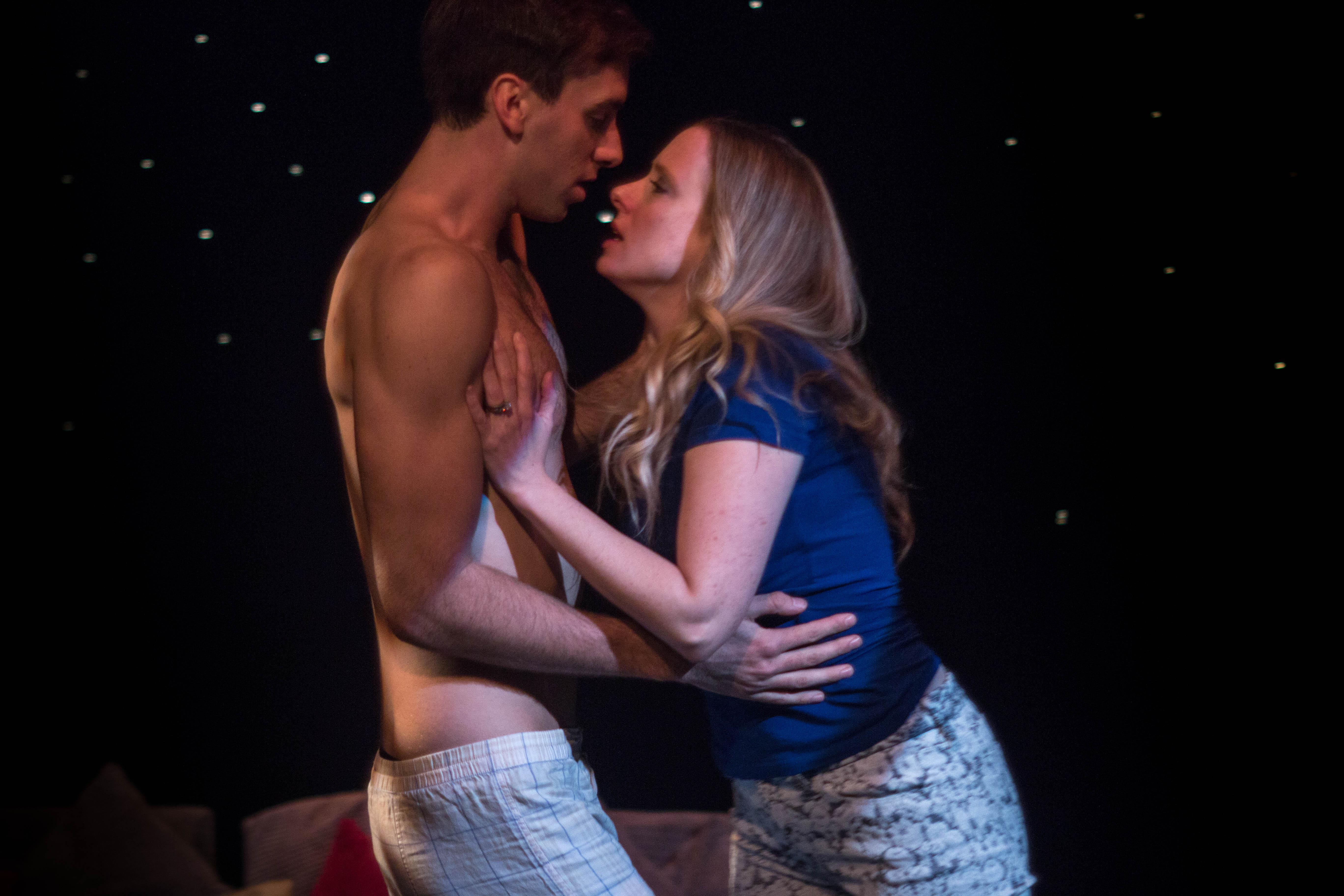
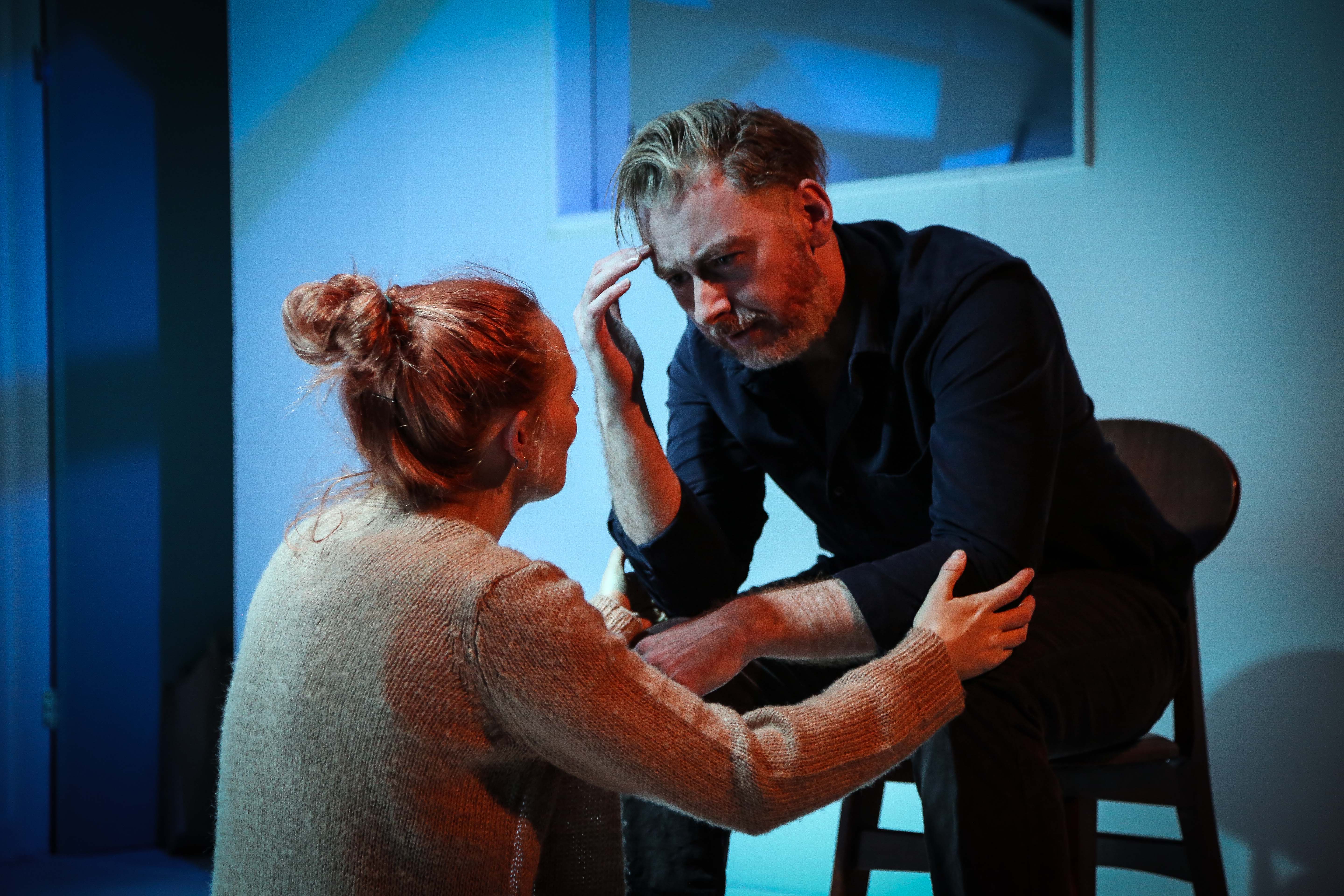
Trying to read the subtexts of works by writers now known to have been gay can be an amusing diversion. To this end, maybe tweaking the plot of The Importance of Being Earnest or changing the gender of a key character in The Deep Blue Sea could uncover what Wilde and Rattigan really wanted to say to us. Phil Willmott’s new play is inspired by Noel Coward’s screenplay (earlier a one-act play) for the 1945 British film Brief Encounter, in which a respectable married woman (Celia Johnson) has a chaste love affair with a respectable married man (Trevor Howard), meeting every Thursday in a railway station. In Willmott’s version, the Thursday meetings are between two men – Larry (Adam Lilley) a doctor from Surbiton and the railway station manager, Arthur (Alexander Huetson). In assuming a subtext, maybe Willmott is underestimating how daring, even brazen, Coward could be. As early as 1932, when he wanted to write about a bisexual love triangle, he simply wrote about a bisexual love triangle (in Design for Living) and damned the consequences. The likelihood is that Brief Encounter was written solely to present audiences of its day with a drama that they could believe in and relate to and Willmott never makes the case for there being underlying gay themes. The film is about the social perils in 1940s Britain of breaking marriage vows and the way in which Willmott adapts it makes the gay element that he introduces seem almost incidental for most of the play. The possible intervention of the law at that time is referred to, but it is an additional factor and not part of the core story. The setting is mostly Vauxhall station and real trains moving in and out that station can be heard above the theatre. Jokes alluding to differences between the Vauxhalls of the1940s and 2015 abound and the play begins and ends in the modern day. Yes Vauxhall has changed and the gay World has also changed in 70 years, obvious facts that the play rams home repeatedly and rather clumsily. Dialogue in the play tries to emulate that of the film, a style that can seem stilted to a modern audience. Lines such as “wherever you are in your head isn’t a happy place is it?” draw giggles from the audience that cannot have been intended, but incidental characters provide more welcome amusement. The station newspaper vendor (Penelope Day) has a fine range of malapropisms and a lecherous police constable (Christopher Hines) plods his beat comically around the waiting area. Unlike in the film and for no obvious reason unless it is titillation, the couple here eventually become intimate, only to be interrupted by the local vicar (Hines again) in a scene that resembles a French farce. This feels like a bad misjudgement. The film may now seem dated, but no-one could ever question its sincerity and this play needs comparable sincerity, not crude physical comedy. Individually, the two central performances are well judged. Lilley shows us Larry’s trepidation at stepping into the unknown, his fear of losing his career, his comfortable home and his loving wife and family. He takes pleasure in mentoring Arthur, trying to bridge the gap in class and cultural interests. Huetson’s Arthur is eager to learn about classical music and taste Champagne for the first time. He is already scarred by wartime experiences and accustomed to being an outcast, his marriage is all but over and he has far less to lose, When the couple’s friendship is platonic, it is conveyed touchingly, but, when it moves beyond that stage, not enough sexual chemistry is suggested to make the relationship believable. Ultimately, neither the assumptions under which the play was conceived nor the story that it tells is wholly convincing and this encounter is not quite brief enough.

Performance date: 16 October 2015

trh

Playground**** (Old Red Lion Theatre)

Posted: October 16, 2015 in Theatre

Josie Ayres and Richard FishThis review was originally written for The Reviews Hub: http://www.thereviewshub.com

There were serial killers on the loose in London’s East End long before the Cereal Killer moved in and Peter Hamilton’s new play (his seventh) centres on a continuation of this great tradition. The bodies of young children are being found everywhere, decapitated with copies of an Enid Blyton Famous Five novel thrown on their corpses, open at page 100. Oranges and Lemons sung (by Sarah Quish) between scenes establishes the East End setting, climbing frames and a suspended tyre suggest a playground and enlarged covers of Blyton books make a colourful backdrop for the play, an absurdist black comedy that questions the lines between reality and insanity. As would be expected, the investigation is led by two inept police officers – the dim-witted DI Mitchell (Dan MacLane) and his cross-dressing sidekick, DC Birch (Christopher James Barley). They explore avenues (“hoping that they will be tree-lined”) and, using Holmes-like logic, they decide that the killer has to be a Welsh lesbian librarian, which would rule out Danny (Richard Fish), who has recently bought a job lot of Enid Blyton books. In fact, Danny is starting a book club devoted to Blyton, the first member being Carolyn (Josie Ayers) who he talks out of committing suicide, she wishing that she could be “young, poor and Pakistani”. The other two members are working class Stuart (Simon Every) and middle class Communist, Tamsin (Laura Garnier), both patients of Dr Ross at Bow psychiatric unit. Danny himself was once a patient there, but now thanks valium and vodka for his sanity. All four members become prime suspects. Tamsin’s political views and Stuart’s opposition to them support the play’s assertion that socialism is advocated only by the liberal middle class intelligentsia in places like Islington “where everyone talks about literature and politics” and not by workers themselves. Well this is an absurdist comedy and, ironically, it is being performed in Islington. However, political satire remains secondary to a style of dark humour that brings to mind another one-time Islington resident, Joe Orton. Hamilton gives us a fine example of the quality of writing now being found in Fringe Theatre, the foundation for the comedy being his talent for taking phrases in everyday use and twisting their meaning. This play takes time to build and it would benefit from having a stronger central narrative to hold everything together, but the laughs, when they come, are plentiful enough to make us overlook such shortcomings. Ken McClymont’s production milks all the comedy from the quirky characters, but sees beyond their humorous facades to show them as lost souls in a big city, searching for somewhere to belong. Poignantly, once the murderer has been revealed, the book club begins to drift apart, as if it had been only the horrific killings binding them together. Neatly summing up the murders and the suspects, the unseen psychiatrist Dr Ross prescribes decapitation as “the definitive cure for all mental illness”. Playground may not be perfect but it is often absurdly funny.

Performance date: 15 October 2015

trh

A-Wolf-In-Snake-Skin-Shoes-at-The-Tricycle-Theatre.-Photo-by-Mark-Douet-I80A0446-683x1024This review was originally written for The Reviews Hub: http://www.thereviewshub.com

Hypocrisy turns up in many guises, at any time and in any place. In 17th Century France, Molière embodied the trait in the character of Tartuffe and now American playwright Marcus Gardley finds it in modern day Atlanta, giving his new verse play the alternative title: The Gospel of Tartuffe. Gardley gives us a what is in effect an amorality tale of born again hypocrites practicing in the American Bible belt. Chief among them is Apostle Toof (Lucian Msamati), a charismatic preacher who casts a congregation under his spell, heals a young woman who has been crippled by a British horse and leads her into a private room to seduce her. He then proceeds to the estate of a dying fried chicken billionaire, Organdy (Wil Johnson) on a mission to minister to him and cheat his family out of his money. Indhu Rubasingham’s boisterous production, played on spacious sets designed by Tom Piper, begins well in the Holy Roll Cathedral with stirring gospel singing led by Sharon D Clarke. However, the first half of the play is weak on structure and purpose, eventually hitting a slump out of which even this energetic company has difficulty lifting it. Happily the second half is much tighter, highlighted by several notable set pieces. A meeting between Toof’s formidable wife (Clarke) and Organdy’s explosive fiancée, Peaches (Adjoa Andoh) is a clash of the Titans, leaving us wondering how on Earth men ever got control of the Church (or anything else for that matter). The avaricious and lecherous Toof still has his eyes on the cash and at least one of the ladies. He pleases Organdy by seemingly curing his gay son, Gumper (Karl Queensborough) of his “sickness” and attempting to bring his rebellious prodigal daughter, Africa (Ayesha Antoine) back into the fold. Job done, a banquet begins and Toof, still in preacher mode, says grace in a hilarious form of spoken hip-hop, before homing in closer to his real targets. The play is a not entirely satisfying mix of absurd humour and obvious metaphors. At times it is inventive and at other times dull, but, in spite of its inconsistencies, it is often highly entertaining and always the performances are a delight. Finally, Gardley puts his cards on the table when Toof delivers a “there is no God, greed is good” sermon preached with all the fervour and persuasiveness that he had used to praise the Lord earlier. Now we have to ask which of the two Toofs is right and which is the hypocrite? But maybe both are both.

Performance date: 14 October 2015

trh

french without tearsThis review was originally written for The Reviews Hub: http://www.thereviewshub.com

Hear the name Terence Rattigan and what usually springs to mind is tear-soaked dramas filled with outpourings of suppressed emotions. Back in 1936, Rattigan had his first big hit with French Without Tears and the staple ingredients for such a drama were there, except that the tears that soaked it were ones of laughter. More Coward than traditional Rattigan perhaps, but, if it had been Coward, out of his very top drawer. The scene is a villa in France where Monsieur Maingot (David Whitworth) and his daughter Jacqueline (Sarah Winter) are giving crash courses in French for English professionals who need to speak the language to further their careers. Set in the round as the Orange Tree dictates, designer Simon Daw places blackboards chalked with French words and phrases around the balcony, with simple wooden chairs and a dining table taking centre stage on a terracotta tiled floor. Mark Doubleday’s warm lighting adds to the rustic French feel. Paul Miller’s has dusted off Rattigan’s classic and his exuberant revival triumphs largely because of the extraordinarily talented, mostly young company that he has assembled. The characterisations and comic timing are faultless. Alex Bhat is the arrogant and conceited Alan, reluctantly following Daddy into the Diplomatic Corps; Joe Eyre is the gullible Kit, oblivious to the adoring looks of the besotted Jacqueline; Tom Hanson is the grounded Brian, who is utterly hopeless at French; and William Belchambers is Bill, a stuffy naval officer, coming late to the party. The “babe” of the group is Kenneth (Patrick McNamee), also aiming for the Foreign Office, and he brings along his big sister Diana, simply because she has nowhere else to go for the Summer. She in turn has nothing else to do but to lure men into her web and devour them without conscience. Genevieve Gaunt’s Diana is a voluptuous temptress to whom “love is subliminal sex”, contrasting completely with the demure and “nice” Jacqueline. The action over a two week period sees changing couplings and switching allegiances as the men fall under the spell of or repel Diana. A hilarious fancy dress ball sees Monsieur kilted as a Scotsman and Kit in a skirt; inevitably, it all comes to drunken fisticuffs. Diana hooks Kit and Bill, only to be thwarted by the contemptuous Alan. Anyone who has ever seen a romantic comedy will recognise that the mutual loathing of Diana and Alan can mean only one thing. And so it goes, but the impeccable construction of scenes and the constant flow of witty dialogue mask the more obvious turns of the plot. Rattigan proves an astute observer of the rituals and posturing defining the English male of his era and the laughter of this audience almost 80 years on indicates that the traits put on display are still recognisable. With Alan being an aspiring writer, there may be much of the playwright himself in the character, but, given what we now know about Rattigan’s life, it is the wistful looks of Kenneth as he yearns for the attention of Alan that give this production its most poignant moments. Miller’s supremely well judged and brilliantly acted production fizzes from the start and then bubbles over to yield what is quite possibly the funniest final Act to be seen anywhere this year. All that is left to be said is “Vive l’Oranger!”

Performance date: 13 October 2015

trh

Romance, Romance*** (Landor Theatre)

Posted: October 13, 2015 in Theatre

IMG_4719This review was originally written for The Reviews Hub: http://www.thereviewshub.com

“Guess what’s all the rage again, taking centre stage again” we are asked at the beginning of both acts of this musical revival. The answer in each case is, of course, “romance”. This is a show of two distinct halves and we must assume that both have been given the same one-word title. The Landor has earned a reputation for making big shows work in its small space, but there is no high-kicking chorus line this time. Although Romance, Romance has had runs both on Broadway and in the West End. it is very much a chamber musical for just four performers and it can work as well, if not better, here as anywhere else. The only exception is that Keith Herrmann’s score may lose some of its melodic quality in the scaled-down orchestrations for a band of four musicians. Act I is set in 19th Century Vienna, where Alfred (Lewis Asquith), a very rich and very single young man is fed up with women who are interested in him just for his money. He sheds his top hat and tails to dress down and pretend to be a penniless poet. He meets Josefine (Emily Lynne), a courtesan who is tired of rich men and wants a handsome one. She also lies about her past and they embark on an affair, each expressing a facetious and cynical view of romance, each using the other for their own ends and regarding them as eventually disposable. It is fast forward a century or so for Act II and to the holiday home that has been shared for many years by two New York couples. Sam (Asquith) is married happily to Barb (Sinéad Wall) and Lenny (Tom Elliot Reade) is married happily to Monica (Lynne). The complication is that Sam and Monica are best friends and, coaxed by a few too many glasses of wine, they begin to question whether their friendship is really as platonic as each has supposed, while their spouses watch on fearing the worst. Now the view of romance is something that sweeps us away when our defences are low, but a force that will pass by quickly. Both Acts are wafer-thin, but Barry Harman’s book and lyrics are peppered with wit. Herrmann’s catchy tunes may not be too memorable, but they suit the moods of the show and four strong performances, under the experienced direction of Robert McWhir serve the production well. Asquith and Lynne carry large chunks of the show and their likability and their skill in effecting transitions between very different characters in each half make a big contribution. While assuring us that “passion is back in fashion”, this frivolous little show sends out only messages that would not have pleased St Valentine. Sadly, it seems that romance is no more than just a diversion from the reality of life, a mere illusion.

Performance date: 12 October 2015

Photograph: Sofi Berenger

trh

Measure for Measure*** (Young Vic)

Posted: October 10, 2015 in Theatre


measure for measure

It is doubtful if so many inflatable sex dolls have ever been seen together before outside an Ann Summers distribution depot. Joe Hill-Gibbins’ unconventional (to say the least) version of William Shakespeare’s Measure for Measure uses the dolls to suggest a lewd and licentious Vienna, abandoned temporarily by its ruling Duke Vincentio and left in the unreliable hands of Angelo. Apart from the dolls, Hill-Gibbins pulls out all the stops to break with tradition, with scenes shot live using hand-held cameras behind a screen and projected onto it and generous rations of modern urban music. It takes a little time to get used to the gimmicks and not all of them are 100% successful, but there is nothing wrong with striving to make Shakespeare accessible for new audiences and the most significant step in this direction comes with paring down the text to run for under two hours straight through, thereby jettisoning the diversions and sub-plots that can drag this play down and bring on the yawns. Rubin Varla’s playful Vincentio sets the tone of the production and Paul Ready, cast in the mould of a City banker as Angelo, makes a perfect villain. As the wronged Isabella, how wonderful to see Romola Garai on stage, bringing freshness and openness to the character. As the final scene approaches, the gimmicks are abandoned and the clutter is cleared. The production has by now drawn in the audience and achieved the clarity for which it has worked, so all that is needed is a bare stage and excellent actors to bring the nonsense to a satisfying conclusion.

Performance date: 9 October 2015

Valhalla** (Theatre 503)

Posted: October 8, 2015 in Theatre

Valhalla Dress 2

This review was originally written for The Reviews Hub: http://www.thereviewshub.com

The title should not be allowed to deceive. Paul Murphy’s 75-minute play, joint winner of Theatre 503’s Playwriting Award for 2014, does not take place in a gigantic hall, rather in what looks like a white oblong box, filled only by a table, two chairs and a coat stand. The sterility of Katie Lias’ set design seems to become all the more fitting as the drama progresses. The play is a two-hander, the characters being named simply “Man” (Murphy himself) and “Woman” (Carolina Main). Both are doctors, he a researcher and they are in a long-term childless relationship. She is haunted by recent riots, he troubled by involvement in clinical trials for a new drug that could be going badly wrong and they decide to escape to a remote island to the far North of Europe. Murphy structures the play in scenes so short that he could have been aiming it at an audience with Attention Deficit Disorder. There is little warmth in the couple’s relationship, which is tense, often combative and their constant bickering eventually becomes irritating and repetitive. The writer gives us a good insight into what is tearing them apart, but very little feel of what is holding them together. Suggestions of unseen threats create tension. Other characters are spoken of, but are we to believe that they really exist? Is he a target for Animal Rights protesters? Does he have a brain tumour? Does she carry a faulty gene? Is she being candid with him about what happened to her in the riots? Is he telling her the truth about the consequences of the trials? In a way, the play is at its best when it is being enigmatic and this helps to open the door to discussions about the ethics of advances in medical science. It is less successful in connecting the issues that it raises to the personal lives of the characters, but it suggests that perhaps they know too much to make wise judgements in relation to themselves; perhaps, in the modern world, we all know too much. The final scene is the most enigmatic of all and springs the biggest surprise in Jo McInnes’ steady production. Served up with dashes of Norse mythology and the supernatural, Murphy packs in many (perhaps too many) interesting ideas without developing any of them very far. However, emotionally, his play is as icy as its Arctic setting.

Performance date: 7 October 2015

trh

Hangmen***** (Royal Court Theatre)

Posted: October 7, 2015 in Theatre

FullSizeRender-89

The return to theatre of Martin “In Bruges” McDonagh, bringing with him the brand of pitch black comedy that has characterised his film work, could hardly be less than one of the events of the year, but it exceeds even those expectations. Notwithstanding all the modern touches in language and style, McDonagh’s spiritual home is with the Ealing comedies of the 40s and 50s, reminders of which crop up repeatedly in the delicious darkness and mouthwatering morbidity of the humour in this hilarious play, an audacious cocktail of fact and fiction. The opening scene sees a grizzly 1963 execution, presided over by hangman Harry Wade (David Morrissey, wearing a smart suit and trademark bow tie) and his bumbling assistant Syd Armfield (Reece Shearsmith). The deed done, a remarkable set transformation takes us on to the pub run by Harry in Oldham, two years later. With capital punishment about to be abolished, the pub’s all-male regulars, each of them a self-confessed alcoholic, continue to follow the “flog ’em and hang ’em” line, cowering in fear of of Harry’s intimidation, as if expecting that he could be about to produce his rope. And then a mysterious, “menacing” Southerner (Johnny Flynn) enters the bar. A detailed description of the mayhem that follows could spoil the fun, but let it just be said that Matthew Dunster’s production takes its time to develop characters during the first act and then lets rip in the second. Morrissey plays Harry completely straight, as a vain and arrogant bully, piqued that his rival Albert Pierrepoint (the real-life executioner) gets all the limelight because his stats have been boosted by the executions of German war criminals, thereby dwarfing Harry’s meagre 233. Shearsmith’s Syd is stuttering and pervy, he and Harry making a grim equivalent to Laurel and Hardy (the other way round). The comedy highlight comes when an indignant Pierrepoint (John Hodgkinson, looking like a mirror image of Morrissey’s Harry) bursts into the bar to start a sort of nooses at dawn duel and, unwittingly, triggers the final execution of his career. Everything is in the worst possible taste, with McDonagh’s razor-sharp dialogue and astute character insights propelling the action. Underlying all the humour is the irony of working class executioners slaying mostly their own kind at the behest of imperious judges. Anna Fleischle’s immaculately detailed sets and Joshua Carr’s lighting add to the pleasure and the supporting performances are first rate. At the end, Harry and Syd, looking like Ollie and Stan, rue the passing of an era. They have done their very best to ensure that the great British tradition of miscarrying justice lives on. Pure genius.

Performance date: 6 October 2015

crushed shellsThis review was originally written for The Reviews Hub: http://www.thereviewshub.com

Best described as an apocalyptic drama encased inside a coming of age story, Ben Musgrave’s new play is set against the backdrop of the panic that ensues when a mysterious, highly contagious disease strikes South-East England. The disease is referred to only as ”type 37 contamination”, but, as it is transmitted through contact with body fluids, we must assume that the writer is alluding to repercussions from the recent Ebola outbreak in Africa and the Worldwide HIV/AIDS scare of the 1980s. Victims of the disease are being ostracised like lepers, London has been sealed off and the coastal area where the play’s action takes place is building up its defences. Derek (Alex Lawther) is a shy and awkward teenager who finds sanctuary in a secluded spot where the sea is visible when standing on top of a caravan. He writes poetry in peace until the arrival of Lydia (Hannah Britland) from London and a friendship begins to form, interrupted by another teenager, Vincent (Alexander Arnold), who is an assertive and occasionally violent bully. This triangular affair seems rather a cliche, but Musgrave adds a dash of mystery, dropping in hints of something sinister going on beneath the surface and slowly revealing what it is during the course the first act. Lawther’s sensitive performance is superb, giving Derek, who in lesser hands could be just a boring nerd, real depth. Britland also shines, bringing out Lydia’s innocence, confusion and terror. Vincent begins as a stereotypical thug, but he later softens and Arnold handles the transition convincingly. A chilling sub-plot introduces Peter (Simon Lenagan), a zealot representing “The League”, a movement with the aim of defending against the disease and, effectively, persecuting its victims. Musgrave now demonstrates how fear, fuelled by religion and patriotism, can sow the seeds of fascism in the fertile minds of impressionable youngsters. At times sweet and romantic, at other times harsh and even cruel, the play’s fragile structure is held together by Russell Bolam’s slowly paced and thoughtful direction. Ellan Parry’s sets and Richard Godin’s lighting are particularly effective in creating an unsettling air of troubled tranquility. Occasionally Musgrave does not appear completely certain of the messages that he wants to send, particularly in an unsatisfactory conclusion that draws upon symbolism when a grounded vision is most needed. Yet, for all that, some of the imagery is haunting, the performances are top class and the progression of the play always keeps us enthralled.

Performance date: 5 October 2015

trh

Medea**** (Almeida Theatre}

Posted: October 3, 2015 in Theatre

FullSizeRender-88This review was originally written for The Reviews Hub: http://www.thereviewshub.com

Head bowed, her face hidden behind her long black hair, Medea listens to taunts meant to shame and humiliate her. An all-female chorus, gossiping and brandishing their maternal badges by clutching their offspring to their breasts, casts her out from among them, like an unclean leper. Medea’s “crime” is being one half of a broken marriage and there can be no doubt that writer Rachel Cusk sees her torment as caused as much by social pressures imposed on her (and, by implication, on all women) as by any misdeed of her unfaithful husband, Jason. Cusk’s 2012 book Aftermath: On Marriage and Separation gives an honest account of the end of her own second marriage and, in making the title character in her adaptation of Euripides’ play a writer noted for her openness, she is sending out a very clear message that this Medea is personal. It is also modern in language and style, Ian MacNeil’s set of a chic town house restricting the action to confined spaces on two levels, contrasting completely with the palatial feel of Carrie Cracknell’s production at the National Theatre last year. Adding another personal touch, Rupert Goold directs his own wife, Kate Fleetwood in the lead role. She has just spent the Summer sipping Champagne and nibbling caviar in High Society at the Old Vic, making her performance here notable for both her versatility and her virtuosity. This is a fierce Medea. prowling around her home like a caged lioness, looking at revenge against Jason with tunnel vision. Cusk’s explanation that the two children of the marriage represent “two broken promises, two lies. What are they without him (Jason)? Trash!” is made totally believable by Fleetwood and it paves the way for an understanding of the horrors that follow. Jason in this version is not the man of power and ambition of Euripides, rather a very modern figure, an egotistical actor. His near indifference to his children puts into question why Medea could think that she would wound him by taking them from him, but Justin Salinger’s performance elicits sympathy, showing how he needs to escape the shackles of his wife’s possessiveness. The raw exchanges between the irreconcilable couple are impassioned shouting matches, projected with tremendous force by the two performances. Goold’s production is strong on memorable visual images – the chorus dancing like witches around a cauldron as they dismantle the family home, Medea silhouetted against the night sky as she shovels dirt into an open grave. There are strong supporting performances too, most notably from Michele Austin as Medea’s cleaner, stoically accepting the role into which a woman is cast, and by Andy de la Tour as a cynical Creon, analysing coldly the consequences of his daughter having taken Jason from Medea. The climax is muddled, suggesting one thing and then telling us another and, most critically, the writer diverges from Euripides in a way that tampers with the core element in the story. Nonetheless, her conclusion is chilling, serving as a stark reminder of the collateral damage resulting from marital warfare and highlighting the utter futility of seeking revenge. A curious epilogue, rendered by a half man/half woman seems set on diluting the strong gender bias of earlier scenes, but it does not really change the view that the perspective of Cusk’s Medea is, overwhelmingly, the female one. Following an unflinchingly brutal Oresteia and a bizarre, gender-bending Bakkai, the Almeida’s three-play Greek Season comes to an end with this strikingly original Medea. The relevance of ancient classics in the modern world has been demonstrated fully and, overall, the cycle has to be judged as a huge achievement.

Performance date: 2 October 2015

trh