Archive for the ‘Theatre’ Category

the glass protegeThis review was originally written for The Public Reviews: http://www.thepublicreviews.com

Classic black-and-white films are being screened as the audience enters the theatre for this emotional drama, serving as a reminder of the “golden age” of Hollywood. It was an era in which movie stars were treated as merely products by studios that, being concerned only with image, were prepared to control them and promote myths about their private lives which were at odds with reality. Dylan Costello’s play begins in 1949 with the arrival in Hollywood of Patrick Glass (David R Butler), a young British theatre actor. He has been cast to play opposite Jackson (Alexander Hulme), an established star who is rumoured to be gay, but has become adept at playing the deception game. The play, which tells of the development of an off-screen relationship between the two actors, is a revised version of one that was staged in London in 2010 under the title Secret Boulevard. Showing the long-term damage caused by lives being manipulated and lived in secret, the play also leaps forward 40 years to where an elderly Patrick (Paul Lavers) is now reclusive and embittered; “when you live your entire life in the closet, you start to cough up mothballs” he snarls. Instead of adopting a conventional flashback structure, Costello opts to relate a separate story set in 1989, running in parallel with the 1949 one and told in alternating scenes. That story concerns Ava (Sheena May), who arrives from the newly- liberated East Germany, having been “bought” as a bride by Patrick’s son (Stephen Connery-Brown). There is symmetry here in that Ava becomes a property to be used by others, just as Patrick had been during his film career, but the 1989 scenes prove to be much weaker and less convincing than the ones set earlier. Furthermore, the play’s structure impairs the build-up of tension in the 1949 scenes as Patrick and Jackson grow closer and threats to them become stronger. Not only is this build-up interrupted regularly, but the problem is compounded further when, on several occasions, the older Patrick reveals what is about to happen in the following scene. If we come to resent the intrusions of the 1989 story, perhaps that is a tribute to the strength of the core scenes, which are brought to life by sharp writing, taut direction and strong performances. Butler and Hulme develop a very believable chemistry, bringing out their characters’ vulnerability as they move from mutual suspicion to shared affection. Emily Loomes touches as an insecure leading lady with an unsavoury past, Roger Parkins is a ruthless studio boss and Mary Stewart a venomous gossip columnist. Matthew Gould’s production is performed on a traverse stage, dominated, for both stories, by a large, curtained four-poster bed. Overhead, the famed “Hollywood” sign appears for the 1989 scenes, becoming “Hollywoodland” for 1949, the year in which it was changed. The secret lives of many real stars of the 40s and 50s are now widely known, endorsing the truth underlying this fictional drama. Costello’s play is an interesting examination of the human cost of deception and loss of freedom. Incidentally, it also sets the mind thinking about what my lie behind the facade of modern day celebrity culture.

Performance date: 15 April 2015

thepublicreview_hor_web copy

Animals**+ (Theatre 503)

Posted: April 14, 2015 in Theatre

Animal Production Photos at Theatre 503This review was originally written for The Public Reviews: http://www.thepublicreviews.com

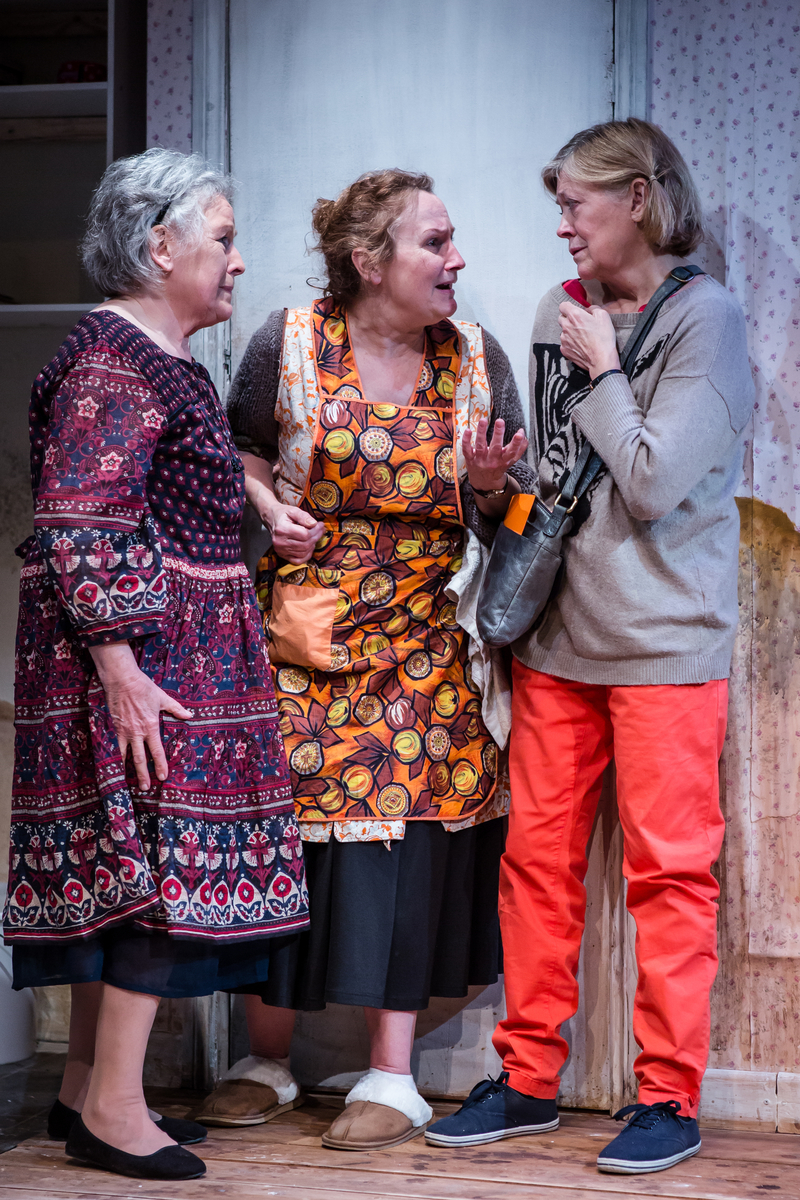
Economic forecasters warn us repeatedly that a growing aged population could soon become a burden too great for society to bear. Emma Adams’ new play takes place in 2046, in a world where the solution to this problem has been found in the drastic form of a lethal injection. A tsunami has engulfed Britain, “incomers” arrive freely and an authoritarian regime is now in place, imposing laws banning certain words and any discussion of the weather. Children’s status in life is determined by a test on their 18th Birthday and “Utility Inspectors” call on the over-60’s to determine whether they are of diminished use or of no further use at all. There may be an inclination to look for political messages in all of this, but very little emerges to be taken too seriously. In the early stages, it seems as if Adams is aiming for a drama about a dystopian nightmare, but the longer the play goes on, the more it becomes a black comedy with touches of absurdism. It rather resembles a re-working of Arsenic and Old Lace as we see batty old ladies, seemingly demure and refined, snorting amphetamines and getting up to all sorts of nasty things. The cantankerous Norma (Marlene Sidaway) is 77, trying to pass herself off as 40 years younger and her home help Joy (a splendidly flustered Sadie Shimmin) is 59. Pushed to extremes by the need to survive, they have taken the kitchen knife to visiting children, keeping their remains in the larder to be used as tasty sandwich fillings. Their neighbour Helen (Cara Chase), 70 and on the cusp of extinction, is drawn in unwittingly to the evil doings. Noah (Steve Hansell), oafish and not too bright, is a Utility Inspector about to visit the neighbourhood. He leaves the daughter on whom he dotes, Maya, in his car and she escapes into the clutches of the three ladies. Maya is one day short of her 18th Birthday but is written and played (by Milly Thomas) more like an overgrown 6-year-old, making the character irritating and unconvincing. Uncertainty of tone, illogical plot details and inconsistent characterisations mar parts of the first act and it is only in the later stages, when the play has established itself as a black comedy, that it gets fully into its stride. Staged on a cramped living room set, Liza Cagnacci’s production occasionally suffers from imperfect comic timing and this affects the flow; hopefully these problems will be resolved as the run progresses. Theatre 503 has recently established a senior writers group and, in a deliberate move, the actresses cast to play the three main characters are all in their 60s and 70s; this is consistent with the playwright’s strong feelings about the accurate representation of women. In the theatre at least, perhaps the future for the elderly is not as bleak as this play might suggest.

Performance date: 13 April 2015

Production photo: Richard Davenport

thepublicreview_hor_web copy

Phoenix-web-production-pageThis review was originally written for The Public Reviews: http://www.thepublicreviews.com

Coming so soon after the London revival of My Night With Reg, Paul Emelion Daly’s new play brings home how much things have changed in 20 years. Back in the 90s, Kevin Elyot presented HIV/AIDS as a killer lurking behind the scenes whose name was not to be spoken. Thanks to medical advances, mortality is not an issue in Rise Like A Phoenix, which shows us five gay men, all diagnosed HIV positive, who discuss their condition openly and try to come to terms with the stigma attached to it, their mental traumas and the side effects of medication. Like …Reg, this play is, essentially, a comedy, albeit a much less subtle one. Estate agent Hector (Reed Stokes) is hosting a party for his ex, Alan (Lewis Rae), a school teacher, at the flat they used to share. The flat is dingy, dusty (sure to aggravate Alan’s OCD) and decorated with dozens of images of Judy Garland and similar divas. Alan brings along his new partner, Eddie (Jonny Dickens) a painter and decorator who has recently parted from his wife. For reasons that are never made fully clear, Hector appears, to everyone’s surprise, as “Fanny Sparkles” in an evening gown and ill-fitting wig. Much of the first act is taken up with a camp comedy of manners. If the characters are rather stereotypical, it hardly matters, because the script is witty and Tim McArthur’s production moves things along crisply. However, whenever the play steps away from comedy, it hits the rocks. Emelion Daly is walking a difficult tightrope in trying to be upbeat about HIV and, at the same time, avoiding giving out the wrong health messages. He struggles and the shifts from comedy to drama always feel awkward and unconvincing. Things are not helped by the writer and the actors creating characters in the triangle that we can easily laugh at but not really care about. The problem is seen most vividly in a long, tedious scene at the beginning of Act II in which Hector and Alan try to sort out past differences; at one point Alan asks Hector, still in full drag, how he can take him seriously when he is dressed like that. The sentiment must be echoed fully by the audience. When these characters have been set up as figures of broad fun, it is very difficult to suddenly take any of them seriously. Fortunately, compensation comes with some delicious comedy, particularly from the fourth and fifth characters. The hyper-anxious Pippin Valjean (Conleth Kane) is, as his adopted name suggests, fanatical about musicals and comes straight to the party having broken up with his boyfriend in the interval of Wicked, which he has seen around 2,000 times. His way of dealing with his HIV+ diagnosis was to rush to a matinee of Les Miserables and he manages to slot a line from a show song into every conversation. Dimitrios Raptidis has a whale of a time going completely over the top as Gucci, a Colombian masseur. Acting as Hector’s “maid” for the evening and wearing hot pants to serve the cocktails, his wry observations and comic asides are amongst the highlights of a production that is at its best when it sets out to be funny, but falters when it does not.

Performance date: 10 April 2015

thepublicreview_hor_web copy

The Royale***** (Bush Theatre)

Posted: April 9, 2015 in Theatre

the royale

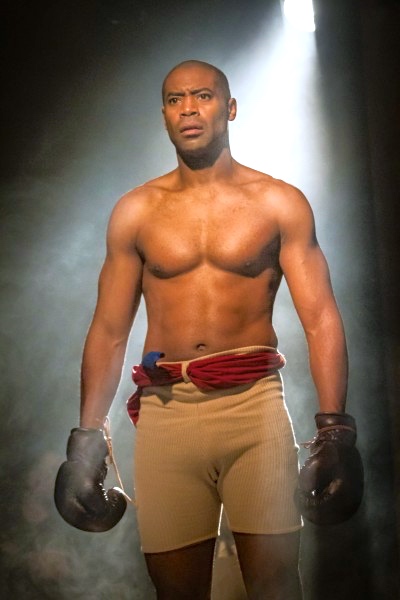
In the racially segregated American Deep South of 1905, there existed a black Heavyweight Boxing Champion, but a match with the reigning World Champion was unthinkable. American writer Marco Ramirez drew inspiration from the true story of Jack Johnson for this remarkable new play which details the efforts of fictional black champion, Jay Jackson, to set up and win a “unification” contest with the World Champion, also known as the “Great White Hope”. In such a contest, he would be fighting not only his white opponent, who is never seen, but also his own conscience as he struggles to come to terms with the terrible consequences that victory could bring for himself, his family and the entire black community. Director Madani Younis’ in-the-round production takes place in a smoky room, on and around a square wooden platform, adorned by just two stools; at one point, a punch bag descends and Jackson thumps it repeatedly as if hammering home to the audience every detail of his anger and frustration. Giving a perfect performance, Nicholas Pinnock brings out all of Jackson’s steely determination and wounded pride. Similarly Gershwyn Eustache Jnr as his loyal trainer, Ewan Stewart as his wily manager and Clint Dyer as his rookie sparring partner are all spot-on. At the heart of Jackson’s personal motivation lies childhood images of his sister’s distress when looking at glamour magazines and never seeing women who resemble her. Contradictorily, it is this sister, Nina (played with quiet dignity by Frances Ashman) who argues the case to him not to proceed with the fight for fear of the repercussions. The writing of Ramirez and the direction of Younis are as packed with muscle and free of flab as any of the actors seen as boxers on stage. Not a punch misses the target, this is a relentless 90 minutes, straight through – Thud! Thud! Thud! The thrilling fight sequences are staged in impressionistic style, with action freezes during which Jackson’s thoughts are conveyed. Of course, boxing is only the play’s backdrop; the real story is of the slow advance of the American Civil Rights movement, paying tribute to the men or women who have the courage to take the big or small individual steps forward. When the audience stands and cheers loudly at the end, it feels like being amongst the crowd at a real boxing match. This is magnificent theatre!

Performance date: 8 April 2015

apartment 40c

Three couples – one young and just coming together, another planning to start a family and the third meeting again in late middle age, long after a painful divorce – all occupy the same New York apartment at different times and they are the focus of this new chamber musical by Ray Rackham (book and Lyrics) and Tom Lees (music). Everything about the piece says “off-Broadway hit”, but its actual birthplace, just a few months ago, was Fulham, at Rackham’s London Theatre Workshop. Programme notes make it clear that it remains a work in progress and, much as the commitment to develop it further is heartening, it is, when at its best, pretty good already. Straying into the territory of Woody Allen and Stephen Sondheim is a brave move by these Brits, suggesting that their primary inspiration may have come largely from works by such greats and that conveying the New York “feel” is at the heart of everything that they are striving for. Sondheim features similar characters in Company, but he keeps his couples apart; here, they are together on the small St James Studio stage, already cluttered with furniture, enacting their different stories and it is this intimacy, this feeling of connections being made across decades and generations which makes the show rather special. There is an element in the narrative which, seemingly, Rackham (who also directs) wants to keep from the audience until late on and the show is much stronger for him doing so, but perhaps future productions ought to give less away in the programme. The youngest couple played by Alex Crossley (the girl) and Alex James Ellison, are the least engaging of the three; their characters are not fully developed and their story feels trite (also very familiar to anyone who saw Hello/Goodbye at the Hampstead Theatre recently). Lizzie Wofford is touching as a stay-at-home wife, preparing to move out of the city to have children, but oblivious to the probable infidelity of her workaholic husband (Johnjo Flynn). Nova Skipp and Peter Gerald are both convincingly embittered as the divorced couple, still clearly in love with each other, but defeated by irreconcilable differences. If the quality of the singing is inconsistent, the performances are all strong dramatically. Dreams for the future and regrets for mistakes of the past, yearning and loss, are conveyed movingly in Lees’ rich, melodic score which features several haunting piano riffs. However, the songs, generally wistful and melancholic, lack variety and the show cries out for at least one comic number in each act to lighten the tone. Likewise, the book and lyrics tend to be over-serious and a few more infusions of Allen-style wit would have been welcome. The show gains depth as the three stories unfold and sequences in which characters from the different stories link together through song carry extraordinary emotional power. Apartment 40c may not originate from off-Broadway, but, continuing its development, that could well be its destination.

Performance date: 8 April 2015

Production photo: Matthew Lees

Buyer & Cellar Barrow Street Theatre

All of us obsessive hoarders know the problem – where do we store all the memorabilia (aka junk) that piles higher year by year? How do we keep it all in reasonable order and dusted? Of course these problems are solved easily for the super rich, who can find all the space they need and then hire someone to look after it all. Jonathan Tolins’ play, a big off-Broadway hit, is a monologue telling of Alex, a “resting” gay actor who takes a job in the cellar of Barbra Streisand’s Malibu home doing just that. The story could possibly be true – an opening disclaimer tells us that it may not be so, but it is much more fun to assume that it is. To his surprise, Alex finds the cellar laid out like a shopping mall, with all the items categorised appropriately –  in a dolls’ emporium, a candy store, a gift “shoppe”, etc. He spends his days doing very little until the eventual arrival of the mall’s only possible customer, who proceeds to haggle over the price of a doll which she already owns. Lovers of showbiz tittle-tattle will find what follows utterly irresistible, a non-stop flow of hilarious anecdotes and in-jokes – a late-night visit by the lady of the house to “buy” a frozen yoghurt, James Brolin later fetching the second helping she is too ashamed to ask for, Alex rehearsing her to play Mamma Rose in Gypsy (25 years too late), and so on. Tolins manages both to mock Streisand and to pay affectionate tribute to her, seeing her as a woman with limitless cash but nothing to spend it on, more isolated than Alex on most of his working days; “nobody ever stops by” she complains, noting that 70% of the people she knows are gay. “I wonder why” responds Alex. However, witty as Tolins’ script is, it is hard to imagine that it could work half as well without the brilliant performance of Michael Urie as Alex; switching from adoring or sneering superfan to impersonations of a brittle superstar, he dispenses warmth and bitchiness in equal measure. This is a real tour de force, providing yet another delightful evening at the Menier.

Performance date: 2 April 2015

sweeney todd enoAnd the award for adaptability goes to…..Sweeney Todd. From traditional theatres to pubs and a pie shop, it is a show that pops up everywhere with increasing regularity – not bad when the original London production at Drury Lane flopped. This “semi staged” concert version, co-produced by English National Opera, originates from a New York Philharmonic production last year, endorsing the view held by many that this so called “musical” is in fact an opera and one of a pretty high standing. People are entitled to dislike it because of its excessive gore and over the top melodrama, but few can fail to be in awe of its astonishing virtuosity, its seamless fusion of book (Hugh Wheeler), lyrics and music (both Stephen Sondheim). The intention in giving a concert performance of a musical is, one assumes, to heighten the impact of the music, which can only be achieved by taking the emphasis away from the drama. Yet, in this case, the question must be asked as to why anyone would want to pick apart the different components of a work that is so perfect as a whole. It is a little like filleting a fish – plenty of tasty bites still to savour, but nothing left to hold it together. Director Lonny Price attempts an early denial of this being a concert performance by casting aside music stands and floral decorations and getting the singers to shed their evening attire to reveal period costumes. He also produces several imaginative flourishes throughout the evening, trying to show the staging as more than “semi”, but, for all that, a concert performance is what, in essence, his production remains. The ENO orchestra (conductor David Charles Abell) is centre stage in front of a backcloth onto which images, mostly graffiti, are projected and the performance takes place in front of and, on an elevated platform, amongst them. If absence of dramatic intensity and involvement in the story are the big losses of this staging, the wonderful sound made by a full orchestra and a near 30-strong chorus is the big plus, City on Fire being particularly thrilling. Sondheim’s incomparable score can seldom have been given so lush a treatment. Bryn Terfel has been singing the role of Sweeney for several years now, his rich bass-baritone voice suiting the music to perfection; vocally, his performance is definitive, but, dramatically, he is disappointingly lightweight, even amiable up to the grizzly finale. Emma Thompson follows in a long line of magnificent Mrs Lovetts and she milks the comedy as we all knew she would, but she also sings the part superbly, reminding us how great a loss to musical theatre her 30 year absence has been. Only Terfel comes from the world of opera. the other featured performers all being grounded in musicals, meaning that expectations for vocal interpretations that might be radically different from previous productions are thwarted. Matthew Seadon-Young, clean-cut and bespectacled, is a terrific Anthony; his serenading of Johanna, like Philip Quast’s harmonising with Terfel on the Pretty Women duet, is amongst several moments so blissful that they bring tears to the eyes. Katie Hall is an angelic Johanna, whilst Jack North, Rosalie Craig, Alex Gaumond and John Owen-Jones also deliver excellent performances. Reservations about concert stagings remain, but this production sets the bar pretty high for Sondheim’s Follies at the Royal Albert Hall towards the end of this month. As for Sweeney, for me it’s next stop the pie shop.

Performance date: 1 April 2015

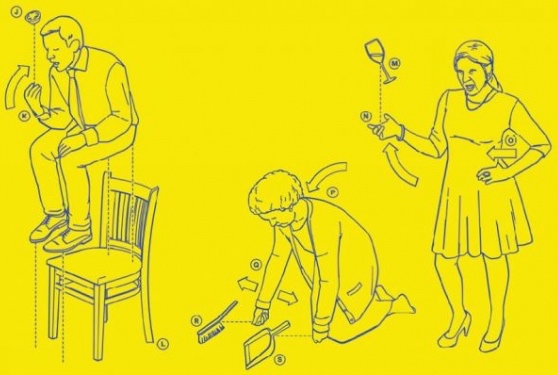
rules for livingWhat better way to celebrate Easter than to see a play about Christmas? Sam Holcroft is not the first comedy writer to mine the rich seam of family Yuletide celebrations, but few can have done so with such hilarious results. The family here is presided over by an authoritarian patriarch, a retired judge who is now stricken by illness and about to arrive on day release from hospital. All the play’s characters abide by rules – house rules, family rules, rules arising from personal characteristics – and they play a card game so overburdened with rules that the only possible outcome is anarchy. Holcroft shows us people who are ruining their own lives in trying to live up to the expectations of others. The older son Adam (Stephen Mangan) was a promising cricketer who is now a lawyer; the younger son Matthew (Miles Jupp) wanted to be an actor but is also a lawyer; and the granddaughter has confined herself to bed, fearful of doing anything in case she will be a disappointment.  Marianne Elliot’s in-the-round production crackles throughout and towering over Chloe Bamford’s splendid kitchen/diner set are “scoreboards” displaying how the characters comply with the rules for their personal traits – for example, we are told that Matthew must sit and eat in order to tell a lie and, true to form, every time that he faces answering an awkward question, we see him scampering around for a seat and food. This ingenious device – the sort of thing that Alan Ayckbourn might have come up with in his heyday – applies to all the five main characters and is a source of repeated hilarity throughout the play. The production is also blessed with perfect casting. Mangan’s Adam is resigned to being a loser, spewing vitriolic sarcasm in self defence and Jupp’s Matthew brandishes an inane smirk whilst telling everyone what he thinks they want to hear, particularly when he is sitting and eating. Claudie Blakley elicits sympathy as Adam’s wife, an over-concerned modern mother with a taste for red wine and Maggie Service is a constant delight as Matthew’s girlfriend, a bit part actress who uses forced jollity to mask her brittleness and embarrasses everyone with her coarseness. Deborah Findlay also excels as the mother, in denial over all the family’s problems, conquering anxiety by “self-medicating” and relentlessly cleaning everything in sight. Of course, comparisons with Ayckbourn are inevitable, but Holcroft brings freshness and modernity to the genre of middle class family comedy. It is only in the last quarter that the play goes slightly off the rails, although this tends to be obscured at the time by laughter. All rules go out of the window in a food fight showdown which is choreographed brilliantly and timed meticulously; however, this descent into slapstick feels out of place with the subtler comedy which has preceded it and leads to a somewhat unsatisfactory ending. Holcroft should be telling us that families will, fate permitting, assemble again the following year to perform the same ritualised masquerade. For this particular family, we are left feeling that such a gathering will be highly unlikely.

Performance date: 31 March 2015

dissidents__gallery_imageThis review was originally written for The Public Reviews: http://www.thepublicreviews.com

With the General Election looming, the plight of the disadvantaged, disaffected and socially disconnected features in most news bulletins every day. Therefore, Shamser Sinha’s new play, which looks closely at the so-called underclass, could hardly be more topical. Siblings Juan (Stevie Basaula) and Selena (Tania Nwachukwu) are second generation immigrants who are faced with obtaining credit to pay for their father’s funeral. He is intelligent but, having been an habitual truant from school, illiterate. Unable to find employment, he has moved into a squat. She, although difficult and argumentative, is able to hold down a job and a home. Moving from a Job Centre to a failing NHS hospital and then to the squat, the play takes its time to gain a hold and find its focus. Sinha embraces many themes – homelessness, unemployment, mental illness, physical disability, the National Health Service, Police aggression and more – whilst carefully sidestepping issues of crime and addiction. With so much going on, it is not until the later stages, when the squat and its inhabitants become central, that the play acquires real dramatic power. Beth Shouler’s production does not help to provide early clarity with the stage often too cluttered with props and actors who are struggling to establish their characters’ identities. This production, presented by Tricycle Youth Theatre shows us a multicultural society and has actors playing multiple roles, many older than themselves. Yet there are times when the production plods and it is disappointing that Shouler does not extract more energy from her 20-strong youthful cast. Amidst what is sometimes chaos, Sinha has many interesting points to make. When Juan gets a mandatory job placement in Poundland, under the charge of a manager from the David Brent school, his chances are sabotaged not by his own inability or laziness, but by his friends, indicating the existence of a negative culture which works against individual advancement. Occasionally, the play is stronger when it is semi-satirical than when being earnest. The de facto leader of the squat is an educated, articulate middle class woman whose bank account is topped up by her family; no doubt she has her eye on a career in left wing politics. The media is targeted too – Juan is put forward to be interviewed by a cynical journalist and, very cleverly, Sinha exposes how facts, people and events become distorted for public consumption. At the heart of this drama is the relationship between Juan and Selena, which comes to the fore in the moving final scenes. Selena asks Juan if he had the world in one hand, his own child in the other and had to drop one, which would he choose. In putting family first, Sinha clearly sees self empowerment as the way forward for this pair, but he is less clear on the future of the others that they will leave behind.

Performance date: 26th March 2015

thepublicreview_hor_web copy

Andrew Sherdian & Matthew Tennyson Feb 2015This review was originally written for The Public Reviews: http://www.thepublicreviews.com

Penrose and Francis gather in their Highgate home to prepare for the funeral of the man that they both call “Daddy”, bickering with each other nervously. Yet they are not brothers. Francis was taken in by the family as a gardener when he was 16 and Penrose only two and, now, 19 years later, the fraternal bonds between the pair are seemingly unbreakable. Robert Holman’s new play takes these *brothers” on a journey of mutual discovery as they tease, test and question each other to uncover past secrets that are uncomfortable for both. The play has a keen sense of how the impact of childhood incidents, major and minor, can linger throughout lives and it shows both men to be damaged – Penrose, with a privileged background, suffering from parental neglect and Francis, with lowly roots in Northumberland, being haunted by abuse and tragedy. This production gets added value from bespoke casting. Matthew Tennyson at first seems far too innocent and immature for Penrose’s 21 years and Andrew Sheridan too bruised and world weary to be only 35. However, as Holman created the two characters for these specific actors, we know that the roles are being played exactly as the writer intended and both the performances are deeply moving. The play explores the nature of love in its purest, platonic form; it shows the importance of giving and accepting care; and it delves into the value of family, conventional or otherwise. Moving from Highgate and Parliament Hill, with its panoramic urban views, to the villages and fields of rural Northumberland, Holman’s descriptive writing has a vivid feel for the locations which form part of key incidents in his characters’ lives. Robert Hastie’s production never forces the pace of the play, with soft lighting on an uncluttered wooden stage creating a reflective atmosphere to underpin the themes of loss and recovery. Music also plays a part, with classical piano pieces being played offstage (supposedly by Penrose) and both actors performing (extremely well) traditional songs. Undeniably Holman’s play is slow to unfold, wordy and a little overlong, but the work possesses rare insight and intensity which make it tug consistently at the heartstrings throughout.

Performance date: 20 March 2015

thepublicreview_hor_web copy