Archive for the ‘Theatre’ Category

Singin-In-The-Rain-Color-Singin-In-The-Rain-ColorThis review was originally written for The Public Reviews: http://www.thepublicreviews.com

Stage productions of this classic 1951 MGM musical seem to come round almost as regularly as rainy Summers, yet all of them must have to face up to the same conundrum – how can you top something when a definitive version is already out there and nearly everyone has seen it? The usual approach is to stage it at a big theatre as a song and dance spectacular, featuring a torrential downpour for the big number. Director Robert Plews goes in the opposite direction in this 100 or so seat pub theatre, using a company of just 12 and a six-piece orchestra. The setting is Hollywood in 1927 at the dawn of the talkies. Silent movie star Don Lockwood is happy to make the transition, but his squeaky-voiced on-screen partner Lina Lamont is completely unsuited, leaving the door open for rising starlet Kathy Selden, with whom Don quickly becomes smitten. A big problem for any production of this show must be the clunky first half hour which has little music and only serves to establish the plot. This problem is made more difficult for Plews because of the theatre’s configuration – an oblong stage with the audience seated on either side. This results in the characters often seeming remote from each other, whilst awkward scene changes interrupt the show’s rhythm and flow. However, once the dance routines get going, the configuration works in the production’s favour, enhancing the excitement generated when dancers and audience are within touching distance. The romance between Don (Simon Adkins) and Kathy (Frankie Jenna) is a tepid affair, with familiar but rather trite songs injecting little life into proceedings. The weight of the comedy falls onto the shoulders of Thea Jo Wolfe, delightfully coarse as Lina, and Paul Harwood as Don’s breezy sidekick Cosmo. Midway through the first half, it is Harwood who kick starts the show with his pratfalling rendition of Make ‘Em Laugh and, when he and Adkins put on their tap shoes for Moses Supposes, the audience is at last getting what it has come to see. Adkins closes the first half performing the iconic title song sequence, pulling it off with considerable panache. He, Jenna and Harwood excel, singing and dancing their way through Good Morning and the other highlight of the second half is a glorious company tap dance routine to Broadway Melody in which Chris Whittaker’s imaginative choreography makes full use of the restricted space. To be honest, the screenplay/book for Singin’ in the Rain was never that hot anyway and, if Plews’ production works best with song and, even more, dance, he has probably got his priorities right. A colourful array of umbrellas closes the show as the company reprises the title song, ensuring that the tune which everyone came in humming is also the one ringing in the ears on leaving. A good fun evening.

Performance date: 19 December 2014

thepublicreview_hor_web copy

Tiger Country*** (Hampstead Theatre)

Posted: December 18, 2014 in Theatre

tiger countryThe previous production on this stage, Roy Williams’ Wildfire, showed us an idealistic rookie, female officer being plunged into the Metropolitan Police Force. Now we see an idealistic rookie, female doctor being plunged into A&E at a London hospital. The Fire Brigade awaits. This play, written and directed by Nina Raine was first performed here almost four years ago. The rookie, Emily (Ruth Everett), who is told that she “cares too much”, needs to toughen up, whilst a more experienced doctor, Vashti (Indira Varma) is too abrasive and needs to soften up. If there are problems in the NHS as shown here, they are human ones at ground level; under-funding issues are left lurking in the background and political arguments are, mercifully, left out all together. Performed in the round, the blue linoleum stage floor with double swing doors on either side tells us instantly where we are supposed to be and what follows is a series of interlinked storylines – Emily’s teetering relationship with a fellow doctor (Luke Thompson), Vashti’s disputes with her uppity junior (Nick Hendrix) and her concerns over a beloved aunt in intensive care, a cardiologist (Alastair Mackenzie) with a worrying tumour, etc, etc. Raine writes about the hospital personnel and the culture that they generate collectively, pitching her play somewhere between the mundanity of Casualty and the heightened drama of ER; over-familiarity is her biggest problem and the structure – shortish scenes, jumping from one story to another is very much that used in countless television series. If she had really wanted to create a distinctive work for theatre, maybe she could have opted for a more narrowly focused intense drama or a bitingly satirical black comedy, but the only risk that she seems prepared to take is that of being dull and predictable. Nonetheless, Raine writes with pleasing clarity, her production flows briskly and all the performances are endearing. If you can tear yourself away from Holby City and the like, this is a moderately entertaining, if not very different, alternative.

Performance date: 17 December 2014

elephantsChristmas is the time for finding comfort in familiar things, or so Rose Heiney tells us in her new play and there are plenty of familiar things on display here, as we enter a cosy, seasonally decorated living room in affluent middle class suburbia, peopled by a group of pretend-jolly folk who are actually really miserable. Yes, we are in Alan Ayckbourn territory and, for those of us who carefully steer clear of Ayckbourn plays (are there 100 yet?) just to avoid spending an evening in the company of such characters, this is not good news. The hosts are Richard (Richard Lintern) and Sally (Imogen Stubbs) whose son had been killed a year earlier; facing that awkward first Christmas after a bereavement, he mopes around, drinks excessively and spits out nothing but sarcasm, while she fusses nervously, trying to pretend that everything is the same as it always was. The first guests to arrive are Dick (Jonathan Guy Lewis) and Valerie (Helen Atkinson Wood),who resolve not to acknowledge the elephant in the room, but then they have one of their own – a lesbian daughter in Australia who has become pregnant after acquiring donor sperm off the internet. Next comes Lizzy (Antonia Thomas), the dead son’s girlfriend and, finally, Richard and Sally’s daughter, the totally obnoxious Daisy (Bel Powley), fresh from six months in a psychiatric unit. Daisy is the play’s catalyst, determined to blow away all the falsehoods and speak the truth. So is it better to pretend that nothing has changed when in fact everything his changed? Or is openness the best policy? Or do we ever care? Throughout its first half Heiney’s play emulates the creatures in its title and plods. Things look brighter after the interval when the writer introduces a device which promises to bring some life to the party, but this turns out to be no more than a brief diversion up a cul-de-sac, preceding a second half which, in its entirety, goes absolutely nowhere. Neither the characters nor their relationships with each other are properly fleshed out, leaving us with a very simple comedy of gaffes in which the aforementioned sarcasm is plentiful but any higher form of wit is scarce and Tamara Harvey’s leaden production manages to wring out very few laughs. Sadly, the elephant at Hampstead Theatre this Christmas turns out to be a white one.

Performance date: 15 December 2014

XMAS-CAROL-web2This review was originally written for The Public Reviews: http://www.thepublicreviews.com

Alongside turkey and mince pies, Charles Dickens’ tale of a miserly old Christmas hater getting his comeuppance has established itself as a permanent fixture in our seasonal celebrations. The story, also a clarion call for a more caring society, may well be over- familiar, but it can still stand up to re-telling when presented with as much freshness as in Metal Rabbit’s version of Neil Bartlett’s adaptation. Here is a classic example of less being more – small space, no sets, makeshift props, just six actors and bucketfuls of imagination adding up to 80 minutes of theatre magic. Bartlett’s script is faithful to the original without being conventional and it has a timeless flavour, being neither rooted in the Victorian era nor completely modern. A black top hat worn by Scrooge at the beginning and long johns worn by him later are the only suggestions of times past and, for the rest, it is warm Winter jumpers, overcoats and scarves. Alexander McMorran’s Scrooge is not the grotesque villain so often seen. By under-playing the character, the actor makes him someone we may all know, possibly a blinkered workaholic who finds himself alone and unfulfilled. He is surrounded by five carollers singing modified versions of traditional Christmas songs, each stepping forward to play other characters in the story. Cat Gerrard, Elizabeth Grace-Williams, James Mack, Liam Mansfield and Rhiannon Neads form an ensemble that is expressive, enthusiastic and energetic. Director Gus Miller’s production flows, seemingly effortlessly, using movement, vocal sounds and very effective lighting (designed by Matt Leventhall) to bring scenes alive and compensate for the absence of special effects. The ghostly visitations are made more chilling by being played in semi-darkness, with spotlights or hand-held torches and lamps picking out the faces of the characters. It says a great deal for the durability of Dickens’ creation that yet another dramatisation of the story can send a shiver down the spine, put a smile on the face and bring a tear to the eye. This production realises all of that potential, doing so in some considerable style, and only a real you know who could fail to enjoy it.

Performance date: 13 December 2014

thepublicreview_hor_web copy

FullSizeRender-66Having just returned from India, I can say with some authority that the National has got this as close to real life as is reasonably possible – the noise, the mayhem, the rubbish piled high in the streets and, putting a cherry on top of the cake, the appearance on stage of a real tuk tuk. Only the roaming animals are missing from a spectacular set which makes full use of what could be the best-equipped stage anywhere; complex scene changes may perhaps excuse two set failures (one stopping the show) at this performance, but, as can only happen at the National, an army of technicians appears in a flash to save the day. So does the play justify the lavish outlay? On this occasion, emphatically yes. Any new play by David Hare is bound to gain attention, but this adaptation of Katherine Boo’s factual account of existence in a modern day Mumbai slum links human drama to epic themes and must rate as his best work for the theatre in many years. The drama centres on the Husain family, Moslems residing in a slum home on the perimeter of Mumbai airport, who have risen above the rest by making money from collecting, sorting and selling rubbish. This is largely due to the efforts of Abdul, a talented but uneducated youngster, and his mother Zehrunisa (Meera Syal). A petty tiff with a neighbour, a one-legged prostitute, sets off a chain of events which drags the family into a seemingly inescapable web spun by self-serving officialdom and multi-layered corruption. The backdrop is the meeting of the third world and the first, where luxuries are within sight but not quite attainable, homes are being demolished to make way for airport expansion and everything is up for grabs using whatever means are available. Gleaming new developments are promoted by smiling faces on posters proclaiming “Beautiful forever”, but little thought is given to the lives going on behind the billboards. The struggles and confusions of transition are demonstrated in another family in which a mother demeans herself to provide her daughter with a “Western” education which includes Virginia Woolf and Congreve in a syllabus of little practical relevance to her own life. Often stark and brutal, all this is brought to vibrant life by an array of fine performances in Rufus Norris’s thrilling and colourful production. In particular, Shane Zaza is outstanding as Abdul, a figure of calm and human dignity who withstands all the ordeals that confront him, seeing that there is a way forward by upholding the core values of honesty and decency. Abdul represents Hare’s hope for the future of India and, if this production is a taster of things to come, the future of the National Theatre after Norris takes over as Director in April 2015 looks very bright too.

Performance date: 12 December 2014

Sikes & NancyThis review was originally written for The Public Reviews: http://www.thepublicreviews.com

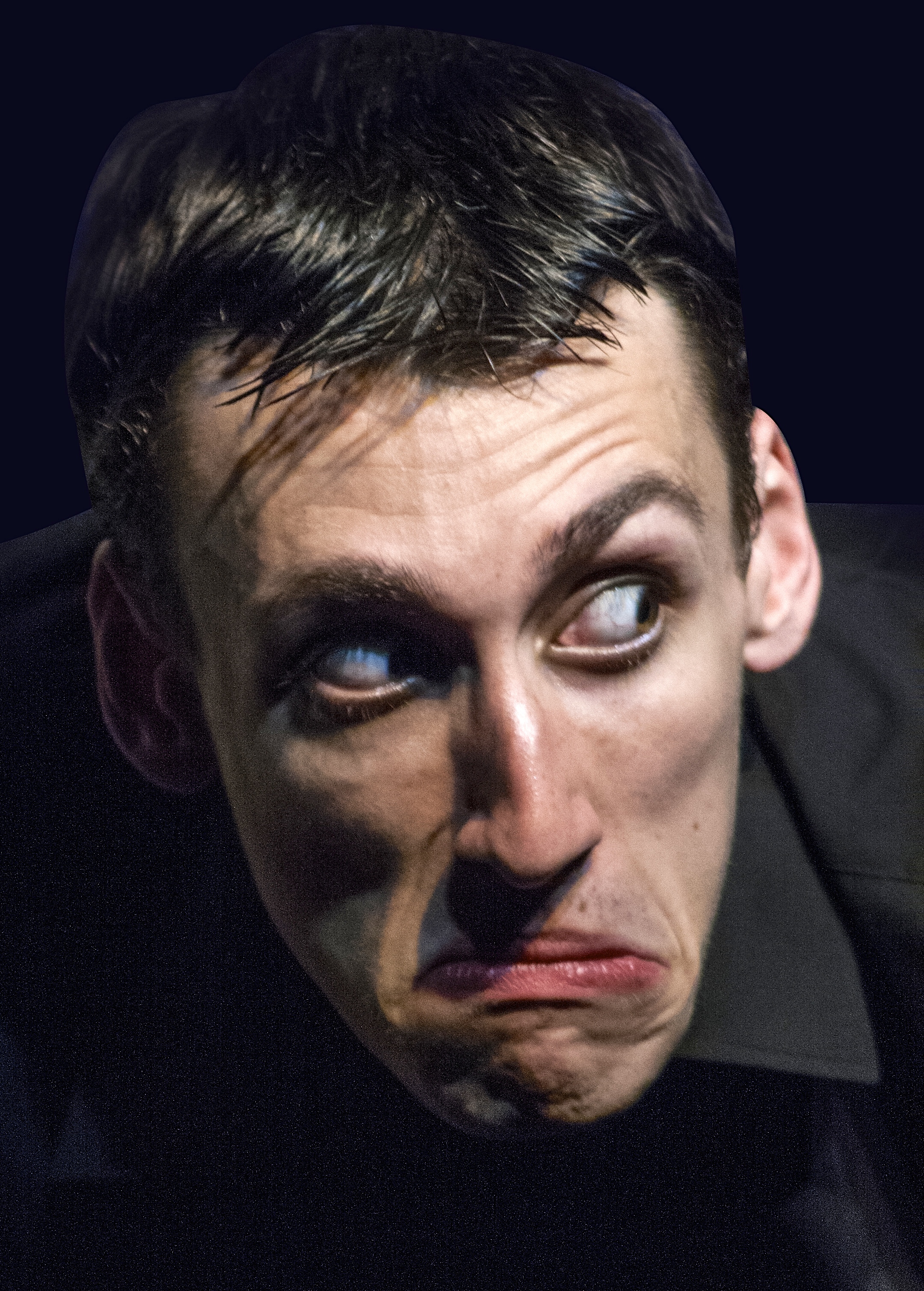
In his later years, when Charles Dickens had become an international celebrity, he took to the stage and toured, playing his most famous characters from Oliver Twist with such passion and ferocity that it is thought that the energy expended could have shortened his life. James Swanton, around three decades younger, has adapted Dickens’ script and, performing it himself with great intensity, he shows us how this material could have taken such a toll on its writer. Dressed entirely in black throughout, Swanton begins with Fagin, his rubber face making the character even more grotesque than we have seen him before. Bizarre inflections in the actor’s delivery exaggerate the creepiness of this character and all the others portrayed. The story goes through from Fagin’s discovery of Nancy’s betrayal to her horrific murder by Sikes and, finally, Sikes’ own demise. It is a story of shade and shade, a Gothic horror melodrama enacted against the backdrop of the darkest corners of Victorian London. Gaunt and sallow, Swanton often resembles a young Boris Karloff, his deep and gravelly tones emitting menace with every utterance, except when he raises his voice to a sort of spoken falsetto to play the whimpering Nancy, fearful and doomed.. The only minor criticism of his performance is that he makes Fagin and Sikes, characters who are both sinister but for different reasons, too similar. Matt Leventhall’s lighting is particularly effective in creating visual images to match the vividly descriptive words being spoken. Swanton is frequently seen emerging from smoky darkness, only his face and arms visible, both pale and later splattered with blood. This hour of theatre shows us the stuff from which nightmares are made.

Photo: Edward Quekett

Performance date: 11 December 2014

thepublicreview_hor_web copy

Gilded BalloonThis review was originally written for The Public Reviews: http://www.thepublicreviews.com

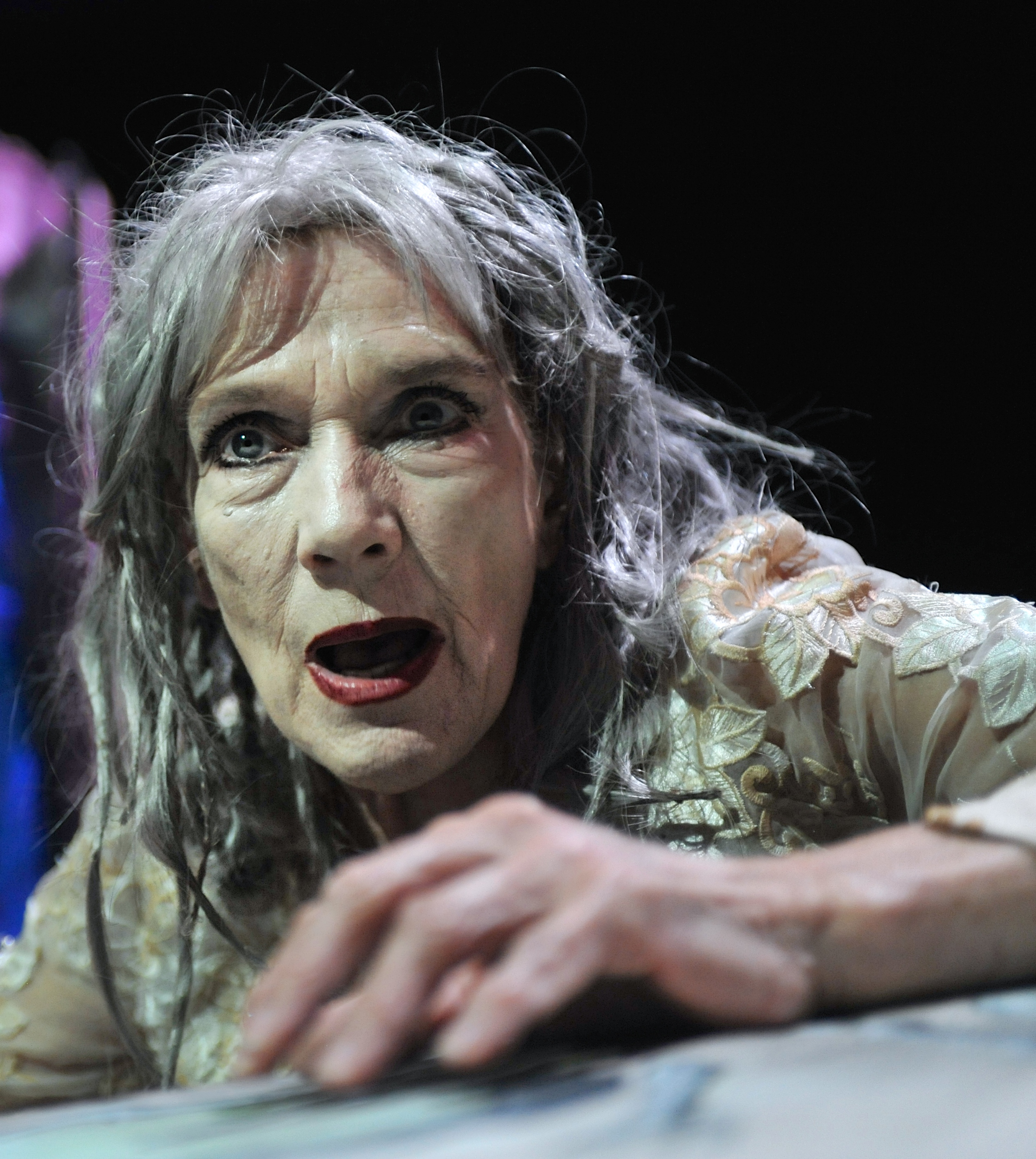
Hovering over Charles Dickens’ enduringly popular novel Great Expectations like a spectre, Miss Havisham has become an iconic, pitiable figure and the programme for this production tells us the she has even given her name to the psychological condition of “stuck grief”. Jilted on her wedding day by the feckless Freddie, she became so traumatised that she remains rooted in that day forever, a recluse in her fusty Gothic mansion. Di Sherlock’s one hour play, which she directs herself, looks at events in the novel from the perspective of Miss Havisham, examining her motives in adopting the young Estella to gain revenge on men and in taking under her wing the unsuspecting Pip to become her step-daughter’s intended victim. Sherlock’s Havisham is partly the character described by Dickens, partly an alternative version thereof and partly a 21st Century figure commenting sarcastically on Havisham and her creator (always referring to him as “Sir Dick”). These variations result in a lack of cohesion throughout the play and even a bravura performance by Linda Marlowe is not enough to paper over all the cracks. Is this Havisham a tragic character or is she a figure of fun? Whilst Sherlock wavers, the audience begins to lose interest. Marlowe makes her entrance wearing a singed, torn wedding dress with a white veil over her face. This is the Havisham we can all recognise from numerous earlier dramatisations, but what follows is less conventional. Her monologue is embellished with witty, modern asides to the audience, two conjuring tricks (executed with considerable aplomb) and an energetic performance of the can-can. Amusing as these diversions are, it is difficult to understand how they serve the themes of the play. This is an intermittently entertaining production and Marlowe is a delight throughout, but its inconsistency and lack of focus leave a feeling that we could have expected more.

Photo: Steve Ullathorne

Performance date: 11 December 2014

thepublicreview_hor_web copy

Henry IV Part II**** (Barbican Theatre)

Posted: December 11, 2014 in Theatre

PARTII-8-541X361

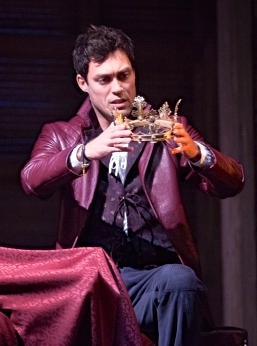
Having caught Gregory Doran’s production of Henry IV Part I in Stratford (see review posted on 29 August), I had long looked forward to discovering what he makes of Part II, now to be seen little more than a stone’s throw from the plays’ spiritual home – East Cheap. Hotspur, the manic super villain in the first play of these productions was left behind at Shrewsbury and the tone now changes from that of comic book action adventure to mellow reflections on the sorrow of ageing and the weight of power. This is the history play without a battle, a peace treaty achieved through duplicity having intervened to deny Shakespeare a much needed centrepiece to his drama and Doran does not completely overcome the problem during much of a first half that sometimes drags and stays afloat only because of the broad comedy supplied by Falstaff and his cohorts. However, The first half draws to a close with a wonderfully moving scene: A night of rollicking ends, Falstaff exits to bed clutching the devoted Doll Tearsheet (Nia Gwynne) and Mistress Quickly (Paola Dionisotti) falls asleep on stage; at this point, the ailing King (Jasper Britton), draped in white like a ghost, makes his first entrance and the essence of these plays, the extraordinary juxtaposition of low humour and epic drama, is grasped to the full – “How many thousand of my poorest subjects are at this hour asleep……Uneasy lies the head that wears a crown”. Merging two scenes, Doran creates a magical moment and, thereafter, his production never loosens its grip. The always delightful Oliver Ford Davies joins the company to render a doleful Justice Shallow, a foil to Falstaff as the pair reminisce and hear the chimes of midnight together. I was still not bowled over by Alex Hassell’s Hal – a carefree prankster for sure, but an unlikely future King Henry V. However, a host of tremendous character performances are more than enough to compensate for a single weakness and Antony Sher’s Falstaff, now even funnier and sadder, remains a wonder to behold. Sher uses his own lack of height to brilliant comic effect, flailing his arms to threaten adversaries in gestures of obvious futility, yet, setting aside the comedy, he still reveals all the character’s insecurity and loneliness. The staging has lost very little in the transfer, Stephen Brimson Lewis’s simple, uncluttered set, aided by Tim Mitchell’s lighting, converting readily from grandeur to intimacy. Overall, these are two memorable productions.

Performance date: 9 December 2014

Cinderella and the BeanstalkThis review was originally written for The Public Reviews: http://www.thepublicreviews.com

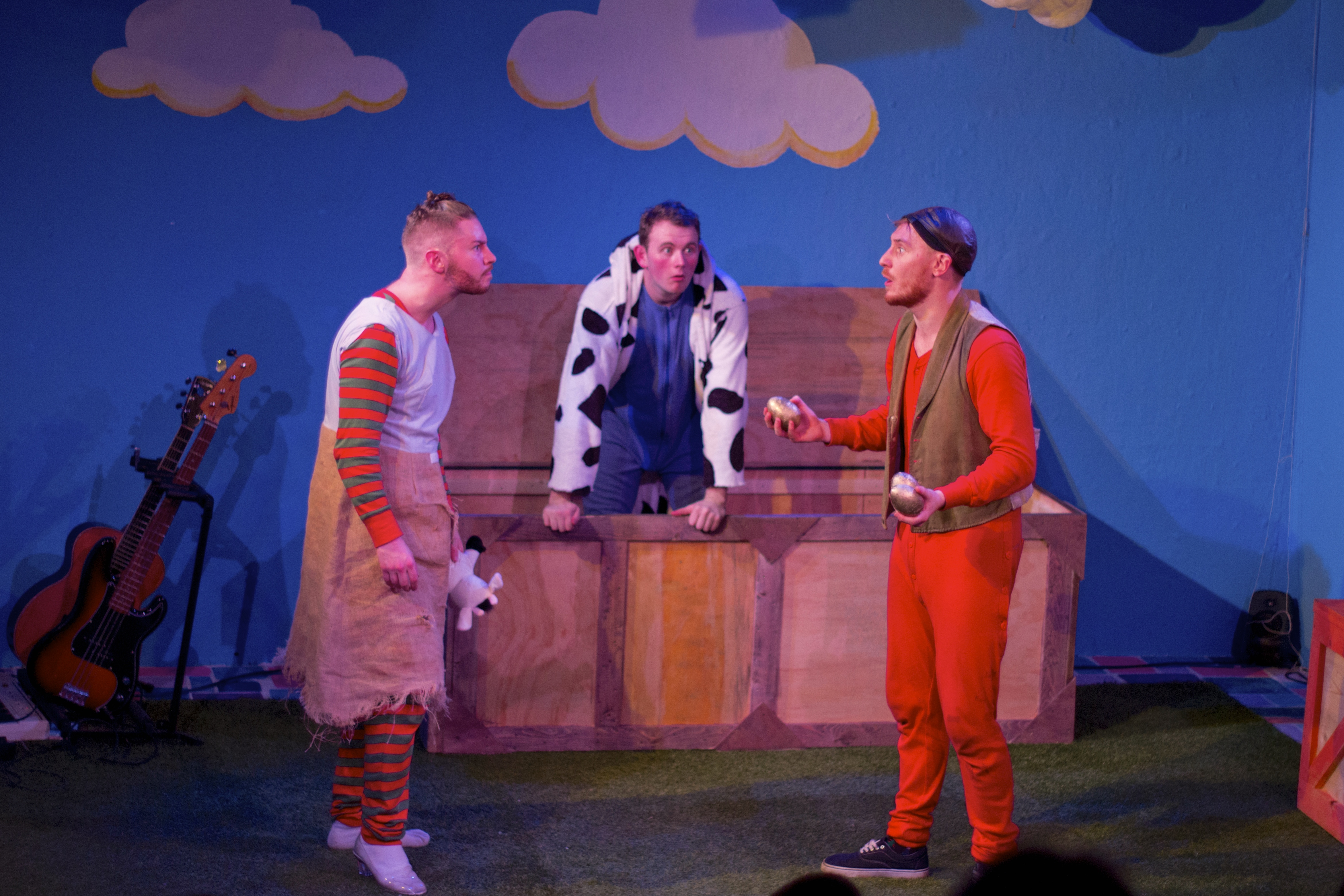
If you fancy a couple of pantos this Christmas, but are a bit short of time or cash, here is the answer – the theatrical equivalent of buy one get one free. Presented by three young men known collectively as Sleeping Trees, this is a mishmash of two traditional children’s stories served up with a Grimm cocktail of assorted characters from several more. James Dunnell-Smith, Joshua George Smith and John Woodburn arrive in dinner jackets to introduce the show that they have written, only to discover that no-one has remembered to hire any actors. Undeterred, they change into brightly-coloured long johns and perform the show themselves, taking on multiple roles, male and female. What follows is a pantomime of many dames and rapid costume changes. Bearded James is uncomfortable in the role of Cinders, who has only one sister because Josh does not consider himself ugly enough to play the other one, whilst John panics when several of his characters are on stage at the same time. Mark Newnham, composer of the show’s songs, sits in a back corner playing accompanying music and occasionally joins in the mayhem. A single set of pale blue, with fluffy white clouds provides the backdrop and several crates litter the stage; they contain costumes and a beanstalk which, rather sadly, grows horizontally. This is probably due to cost constraints, but, thankfully, this is a pantomime for which the budget does not run to soap stars either. A quick enactment of the entire film Home Alone at the start of the second half is near brilliant. Otherwise, knowing jokes aimed at adults and sure to go over children’s heads are notably absent and there is absolutely no smut. The script may be short on wit, but the compensation is a a tidal wave of simple, unforced jollity which deluges the audience and even Scrooge would have difficulty sitting through it without a broad smile on his face. Children (recommended age 8+) should revel in all the clowning, but maybe the younger ones would find a straightforward telling of a single story more enchanting and a scene in which “Mr” Cow gives birth could cause them quite a bit of confusion. Pantomime is often said to be the starting point from which children go on to develop a lifelong love of theatre, having been told magical stories, gazing in awe at the glitter and spectacle. Here we have the opposite of all that – a muddled plot, tiny cast, makeshift props and costumes. So welcome to the world of fringe theatre, kids, you’re going to enjoy the ride.

Performance date: 5 December 2014

thepublicreview_hor_web copy

Hope****+ (Royal Court Theatre)

Posted: December 4, 2014 in Theatre

hope-rcIt is hard to believe it possible that a play about local authority spending cuts could be quite as entertaining as this. Jack Thorne’s terrific new play is neither satirical nor cynical, rather it is a factual account of a fictional Labour council’s efforts to square  a familiar circle and it becomes so engrossing because of the way in which the writer skilfully develops his characters, weaves in personal stories and spikes the cocktail with generous infusions of laugh-out-loud humour. Faced with a £22 million cut in national government funding and denied any means to raise its own further revenue, this council prepares to set a budget for the coming year, deciding where the axe will have to fall – day care centres, libraries, swimming pools, public conveniences, etc are all lined up as likely victims. The Councillors all know that, when an assault takes place in an area where street lighting has been removed, they will be blamed and their level of personal involvement with public decisions is further emphasised by the ex-wife of deputy leader Mark running a special needs centre faced with closure. Fresh from a long run in Handbagged, Stella Gonet does not quite shed the Thatcher persona as council leader Hilary, but the character’s self-sacrificing sense of duty makes her far more sympathetic. Paul Higgins is perfect as the wavering Mark, battling with alcoholism, managing a tentative relationship with fellow councillor Julie (Sharon Duncan-Brewster) and taking responsibility for his excessively smart teenage son Jake (Tommy Knight). John Tiffany conjures up a carefully measured and superbly acted production, energising the dry but necessary discussions of detailed cuts with expressionist physical movement. Thorne could easily have made this a simple exercise in Tory bashing, but he has the wisdom to remember from whom the Coalition Government inherited economic chaos and, whilst his characters may call Cameron a ****, they are at least as disdainful of Ed (without specifying which one). Indeed, the play’s keynote speech, spoken by retired council leader George (the splendid Tom Georgeson), sounds like a eulogy for Britain’s deceased labour movement. In depicting a conundrum to which there is no solution, Thorne could well have called his play “Hopeless”, but then he tags on a wonderful final scene. Elderly George and young Jake sit together on a park bench discussing Dickens’ Great Expectations and, as the conversation develops, the simple optimism of youth overpowers the tired cynicism of age and the chosen title now seems perfect. It is late enough in 2014 to be able to say with reasonable confidence that Hope is one of the best new plays of the year.

Performance date: 3 December 2014