Archive for the ‘Theatre’ Category

SavedPicture-201441622521This review was originally written for The Public Reviews: http://www.thepublicreviews.com

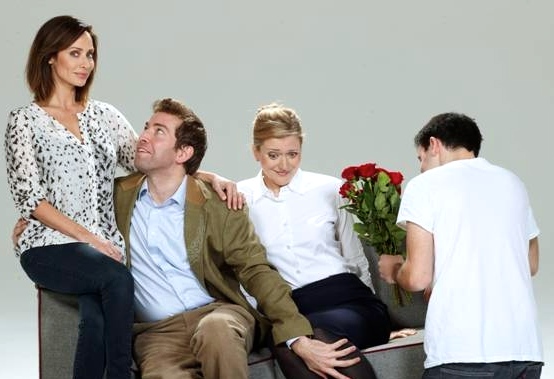
The highlight of  this comedy comes with what is probably the most ferocious man/woman fight scene conceived for the stage since Private Lives. High praise perhaps, but any comparison with Noel Coward must be the thing that Alan Ayckbourn dreads most. He built his reputation in the 1970s-90s with sharp observational comedies set mostly amongst the suburban English middle classes, but, increasingly, it is looking as if time has been rather unkind to some of his plays, robbing them of topical relevance and thereby exposing them for their lack of Coward-style wit.  For all the flippancy of Private Lives, that play still has something meaningful to say about the nature of human relationships, whilst this one, Ayckbourn’s 51st, now feels vacuous, ! lacking in purpose and horribly dated, even though it is less than 20 years old. The play was generally well received on its West End opening in 1998, so have times changed that much or is it simply misjudgements in this production that have damaged it? In a converted Victorian house in Fulham, Barbara (Claire Price), a frigid career woman and committed spinster, is occupying the ground floor flat and letting the upstairs one to new tenants, Nikki (Natalie Imbruglia), an old school friend and her fiancé Hamish (Edward Bennett). These characters are post-Thatcher London yuppies, something of a departure for Ayckbourn, and he never seems quite comfortable with them or able to develop them to become credible. As soon as it is established that Barbara hates Hamish for being Scottish and a vegetarian and that he hates her for being Barbara, it is clear that a love triangle is sure to develop, even though the chemistry between Price and Bennett is most notable for its absence. However, the central point of the play does not emerge until just before the interval and, until then, we need to endure almost an hour of laboured, inconsequential chitchat.  The actors, desperate to hear even the smallest ripples of laughter, often succumb to the temptation to overplay. This is seen in Imbruglia’s jumpy and excitable Nikki, but more so in a fourth character, basement-dweller Gilbert (Simon Gregor), a postman and a handyman who has a talent for fixing central heating and a fetish for wearing Barbara’s discarded clothes. Gregor makes a passable drunk, but, when sober, the weird inflections in his voice and his exaggerated postures seem as if they could be more at home in a cartoon. This production emphases the fact that Gilbert is a sad little working class man, then reiterates it and finally double underlines it. If this character was ever intended to have any dignity, Gregor never comes close to finding it. Multi-room sets are a common feature in Ayckbourn and here Giles Cadle’s design is rather effective. Barbara’s flat is in full view over a small section of the upper part of Gilbert’s; above is the lower quarter of Nikki and Hamish’s flat. The production looks handsome enough, but there is no escaping it – the main problem here is the play. The best of Ayckbourn’s later comedies tackle the darker undercurrents running beneath ordinary lives, but it is very difficult to find any depth at all to this one, still less anything to make us laugh. Eventually it just fizzles out in an awkward and unconvincing ending. Over two hours in the company of this irritating and unlikeable quartet could just be bearable were it not for the production’s quest for cheap laughs through its sneering and condescending depiction of Gilbert. This leaves a very nasty taste in the mouth and it flies in the face of modern day sensitivities every bit as much as the entire effort flies in the face of exciting new theatre.

Performance date: 19 May 2014

thepublicreview_hor_web copy

This review was originally written for The Public Reviews: http://www.thepublicreviews.com

Faced with a drunken man staggering around and rambling incoherently, most of us would make a dash for a corner at the back of the pub and hope that he stays at the front. However, on this occasion, we are invited to the back of the King’s Head to meet just such a man and spend 80 minutes in his company. The unnamed young man in question appears wearing a crooked bow tie and a dinner jacket with a pink carnation in the lapel; he looks as if he is about to give the best man speech at a wedding reception after all the guests have departed. He is not happy, describing himself as “not a person, but a person-shaped black hole”. He arrives already drunk and then empties four gin bottles, literally drinking himself under the table. Is he doing this to celebrate, to console himself or just to forget? He decides that it must be to forget, because he can no longer remember the reason. Edmond Digby-Jones captures the man’s state of advanced inebriation very convincingly, struggling to keep his balance, his mind racing and his tongue racing well ahead of it. One minute morose, the next regressing to childhood, he apologises to an imaginary female friend for his transgressions and promises not to do it again, without having a clue as to what he has done. He pours gin into her glass and when, after a couple of minutes, the glass is still full, he empties it himself. He coughs and then repeatedly reassures himself that he is still alive by exclaiming “still able to cough”, until it occurs to him that he might have got drunk to forget that he has an incurable chest disease. In fact, we conclude long before him that the most likely reason for his drunkenness is that he is using gin as an antidote to loneliness. Despite the obvious humour, the overall tone of Timothy Turner’s monologue, directed by himself, is rarely comic. Backed by slow, repetitive piano music, it is more melancholy and, eventually, nightmarish. In taking us into the darker zones of alcohol abuse, the play is not likely to do much for the King’s Head’s bar sales, but it serves as a salutary warning to the audience. ! ! As Being As I Am is at least 20 minutes too long, Digby-Jones has to work harder than he needs to, making it tempting to offer to buy him a drink at the end. On second thoughts, perhaps that would not be such a good idea.

Performance date: 18 May 2014

thepublicreview_hor_web copy

p.txt-2This review was originally written for The Public Reviews – http://www.thepublicreviews.com

Theatre versions of well-known films have become increasingly common of late, but who would ever think of adapting a western? The wide open prairies of the American West would not be easy to replicate on a North London stage, but John Ford’s 1962 film, an acknowledged classic of the genre, is an unusually intimate piece, shot mainly in a studio on interior sets, and it undergoes the transition naturally. Bypassing the film, Jethro Compton has based his adaptation on the original 25-page short story by Dorothy M Johnson, which could have helped him to reimagine the characters and distinguish them from James Stewart, John Wayne, Lee Marvin and the like. Certainly the actors never seem inhibited by those long shadows and we forget about making comparisons with their film equivalents even before the end of the first scene. A British cast could also have led to problems with authenticity, but such worries are dispelled equally quickly, helped somewhat by hearing the recorded voice, as narrator, of Robert Vaughn; he is the last survivor of the original Magnificent Seven and, therefore, about as authentic as it is possible to get. Ransome Foster (Oliver Lansley), a lawyer from the East, arrives in the small Western town of Twotrees, having already taken a beating on the road from the merciless outlaw Liberty Valance (a menacing James Marlowe) and his gang. He is rescued by Bert Barricune (Paul Albertson), an ageing, gunslinging cowboy, and given refuge by the town’s saloon owner, Hallie Jackson (Niamh Walsh), who Bert believes to be his girl. Foster takes on the challenge of educating Hallie and her barman (Lanre Malaolu giving a stand-out performance), a gifted young black man nicknamed “The Reverend” because of his ability to memorise passages from the Scriptures. In the eyes of Valance, education will inevitably be followed by law and order and result in the end of his reign of terror, so a showdown between him and Foster becomes inevitable. On the face of it, this is a simple morality tale setting good against evil, but, in fact, there is much more complexity and depth to it. Barricune represents a dying breed of pioneers who had paved the way for a civilised society and Foster represents a new breed of men in suits and ties who take over the reins and drive forward to a world dominated by lawyers and politicians. The play asks which of these different codes is fairer and more honest, who are the real heroes and what separates truth from myth. A cleverly conceived and very satisfying ending highlights the ambiguities in the story and the irony in its title, bringing secondary themes to the fore. Varying the tone, the story also involves a touching love triangle, which is played out with great sensitivity. The heart sinks upon first sight of Sarah Booth’s set, a traditional saloon bar with swing doors, but fears that the play would be just another pastiche of a cinema genre so full of cliches are quickly dispelled. Compton’s script contains much natural humour, but never veers towards comedy and he shows good judgement in ensuring that sequences which could have been risible occur offstage or in darkness. Building tension for the impending arrival of Valance, the pace is slow and deliberate throughout, thesombre and reflective mood being heightened by atmospheric lighting from Julian McCready and original music composed by Jonny Sims. It would probably take around half an hour to read the original short story, so it is remarkable that there is enough in it to stretch to over two hours. But indeed there is and this version provides a consistently absorbing, often moving and very unusual evening of theatre.

Performance date: 16 May 2014

thepublicreview_hor_web copy

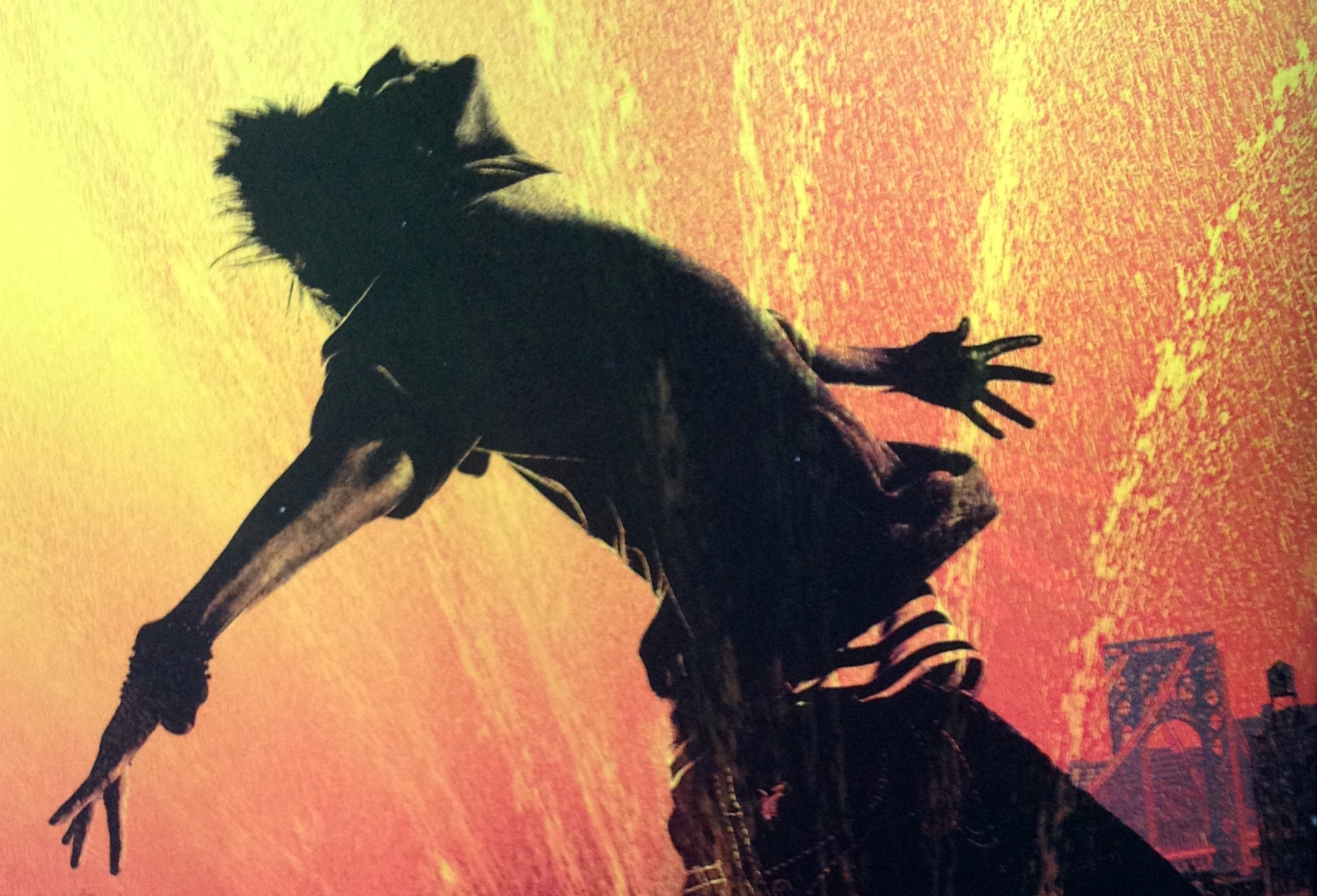
photo-66After four extraordinary successes, everyone now takes notice when Southwark Playhouse puts on an American musical. This is a Tony award winner from five years ago, set in the largely Hispanic district of New York City, Washington Heights, and amongst first and second generation immigrants from Puerto Rico – the young and the not so young, cab company and coffee stand owners, an ice cream seller, a hairdresser, a promising student, etc. We follow them through life’s trials and tribulations – financial hardship, a lottery win, courtship,  celebration, death and a power cut. Lin-Manuel Miranda’s tuneful score owes little to traditional Broadway and a lot to Latino artists such as Gloria Estefan, thereby making the songs refreshingly different and perfect for the exhilarating and colourful dance routines which crop up at regular intervals throughout the show. Directed by Luke Sheppard and choreographed by Drew McOnie, the mostly young company throw themselves across every inch of the small stage with energy and vigour; if the pace ever lets up, they have the simple answer – bring on the dancers. Miranda’s lyrics work well with Quiara Alegria Hodes’ book, both being lively and witty, but the only real problem lies with the narrative, which is too scattered and riddled with cliches; the stories manage to hold our interest for the first half, but fall away badly after the interval, leaving only the characters and the songs to drive a show which ends in slight disappointment that it did not turn out to be quite as good as it had promised. There are some terrific performances, most notably from Sam Mackay as the constantly rapping Usnavi (named after the ship that brought him to America) and seasoned players such as David Bedella and Eve Polycarpou are on hand to preside over the youngsters. However, in general, the script does not allow the performances to be developed into more than delightful cameos. As with other musicals staged by Southwark Playhouse, here and at its previous location, the big thrill is being able to sit in such close proximity to the performers for a flat-out song and dance production. This show is far from faultless, but it provides entertainment of a pretty high order.

Performance date: 15 May 2014

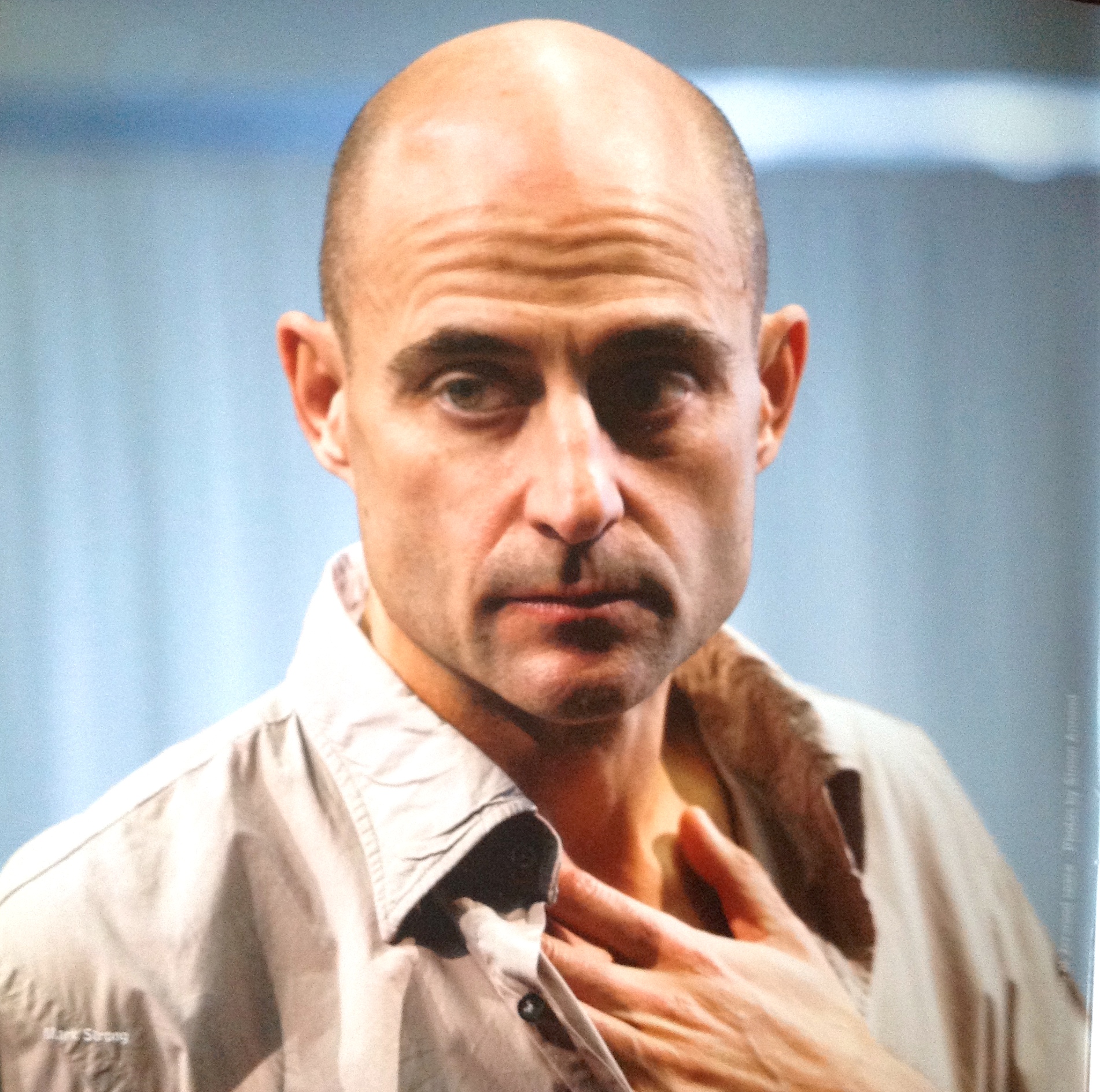
photo-68Belgian director Ivo van Hove’s reputation preceded him to the Young Vic, but few could have expected anything like this. He has taken Arthur Miller’s play, a masterpiece of modern drama, stripped it down to its bare essentials and rebuilt it piece by piece so that it comes to resemble a spoken opera. Clues that we are in for something special come from the very beginning. With the audience seated on three sides of an all-white oblong stage, a surrounding curtain rises slowly and, to the sound of solemn church music, reveals two men washing after their day’s hard work as longshoremen in 1950s Brooklyn, New York. One of them is Eddie, a legal Italian migrant who lives with his wife (Nicola Walker) and her 17-year-old orphaned niece, Catherine (Phoebe Fox). Their lives are disturbed by the arrival, illegally, of two relatives from Italy who need accommodation. An attraction forms between Catherine and one of them, Rodolpho (Luke Norris) and its growth is matched by that of Eddie’s uncontrollable jealousy. Miller moulds his play from Greek tragedy, with a lawyer acting as the chorus, commenting on events to the audience and to Eddie, the outcome seeming inevitable and unavoidable from the beginning. It is an enormous challenge for any writer and actor to express the emotions of an inarticulate man who cannot even understand them himself. Miller rose to the challenge and now Mark Strong, a hard man in many films, gives what must be a career-defining performance as Eddie. The visceral power, intensity and authenticity displayed by Strong are, at times, staggering. The other performances are also impeccable, but it is the director who is behind making this production of the play stand out from any other; there is no set and only one prop is used throughout the uninterrupted two hours running time; the actors are all barefoot, as if treading on sacred ground; the religious music persists at decreased or increased volumes, accompanied at times of high tension by a slow, soft drum beat. Occasionally, it benefits to look at actors who are peripheral to the scene taking place, in order to observe how they are staying in character and reacting. It seems as if every tiny detail matters to van Hove in his quest to develop and heighten the drama, but taking note of each of the details is impossible whilst we are reeling at their cumulative impact.  The climactic scene sees an unforgettable coup de theatre that is visually shocking, but entirely appropriate to the drama leading up to it. It is still only Spring, but, if London theatre sees anything better than this production during 2014, it will have been a truly blessed year. A shattering experience.

Performance date: 14 May 2014

225450_2_previewThe exterior of a modern double-fronted executive home occupying the entire stage is an imposing sight on entering the Olivier. Then the lights dim, the stage revolves and the whole of Act I takes place indoors. At the interval, the exterior re-appears and then revolves out of sight at the start of Act II, never to be seen again. So why is the National Theatre, which is subsidised out of public funds, wasting money and manpower resources on building a set, for which every one of hundreds of bricks is painted meticulously, when it is not even used in the course of the play? Notwithstanding this, there are no gripes about the ingenious six-room interior set, which trebles up to be three different homes with several scenes taking place concurrently, typical of the style of this play’s writer, Alan Ayckbourn. It was written in the mid-198os and performed on this same stage, with Michael Gambon in the lead, in 1987. It is a satire on greed, materialism and corruption in Margaret Thatcher’s Britain, telling how Jack McCracken (Nigel Lindsay), an upright and totally honest man, takes over a family business from his retiring father-in-law only to find it riddled with criminal malpractices. At first he stands firm and tries to uphold his standards of morality and decency, but he finds himself getting sucked more and more into the mire. The satire is just as biting and relevant now as it was in the 1980’s, but, somehow the play does not seem as consistently funny as it did back then. Ayckbourn built his reputation on his ability to make astute observations on the lifestyles and language of middle class Britain, so can it be that British society has changed in ways that make the playwright’s characters less readily identifiable? If so, then the play will have lost some of the humour arising from recognition of people and situations and, as Ayckbourn’s writing contains little wit of other kinds, it is funny only intermittently and just mildly amusing for the rest of the time. More Ayckbourn is lined up for next week, so it will be interesting to see whether this view holds or is refuted. Adam Penford’s direction, with a capable, non-starry cast, is slick and entertaining. It is difficult to pinpoint anything seriously wrong with this production, except that it never really catches fire.

Performance date: 13 May 2014

This review was originally written for The Public Reviews: http://www.thepublicreviews.com

On an evening of bright sunshine and heavy showers, a rainbow appeared above the Landor as the audience entered for the opening performance of this one-woman show. If the Heavens were signalling their approval, they were right to do so. Sharon Sexton has played Liza Minnelli in this monologue with songs, both on tour and at the 2012 Edinburgh Fringe Festival, but she is bringing it to London for the first time, taking a break from her role in The Commitments in the West End to do so. Telling the story of Minnelli’s life, focussing primarily on the early years, the show begins with black and white footage of Judy Garland introducing her teenage daughter to a television audience, followed by a medley from Gypsy and then Broadway Baby. There is a fair amount of name dropping – Frank Sinatra visited her in hospital on the day she was born, etc – but this is not a simple riches to riches story, as we hear how Liza entered showbiz in the face of opposition from her mother and how she was forced to clamber down the ladder before climbing back up. She tells of sleeping rough in Central Park and of being rejected for roles, most ironically for the lead in the Broadway production of Cabaret. After that, broke and desperate for work, she consoled herself by buying a Cartier watch, exemplifying her philosophy that “reality is something you rise above”. Sexton does not impersonate Minnelli, she becomes her, digging deep to find the real person beneath the flamboyant, glitzy facade. Her exaggerated movements, her nervous giggle, her self deprecating humour all reveal a woman who is caught by the limelight, yet strangely vulnerable, living the life that she leads because she has never known any other way. She apologises for not being able to volunteer bad news about her childhood, recalling idyllic moments when her playtime was directed by Vincente Minnelli and she causes howls of laughter when she describes a show at the London Palladium in which she and her mother battled to upstage each other. As she sang her solo, she saw a proud mother standing in the wings and, then, when it finished, she saw not her mother but Judy Garland, a fierce rival, standing on stage. At Garland’s funeral wake, Liza took her first valium, to begin a downward spiral of pills to counter other pills and so on, the anguish of which is expressed in a rendering of Sondheim’s Losing My Mind, bringing tears to the eyes of both the performer and the audience. Otherwise, regretful glances from Sexton are enough to tell of the drug and liquor problems and of the failed marriages. This is essentially an upbeat celebration of the life of a survivor and Sexton proves it with her glorious versions of the big numbers from Minnelli’s biggest success, the film version of Kander and Ebb’s Cabaret. Carefully written and with well chosen songs, this is a production which makes 80 minutes just fly by. Above all else, it is a triumph for Sharon Sexton’s performance, a real tour de force and even Liza Minnelli herself would be hard pressed to top it.

Performance date: 12 May 2014

thepublicreview_hor_web copy

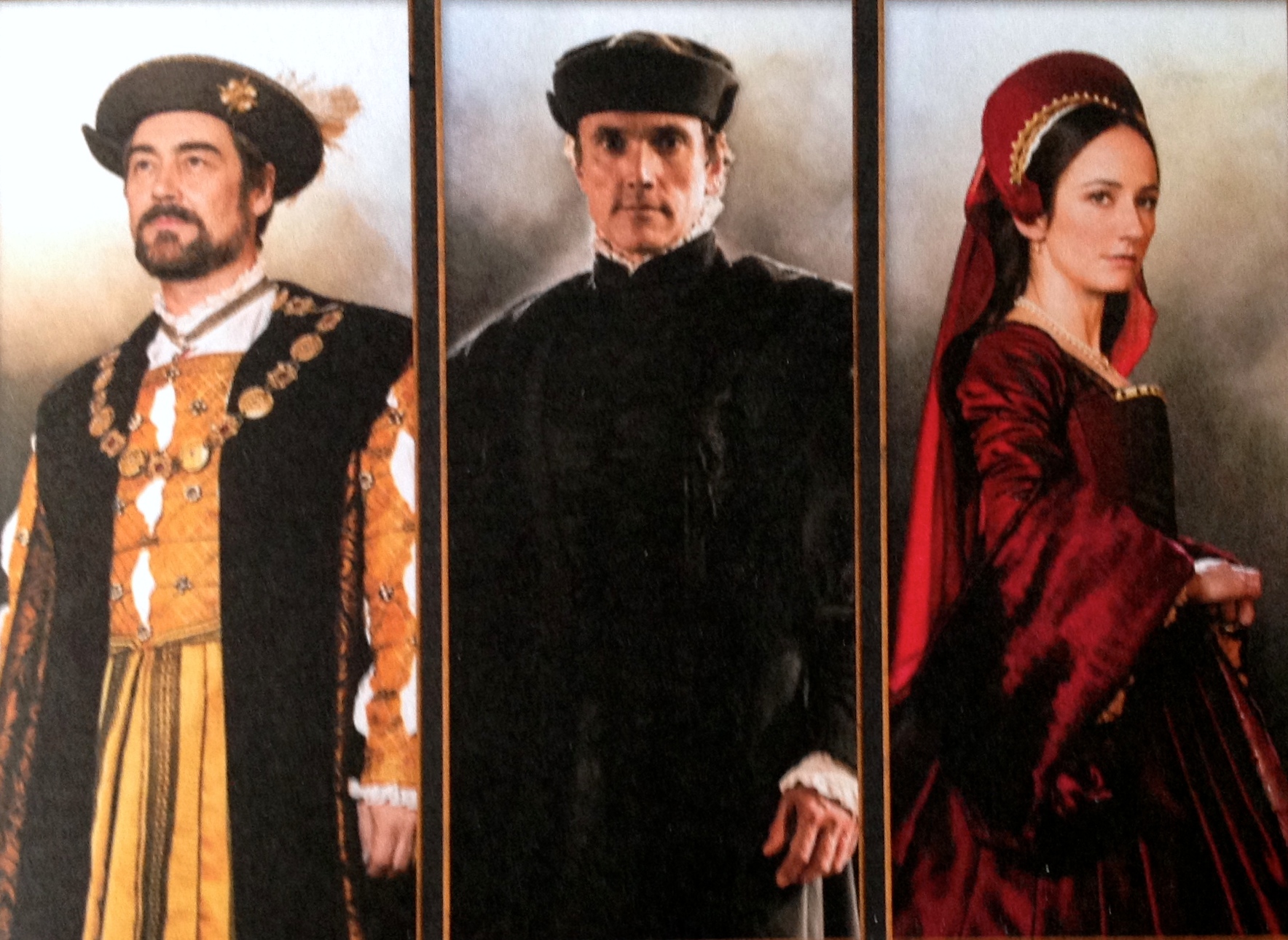
photo-64It is now over 30 years since the Royal Shakespeare Company performed their revolutionary and now legendary adaptation of Charles Dickens’ Nicholas Nickleby on this same stage and nothing like it has been seen since. Until now. In the intervening years, the Company has had an unsuccessful spell in the Barbican followed by a prolonged absence from the capital, so it is fitting that a return to their spiritual London home should be marked by another massive adaptation from a novel, actually two novels by Hilary Mantel, both of them winners of the Booker Prize. Together, the plays, adapted by Mike Poulton, run for almost six hours, so they are huge in every sense, a vivid and detailed examination of political manoeuvring in the Court of King Henry VIII. The history of this period is well known and there have been many dramatised versions, but Mantel is more concerned with the characters than the history, interweaving fact with fiction and making the people of Tudor England very modern in their language and behaviour. Their conversations include moans about the British weather and ideas about what to eat for dinner as well as discussions over Court gossip and plots for their next moves. Thomas seems to have been a very popular name in these times and, at the centre of the plays is Thomas Cromwell (Ben Miles), a blacksmith’s son who has been a mercenary, a financier, a lawyer and is now emerging as a politician. At first, he is a “fixer”, a sort of Tudor Arthur Daley, for Cardinal Thomas Wolsey (Paul Jesson), who is depicted here as avuncular and with an acerbic wit. When Wolsey falls out of favour with the Court, he moves on and eventually becomes right hand man to the King himself. Whilst being streetwise and ruthless, Cromwell is also a devoted family man and unswerving in his loyalty to his friends, particularly Wolsey. Thus Mantel paints a picture in which decency and honesty co-exist with intrigue and betrayal. It is these contradictions in the story, but more specifically in the character of Cromwell, that make the plays so spellbinding and Miles’ performance is awesome in both the intimate and the epic (he is rarely off stage for the duration) senses. Other characters also defy conventional portrayals: Henry (Nathaniel Parker) is given much more depth and complexity than usual; Sir Thomas More (John Ramm), far from being the saint of A Man for All Seasons, is a near-demented religious zealot; and Anne Boleyn (Lydia Leonard) is no innocent victim, more a manipulative power-seeker who cares for her dog more than her husband or her (allegedly) many lovers. The performances are all so strong that Hilary Mantel has stated publicly that the characters as played here are now fixed firmly in her head as she writes the next sequel. Revisionist history this certainly is, but there is never any doubt that these plays are intended to be entertaining more than educational and they almost always succeed with that aim. That parts of the second play are less gripping than the first could be due to the novelty of their presentation and structure having worn off slightly, or to events seeming repetitive, or maybe just to audience fatigue. Nonetheless, the two plays do not stand well alone and no-one having seen Wolf Hall is likely to be able to resist its sequel. The actors are lavishly costumed, but the open stage is uncluttered with props, allowing Jeremy Herrin’s production to flow smoothly throughout. After so many positive comments, it is sad to end with a complaint, but £6 is excessive for a theatre programme and separate programmes for the two plays (completely unnecessary as the casts and production teams are the same) is pushing it much too far.

Performance date: 10 May 2014

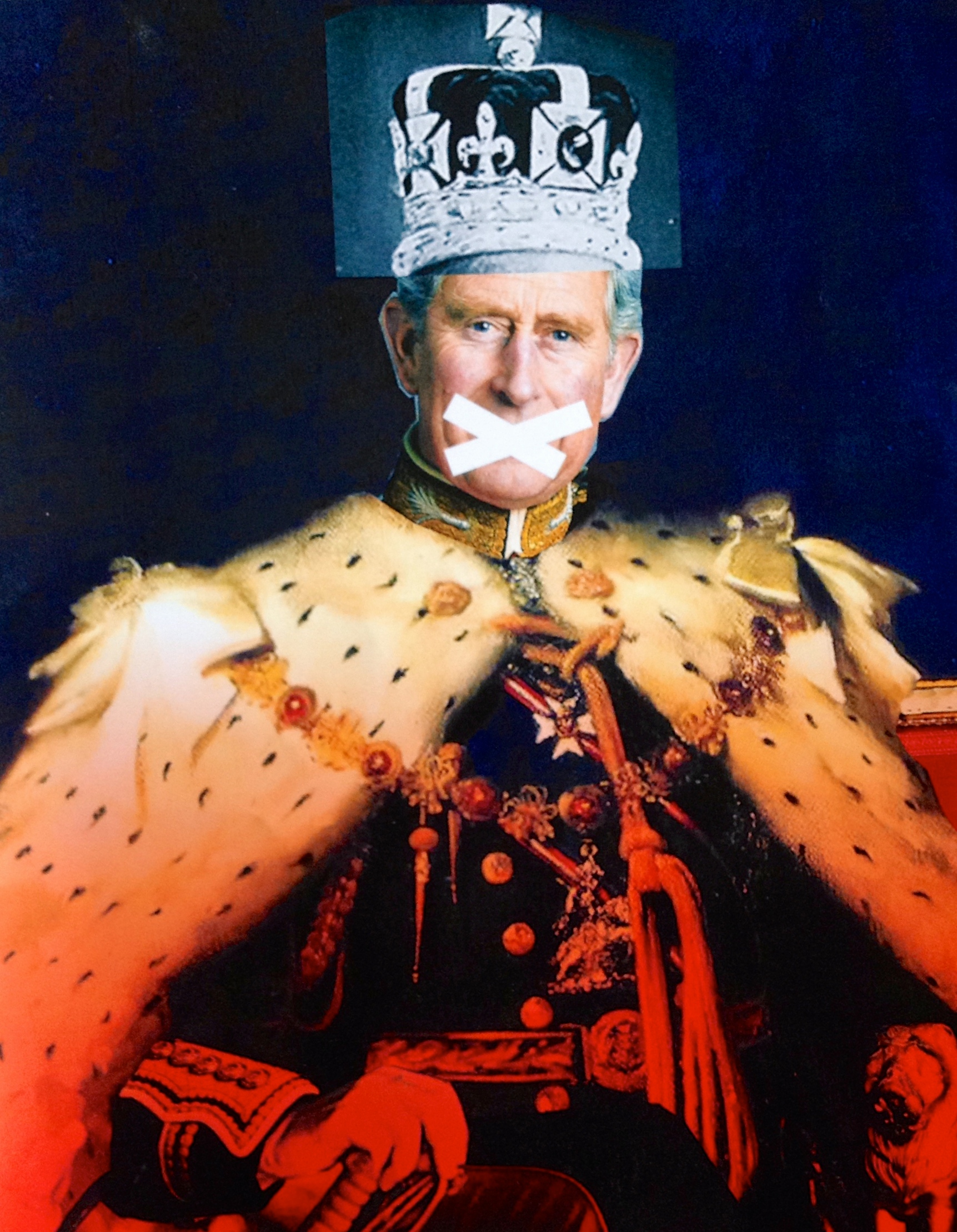
photo-63Describing his work as a “future history play”, Mike Bartlett explores a time in which our beloved monarch of more than 60 years will no longer be with us, a time of confusion for the nation and of collective loss of identity. Daringly, he adopts the structure of a Shakespeare history play and writes in verse, moulding several of the characters to resemble those in the Bard’s plays – Charles (Tim Pigott-Smith) begins as a dithering, well intentioned Richard II, miscalculating his power base, and then progresses to become a half-mad Lear; the wayward and dissolute Harry (Richard Goulding) is, obviously, Hal; most tellingly, Katharine (Lydia Wilson) is Lady Macbeth, plotting and scheming the path to the throne for her upright and ultimately ruthless husband, William (Oliver Chris). A not so merry wife of Windsor, Camilla (Margot Lester), looks on aghast and there is even a Palace ghost (Diana of course). The monarchy begins to unravel when the as yet uncrowned new King refuses to sign a Press Regulation Bill as a matter of principle, notwithstanding the fact that, as the (Labour) Prime Minister points out, he has, throughout his life, been one of the greatest victims of the rampant Press. Although he knew it all along, the King is now faced with the reality of the job which he has waited for more than half a century to take up, not being a job at all. He is just a meaningless, powerless figurehead. Inevitably a constitutional crisis ensues. Although plenty of good jokes are thrown in, this is not a comedy, but a serious examination of a quirky system of Government and a constitution that does not even exist. It is played out with all the dramatic force and pageantry associated with Shakespeare’s histories and, at just under three hours, it is of similar length. All that is missing are the bloody battles. Rupert Goold mounts a grand and impeccably acted production, buoyed by the confidence of knowing that neither he nor his Almeida seems capable of doing anything wrong right now. This is another significant hit for them, bold, different and riveting. The play paints an alarming and plausible picture of what could lie ahead in, hopefully, the not too near future. God Save the Queen!

Performance date: 9 May 2014

YesterdaysTomorrow1-Photo-by-Invisible-DarknessThis review was originally written for The Public Reviews: http://www.thepublicreviews.com

Gene David Kirk never quite gets round to explaining the significance of the title of his new one act play. Does he mean “today”? If so, it is good to report that the obliqueness in the title is not replicated in the writing, which is vivid, descriptive and, at times, even poetic. The writer draws on his own experiences in the military and bases his play on actual events, a collection of memories and feelings which he binds together not to tell a single coherent story, but to convey haunting images and contrasting emotions. The setting is an unspecified far away trouble spot where Britain is part of a United Nations peace keeping force. Ian (Ben Carpenter) is a young officer and John (Matthew Schmolle) belongs to the lower ranks. We first meet them as they both describe to the audience the same horrific incident as they would have seen it, interrupting and talking over each other. This proves to be a very effective device for establishing the characters, their backgrounds and their differing perceptions. Ian is middle class, well educated and sensitive, John is working class with a more down-to-earth outlook. The performances of both actors fit the profiles perfectly. What we do not realise at first is the connection between the two, but fleeting touches and affectionate glances begin to reveal the nature of their friendship and then, in the play’s most moving scene, Ian finds a letter amongst John’s belongings in which he expresses feelings that he cannot bring himself to speak. Ian does not reveal that he has seen the letter, but simply writes at the bottom of it “me too and then some”. The subtlety with which the relationship is developed magnifies its impact immeasurably. Institutional homophobia in the military is touched upon in the character of Simon (Nicholas Waters), who callously demeans local women for his own gratification and boasts about it to Paul (River Hawkins), a rookie that he takes under his wing. However, this is not a play with a political agenda and exposing bigotry is incidental to its purpose. It becomes clear that the writer’s real aim is to contrast the tenderness of the affection between his two central characters with the dehumanising brutality of modern warfare. The contrast is stark and, helped by imaginative staging, the play achieves its objectives fully. This production delivers a riveting 70 minutes of theatre. In choosing his own play to begin his tenure as Artistic Director of the Drayton Arms, Gene David Kirk has done well. Good luck to him for the future.

Performance date: 8 May 2014

thepublicreview_hor_web copy