Terence Rattigan’s most famous play, dealing with a family’s fight for justice whatever the personal cost, still comes across as beautifully crafted and rich with human emotion. However, at just under three hours, with four acts and numerous sub-plots, it also looks rather old-fashioned. Henry Goodman gives a towering performance as Winslow senior, but Peter Sullivan is rather disappointing as the Barrister, lacking a natural aura of authority; beyond that the acting is excellent, whilst the sumptuous set and costumes reflect the era, exactly a century ago. However, when a great play is staged by a major theatre, expectations are rightly high and this production meets those expectations but never exceeds them. Essentially, this is a routine, straightforward revival which makes no attempts to modernise or to inject topicality and much needed pace. It is a production that could easily have played at the Old Vic 50 years ago.
The beautiful Great Hall at Battersea Arts Centre is transformed into a Parisian music hall of the 1930’s; audience members are seated at tables around the performance area, acres of plush red velvet curtains dominate the room and even the huge built-in organ is brought into use. Ostensibly, we have come to see a mimed enactment of the story from Greek mythology in which Orpheus descends into the Underworld in pursuit of his lost love Eurydice. Of course, the mime show is completely ridiculous even though the sight of over-sized performers prancing around and exaggerating their facial expressions in the style of Valentino and Pickford is intermittently funny. But this is not the point. The mime show is there just to give the setting and ambience for the music, played by a wonderful eight piece orchestra, all of whom also perform in the mime. The music is basically anything and everything French, ranging from Debussy to Piaf, but most prominently it is jazz. The production makes the inspired assumption that the legendary jazz guitarist Django Reinhardt would have been performing at this venue on this evening. Playing Reinhardt, Orpheus and guitar, Dominic Conway is magnificent. He is equalled by Eugenie Pastor, MC, chanteuse, flautist and Eurydice. These two performances are unforgettable tours de force. If this is what the Underworld is like, those of us who are probably destined to go there need not feel so bad about it.
Pre-West End, this is a revival of Peter Nichols’ Pinteresque play from the early 1980s which studies the strains placed on a middle-aged couple’s otherwise comfortable marriage when a predatory young woman sets her sights on the husband. The twist is that both spouses appear on stage with their alter egos, who express their inner thoughts, prompt and cajole them throughout. Zoe Wanamaker and alter ego Samantha Bond play the wife, Owen Teale and alter ego Oliver Cotton play the husband; even if the chemistry between them is not yet fully realised, this is an accomplished quartet, all able to give the dialogue the brisk delivery it needs and handle rapid shifts in mood. Annabel Scholey is alluring and mischievous as the younger woman. As seen in this production, the play is difficult to categorise, not funny enough to be a comedy, not serious enough to be a drama; furthermore, it tails off badly in the second half once the novelty of the set up has worn thin, making it a classic example of a one act play stretched out to two. Nonetheless the play contains many thought-provoking ideas and this is a very classy production of it.
This review was originally written for The Public Reviews: http://www.thepublicreviews.com
The title implies a battle between contrasting emotions and the structure of he evening implies a battle of the sexes. In fact, what we see is two one-act plays, both under one hour; the first about hate is written, directed and performed entirely by women; the second about love is written, directed and performed entirely by men. These are stand alone pieces but, if the umbrella title is primarily a marketing device, it also provokes thought as to how love and hate are two sides of the same coin, each fundamental to understanding the human condition. The evening begins with the hate play, entitled Wounds, written by Chantelle Dusette and directed by Zoe Ford. It depicts three generations of a dysfunctional family, headed by the matriarch Grace, the widow of a philandering husband and now an overbearing mother and grandmother. Playing her, Ellie Dickins shows how she struggles to maintain her own vision of dignity but remains insensitive to the concerns of her family. Playing the daughters, Collette Cooper shows resilience and defiance as a recovering drug addict and Terri Dwyer is vulnerable yet determined when her character leaves an abusive marriage and then enters a lesbian relationship. All these characters are wounded by their experiences and, most pointedly, by themselves and the play demonstrates how they use their wounds as weapons against each other with tragic consequences. Set entirely in the family living room and with deft shifts backwards and forwards in time, this is largely a conversation piece, with minimal movement on stage and it is a gripping and convincing drama. In the second half, we see the love play, entitled To The End Of Love, written by Edwin Preece and directed by Sean Turner. It begins with Pink Floyd music being played at the funeral service for a young lady named Stella, after which it becomes instantly clear that the style will more pacy and aggressive, contrasting starkly with the first play. The dialogue is snappy and infused with humour, the scenery is adaptable and there is constant movement by the six actors, all of whom are on stage throughout. Stella has died of cancer and we see her Father (Michael Yale) and three lovers from various times in her life (Darcy Vanhinsbergh, John Pickard and Stevie Raine) enacting scenes from the past and outpouring their emotions to a counsellor. The most moving performance is given by Niall Phillips as her devoted brother who had assumed the role of her protector, both in life and in death. What these characters are expressing is not grief but love which, although not completely fulfilled, is pure in its nature. The writing shows a clear understanding of the pain, regret and even guilt associated with such a loss and it is made all the more effective by its concision. Lonesome Schoolboy Productions takes credit for bringing these two new works to the stage. If it was a real contest, the prize would go to love by a narrow margin, but there are no losers as this proves to be an outstanding showcase for emerging talents.

In his novel of the same name, Franz Kafka created a nightmare world in which the giant State machine turned against one person. This production invites us to immerse ourselves in that world and become the persecuted individual. Taking the format of The Menier’s “Accomplice London”, we are led one-by-one around various locations (not always too close which can be a problem in inclement weather) to meet actors assuming the guises of quirky characters who all try to persuade us that our predicament is becoming increasingly dire. At one stage, we are required to take a 15 minute walk through London’s East End receiving directions over a mobile phone, so there is certainly a real feeling of threat, but perhaps not of the type the producers intended. Beyond that, it is difficult to feel under arrest and the victim of persecution when walking freely in the open air and when we always have it in the back of our heads that, if we really faced torture and worse, Health and Safety regulations would have intervened. A further let down is that we never reach an actual trial, making the conclusion of the journey anticlimactic. Because of this and the absence of credible menace, the characters we meet seem mere comic eccentrics and the essence of Kafka’s work is lost, thereby making the whole experience rather pointless.
Sadly, I left at the interval due to feeling unwell. This is a satire on American capitalism, starting with the premise that its 18th Century roots lay in prostitution, theft and slavery. The writer’s previous works include the multi-award winning and highly entertaining “Clybourne Park” and this is similar in that the targets for the satire are very obvious and the humour is often crude. Unfortunately, the first half was patchy and some scenes were very drawn out. However, it certainly would not have merited an early exit in other circumstances.
A night at the circus (without animals thankfully), performed by the Nofitstate Circus group. The audience were allowed to wander around the performance area and watch trapeze artists, trampolinists, jugglers, rope climbers, tightrope walkers, etc strutting their stuff to live music. When it was well coordinated and choreographed, it provided an impressive spectacle, but, at times, the overall impact was less than the sum total of the individual efforts. Nonetheless an unusual and entertaining evening.
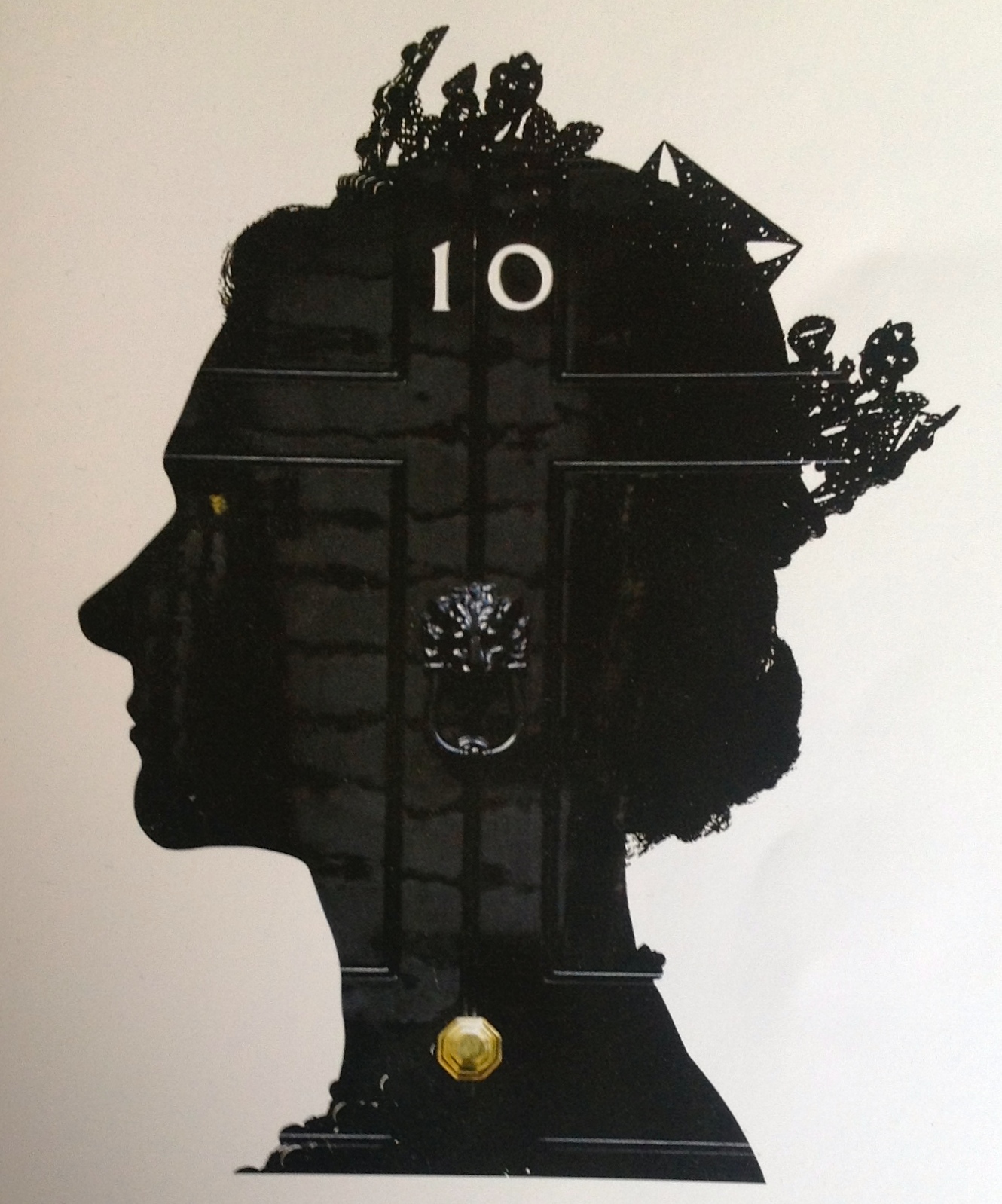 London’s hottest ticket of 2013 and it is worth at least ten times whatever price paid for the privilege of spending an evening in the company of HM (Helen Mirren) The Queen. Covering 60 years, Peter Morgan’s new play dips into the The Queen’s weekly audiences with her twelve Prime Minister (she calls them “the dirty dozen”). Not all of them appear, the most notable omission being Tony Blair who is only referred to and then with disdain. What a splendid and thoroughly deserved insult! We see Winston Churchill (Edward Fox) trying to bully the 26 year old Monarch and David Cameron (Rufus Wright) toadying to her at 86. Using many quick changes of costumes and wigs, Helen Mirren spans the ages effortlessly; but she is not offering a mere impersonation, rather an insight into the real person, showing us that she is “more than just a postage stamp with a pulse”. It is an extraordinary tour de force. The production, directed by Stephen Daldry is, at different times, mischievously funny, fiercely political and deeply moving. The comedy is largely at the expense of John Major and Gordon Brown who are caricatured by Paul Ritter and Nathaniel Parker respectively; the politics come in debates with Anthony Eden (Michael Elwyn) over Suez and Margaret Thatcher (Haydn Gwynne) over South African sanctions; the most touching scenes are those involving Harold Wilson (Richard McCabe), who is presented as the Queen’s favourite of the twelve. He is bumbling and nervous at his first audience, relaxed and playful on a visit to Balmoral and, finally, confused and distraught as The Queen becomes the first he tells that he has been diagnosed with Alzheimer’s Disease. More than just a fun evening, this is a genuinely great play that unravels the mystery of our Constitutional Monarchy, explaining to us and to the rest of the World how and why it works. The lingering thoughts after the curtain falls are how lucky as a nation we are to have Elizabeth II and how lucky the theatre is to have Helen Mirren.
This review was originally written for The Public Reviews: http://www.thepublicreviews.com
First performed in the early 1970s, this musical based on the Gospel of Matthew has become somewhat overshadowed in public perceptions by the Rice/Lloyd Webber Biblical musicals. The prospect of seeing a dated show revived by an amateur company is not normally something to set the juices flowing but, happily, this production confounds expectations on every level. Mainly this is due to the radical idea of setting it on the steps of St Paul’s Cathedral (little more than a stone’s throw from this theatre) during the Occupy London demonstrations over the Winter months of 2011/12. This new context may not be a perfect match with the show in all respects, but it enriches it with modern relevance and many delicious ironies. We see Jesus Christ as leader of a group which is challenging the Church that was founded in his name. At the time of the events, the Church was thrown into turmoil over whether its priority should have been supporting the poor and downtrodden or defending public order and its own property; this production resurrects that debate, coming down strongly in sympathy with the demonstrators. Ultimately, the constraints of the show limit the extent to which such issues can be emphasised, but they are always there as strong underlying themes. The evening begins with the set occupied by black-suited City traders who look as if they could have drifted in from one of the neighbouring bars. Gradually they are replaced by a more colourful group of demonstrators, waving their banners and the stage is strewn with garbage bins, leaflets, tents and, to stress the theme of capitalist excess, a giant monopoly board. The songs have worn surprisingly well; Day By Day is the best known, but Stephen Schwartz has adapted his lyrics and Beautiful City works particularly well in this setting. Performed with the accompaniment of a small rock band, the songs provide all the show’s high points. Godspell may have fallen out of favour because, unlike the other Biblical musicals from the same era, it is not sung through and, between musical numbers, the script often comes across like a very dreary sermon. This is a big obstacle for any director to overcome and Robert J Stanex has chosen to tackle it by harnessing the vitality and enthusiasm of his young cast to provide constant movement which distracts from some of the dullest patches. On the second night, there were a few breaks in continuity in the later stages, but, hopefully, these will be rectified as the run progresses. To have any chance of working, Godspell needs above all else to have a charismatic Jesus and Joe Penny proves well able to deliver. Skateboarding, skipping, hula-hooping and performing conjuring tricks, he leads the show with remarkable energy and his singing voice also has a pleasing tone. Dan Geller doubles as John and Judas. Many of the best performed songs are by the chorus, which harmonises well, but there are also a couple of knockout individual numbers from the supporting ensemble. To add a final irony, this production is from Sedos, a company founded by the Stock Exchange, the institution which is housed adjacent to St Paul’s Cathedral and was itself a prime target of the Occupy London demonstrators.
This review was originally written for The Public Reviews: http://www.thepublicreviews.com
Well we’ve all been there haven’t we? The dinner party from Hell! This revival of Moira Buffini’s black comedy, first seen at the National in 2002, allows us to squirm in horror at the ghastly food and even more ghastly conversation whilst staying sufficiently removed so as not have to experience it all directly; not too far removed though, as, in this small basement space, the audience is almost sitting around the table with the guests. The hostess is Paige who went to finishing school, pocketed an inheritance, married and thereafter has done nothing worthwhile; she describes the dinner party as her work of art and she presents herself like a cross between Nigella Lawson and Cruella de Vil. She is throwing the party for the friends of her husband Lars, a City trader turned philosopher, to celebrate the publication of his book, a pretentious self-help guide for the aspirational. In reality, the party is Paige’s last throw of the dice in a rapidly failing marriage, but a waiter (dumb obviously) has been hired and “surprise” dishes have been prepared for each course, so what could go wrong? The first sign of disaster is the arrival, unexpectedly alone, of Wynne, an artist who has just been dumped by her partner. She seems set on rekindling her past relationship with Lars and he is disinclined to resist. The other invited guests are Hal, a biochemist reluctant to reveal details of his work and his wife, Sian, a tv news presenter (or, as she contemptuously boasts, “thinking man’s crumpet”); this couple is also beset by marital difficulties and haunted by the spectre of Hal’s suicidal former partner. In the early stages, the hosts and all the guests talk pseudo-intellectual claptrap which is understood neither by the speaker nor the listeners, whilst they consume sufficient alcohol for us to know that they will regret it later. Gradually, both the party and the central relationships begin to fall apart. The catalyst comes with the arrival of Mike, a van driver who has crashed into the front gate in the fog. Has he just burgled the house next door or is he merely delivering cakes? We are never sure. However, he is different because he is perceived as from a lower level of society. In return, he looks at the others firstly with envy and eventually with disdain as he comes to see the superficiality of their lives. Wynne makes the hollow protest that something vague in her past makes her “almost working class”, the others view Mike as an amusing novelty. It is in this section that the play has its clearest focus, as it scrutinises the class structure of the post-yuppy generation and wittily lays bare many myths. The first production by the newly-formed Rose Bridge Theatre Company, this is an ensemble piece featuring actors who are all relatively new to their profession and they attack their roles with clear enthusiasm. They are Benedict Chambers, Lara Frances, Stephanie Hampton, Mickey Hope, Ben Lewis, Felicity McCormack and James McGregor. Adam Morris’s direction is fluid, making excellent use of the confined space. The script is packed with very funny lines, but the play covers what has become familiar territory in the decade or so since it was written and, for this reason, it may have lost some of its edge. The characters come across as more stereotypical and the situations more predictable now than perhaps they did in 2002 and the conclusion which, as Paige bemoans, comes before the cheeseboard, seems contrived and lacking in purpose. However, this is an entertaining 90 minutes, a night out that is much preferable to attending one of these events for real.
 The Beast's Pen