
Writers: Robert Khan and Tom Salinsky      Director: Tom Salinsky

⭐️⭐️

With the Westminster Parliament in recess, things have gone a little quiet regarding everybody’s favourite subject – Brexit – so, for those showing withdrawal symptoms, here we have an antidote until things hot up again.

When the United Kingdom as a whole overrode the wishes of Scotland and London among others in June 2016, a seemingly unstoppable course was set for us the exit the European Union. Robert Khan and Tom Salinsky’s satire takes a crystal ball to look into the not too distant future and sees chaos, with a governing party split down the middle and a main opposition party sitting resolutely on the fence. Well yes, but isn’t that exactly what we have already? The writers’ problem is finding a way to satirise something that is already an utter farce.

The play begins with the duplicitous Adam Masters (Timothy Bentinck) having just taken over from “Matron” as Prime Minister. He urges his election campaign manager Paul Connell (Mike McShane) to accept a job as his senior adviser, knowing that he will need a scapegoat when things go wrong and appoints to his cabinet to do much the same job  two politicians with diametrically opposing views: Simon Cavendish (Hal Cruttenden) is so fervently anti-EU that he has I Vow to Thee My Country as his ringtone and he is to be Trade Secretary; Diana Purdy (Pippa Evans) an equally fervent Remainiac is to be Brexit Secretary.

Masters also subscribes to a political doctrine, which is to do absolutely nothing, and he plans to continue with transitional arrangements with the EU in perpetuity. At one point, he thinks that things might die down so that the UK could quietly rejoin and suggests this to EU negotiator Helena Brandt (Jo Caulfield). When she advises him that joining the Euro would then be mandatory, seeing the frozen look of horror on Bentinck’s face is almost worth the ticket price on its own.

The play has some good jokes scattered here and there and a quintet of top-class comedy actors makes it all palatable, but we are still left questioning what is the point. Satire is supposed to magnify and expose absurdities, but all we have here is a rather limp comedy that feels uncomfortably real.

Performance date: 9 August 2018

This review was originally written for The Reviews Hub: http://www.thereviewshub.com

Creators: Jennifer Kidwell and Scott R Sheppard with Lightning Rod Special      Director: Taibi Magar

⭐️⭐️⭐️⭐️

The small town of Hanover sits on what was, during the American Civil War, the Union side of the Mason-Dixon line. Over on the Confederate side, black slaves would enter the “underground railroad” to escape to freedom through Hanover and, hopefully, onward to Canada.

In the modern day, two teachers, a black woman, Caroline (Jennifer Kidwell) and a white man, Stewart (Scott R Sheppard) are teaching history at Hanover Middle School and we, the audience, are their students. To play the game, we are divided equally between the Union and Confederate armies, the objective of the former being to assist escaping slaves and of the latter to capture them. The army with the most slaves wins. The game provides the loose structure for the humorous entertainment which follows, a series of sketches jumping between the Civil War days and 2018. The powerful tool of riotous comedy is deployed to explore the lingering legacy of slavery through to the present.

The show is bold and provocative, brandishing the “N” word like a sharp-edged sword. It is hilarious and horrifying in equal measure as it exposes how mid-19th Century attitudes and values still prevail today, the concept of the mastery of one race over another continuing to infiltrate everyday life in often devious ways. Most daring are segments which explore the nature of inter-racial sexual attraction. After seeing Caroline and Stewart begin to date as supposed equals, we are taken back for a startling scene of master/slave intercourse and then brought back to an equally startling scene with the balance of power having changed.

Inevitably, with a show as fragmented as this, there are segments which work less well than others, but it is at its strongest when it abandons subtlety in favour of full-out, in-your-face comedy, intended to shock and inform. This is not the sort of lesson that most of us will remember from our own schooldays.

Performance date: 9 August 2018

This review was originally written for The Reviews Hub: http://www.thereviewshub.com

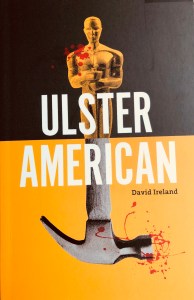
Writer: David Ireland      Director: Gareth Nicholls

⭐️⭐️⭐️⭐️⭐️

Have you heard the one about the Englishman, the Irish woman and the American? Yes, any jokes beginning similarly have long been branded politically incorrect, but all the rules of PC are put through the shredder in David Ireland’s brutal, excoriating and blisteringly funny black comedy.

The Englishman is theatre director Leigh (Robert Jack), who is hosting a meeting on the eve of the start of rehearsals for his production of a new play by Ulster writer Ruth (Lucianne McEvoy). The star is to be American Oscar winner Jay (Darrell D’Silva) who is the first to arrive. The setting is Leigh’s London flat, which becomes what Monty Python would have called the room for an argument, a long one that goes on unabated for close to 90 minutes.

The hero of Ruth’s play is a terrorist with the Ulster Volunteer Force. Jay is of Irish Catholic descent, possibly with associates who had funded the IRA and with no understanding of what the Irish troubles had been about. Leigh stands in the middle, aware that Ulster is part of the United Kingdom, but not seeing it as British. Ruth is definitely British and definitely not Irish. Before she arrives Jay asks feminist sympathising Leigh the blunt question: if forced at gunpoint to rape someone, who would he choose? Jay boasts of advances in American civil rights to Leigh, who thinks that James Baldwin is one of Alec’s younger brothers.

In Gareth Nicholls’ relentlessly aggressive production, all the accepted values of modern life are challenged and overturned. Sectarianism, nationalism, feminism and racism are in the firing line, latent prejudices and misunderstandings are exposed and gaping wounds are reopened. Can it be that the liberal codes that we thought to be set in stone are no more than paper covering deep cracks in society? Can these be the cracks that led to the vote for Brexit or the election of Trump? Possibly, but we can mull over the serious stuff afterwards as there is little time to do so between the laughs while the play is going on.

The acting is splendid. D’Silva’s bullish Jay has the arrogant swagger of an egotistical Hollywood star, practicing his “Belfast Dick van Dyke” accent and always carrying his Oscar with him to prove his credentials and, maybe on this occasion, use as a weapon. He meets his match in McEvoy’s fiery feminist, right wing Ruth, more concerned with ensuring that her play reaches the stage unchanged than with being at her sick mother’s bedside. In the middle, Jack is a particular joy, his slightly camp and panic-stricken Leigh, staring like a rabbit in the headlights as horror after horror unfolds and trying to act as arbiter while always making things worse.

Ireland’s hilarious play makes us laugh until it hurts, but it also asks us to question exactly why we find it so funny and the answers could be disturbing.

Performance date: 7 August 2018

This review was originally written for The Reviews Hub: http://www.thereviewshub.com


Writer: Christopher Reid      Director: Jason Morell

⭐️⭐️⭐️

As a suited middle-aged businessman walks from his Bloomsbury office, he muses that things are not what they used to be. The boozy lunches of the 80s and 90s are now history and nothing in the streets along which he walks is quite the same. He is heading for his once favourite lunchtime haunt, Massimo’s Italian restaurant in Soho, to meet his old flame from long ago.

Christopher Reid’s verse comedy is gentle and melancholic. Robert Bathurst as the businessman has the tired look of a man that is only just coming to realise that he is past his prime, regretting missed opportunities, but quietly accepting the hand that fate has dealt him. His published book of poems only just achieved sales in three figures and his demeanour suggests that he has also failed at most other things in his life.

When she arrives at Massimo’s, the woman (Rebecca Johnson) is smart and confident, close to arrogant. She is married to a successful novelist. Poetry has been abandoned in favour of prose. Inevitably, the lunch goes badly and the businessman consumes at least one bottle of wine too many, bringing back memories of the good old days. “You are out to lunch at your own lunch” the lady informs him.

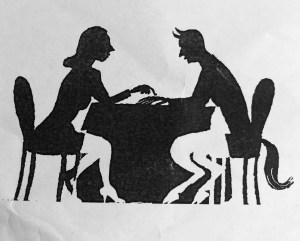
The 50-minute play is slight, but Bathurst is a master of light comedy and he carries it with ease. Jason Morell’s production features animated drawings by Charles Peattie, in the form of silhouettes projected onto a back screen and these add a surreal feel which complements the verse. The play is small, but perfectly formed.

Performance date: 7 August 2018

This review was originally written for The Reviews Hub: http://www.thereviewshub.com


Writer: Ian Kershaw      Director: Raz Shaw

⭐️⭐️⭐️💫

The script generously points out that the play’s title invites a two-word review. Can the writer mean “it isn’t”? Well true, it isn’t, but this charming piece of romantic whimsy from the husband and wife team of writer Ian Kershaw and actor Julie Hesmondhaigh is still worth a look.

The play is about loneliness, the Cosmos, shoes, Carl Sagan, two Toms and several Sara(h)s. It takes place at 4.40am one morning on Preston Road, somewhere in Northern England. Directed by Raz Shaw, Hesmondhaigh acts as narrator of the story and sole performer, with shelves stacked high with shoe boxes behind her. She takes down shoes to represent some of the characters in her story and she borrows shoes from the front row of the audience for others. She is so charismatic and warm that no one could ever dislike this production even if was rubbish. And it isn’t.

We hear of Tom, a 31-year-old bachelor who lives on one side of Preston Road and Sara, a single woman who does not believe in hurricanes and is just moving into a house on the opposite side. Tom is writing a play (guess what it is called); he is not the nosey type, but he cleans his front windows in a rhythmic motion an awful lot. The union of the pair seems written in the stars, maybe even literally. Beyond this, no more plot spoilers.

Kershaw’s style taps into the legacy of the late Victoria Wood, using the language of ordinary northerners and observing the minutiae of their lives. His humour does not quite have the sharpness to keep the play fresh for any more than its scheduled 70 minutes, but his imagination runs free.

Performance date: 7 August 2018

This review was originally written for The Reviews Hub: http://www.thereviewshub.com



Writer and Presenter: Gyles Brandreth

⭐️⭐️⭐️

Until recently, when he and two other members of his family shared all the roles in a production of no less than Hamlet on the London fringe, few would have associated the name of Gyles Brandreth with the art form of theatre. The former doyen of Countdown’s Dictionary Corner and, for five years, Conservative Member of Parliament for Chester has, of course, done many things in media, but theatre? Anyway, here he is with an hour-long collection of anecdotes supposedly about that very subject.

Brandreth begins with a rendition of Noél Coward’s Don’t Put Your Daughter on the Stage Mrs Worthington which suggests that he may not be considering a move into musicals. What follows prompts the question as to whether “Break a Leg” in the show’s title could be more aptly replaced by “Drop a Name” as Brandreth claims (and there is no reason to doubt him) to have met an extraordinary number of thespians, past and present. Entertaining Sir John Gielgud at the House of Commons on the great actor’s 90th Birthday, he expressed pleasure that he chose to be there and received the response: “well all my friends are dead”.

Of the jolly anecdotes in the hour, around half actually relate to theatre, including mentions of Larry, Sybil, Ralph, Judi and Maggie. The show concludes with I Remember it Well, touchingly duetted with the recorded voice of Dame June Whitfield, a lady primarily associated with television/radio and not theatre. Many of the stories may have been told before, but the chief attraction is Brandreth himself who takes to this form of entertainment like a duck to water. His quick wit, timing and connection with the audience are the equal of a top comedian. Maybe this Jack of all trades missed his true vocation.

Performance date: 7 August 2018

This review was originally written for The Reviews Hub: http://www.thereviewshub.com


Writer: Frank Skinner      Director: Polina Kalinina

⭐️

Established for many years as a top comedian and television game show host and with a recent UK (perhaps excluding Scotland) number one hit in the pop charts, it would seem that Frank Skinner is close to having it all. That said, there have to be some worries for him if the real women in his life are as truly ghastly as the two horrors seen in this, his debut play.

The affable cheeky chap from the Black Country begins by asking whether it is possible for a couple to remain friends after they have parted and he answers with a secondary question – why ever would they want to? As played by Jessica Clark, Nina is dominating, manipulative and wholly self-centred. Rob Auton makes her ex, Chris, seem like the only man on Earth who would be fool enough to hang around Nina long enough for her to dump him; he comes across as an ineffectual, prematurely ejaculating jerk who still has visions of Nina’s private parts and even wants her back. Added to the mix is Nina’s obstreperous friend Vanessa (Breffni Holahan) who seems to take a contrary view on every issue just to start an argument.

Stringing together a succession of lewd wisecracks may work for a stand-up routine, of which we assume that Skinner has written many, but it is not enough to make a play. Even the gags dry up halfway through and Polina Kalinina’s static direction offers little to revive the piece as it drifts into babble about testing for genuine friendship. So what is Nina’s news? Well, she has discovered that she can levitate, although, sadly, her powers do not seem strong enough to take her crashing through the glass dome here and into outer space. For good measure, Vanessa reveals that she has X-ray vision. Poor Chris never stands a chance.

Whether this is a gentle comedy about relationships or the hoped-for beginning of an X-Women franchise, the writer seems unable to decide. There is just one piece of good news – the running time is only 50 minutes. For the rest and, for Skinner in particular, the news is all bad.

Performance date: 6 August 2018

This review was originally written for The Reviews Hub: http://www.thereviewshub.com
Creators: Daphna Attias and Terry O’Donovan       Writer: Chris Goode      Director: Daphna Attias 

⭐️⭐️⭐️⭐️⭐️

Firstly, this show is not found at the Traverse Theatre itself, rather it is at the Jeelie Piece Café, a modern corner coffee bar about ten minutes walk away. The show is site-specific and immersive; lattes and muffins are optional and come at extra cost.

The show asks a simple question: when someone dies, what happens to their digital property? Should someone have the right to delete that person’s e-mails, Facebook, Instagram and Twitter accounts, etc or should they be left forever to float around cyberspace. We are all familiar with the role of executors for real property, but the concept of digital executors is new to the 21st Century. Daphna Attias and Terry O’Donovan, along with writer Chris Goode, have created for Dante or Die productions this exploration of the role of a digital executor and they take us on a surprising and unexpectedly emotional journey.

Supplied with headphones and mobile phones, we sit quietly observing the anonymous faces around us. The soft tones of Nora Jones provide a mellow ambience and this could be 11.00 on any morning in any coffee bar. We can be forgiven for not noticing the solitary figure of Terry (Terry O’Donovan), sitting quietly in a corner, until he speaks and gives us his observations on us. And then his phone buzzes and we share the images; a dozen or so text messages appear, all expressing shock and offering condolences. Terry’s former partner of 10 years has died suddenly. The phone buzzes again and it is an e-mail from a law firm, informing him that he has been nominated to become the deceased’s digital executor.

The production has been thought through brilliantly and it is executed with absolute precision. As Terry trawls through shared memories, seen from a different perspective and uncovers previously unknown secrets, he leads us, as if through cyberspace itself and the combination of technology, heartbreaking narration and O’Donovan’s understated but deeply emotional performance generates an ethereal experience of astonishing power.

When the journey is complete, an obvious truth has been affirmed. What matters most in the digital age is what has always mattered most – family, friends and relationships.

Performance date: 5 August 2018

This review was originally written for The Reviews Hub: http://www.thereviewshub.com

Class (Traverse Theatre, Edinburgh)

Posted: August 12, 2018 in Theatre

Writers and directors: Iseukt Golden and David Horan

⭐️⭐️⭐️💫

Who would be a teacher? Walking through the modern minefield of rigid rules and political correctness, young Mr McCafferty asks himself just that question in this 85-minute one-act play first seen at the Dublin Theatre Festival.

There are sharp edges beneath the surface of Iseult Golden and David Horan’s bubbling comedy. As Mr McCafferty, Will O’Connell shows a delightful mix of eagerness and anxiety. He would prefer to tackle a problem and bungle it rather than stand by and do nothing. When one of his students, 8-year-old Jayden, starts lagging behind his classmates and becomes disruptive, the teacher decides to call in his parents.

The father, Brian (Stephen Jones) is the first to arrive, doing so like a bull in a china shop, in denial that he and his wife Donna (Sarah Morris) are now separated. They sit in the classroom on child-sized chairs and behave like the small people that they were made for. And then, appropriately, the pair become children – Jayden and Kaylie, daughter of a junkie who is also receiving extra tuition. The writers’ aim, to show the future adults in children and the childishness of adults is achieved cleverly and amusingly.

As a lightweight account of the dysfunction of modern education, the play has much to say. The frustrated, well-meaning teacher, the father undergoing anger management therapy and the mother reaching out for a life of her own all ring true. All want to put the interests of the child before everything else, but life gets in their way. For the most part, the writers keep the issues simple, lapsing slightly with a final plot twist that the play does not need. For those of us who have forgotten what it is like to be or to have children, this is an education.

Performance date: 5 August 2018

This review was originally written for The Reviews Hub: http://www.thereviewshub.com

Writer and director: David Leddy

⭐️⭐️⭐️

Having little to do with Shakespeare’s bloody tale of Roman power politics, David Leddy’s new intimate  70-minute monologue is a mournful poem about love, loss and human connections.

The central character is Chris, who talks philosophically about his relationships with his parents, his wife, their adopted young son and also with his gay lover Paul. “I’m trying to be happy, but it’s just out of reach. Always has been” bemoans Chris, setting the tone for a piece that is defiantly cheerless, with touches of existentialism.

The production is staged on a raised circular platform, with an old-fashioned wooden desk and chair. Leddy has himself performed the role of Chris, but, here, it falls to Irene Allan, gender blind casting that has advantages and disadvantages, Her soft tones and natural warmth highlight Chris’s vulnerability and confusion, but she cannot be fully the character that the play is describing and a work that is already enigmatic becomes even more so.

Short scenes follow-each other non-sequentially, making what narrative the play has feel irrelevant. Muddying the waters further, Leddy throws in views about the United Kingdom’s ambiguous relationship with Saudi Arabia. It always feels as if the the writer is more concerned with ambiguity than with clarity or purpose and, too often, what we hear comes across as random, disconnected thoughts, beautifully written and spoken, but difficult to engage with.

Performance date: 5 August 2018

This review was originally written for The Reviews Hub: http://www.thereviewshub.com