East (King’s Head Theatre)

Posted: January 12, 2018 in Theatre

(c) Alex Brenner (info@alexbrenner.co.uk)

Writer: Steven Berkoff      Director: Jessica Lazar

⭐️⭐️⭐️⭐️

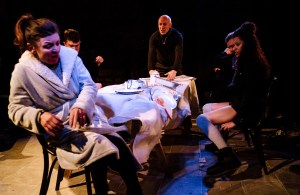
Returning to the King’s Head where it made its debut in 1975, East, Steven Berkoff’s angry and unsentimental homage to London’s East End, has lost none of its potency. Now, as then, there is a sense that the theatre’s location, in North London bordering on the East, provides the writer with a metaphor for where he wants to place his audience – as outsiders looking closely in.

The passing of more than four decades gives the play an ironic addendum. A working class community that has adjusted to several waves of immigration, lived with organised crime and survived de-industrialisation finally faces extinction at the hands of creeping gentrification. Maybe the writer would lament many aspects of this, but nothing in his play suggests that he would not be happy to see outdated traditions wiped out.

By the 1970s, the local Palais had already been turned into a bowling alley and then into a supermarket, but Berkoff rarely touches upon Fings Ain’t Wot They Used T’Be nostalgia. Instead, his savage and ferociously funny play sets out to expose and ridicule ugly features that he sees as endemic to the East End – violence, petty criminality, misogyny and racism.

Both poetic and abrasive, Berkoff’s writing is pitched at a point where Shakespearean English meets Cockney Rhyming Slang. Indeed some scenes here could well allude to Henry IV Pt1, itself set partly on the fringes of the East End. However, the character of “Dad” (Russell Barnett) is much more Alf Garnett than Falstaff. A television addict who evades paying his licence fee, he rants right wing mantras and recalls fondly the marches of Oswald Mosly’s Fascist Black Shirts. He is the only one of the play’s five characters that does not question the role in which life has cast him.

His wife (Debra Penny) slouches in a dressing gown, utterly defeated by a male dominated society. The couple’s only son, Mike (James Craze) mouths expletives as if by habit or expectation and resorts instinctively to violence when his girl is wooed by the upstart Les (James Condon); but, in a rare sign of atonement in the play, the lads ask “what’s the point?”, make up and become friends. “If you were the only girl in the world….” they sing to Sylv, played by Boadicea Ricketts as both slutty and vulnerable. She completes a quintet of outstanding performances.

Jessica Lazar’s raucous, animated production hardly gives itself time to breathe. Playing an upright “Joanna”, Carol Arnopp contributes a mix of music hall songs and contemporary tunes, serving as a backing track for most of a production in which music is integral. In mimed sequences, such as a hilarious family outing to Southend, the piano generates the feel of a silent movie; and, on a blissful escape to the M1 on a motorbike, Mike and Les begin as Hell’s Angels and morph into Flanagan and Allen singing Underneath the Arches, the modern and the traditional blending together seamlessly.

The content and the style of East could well have jolted audiences in 1975, perhaps not so much now. If Berkoff’s works still remain something of an acquired taste, this is a revival that should encourage many more to acquire it,

Performance date: 11 January 2018

This review was originally written for The Reviews Hub: http://www.thereviewshub.com

Writer: George Bernard Shaw      Director: Paul Miller 

⭐️⭐️⭐️⭐️

Kicking off 2018 with a 109-year-old play, it is a great feeling to be one of the younger members of an audience again. During Paul Miller’s tenure here, the Orange Tree has embraced cutting edge theatre with considerable success, perhaps causing raised eyebrows among traditional supporters; however, the revival of a classic drawing room comedy such as this is sure to encourage a dusting off of Richmond’s zimmer frames and, as theatre must be for all, there’s nothing wrong with that!

The misalliance in question is between the hard-up aristocratic family headed by Lord Summerhays (Simon Shepherd) and the wealthy middle-class shop owners, the Tarletons, presided over by blustering patriarch (splendid Pip Donaghy) and fussing matriarch (delightful Gabrielle Lloyd, resembling a reincarnated Katie Johnson). Their traditionalist son Johnny (Tom Hanson) fiercely opposes the impending marriage of their independent minded daughter Hypatia (Marli Siu) to Summerhays’ son Bentley (played by Rhys Isaac-Jones as so camp that he would have been risking jail every day in the Edwardian era). For much of the first act, characters talk too much and complain about others talking too much, but this is George Bernard Shaw and too much talking is inevitable. When a two-seater plane crash lands on the Tarleton’s lawn, the play gains wings.

The pilot is penniless toff Joey (Luke Thallon) and his passenger is exotic Polish acrobat Lina Szczepanowska (Lara Rossi). They ruffle feathers, but another intruder, a gun-wielding Marxist (terrifically angry Jordan Mifsúd) makes them fly. What had been a witty but wordy piece now becomes weird and wacky. Shaw’s left wing social and political views all get a full airing, but they are never allowed to weigh down the comedy. Miller’s successful revival of Terence Rattigan’s French Without Tears, here in 2015, showed that the way to energise dated comedy is to cast promising young actors and give them free rein to let rip. He uses the same formula here, with seven of the cast of ten being relative newcomers and the result is sparkling screwball hilarity that should appeal to all ages, including those even younger than myself.

Performance date: 2 January 2018

2017 Theatre Round-up

Posted: December 30, 2017 in Theatre, Uncategorized

2017 has been a vintage year for new plays and spectacular revivals in London. Jez Butterworth delivered a possible masterpiece and James Graham turned prolific with three plays in the West End and another on the way. New musicals were thinner on the ground until very late in the year. The Almeida in Islington continued to showcase challenging work of the highest standard and the National Theatre’s phenomenal run of hit after hit was marred by just two turkeys.

In listing personal favourites, I have considered only shows that opened in 2017 which I saw in 2017. The three most notable omissions are Everybody’s Talking About JamieNetwork and Hamilton, all of which I shall be seeing early in the New Year, so roll on 2018!

FAVOURITE PRODUCTIONS

1. The Ferryman (Royal Court/Gielgud) No exaggeration, Jez Butterworth’s heady cocktail of tragedy, comedy, suspense and romance looks like the early front runner for play of the century.

2. Follies (National Theatre, Olivier) Sondheim on the grandest scale. We may never see its like again.

3. Angels in America (National Theatre, Lyttelton) Drama on the grandest scale (almost 8 hours of it) and unforgettable.

4. Ink (Almeida/Duke of York’s) Topping an incredible year for James Graham, this sets the bar for  fact based theatre at a new high.

5. Hamlet (Almeida/Harold Pinter) Robert Icke’s modern day Hamlet, with Andrew Scott in the title role, is at least as good as any I’ve seen and I’ve seen (far too) many.

6. Lady Day at Emerson’s Bar and Grill (Wyndham’s) Devastating vision of a star burning herself out.

7. Mosquitos (National Theatre, Dorfman) The Olivias Coleman and Williams prove the Big Bang theory as sisters both bound together and torn apart.

8. On the Town (Regents Park Open Air Theatre) Leonard Bernstein’s music, spctacular choreography and a balmy Summer evening. Who could ask for anything more?

9. Oslo (National Theatre, Lyttelton/Harold Pinter) It takes a great play to show the world how negotiations between nations should be handled.

10. Albion (Almeida) Muddled metaphors, but thoroughly engrossing drama.


FAVOURITE PERFORMANCES

Male in a play – Andrew Garfield (Angels in America)

Female in a play – Sara Kestelman (Filthy Business at Hampstead Theatre)

Ensemble in a play – The Ferryman

Male in a musical – Let’s leave this one for either Hamilton or Jamie to claim

Female in a musical – Audra Macdonald (Lady Day…)

Ensemble in a musical: – Follies


OTHER FAVOURITES

New play: The Ferryman

New musical: Romantics Anonymous (Sam Wanamaker Playhouse)

Director (play): Sam Mendes (The Ferryman)

Director (musical): Emma Rice (Romantics Anonymous)


LEAST FAVOURITES

Obviously I have been selecting shows to see more carefully this year, coming up with a very short list of only three stinkers:

1.  Salomé (National Theatre, Olivier) Overblown and underwritten load of Biblical tosh. Audiences may well have felt entitled to ask for writer/director Yaël Farber’s head on a plate.

2.  Common (National Theatre, Olivier) The great mystery is how anyone could have thought it worthwhile to spread this huge pile of early 19th Century farmyard manure all over the Olivier stage.

3.  The Secret diary of Adrian Mole… (Menier Chocolate Factory) I acknowledge freely that not everyone loathed this as much as I did. Nonetheless, after a disappointing year (apart from Love in Idleness), I am starting to worry that the delightful Menier’s crown is slipping.

August to December 2017 Quick Catch-up

Posted: December 30, 2017 in Theatre

I’ve been rather busy travelling and doing things other than writing about theatre this year, but still not too busy to see lots of shows. So here is a catch-up of some of those that I saw in the August-December period but did not get round to reviewing in full:

 

The Twilight Zone (Almeida Theatre)

Adaptor: Anne Washburn      Director: Richard Jones

⭐️⭐️

When Mr Burns, Anne Washburn’s post-apocalyptic reflection on The Simpsons, appeared at the Almeida in 2014, it divided opinions sharply and I’m afraid that I fell on the side of the nays. History could be repeating itself with this collction of creepy tales adapted by the same writer from the cult television series which reflected the paranoias of 1950s America. This slick production has its moments, but the creative team often seems to forget that, for this sort of stuff to succeed,  it has to be taken seriously and intercutting of the tales works against involving us and thereby spooking us. This leaves a show that is only intermitently engaging and too much a pallid parody of the paranormal.

Peformance date: 20 December 2017

 

Belleville (Donmar Warehouse)

Writer: Amy Herzog      Director: Michael Longhurst

⭐️⭐️⭐️

Amy Herzog’s 2013 play digs beneath the surface of the superficial lives of a seemingly successful 30-ish modern American married couple living in Paris. The play begins as a rather tiresome and unfunny romcom, but the writer, director and two stars, James Norton and Imogen Poots show great skill in guiding us, almost imperceptibly, to much darker places.

Performance date: 15 December 2017


Cell Mates (Hampstead Theatre)

Writer: Simon Gray      Director: Edward Hall

⭐️⭐️⭐️

Simon Gray’s 1995 play gained unwanted fame for the sudden departure from the original West End production of one of its stars, Stephen Fry. It is based upon the true story of the 1966 escape from Wormwood Scrubs of convicted spy George Blake, aided by fellow inmate, Dubliner Sean Bourke. Alan Bennett’s plays telling similar stories have examined the nature of treachery and of being English, but Gray is content to give us an “Odd Couple” style bitter-sweet comedy, the cell of the title being a Moscow flat. The ever reliable Geoffrey Streatfeild is engagingly enigmatic as Blake, Irish actor Emmet Byrne does an eye-catching turn as Bourke and the high production values associated with Hampstead make this an entertaining, if undemanding treat.

Performance date: 13 December 2017
 

Barnum (Menier Chocolate Factory)

Book: Mark Bramble      Music: Cy Coleman      Lyrics: Michael Stewart      Directo: Gordon Greenberg

⭐️⭐️

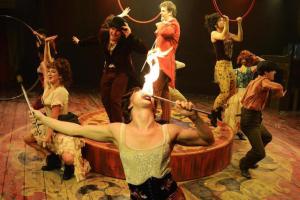
I’ve seen Barnum twice before (in New York with Jim Dale in the lead and at the London Palladium with Michael Crawford) and I really can’t think why I chose to see it again. It is a show that is all about the trimmings – colour, circus acts, dancing – which help us to overlook the thinnest of books and what is possibly the blandest collection of songs ever to emerge from Broadway. A charismatic performer in the eponymous role also helps to mask the show’s shortcomings. The little Menier is turned into a big top and, unsurprisingly, the trimmings here are top class. However, Marcus Brigstocke, an amiable chap, offers us a PT Barnum – canny showman, impresario and politician – who wanders around, grinning broadly, like a little boy lost. But then Brigstocke himself seems exactly that heading up a musical. Failing to walk a tightrope (three times at this performance) is, on its own, forgivable, but it contributes to an overall impression of incompetence, suggesting that this could be the worst miscasting of 2017.

Performance date: 8 December 2017

Photo: Nobby Clark
 

Barber Shop Chronicles (National Theatre, Dorfman)

Writer: Inua Ellams      Director: Bijan Sheibani

⭐️⭐️⭐️⭐️

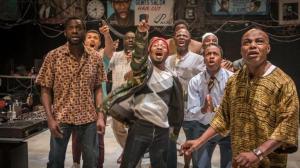
It was good to catch one of the National’s biggest recent hits which I missed first time round a few months ago. Linking London with cities across Africa through vignettes with the common setting of a barber’s shop, the production has freshness and life-affirming energy, leaving behind the message that there is more that unites communities than divides them.

Performance date: 29 November 2017
 

Big Fish (The Other Palace)

Book: John August      Music and lyrics: Andrew Lippa      Director: Nigel Harman

⭐️⭐️⭐️⭐️

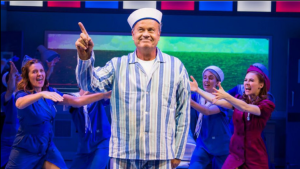
Some people will pass this off as sentimental tosh and maybe they will be right. However, quite a few others can take watching It’s a Wonderful Life over and over and this show is for us. Kelsey Grammar is a commanding presence as the dying dad, a big fish only in his small town America pond,  who believes that little people can achieve big things and that dreams and reality can merge into one. As his younger self, Jamie Muscato is superb as are Clare Burt as his wife and Matthew Seadon-Young as his disbelieving son. It is also good to see that songwriter Andrew Lippa is, this year, starting to get the recognition that he deserves in his country of birth.  A small musical and not to everyone’s taste, but it gave me a warm feeling that lingered long after Frasier had left the building.

Performance date: 11 November 2017


The Retreat (Park Theatre)

Writer: Sam Bain      Director: Kathy Burke

⭐️⭐️⭐️

Think Only Fools and Horses. Think Rodney escaping to a simple life in a remote retreat run by some obscure sect. Think Del turning up to lure him back to the big smoke. Think all those things and you have pretty well got the flavour of this amiable light comedy – three half-hour sitcom episodes strung together and getting a bit stretched. Of course director Kathy Burke knows a bit about sitcoms and she gets very funny performances from Adam Deacon (as the Del figure) and Samuel Anderson as his gullible younger brother.

Performance date: 9 November 2017


Young Marx (Bridge Theatre)

Writers: Richard Bean and Clive Coleman      Director: Nicholas Hytner

⭐️⭐️⭐️

A big welcome to London’s newest theatre – great ambience, comfortable seats, excellent sight lines, fit for purpose facilities – what more can we ask? A great show perhaps? This opening production, which turns the chaotic early life of Karl Marx into a rip-roaring farce, is more hit than miss and Rory Kinnear, Oliver Chris and Nancy Carroll all have great fun with it. However, the play is never quite as funny as the name of Richard Bean (1M2G) may lead us to expect and it becomes more effective when it gets serious in the last quarter. A nice appetiser for, hopefully, meatier dishes to follow here.

Performance date: 8 November 2017
 

Trestle (Southwark Playhouse)

Writer: Stewart Pringle      Director: Cathal Cleary

⭐️⭐️⭐️⭐️

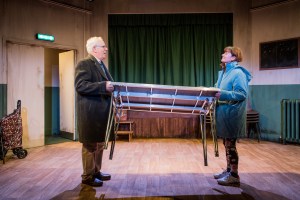
It is good to be reminded that people of my own generation do not have to be portrayed as infirm, dying or suffering from dementia. Stewart Pringle’s two-hander, winner of this year’s Papatango award, is warm and perceptive, chronicling weekly encounters between Harry and Denise in a northern village hall; as his meeting ends, hers is about to begin. The play is low-key and humorous, borrowing some of the flavour of Last of the Summer Wine. The suggestion made in some quarters that Trestle would be better suited to radio may be a compliment to the quality of the dialogue, but it is piffle, mainly because it undervalues the excellent contributions of the two actors, Gary Lilburn and Connie Walker.

Performance date: 3 November 2017
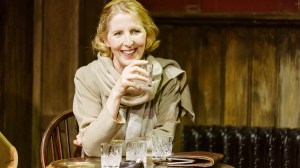
 

Slaves of Solitude (Hampstead Theatre)

Writer: Nicholas Wright      Director: Jonathan Kent

⭐️⭐️⭐️

At first sight, the set, a dining room in a Surrey boarding house during World War II, suggests an impending performance of Terence Rattigan’s Separate Tables and suggestions of Rattigan do not end there. However, this is an adaptation of a little known novel by Patrick Hamilton about an independent woman finding her way though the war years and emerging stronger. Fenella Woolgar is superb.

Performance date: 31 October 2017

 

The Lady from the Sea (Donmar Warehouse)

Writer: Henrik Ibsen (new version by Elinor Cook)      Director: Kwame Kwei-Armah

⭐️⭐️⭐️

It is a long way from the freezing temperatures of Norway to the scorching heat of the Caribbean. but director Kwame Kwei-Armah takes Ibsen’s play on exactly that journey. Familiar Ibsen themes of female suppression and struggles for freedom survive intact and, accepting that this is not the cream of the playwright’s crop, it all works rather well.

Performance date: 23 October 2017


Albion (Almeida Theatre) 

Writer: Mike Bartlett      Director: Rupert Gould

⭐️⭐️⭐️⭐️💫 

Mike Bartlett re-imagines Chekhov’s The Cherry Orchard in an English Country Garden and, although the countless state of the nation metaphors get more than a little muddled, the drama at the play’s heart sizzles. Victoria Hamilton leads a superb cast.

Performance date: 19 October 2017


The Lie (Menier Chocolate Factory) 

Writer: Florian Zeller     Translator: Christopher Hampton      Director: Lindsay Posner

⭐️⭐️

The Zeller/Hampton team certainly like squeezing blood out of a stone. Their The Truth was a success here last year, a snappy, diverting piece on marital infidelity. So here we go again with what is as near as makes no difference the same play, but what was amusing first time round is now just tiresome. The likes of Samantha Bond and Alexander Hanson can perform this sort of stuff expertly with their eyes closed, but does anyone really care?

Performance date: 13 October 2017
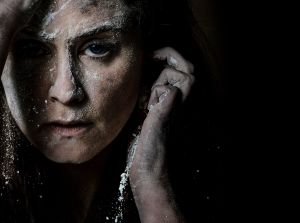
 

Knives in Hens (Donmar Warehouse) 

Writer: David Harrower      Director: Yaël Farber

⭐️⭐️⭐️

Yaël Farber redeems herself at least partially after the debacle of Salomé at the National with this intriguing little play constructed around themes of literacy and female liberation. The writer lays on the symbolism much too thickly, but the play benefits from being enigmatic and it is short enough for us not to tire of it.

Performance date: 6 October 2017
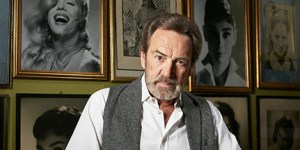
 

Prism (Hampstead Theatre)

Writer and director: Terry Johnson

⭐️⭐️⭐️💫

A melancholic look back at the life and career of legendary cinematographer and film director Jack Cardiff, as seen through the prism of dementia in his twilight years. The play is full of warm, gentle humour. The central role fits Robert Lindsay like a glove and Claire Skinner does a mean Katherine Hepburn, doubling as Cardiff’s wife.

Performance date: 4 October 2017


Aladdin (Prince Edward Theatre)

Music: Alan Menken      Lyrics: Howard Ashman, Tim Rice and Chad Beguelin      Book: Chad Beguelin      Director/Choreographer: Casey Nicholaw

🌟🌟🌟

I have never been a great advocate of the “Disneyfication” of musical theatre and this adaptation of the 1992 animated feature does little to change my mind. It is slick, colourful and spectacular, ready to be franchised in near-identical productions all over the world. Having transferred from Broadway, the West End production is now a year into its run and Trevor Dion Nicholas is a brilliant Genie. Otherwise, the songs are only so-so, the show as a whole is completely soulless and, worst of all, Widow Twanky is nowhere to be seen.

Performance date: 29 September 2017
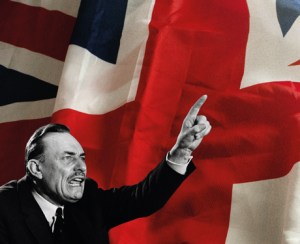
 

What Shadows (Park Theatre)

Writer: Chris Hannan      Director: Roxana Silbert

🌟🌟🌟🌟

Chris Hannan’s play is a powerful reflection on the life of controversial politician Enoch Powell, centring particularly on the infamous 1968 “Rivers of Blood” speech. To its credit, the play neither glorifies nor vilifies its central figure, balancing his right to speak freely against an assessment of the hurt inflicted by him. A mesmerising performance by Ian McDiarmid captures the essence of the politician perfectly, showing him to have been a flawed human being who was simply out of step with the times in which he lived.

Performance date: 28 September 2017
 

Wings (Young Vic)

Writer: Arthur Kopit      Director: Natalie Abrahami

⭐️⭐️

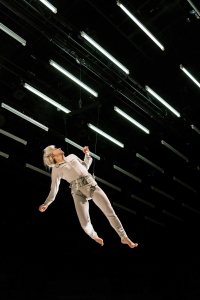
On her last appearance at the Young Vic, Juliet Stevenson was buried up to her neck in sand. Now she flies through the air. Arthur Kopit’s play about an aviation pioneer coming to terms with the effects of a stroke was written for radio and the director’s attempt to give it a visual dimension has the central character on wires hovering above the stage for almost the entire performance. Stevenson shows remarkable agility, prepared to suffer for her art, but, for much of the time, the play itself also goes over our heads.

Performance date: 26 September 2017


Follies (National Theatre, Olivier)

Book: James Goldman      Music and lyrics: Stephen Sondheim      Director: Dominic Cooke

⭐️⭐️⭐️⭐️⭐️

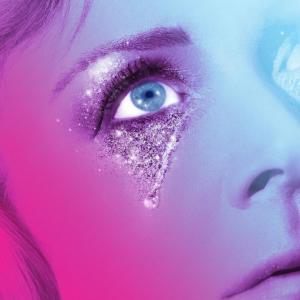
When Follies was semi-staged at the Royal Albert Hall a couple of years back, it seemed to serve as confirmation that the economic realities of modern theatre make a full-scale revival almost impossible. Surely only the National could find the resources and, with a company of almost forty and a 20-plus piece orchestra, here it is – a dream come true in every sense. Dominic Cooke’s revival does not resolve all issues with James Goldman’s flawed book, just most of them and he reconciles the melancholic themes with Stephen Sondheim’s matchless music and lyrics. There are times when each note seems to shed a tear or skip with joy. Among the ageing ladies returning to the home of their former glories in the golden era of Broadway and facing up to their younger selves and their lost opportunities, Imelda Staunton, Janie Dee and Tracie Bennett stand out, but Follies is essentially an ensemble piece. We should savour this immaculate production, because, like the follies themselves, we may never see its like again.

Performance date: 23 September 2017


Oslo (National Theatre, Lyttelton)

Writer: JT Rogers      Director: Bartlett Sher

⭐️⭐️⭐️⭐️💫

Sitting in on Israeli/Palestinian peace talks has never featured highly on my bucket list, but JT Rogers’ drama, this year’s Tony Award winner for Best New Play, somehow makes the idea palatable. The key comes from the writer realising that the outcome of any negotiations depends less on the issues being discussed than on the human beings involved. Accordingly, his account of secret discussions held in Oslo in the early 1990s is filled with characters that are richly drawn and superbly played by a fine company. The play is lifted by unexpected humour, so that even the details of the positions held by the two seemingly irreconcilable sides become riveting.  The resulting peace accord may have been short lived, but the message that talks held away from the glare of the media spotlight and without high public expectations can succeed lives on. Can anyone think of any modern day negotiators that could learn from this?

Performance date: 20 September 2017

 

Against (Almeida Theatre)

Writer: Christopher Shinn       Director: Ian Rickson

⭐️⭐️⭐️

The Almeida did not achieve its phenomenal recent run of successes without being prepared to take risks, so perhaps it is inevitable that there will be the occasional near miss. However, such is the good will held in store for the Islington powerhouse that lapses can be quickly forgiven and, really, this one is not all that bad. Ben Wishaw has  the magnetic presence needed to play a modern day Messiah, a computer billionaire with a mission to oppose violence all over the world. Christopher Shinn’s play is packed with interesting ideas, but, sadly, they do not quite connect together.

Performance date: 29 August 2017
 

Apologia (Trafalgar Studios)

Writer: Alexi Kaye Campbell      Director: Jamie Lloyd

⭐️⭐️⭐️

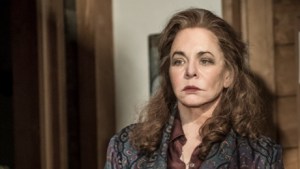
I admired Alexi Kaye Campbell’s early plays, but, following Sunset at the Villa Thalia at the National last year, this is the second to have disappointed me. Stockard Channing plays an acid-tongued American-born matriarch who has, seemingly, spent too much time pursuing her career as a writer and too little time caring for the needs of her two, now adult, sons. As a straightforward account of family dysfunction, the play is entertaining enough, working best in comedy scenes. The problem is that the writer teases us with the prospect of a much deeper and more interesting exploration of cross generational issues and he never fully delivers.

Performance date: 17 August 2017


Girl From the North Country (Old Vic)

Writer and director: Conor McPherson      Music and lyrics: Bob Dylan

⭐️⭐️⭐️⭐️

Conor McPherson’s play about human hardship during America’s depression era feels like the perfect match for Bob Dylan’s sorrowful songs and this beautifully performed show should have had me knocking on Heaven’s door. Unfortunately, I failed to connect with it to the extent that I wanted and expected and, for that, I can can only blame the Old Vic. Uncomfortable, cramped seats, appalling sight lines and a traditional configuration that distances the audience from the stage all take their toll. Under, the previous Artistic Directorship, an in-the-round configuration was introduced and it yielded what was possibly one of the most successful periods in the theatre’s history. I urge the current regime to consider changes.

Performance date: 16 August 2017
 

Yerma (Young Vic)

Writer and director: Simon Stone (from Federico Garcia Lorca)

⭐️⭐️⭐️⭐️⭐️

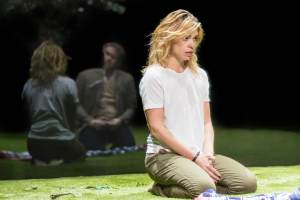
This feels a bit like catching a great film on DVD after missing it in cinemas. Yerma sold out at the Young Vic in 2016 and it returns in a blaze of glory. Simon Stone brings Lorca’s drama of a woman driven to insanity by childlessness bang up to date and Billie Piper tears into the lead role with one of the greatest performances seen in recent years, fully deserving of all the accolades and awards.

Performance date: 4 August 2017


The Secret Diary of Adrian Mole Aged 13.75 (Menier Chocolate Factory)

Book and lyrics: Jake Brunger      Music and lyrics: Pippa Cleary      Director: Luke Sheppard

⭐️

Oh how I hated this! It is possible (albeit unlikely) that I would have been amused by Sue Townsend’s creations 45 or so years ago, but this musical adaptation prompts neither mirth nor feelings of nostalgia. Her clichéd view of British working class family life in the early 70s now feels sneering, patronising and offensive. The tone is set to appeal to a young audience, but it is hard to imagine that today’s teenagers would find much to relate to in a world where Facebook was still a distant dream and schoolteachers wielded canes. Songs inspired by the music of the 70s could have helped to justify this adaptation, but all we are offered is the brand of bland, forgettable pop that seems to exist exclusively in the very worst of British musicals. Of those involved, only the kids in the cast can escape blame. Horrible!

Performance date: 1 August 2017
 

White Fang (Park Theatre)

Posted: December 15, 2017 in Theatre

⭐️⭐️⭐️💫

This review was originally written for The Reviews Hub: http://www.thereviewshub.com

In 2014, Jethro Compton brought his version of the film western The Man Who Shot Liberty Valance to the main stage here at the Park. Clearly a man undaunted by challenges, he now turns to an adaptation of Jack London’s classic 1906 novel White Fang, aiming to evoke its setting, the vast, icy Canadian wilderness, in the even smaller studio space.

At the core of both stories lie clashes between old ways and the new, each asking questions as to whether “civilisation” brings nobler values than what it replaces. In dramatising and condensing London’s novel, Compton has taken considerable licence to change the story and characters, relegating the eponymous figure to a supporting role. We no longer see the human world from the perspective of an animal. Here, the wolf cub White Fang is brought home by hard-drinking hunter Weedon Scott (Robert G Slade), as a gift for his adopted granddaughter Lyzbet, who is of native American origin.

We are told that Lyzbet is a young girl when the story begins, but there is little of the child in Mariska Ariya’s performance. Instead, she comes across as a very strong-willed, modern young lady. Ariya has great presence playing what is, in this version, the pivotal role, but she struggles to find a consistent balance between innocence and wisdom. Her adversary is the ironically named Beauty Smith, a ruthless, land grabbing gold prospector, who is made an ugly villain by Paul Albertson’s performance.

London recognises the natural world as cruel and unforgiving, leaving little room for Disney-style sentimentality in his depiction of animals. White Fang is represented as a life-sized puppet (James Silson is puppetry director). Snarling and bedraggled, this is a fearsome beast and there are several scenes which younger children could find upsetting.

As well as writing and directing, Compton acts as set designer and lyricist. The imposing single set, the interior of a wooden cabin, fills almost half the space, with a curtain being drawn across for exterior scenes. The lyrics are for songs in traditional style composed by Gavin Whitworth and sung a cappella by the company of six.

Compton’s dramatisation is predominantly plot-driven, with characterisation taking a back seat, but Lyzbet’s emotional torment produces some moving scenes. She treats the flagship of encroaching civilisation – an education – as a threat, she fights to preserve a dying way of life and she is struck by the urge to rediscover her ethnic identity. Compton emphasises themes in London’s work that are timeless, not least the spectre of racism.

This is an absorbing, if flawed, piece of theatre. Important elements of the original novel are lost and there are times when Compton’s concept feels over-ambitious, yet still his production manages to rise above its limitations more often than it is diminished by them.

Performance date: 14 December 2017

FCUK’D (The Bunker)

Posted: December 14, 2017 in Theatre

⭐️⭐️⭐️⭐️

This review was originally written for The Reviews Hub: http://www.thereviewshub.com

Sowing seeds of disquiet for us to mix in with our Christmas puddings and mince pies, Niall Ransome’s hour-long monologue, in rhyming verse, provides the perfect antidote to any excess of seasonal spirit. The play is raw and it is real.

Set in northern England during a freezing December, the story follows the hopeless odyssey of a 17- year-old boy and his 7-year-old brother to escape from the younger being taken into care. Their father has abandoned them and their mother is debilitated by alcoholism, but the spirit of family survives in the bond between the brothers. Transported in a stolen car and feeding from the proceeds of shoplifting, they are pursued northwards by the authorities. The boys’ story is far removed from traditional Christmas theatre offerings, except that the writer’s sincere concerns for the underprivileged and undervalued clearly echo those of the supposed inventor of Christmas, Charles Dickens.

Rhymes flow effortlessly, helping to build up the tension of the pursuit and to enrich Ransome’s descriptive writing, particularly in relation to the urban wasteland that the boys normally inhabit. Broken fridges, cars without wheels and abandoned shopping trolleys litter their city. The escape is fuelled by desperation, but mired in confusion and delusion.

As the older boy, Will Mytum’s riveting performance glows with fraternal love and explodes with uncontainable rage. He collects his brother from school, “on parole” at 3.30pm and reflects on an education system that has already failed him, but later expresses optimism that the younger boy will do better. “I want you to trust me, I won’t let you fall. Without you in this world, I have nothing at all” he pleads to his frightened brother, but he seethes with resentment at being cast aside himself and branded a troublemaking failure, screaming “I’m here too!”

Grace Venning’s set design reflects youth and decay in a marked-out playground with dead leaves piled up and Peter Wilson’s slow, sombre music stresses the perils facing the boys. Lighting, designed by Jess Bernberg also plays an important role in Ransome’s vivid staging, day turning into night and vice versa, malfunctioning street lamps flickering and blue flashes from police cars signaling the arrival of a hostile presence. In all, this is a production which jolts us with a stark but necessary reminder that, however cold this Winter gets for us, there are others for whom it will be much colder.

Performance date: 13 December 2017

Photo: Andrea Lambis

⭐️⭐️⭐️

This review was originally written for The Reviews Hub: http://www.thereviewshub.com

Mods on their Italian scooters are congregating on Brighton seafront, near to the house shared by gay couple Freddie and Ted. It is August 1966 and Radio Caroline can be heard on their portable wireless, but then Freddie switches channels to the BBC Home Service, which is broadcasting The Ruffian on the Stair by the current playwriting sensation, Joe Orton.

Don Cotter’s new play takes place over approximately one year, the last in Orton’s life, against the backdrop of the outlawing of pirate radio and the partial decriminalisation of homosexuality. We arrive at our seats, listening to tracks by the likes of Matt Monro and Dusty Springfield, by walking through a shabby living room that is awash with floral patterns. Justin Williams’ set design would have been just as perfect for a revival of Entertaining Mr Sloane or Loot.

The period references in Ray Rackham’s unhurried production are so precise and so plentiful that they threaten to overwhelm what is, in essence, a timeless piece, depicting a dysfunctional relationship. Middle-aged Freddie, still grieving for a love lost at Dunkirk, barely conceals that aspiring young musician Ted is an inadequate replacement, but the bickering couple are held together by strained mutual dependency and habit.

Robert Styles’ Freddie is pompous and unfeeling, obsessed with Orton and wearing a hat similar to one associated with the playwright even to bed. He throws a tantrum when Ted brings home the wrong brand of scouring powder, but remains oblivious to the fact that his partner may need affection and appreciation as much as financial support. Eoin McAndrew is touching as the brightly optimistic Ted, looking for the confidence to carve out a career for himself in music, but thwarted by Freddie’s devious and desperate efforts to hold on to him.

“Funny old life, you never know what lies round the u-bend” declares Ted’s friend Dilys (a spirited performance from Helen Sheals) in one of the very few touches of Ortonesque humour that Cotter provides. However, her grandson Glenn (Perry Meadowcroft), a laddish, sexually ambivalent and at first menacing interloper, is a character that could have come straight out of an Orton play.

There are times when Cotter’s attempts to show parallels between the central relationship in the play and that involving Orton and his possessive lover, Kenneth Halliwell, feel quite crude and too obvious. Nonetheless, repeated hints that Freddie and Ted could be heading towards the same tragic conclusion add simmering tension, particularly in the slowly-paced second act.

In structure, style and detail, Cotter’s play belongs to the era in which it is set. It has no clear relevance to 2017 and, while it considers the impact of Orton on his contemporaries, it does not explore his lasting legacy. Four solid performances make this production entertaining enough, but it is mainly notable for allowing us to wallow in 60s nostalgia.

Performance date: 1 December 2017

Photo: Jamie Scott-Smith

This interview was originally written for The Reviews Hub: http://www.thereviewshub.com

When audiences are flocking to see Barnum at London’s Menier Chocolate Factory this Christmas, they may spot that, next door in the subterranean Bunker Theatre, there is something far removed from the fun of the circus. FCUK’D offers an alternative festive experience, focussing on the emotive topic of runaway children, and its writer/director Niall Ransome took time off from treading the boards in the West End show The Comedy About a Bank Robbery to talk about it with The Reviews Hub’s Stephen Bates. 

Making no attempt to conceal neither his native Hull accent nor his infectious enthusiasm for theatre, Ransome makes a persuasive case for his alternative to the traditional Christmas fare. “We go to see these fantastic pantomimes and musicals and West End shows at Christmas, but I also think that theatre like this is important all year round and we shouldn’t stop putting on theatre that says something about the times we live in,” he argues.

As a young actor straight out of drama school, Ransome was involved at the start of the hugely successful The Play that Goes Wrong and, learning from that experience, he says “I’m very used to the idea of audiences shouting and becoming involved and, in FCUK’D, Boy (the central character) often turns to the audience to ask what he should do.” He feels that we all ignore strangers in our busy lives and make judgements about them; “I would like to see someone come to the play, see Boy and make a judgement about him; then it becomes the job of the play to break that down.”

Boy is a 17-year-old living in a flat on a Hull council estate with his alcoholic mother and Matty, a brother 10 years his junior. When Social Services move to take Matty into care, the two boys run away from home and head north. “The boys only have each other,” explains Ransome, “it’s a story of family unity, of being together.” The writer researched the route they take carefully, even going to a cliff edge where a key scene takes place; “I took my Mum,” he says smiling.

The play is presented in monologue form and Ransome has performed it himself in test runs. However, at the Bunker, it will be performed by Will Mytum. “Me and Will have been friends for years,” says Ransome. “We went to drama school together and were in the next rooms. I trust him implicitly.”

The writer also set himself the additional challenge of writing the play in rhyming verse, explaining: ”Rhymes just trip off the tongue and, once you get the flow and rhythm of it, it almost dictates the way in which the story goes.” He feels that he is following in a great tradition: “Hull is rich with poetry; we have Philip Larkin, we have Stevie Smith,” he boasts.

“I am very very proud to be from Hull, a city that, over the years, has got a lot of stick,” he declares. “I went to quite a naff school in Hull, it wasn’t a nice school, but I always think that the best teachers teach in the worst schools; they can get someone from an underprivileged background to be enthusiastic about drama, art, history, maths and that is a triumph”. He continues: “FCUK’D focusses on a group of people who I feel aren’t always given voices in theatre and, around Christmas, their issues never have a holiday; setting it around Christmas, heightens all the issues.”

Ransome holds passionate views about the direction which British theatre should be taking. “Abroad, we are often seen as being about the Queen’s English, the cups of tea,” he claims. So how does he feel about the current prominence of Public School educated actors? “I admire the likes of Benedict Cumberbatch and Eddie Redmayne, I think they do incredible work; but we live in a time when we talk about ethnic diversity and gender equality, which are so important, yet I do think at times that the working class voice is getting a bit behind again; the theatre should be a community of all voices, all colours, all sexualities, all ethnicities and it should be a welcoming place.”

The play’s title is very in-your-face, but did he deliberately choose it to be provocative? “Absolutely!” he retorts. “That’s quite a northern attitude for me, a wonderful northern straight to the camera sort of thing, straight, snappy, bold, just what the play itself is.” He hopes to draw in audiences of all ages, but particularly the young. “It feels like 2017 is a year in which young people have really got on board,” he says, adding the caveat “I never wrote (the play) as a political piece, I wrote it as a story”. Hoping that sensible Fringe ticket prices will be a further draw for the young, he says: “The West End is money, but London has such a fantastic theatre scene.”

Plans to take FCUK’D on the road are being drawn up and a second play is already in the pipeline. As an actor, Ransome continues in his West End role until February and then it’s back to the auditioning circuit. “I believe we live in a time when, as writers, actors, directors, we can’t wait for the phone to ring” he concludes. A busy Niall Ransome sounds like very good news for theatre.

FCUK’D is at the Bunker London from 11 to 30 December 2017

Photo: Andrea Lambis

The Secondary Victim (Park Theatre)

Posted: November 26, 2017 in Theatre

⭐️⭐️

This review was originally written for The Reviews Hub:www.thereviewshub.com

With two decades as a therapist under his belt and ten produced plays to his credit, no-one could accuse Matthew Campling of not knowing his subject for this new play or of not knowing how to write about it. The mystery is why what appears on stage here feels so unconvincing.

The thoroughly professional demeanour of Susannah Doyle’s Ali belies her inner turmoil. She charges £40 an hour to listen to her clients’ problems and perhaps point them in the direction of a solution, but she is floored when one of them, teenage boy Hugo (Michael Hanratty), accuses her of sexual misconduct – suggestiveness, touching his cheek and running her hand over the lower part of his back. At a time when we all need to be careful about ill-chosen words and gestures, the writer shows us that concerns are magnified many times over when a code of professional ethics is added to the equation.

Ali turns to her colleague Marilyn (Natasha Bain), paying over £40, and Hugo moves on to Jonny (Matt Holt) as his new counsellor, allowing the audience to hear both versions of events. “Good looks can breach our usual defences” Marilyn advises as she prepares for a possible confession of guilt from Ali, underlining the writer’s point that the line between the private individual and the professional one can be very thin.

If Campling intended to create a suspense thriller in which the audience is left guessing which of the two protagonists is telling the truth, he scores an own goal by making Hugo so obnoxious. Vengeful, scheming and possibly schizophrenic, he boasts of having an American book deal lined up if his accusations against Ali are upheld. It beggars belief that even an American publisher would be drawn to such a slight story, but both Campling and Hanratty leave us in no doubt that Hugo is a nasty (if troubled) piece of work and shaping him as so clear a villain so early does not serve the play well.

The play dwells on sub-plots – Ali’s oafish client Teddy (Christopher Laishley) having problems with under-age girls and a Donald Duck tattoo near his private parts; her rocky marriage to Victor (Gary Webster) who is recovering from a heart attack and bankruptcy; and Marilyn’s one night stand with Jonny – none of which gels properly with the main plot. What the play needs is to be more narrowly focussed, sharper and a lot shorter.

In examining the minefield of professional conduct and the boundaries that cannot be crossed, Campling makes his case persuasively that, if recipients of therapy are victims, their therapists are secondary victims. However, in a play weighed down by colourless dialogue and over-plotting, this does not always make gripping drama and Matthew Gould’s in-the-round production often lacks the energy to sell it. Whether in the flat-footed first act or in the rambling and melodramatic closing scenes, the play is consistently earnest but too contrived to be believed.

Performance date: 15 November 2017

The Tailor-Made Man (White Bear Theatre)

Posted: November 10, 2017 in Theatre

⭐️⭐️⭐️💫

This review was originally written for The Reviews Hub: http://www.thereviewshub.com

With current stories of improprieties in the film industry seeming to be as plentiful as gold stars on Hollywood Boulevard, this revival of Claudio Macor’s The Tailor-Made Man could hardly be more timely. The play is based on the true story of William “Billy” Haines, a star of silent movies and 11 talkies, whose career collapsed like a house of cards when studio bosses took a stand against his homosexual lifestyle.

The play was adapted into a musical, generally well received when it ran at London’s Arts Theatre in 2013, but this 25th Anniversary production reverts to the original non-singing version. If the name William Haines prompts the question “William who?” this could be because all his films were consigned to locked vaults for a generation by MGM and even still photographs of him were destroyed.

Arriving in Hollywood in 1922, wise-cracking extrovert Billy quickly becomes a tailor-made man, moulded by his studio in the image of the all-American male. However, Billy’s private life threatens to tarnish the image and, on hearing of the latest Haines indiscretion, Louis B Mayer (a fearsome Dean Harris) growls: “How can I take my daughter to the pictures when I know that William Haines is a fagelah?”

Parts of the story are told talking into a camera by the love of Billy’s life, Jimmie Shields (touchingly played by Tom Berkeley) who is content to hide in the shadows while his partner steals the limelight and to overlook his persistent promiscuity. Fresh-faced and exuberant, Mitchell Hunt’s Billy looks too innocent to be a convincing predator but Bryan Hodgson’s revival leaves no room for doubt as to what is going on. Billy’s actions in exploiting his star power to proposition, grope and seduce young men cause some discomfort when looked at through the prism of modern sensitivities.

For all this, Macor’s aim is never to demonise Billy. Rather he seeks to condemn the hypocritical studio system and, ultimately, to tell an uplifting story of enduring love conquering adversity. When Hollywood eventually expels Billy, he is able to call upon a latent talent for interior design and, along with Jimmie, forge a new career in which he was to achieve considerable success. Hodgson’s slick, well-paced production moves smoothly between satirical comedy and tender romance.

On occasions, Hodgson allows over-acting that may go beyond the need to emulate the style of the silent era, but, more often, strong cameo performances lift the production, particularly in the play’s more leaden scenes. Henry Felix shows resilience as the young screenwriter Victor Darro, who fends off Billy’s unwanted advances and becomes the couple’s loyal friend; Edwin Flay is strikingly sleazy as Howard Strickling, MGM’s PR man who will resort to anything, even setting up marriages of convenience, to promote the right image for the studio’s stars; and Yvonne Lawlor goes deliciously over the top playing leading lady Marion Davies, as does Rachel Knowles in the dual roles of Carole Lombard and Pola Negri.

Mayer makes the prediction that every gay actor in the future will hear the words “remember William Haines” before thinking about coming out of the closet. It is a chilling moment that underscores the modern relevance of a play that sheds further light on the continuing ills of Hollywood.

Performance date: 9 November 2017

Photo: Andreas Lambi