Ragtime***** (Charing Cross Theatre)

Posted: October 20, 2016 in Theatre

ragtime-webback_showcaseimageEL Doctrow’s sprawling 1975 novel Ragtime has a title that begs for it to be adapted into a musical, but the case for the work itself, an extraordinary amalgam of fact and fiction, was less clear. Until now. This show, a multiple Tony Award winner in 1998, has failed to make much of an impression over here previously, making it just the kind of sick patient that director Thom Southerland loves giving the kiss of life to, usually at Southwark Playhouse. Moving now to a subterranean venue that has for so long struggled to find an identity, he not only revives a great musical, but he also makes the theatre itself surface as an overnight star, a halfway house between fringe and West End.

Terence McNally’s skilful adaptation allows Southerland to create what resembles a giant mosaic of America at the very beginning of the 20th Century. Still bearing the scars of civil war, it is seen as a nation starting to look outward to the rest of the world, but at odds with itself as it embarks on a journey that would lead to it becoming the dominant global power. It was to be a century of opportunity, hope, discovery and conflict, a century that would see the motion picture industry blossom and the Broadway musical emerge alongside it as the greatest new art form. It is all here.

If the scope seems too vast, it helps that a single opening song can replace dozens of pages in the novel devoted to establishing characters and setting scenes. Lynn Ahrens’ precise lyrics rarely stray far from their primary purpose, which is to tell stories. Doctrow’s original work often feels fragmented, jumping almost randomly between characters and storylines, but McNally has consigned several characters to the peripheries and Southerland merges one scene into the next seamlessly, aided by music. A two-level set, with mobile units that incorporate steps, is becoming the director’s trademark, but it has never been used to better effect than in the design by Tom Rogers and Toots Butcher, which helps the show to flow. Howard Hudson’s lighting shows off both the sets and Jonathan Lipman’s period costumes to brilliant effect.

Southerland mixes musicians with actors in the ensemble and playing small roles, the integration giving the feeling that music is very much part of the age  Illusionist Harry Houdini (Christopher Dickens) carries his piano accordion and glamorous theatre star Evelyn Nesbitt (Joanna Hickman) is a cellist. Other figures from real life – anarchist Emma Goldman (Valerie Cutko), car maker Henry Ford (Tom Giles), banker JP Morgan (Anthony Cable) and African American community leader Booker T Washington (Nolan Frederick) – appear fleetingly as they touch the lives of Doctrow’s fictional characters.

The show begins by telling the stories of three separate families who gradually become entwined with each other. Coalhouse Walker (Ako Mitchell) is a black pianist who fathers a child with Sarah (Jennifer Saayeng), abandons her and then repents. “Father” (Earl Carpenter) is an adventurer who departs on a polar expedition and “Mother” (Anita Louise Combe), left at home, gives refuge to Sarah and her baby. Tateh (Gary Tushaw) is a widower, an immigrant arriving from Latvia with a young daughter that he struggles to feed until he seizes at opportunities and becomes a pioneer in the movies. The characters go into a crucible to form a narrative driven by the racial injustices and social tensions that beset America at that time and still today.

Stephen Flaherty’s score includes influences not only of Scott Joplin-style rags, but also other American music such as gospel, country and blues. Yes there may be too many soaring anthems in the final stages, but, by then, the show has conjured up so much magic that most will not complain. The singing, particularly by Mitchell, Saayemg and Combe is superb, so strong in fact that it has given the Evening Standard critic a headache (poor thing!). This sublime production often comes so close to perfection that it is difficult to suppress tears of joy.

Performance date: 19 October 2016
moby_dick_mainThis review was originally written for The Reviews Hub: http://www.thereviewshub.com

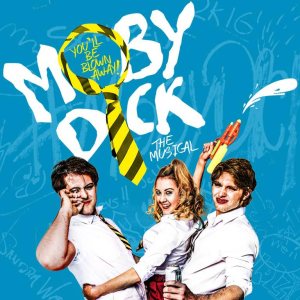
f making a musical out of Herman Melville’s classic novel Moby Dick seems an absurd idea, then making a musical out of a bunch of schoolgirls making a musical out of that novel must be more so by several multiples. Nonetheless, this is exactly the premise behind this 1983 show, a collaboration between Hereward Kaye and Robert Longden, which had a decent run at London’s Piccadilly Theatre in 1991 and has achieved a growing cult status since.

The cramped Union Theatre is closer to the size of the school hall where all the action takes place and, therefore, a much more apt setting for the show than a conventional theatre. Furthermore, this time round, the fun is not going to be spoiled by having had to pay West End ticket prices.

The musical within a musical created by the pupils of St Godley’s Academy for Girls, to be performed by themselves and their teachers, has clear influences of pantomime, “Moby Dick Whittington” perhaps, and draws from the same dictionary of double entendres. The girls even have their own “dame” in the form of their headmistress, played with relish by Anton Stephans, although, when she assumes the role of Captain Ahab, a man playing a woman playing a man becomes a bit of a stretch.

Andrew Wright’s bouncy revival rarely flags, making it all awful fun rather than just plain awful. Perhaps it is difficult to go wrong when the humour derives from the show being terrible, meaning that the worse it gets the better it gets. Hockey sticks and tennis rackets serve as makeshift props, blue sheets become the rolling ocean and Moby just has to be seen to be believed.

Ahab leaves a wife onshore who, as played by Brenda Edwards, has a voice to be heard hundreds of miles out at sea and the crew members of his ship are all played with boisterous energy as they set sail to hunt down the whale that bit off their captain’s leg. They include the pushy Ishmael (Rachel Anne Rayham), the coffee-drinking Starbuck (Laura Mansell), the slutty Stubb (Aimee Hodnett) and the courageous Pip (Glen Facey). Moby Dick himself is voiced by Russell Grant who, perhaps, ought to have seen in the stars what would be coming after him.

A four-piece band, under the musical direction of Lee Freeman, accompanies the songs which let down the tone of the show by being surprisingly good. They merit no awards for originality and they make cheeky nods to almost every hit musical of the 1980s, but they are pleasingly tuneful, sufficiently varied to sustain a show that is almost sung through and, in chorus numbers, suited perfectly to the predominantly female harmonies.

A bizarre cross between the St Trinians films and Jaws set to music, the show is unashamedly silly, but the company of 10 packing this small venue clearly has a whale of a time, so it makes sense to go with the flow.

Performance date: 18 October 2016

trh-2

one-night-in-miamiA meeting between four men that took place more than half a century ago and an imagined discussion about social change are hardly the most thrilling starting points for a play. No plot. apart from that given by history, no dramatic incidents, just talk and argument (plus a couple of songs), which makes it remarkable that writer Kemp Powers has managed to craft such an absorbing 90-minutes of theatre.

Robert Jones’ set design incorporates touches of Art Deco to establish the location of the hotel room in which the meeting takes place. The time is February 1964, just after Cassius Clay has beaten Sonny Liston to become World Heavyweight Boxing Champion. Clay, played by Sope Dirusu with little of the swagger associated with the public persona, is seen as naive and impressionable, under the influence of Malcolm X, as he prepares to announce the following day that he is converting to Islam and changing his name to Mohammed Ali. Fellow sportsman, American football star Jim Brown (David Ajala) finds it easy to resist pressure to make a similar conversion on the grounds that it would mean foregoing the pleasures of his grandma’s pork chops.

The core of the play is the clash of ideals between Malcolm X (Francois Battiste) and singer/songwriter Sam Cooke (Arinzé Kene), the former pushing for militant action to advance American civil rights, the latter preferring slow change to a system that is seeing him coming out on top by making records that reach white audiences and selling songs to the likes of the Rolling Stones. The argument is revolution versus evolution. Cooke entertains the group with a performance of the innocuous You Send Me, but faces taunts that it has taken a white man (Bob Dylan) to write the first great song for Black Americans, Blowing in the Wind (repeated tributes to Dylan in the play feel particularly apt in the week when he has been awarded the Nobel Prize for Literature). Cooke’s hurt is visible in Kene’s expression and his retaliation, a preview performance, sung a cappella, of A Change is Gonna Come is stunning; this should have ended the play with an exclamation mark and it is rather a pity that it continues for a few more minutes to reach anticlimax.

Neither Malcolm X nor Cooke was destined to survive another full year after this meeting, the suggestion being made that Malcolm X was more a prisoner of the Nation of Islam movement than a free revolutionary leader and that his life was under threat long before his assassination. Kene stands out among four superb performances in Kwame Kwel-Armah.s solid production. The play leaves open the question of which of the two approaches to change history has proven to be right. Notwithstanding the presence of a black President in the White House, sickening news and statistics still coming out of American cities indicate that, sadly, the answer could be neither.

Performance date: 14 October 2016

A Man of Good Hope**** (Young Vic)

Posted: October 14, 2016 in Theatre

a-man-of-good-hopeThis review was originally written for The Reviews Hub: http://www.thereviewshub.com

When politicians and the media talk about migration, it is usually in terms of numbers, but this new work by South Africa’s Isango Ensemble reminds us that those numbers are made up of individuals. It tells the story of one boy/man’s 20-year odyssey across a troubled terrain in search of a better tomorrow.

In 1991, at the age of eight, Asad Abdullah, from a proud Somali family, looks on as his mother is shot dead. The orphan’s journey begins, traversing post-colonial Africa, a continent crippled by conflicts of all kinds, eventually meeting Jonny Steinberg in Cape Town in 2011. The show is adapted from Steinberg’s book of Asad’s true story,

When Mandisi Dyantyis opens the show dancing centre stage while conducting musicians placed either side of him, we are given clear notice that orthodoxy will play little part in what follows. The music he conducts is a thrilling fusion of styles, traditional African sounds, rhythms and melodies blending with European opera. Perhaps it should not work, but it does and the only complaint about the music is that there is not enough of it. Exciting movement and choral singing provide an exhilarating spectacle that cannot be matched by rather static spoken scenes.

The precocious boy Asad (played at this performance by Phielo Makitle) grows into a resourceful youth (Zoleka Mpotsha), a budding entrepreneur (Luvo Tamba) and, finally, the embittered man (Ayanda Tikolo), looking older than his 28 years, who meets Steinberg. White hats pass between the four actors like batons. Asad’s journey takes him through Kenya, Ethiopia, Tanzania, Zambia and Zimbabwe. The doors of admission to America are slammed in his face cruelly and he sees South Africa as the new land of opportunity. He grapples with languages, finds a wife (Busisiwe Ngejane), fathers a child and survives on the strength of his ingenuity.

Directed by Mark Dornford-May, the thrust stage is frequently awash with colour and shaking with vibrant energy, but the show does not quite overcome a problem common to most “road” stories in that it is episodic. New characters emerge regularly, only to disappear before we have got to know them, leaving Asad as the one character to be fleshed out fully. The creators’ political agenda is in plain view; they describe a South Africa in which the promises of Nelson Mandela have all been broken by his successors, where lawlessness and corruption are rife and where different forms of racism have survived the demise of Apartheid.

The journey ends with Asad disillusioned and ready to abandon Africa, making the show’s title seem entirely ironic. Yet, conversely, the originality and vitality that run through its veins are uplifting enough to leave a feeling that hope for the future may not be so badly misplaced.

Performance date: 13 October 2016

trh-2

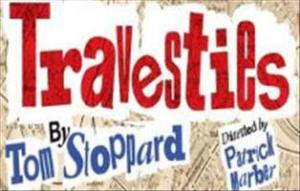
travestiesThere are two Tom Stoppards. One works within a disciplined framework – examples being The Real ThingHapgood, and the screenplays – where his writing gives richness and depth to characters and stories. This is the other Stoppard – undisciplined, self-indulgent, intellectual and absurdist. The play dates back to 1974, not long after the success of Jumpers, written in similar style. It centres (roughly) around the recollections of Henry Carr (Tom Hollander), an official with the British Consulate in Zurich in 1917, a time when others finding a Swiss haven in the middle of war-torn Europe included James Joyce (Peter McDonald), Tristan Tzara (Freddie Fox) and Lenin (Forbes Masson), who was, of course, keeping an eye on revolting developments in his homeland.

Familiar Stoppard themes, including espionage, English eccentricity and Eastern European politics, go into the melting pot and director Patrick Marber makes the concoction sizzle, with flair and invention, adding the odd (very odd!} song and dance to the mix. Mockery of other writers abounds, with a performance of modified scenes from Wilde’s The Importance of Being Algernon {or is it the other one?) included. Hollander is magnificent and the entire ensemble (Clare Foster, Amy Morgan, Sarah Quist and Tim Wallers are the others) performs with gusto. They are entitled to congratulate themselves both for conquering the verbal gymnastics and remembering their complex lines. In all the play is witty but uneven, sometimes hilarious, sometimes too clever by half and it all starts to melt away from the memory within five minutes of leaving the theatre.

Performance date: 11 October 2016

straught-to-the-heartThis review was originally written for The Reviews Hub: http://www.thereviewshub.com

There is more than enough good theatre around in London these days to satisfy enthusiasts every evening of the week, so what about popping along to Leicester Square for an additional lunchtime fix? Ken Jarorowski’s trilogy of short plays consisting of seven warm and wise monologues will make the excursion well worthwhile.

The three stories in Pulse are linked by themes of father/child relationships and connect to doctors. Charles (Alistair Brown) was stillborn, but saved by his father, who refused to accept a doctor’s hasty verdict. Now, as an adult, father and son avoid each other, Charles fearing coming out as gay to a manly Royal Marine who preaches in church at weekends. Ron (Daniel Simpson) fears for his young son, who is being bullied at school by the son of a doctor and he teaches him how to be a boxer with unforeseen consequences. Diane (Nadia Shash) has sacrificed her life to care for her father since her mother left the family when she was 11 and now she is told that his degenerating heart condition could mean that the end is near.

One to the Head One to the Heart is the darkest of the three plays. Aaron (Simpson) and Beth (Shash) are an American married couple who, having combatted infertility problems, now have a severely disabled daughter. They each tell their stories – he is a tough guy who has fought his way up to become a college professor; she is a former nurse who has never done anything bad in her life, but senses that this must change. This moving little play is marked by deeply satisfying touches of irony.

The Truth Tellers is lighter, introducing us to Annie (Shash) and Larry (Brown) both single and passing their prime. They go reluctantly to a club one evening and fall upon each other (literally) but they fill their conversation with dishonesties which threaten to undermine their developing mutual attraction. He is a bookkeeper who pretends to be a CEO, she is an office clerk pretending to be a hedge fund manager. Annie has been advised “every nice guy in the world is either gay, taken or weird” and now, as both tell lies to each other and the truth to the audience, she just hopes that Larry is weird.

Director Alex Dmitriev cuts back the staging in a bare studio space to absolute basics – up to three actors standing on stage, with spotlights picking them out when it is their turn to speak. The plays represent exemplary, concise short storytelling and they are performed to perfection. Running at around 65 minutes overall, the plays may not fit perfectly into a lunch hour, but they are well worth a late return to work. And perhaps it would be wise to add on another five minutes to dab away a tear or two.

Performance date: 11 October 2016

trh-2

Trident Moon*** (Finborough Theatre)

Posted: October 11, 2016 in Theatre

trident-moon-mainThis review was originally written for The Reviews Hub: http://www.thereviewshub.com

In 1947, a line was drawn on the map to separate predominantly Hindu India from predominantly Muslim Pakistan, as both countries gained independence from the British Empire. Canadian writer Anusree Roy’s new one-act play, getting its world premiere here, explores the plight of six women and three female children caught up in the chaos of the separation.

Alia (Sakuntala Ramanee) leads the mini exodus from Muslim territory in a coal truck. She is widowed and has abducted two Muslim women, with one child, in revenge for misdeeds. Another woman lies in the truck, felled by a bullet and tended by her “retarded” daughter. Two more women, one pregnant, and a girl get on board en-route. Roy paints a stark picture of the sub-continent’s matriarchal society – women hardened by adversity, determined and resourceful, while their men are absent, fighting, scavenging or dead.

In Anna Drifmier’s compact set design, the back of the truck fills the whole of the Finborough’s small traverse stage, making Anna Pool’s taut production as claustrophobic as it is ferocious. Roy structures the play as a series of dramatic set-pieces, often violent, even gruesome, and the cumulative effect of this relentlessly brutal onslaught becomes wearing. In a chilling moment, Alia encounters a 12-year-old mute, crippled girl and asks “have you been raped yet?” in a matter-of-fact tone that implies acceptance of the inevitable. Here, Roy demonstrates how, when cataloguing horrors, less can be more,

The play emulates the rickety truck, proceeding along a bumpy road, but having no certain sense of direction. A little over-plotting does not help it to achieve clarity, but impassioned performances from a strong ensemble drive it along with force. In describing the plight of women and children displaced from their homes by conflict, the writer must surely have had her mind on modern day suffering and, in that respect, the truck’s hazardous journey has still to end at its destination.

Performance date: 10 October 2016

trh-2

kissing-the-shotgunThis review was originally written for The Reviews Hub: http://www.thereviewshub.com

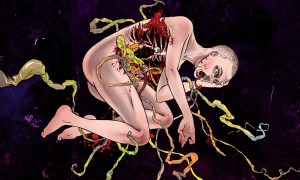
Christopher Brett Bailey is one of those theatre makers who does not make things easy for his audiences. His show This is How We Die, which toured the UK a couple of years back, pummelled us with weird ideas and anecdotes delivered at breakneck speed and ended with a loud performance by a rock band. Here, how we die again features highly, but the music takes on the prominent role in what could be described as a rock symphony in five movements, the fourth of which is spoken.

“This is a Hell dream” we hear repeatedly as the show begins in near darkness. If so, it is a dream to wake the neighbours.Think AC/DC or Metallica and then treble the volume. We are told that the decibel level reaches the equivalent of an aeroplane taking off and, mercifully, ear plus are provided if needed. Alicia Jane Turner and George Percy are the composer-musicians along with Brett Bailey.

With lighting designed by Lee Curran, the team creates the theatrical equivalent of an abstract painting. asking each individual audience member to make of it what they will, putting a shotgun to our heads and urging us to pull the trigger. The coordination of sound and lighting is highly complex and it has to be said, in fairness to all, that the performance being reviewed suffered from a major technical glitch, resulting in a lengthy unplanned interval. As the creators’ intent is to project a continuous flow of aural and visual images, building cumulatively, the break was unfortunate.

The spoken section begins in total darkness with the disembodied voice of Brett Bailey reciting a magnificently morbid poem that gives further context to the music. We are seated in crouch position on a plane seconds before it crashes, we lie helpless in a hospital bed connected to a network of tubes and we are tormented by a parasite growing inside us. “A suicide note is tattooed on your throat” the echoing voice warns. A Hell dream indeed and, after 70 minutes or so of being face-to-face with our own mortality, we wake to reflect on the horrors of the real world.

Performance date:7 October 2016

trh-2

good-canaryIt is not often that directors become box office draws. In films maybe Hitchcock or Spielberg, but in theatre? Well what about John Malkovich? His name certainly seems big enough to get theatregoers scurrying out to Kingston without the attraction of an established writer or big stars. And his direction is good, very good, but the icing on the cake is that the writing and the acting are superb too.

American writer Zach Helm’s play, centring on drug addiction in literary  circles, comes very soon after Duncan MacMillan’s People, Places and Things explored similar themes in the acting profession and there is hardly anything between the two works in terms of quality. Jack (Harry Lloyd) is a novelist who has just hit the big time, but he has a problem wife, Annie (Freya Mavor) who is hopelessly addicted to drugs and, at times, out of control. Jack’s publisher, Charlie (Steve John Shepherd) is eager to cash in on the success, but begs with Jack to keep Annie out of sight. Easier said than done.

Helm’s writing often has touches of David Mamet, sharp, snappy and incisive, but the big difference is that this is a play with real heart. Mavor is little short of sensational as Annie, catching the character’s mood swings with absolute assurance. She buys speed by the bucket load and works off her frenzies with frantic bouts of housework (can I borrow her please?), but she is on a spiral that is only going downwards. Ilan Goodman provides welcome light relief as her drug dealer, so unthreatening that he could be a pizza delivery boy. When Annie turns up at a cocktail party where guests include a vitriolic literary critic (Simon Wilson) pandemonium breaks out.

The cocktail party is one of three key scenes directed with precision by Malkovich, characters shuffling around in varying degrees of discomfort, This follows the housework scene when the projected backdrop takes on the life of a psychedelic cartoon. The third comes after Annie has returned from rehab; she and Jack embrace on the couch, staying silent as their dialogue appears behind them and a piano tinkles in the background. This emphasises that, apart from being a harsh tale of addiction, the play is also the most tender of love stories and Lloyd’s portrayal of Jack’s complete devotion becomes heartbreaking.

Helm is showing us that Annie’s addiction has become part of her destructive personality, part of who she is and that, when she and her drugs are seperated, she will not really exist. A bleak message perhaps, but this play is so compelling that it does not seem so. A deceit in the first act works well at the time, but seems to cheapen the play when thought about afterwards. Otherwise, this is quite an impressive achievement and one of the most enthralling productions seen so far this year.

Performance date: 6 October 2016

this-little-life-of-mine-park-theatre-l-r-kate-batter-izzy-_-james-robinson-jonesy-photo-by-charlie-round-turner-e1475715897910This review was originally written for The Reviews Hub: http://www.thereviewshub.com

Who says that musicals need to have fantastical themes and exotic settings? Michael Yale seems to say not and goes out to prove it with a chamber musical about little lives in mundane places and, more specifically, about infertility.

Even the name Jonesy declares ordinariness, as the character of that name moves into a tiny new London flat somewhere in Zone 2 with his partner Izzy. He likes occasional drinks with his mates, her favourite film is Breakfast at Tiffany’s (“the one about the skinny prozzy with a wet pussy” Jonesy reminds her). They struggle to make ends meet, but have a fun lifestyle, even dabbling in swinging with a friendly couple. But then the urge to expand the family grows stronger and Jonesy’s sperm count lets them down. They try and they try but their failure to conceive drives a wedge between them.

Act I of the show jumps around far too much before settling on a steady course. James Robinson and Kate Batter are both charming in the central roles, but much of their spoken dialogue feels badly stilted, and only the injection of some sharp jokes makes it bearable. However, when it comes to providing the lyrics to fit with the moods and melodies of Charlie Round-Turner’s lovely music, Yale’s writing comes alive to make this a musical that really is all about the songs.

All the minor characters are played by just two actors, both making enormous contributions – Caroline Deverill’s guises include an office slut and Jonesy’s controlling mother; Greg Barnett moves from a singing barista to a gynaecologist among others. They are also the couple in the swinger scene, joining Robinson and Batter in some eye-poppingly raunchy choreography. Comedy numbers, such as this and the lively Just One More, when Jonesy stays on too late in the pub, lighten the mood, but most of the songs are haunting romantic or sorrowful solos and duets.

Robinson accompanies himself on guitar for the simple love ballad Bella Rose and Batter, whose voice has a beautiful clarity, sits alone at a bar table like a torch singer to perform Drinking Alone. Most memorably, as the couple’s relationship hits the rocks, Jonesy leaves the flat, but remains visible through a screen and he duets with Izzy, both singing “…sometimes I confess that I wish I loved you less…” each unheard by the other. This heartbreaking scene sums up in seconds the devastating effect when channels of communication between a devoted couple become lost and it typifies how song is used in the show to express human emotions in ways that spoken words fail to do.

In turns, rude, romantic and real, this is undoubtedly a show that needs more work, but it has loads of potential to grow. The publicity invites us to “be at the birth of a brand new British musical” and it is an invitation well worth accepting.

Performance date: 5 October 2016

Photo: Charlie Round-Turner

trh-2