Lardo**** (Old Red Lion Theatre)

Posted: March 6, 2015 in Theatre

LardoThis review was originally written for The Public Reviews: http://www.thepublicreviews.com

It is many years since wrestling disappeared from the schedules of the main television channels and icons such as Big Daddy and Giant Haystacks have faded into distant memory. So it will come as a surprise to many that the sport is still going strong, at least in Glasgow where Mike Stone’s new play is set. Lardo is a rotund, not too bright young man who has not quite grown up. He believes that his father died in the wrestling ring when he was a child and sets his heart on going into the same profession. Daniel Buckley is ideal in the role; wearing spandex to emphasise every unflattering bulge, it is easy to believe that he would create a sensation on You Tube and generate the following needed to draw crowds to Wrestling. Buoyed by his internet success, he turns his back on his pregnant girlfriend (Laura Darrall) and knocks on the door of ruthless promoter Gavin Stairs (Nick Karimi). The set for Finn Caldwell’s production could not be simpler – a wrestling ring filling almost the entire performance space – and it provides the stage for several breathtakingly realistic fight sequences. The close proximity of the audience, on two sides of the ring, is a key factor and the actors/fighters milk audience participation for all it is worth. Wrestling in the liberated era includes both sexes and Zoe Hunter gives a strong performance as “Whiplash Mary”, a fighter bruised inside and out. As operated by Stairs, played by Karimi as an ugly thug, Wrestling is a seedy business, at odds with the modern world. When a Health and Safety officer (Rebecca Pownall) intervenes, Stairs’ response is to seduce her and carry on regardless to push for further extremes of violence. Lardo’s friend who fights under the name of “Wee Man” (Stuart Ryan), takes the worst of the resulting knocks. Due to doubling up of roles, all six actors get turns in the ring and the action eventually climaxes in a Rocky-style showdown. Those who have always seen Wrestling as part sport, part theatre, may well be inclined to comment that it has at last found its natural home. Stone touches on serious social issues – the irresponsibility of exploiting uneducated youngsters who are greedy for fame and wealth and the immorality of feeding the public hunger for ever more realistic violence. However, he does not dig too deep, preferring to wrap his play in a simple and sometimes trite storyline, leaving plenty of room for the action sequences. On balance, his approach seems to have paid dividends and he could well have created a sizeable popular hit.

Performance date: 5 March 2015

thepublicreview_hor_web copy

jerrys-girls266This review was originally written for The Public Rviews: http://www.thepublicreviews.com

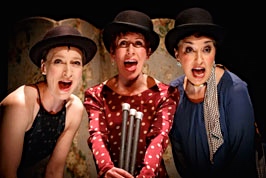
Jerry Herman is what he is – a master of traditional Broadway musicals. He is also the creator of some formidable female characters, even if the best known of them are a little too seasoned to be called “girls” and, in the case of La Cage Aux Folles, they are really not female at all. This cabaret-style revue of songs from Herman shows started life in New York and comes to London featuring three sassy dames, all leading musical comedy stars who are well capable of giving plenty of welly to material like this. The stage is set up to resemble a star’s dressing room, with a grand piano at the side and hanging on the wall are photographs of Jerry’s real life “girls” – Ethel Merman, Carol Channing, Angela Lansbury, Barbra Streisand – seemingly to remind this show’s stars of what they have to live up to. Herman had three Tony Award winning smash hits on Broadway – Hello Dolly, Mame and La Cage… – and another which flopped, but has since grown in stature and is now considered by many to contain his finest score – Mack and Mabel. These four shows provide the majority of the songs in this revue. Anna-Jane Casey, fresh from a successful run in Forbidden Broadway, Sarah-Louise Young, a cabaret regular who has worked with Fascinating Aida, and Ria Jones, star of countless musicals, are just about perfect for this blend of comedy, pathos and gutsy determination. They combine for a hilarious version of Tap Your Troubles Away, bringing into the dance routine accompanists Edward Court and Sophie Byrne, and then, leading up to the interval, they take the title songs from Dolly and Mame, along with When Mabel Comes in the Room to perform a memorable medley. It seems unfair to single out any one of the three stars for special praise, but it has to be said that Jones grasps at every opportunity to steal the show. Starting with a wonderfully self-deprecating response to Take it All Off (written for this revue), she then fills in for the absence of an authentic “Mack” with a stunning version of the beautiful I Won’t Send Roses, breaks our hearts with Time Heals Everything and climaxes by bringing the house down with I Am What I Am, gaining in conviction and confidence with every line. Jerry Herman has enjoyed a mini-renaissance in the last couple of years with UK premieres of “forgotten” shows Dear World and The Grand Tour. This revue should add to his reputation and next up is a revival of Mack and Mabel, in Chichester and then touring from the Summer. The appetite is well and truly whetted.

Performance date: 4 March 2015

thepublicreview_hor_web copy

Heavens-of-intentionsThis review was originally written for The Public Reviews: http://www.thepublicreviews.com

Laurence Olivier and Ian Fleming were born little more than a year apart when King Edward VII was on the throne, they moved in touching circles (Noel Coward, for example was known to both) and, in their different fields, they became British icons of the 20th Century. Mark Burgess’ two one-hour monologues show these figures in their declining years, looking back over their lives. Larry, directed by Daniel Finlay has topical poignancy at a time when Michael Gambon and Maggie Smith have announced that they can no longer cope with the rigours of live theatre. We first see Olivier in 1975, when his last stage appearance at the Old Vic is behind him and the National Theatre is established. He has recovered from two life- threatening illnesses, but is frail, suffers from stage fright and has even dried on the first night of Ibsen’s The Master Builder. He is in New York to shoot Marathon Man, doing battle with Dustin Hoffman over his method acting techniques and learning the skills of dentistry. Keith Drinkel show’s Olivier as a man still filled with insecurities and uncertainties even though he has reached the pinnacle of his profession, playing him as an actor who knows no other way but to go on acting when the tools which he needs are failing him. When we see him again in 1983, he is packing a suitcase full of of old scripts and using it in a lifting exercise to give his arms the strength to carry Cordelia in a television version of King Lear. A professional to the end, he remains adamant that he will not allow her to be supported by strings. The Man with the Golden Pen, directed by Louise Jameson, begins in 1952 at Ian Fleming’s Jamaican home. He is dressing for his wedding and, having just completed his first novel, holding a conversation with its hero, James Bond. From a privileged background, Fleming is a man who has lived a hedonistic lifestyle, ridden his luck and got away with it. Setbacks, such as contracting an unfortunate disease are skimmed over and we hear mostly of a life filled with booze, women and extravagance. However, when only in his 40s, his excesses are already beginning to take a toll on his heath. It emerges that Bond is a cocktail – one part extracted from Fleming’s own life, one part people he has known and several parts wish fulfilment fantasy. Michael Chance plays Fleming as debonair, but regretful that maybe he has let slip some of the more important things in life. When we meet him again, ten years and ten Bond novels later, he has suffered a heart attack, his marriage is in ruins, his fictional hero having become the third person in it, and he resents being sneered at by literary intelligentsia. He expresses reservations over the casting of a rugged Scotsman as Bond in Dr No, but he was not to live to know the phenomenal success of the film franchise that would follow. There is little that is revelatory in these two short plays, most of the anecdotes being well known previously, even to those with only a smattering knowledge about these two men. However, both plays are performed competently and Burgess strikes a good balance between factual detail and humour which always entertains.

Performance date: 2 March 2015

thepublicreview_hor_web copy

Muscovado** (Theatre 503)

Posted: February 27, 2015 in Theatre

muscovado-05

Stories of 19th Century slavery are usually set in the American Deep South, but Matilda Ibini’s new play serves to remind us of British involvement, not only as traders, but as slave owners in overseas plantations. Her play is set in Barbados in 1808 and centres on Kitty, the subservient wife of an unseen landowner, and three of her husband’s slaves – Asa (Alexander Kiffin), a loyal, obedient servant who was probably fathered by his master, the rebellious Elsie (Damilola K Fashola) and Willa (Sophia Mackay), a precocious 12-year-old. Three superb performances in these roles, rich with human dignity, bring out all the slaves’ suffering and suppressed anger. Kitty is an ambiguous character – at one moment a kindly guardian to the slaves, at the next a cruel mistress – and, not helped by some stilted dialogue, Clemmie Reynolds often struggles to make the transitions convincing. Ibini seems intent on pointing a finger of blame for slavery towards the Church by introducing the character of Parson Lucy, a vociferous advocate of unenlightened Christianity and bogus science who is inclined to quote from the Old Testament and whack slaves with his Bible. However, she makes a cleverer move by keeping the slave master offstage, whilst ensuring that his menace is felt constantly. As described, he is a stereotypical tyrant and his appearance could have cheapened the drama and robbed the play of much of its subtlety. Directed by Sophie DeVries and Clemmie Reynolds, Act I of this production is atmospheric and haunting; Sophia Simensky’s claustrophobic set evokes the play’s steamy West Indian setting and lovely choral music, composed by James Reynolds, creates a melancholic air, consistent with the themes of lives being abused and wasted. By showing that Kitty is herself enslaved and then suggesting that she and the three black slaves might find emancipation through each other, Ibini seems to be taking the play in an interesting direction. But then, in a terrible second act dominated by hysterical melodrama, the play goes nowhere and much of the earlier good work is thrown away. The gravity of the play’s themes places a responsibility on this company to ensure that their production never becomes risible, as often happens in Act II. The chief culprit seems to be Adam Morris who plays Parson Lucy like a pantomime villain, but the character is crudely written and the joint directors must also be blamed for not reining in the excesses. The point that slavery is an inhuman abomination is made most powerfully in this play when it is understated, but, once the play’s purpose becomes merely to demonstrate graphically the extremes of the brutality which results from slavery, then its power is diminished. This production is beginning a long tour, culminating at the Edinburgh Fringe Festival in August. The company has time to work on current flaws and, judging from the quality of much of Act I, they are well capable of making improvements.

Performance date: 26 February 2015

Game*** (Almeida Theatre)

Posted: February 26, 2015 in Theatre

Game_MAIN_260x356

What can I say about a production so swathed in secrecy that the Almeida refuses even to sell programmes until after the performance? Well, the ticket reveals that the audience is seated in zones and it is evident in the foyer that there are four of them. I was in one, but I cannot attest to the existence or whereabouts of the other three in an entirely re-configured theatre space. Leaving aside the specifics of this new play by currently high-flying writer Mike Bartlett, it seems that the intention is to place the audience in a world that is half real and half virtual – let’s call it “mid-reality” – and thereby explore the dividing line between the two. Moral questions that are asked – how safe is it to devise a seemingly harmless outlet for latent violent instincts and what is the potential damage to children? – invite comparisons with Jennifer Haley’s The Nether. However, that play possessed a compelling narrative, whilst this is a succession of short scenes (adding up to under an hour), with much repetition and indistinct progression. Technically, Sacha Wares’ production, designed by Miriam Buether, is a triumph, the conceit being constructed impressively and executed with precision. Ultimately, I found mid-reality an uncomfortable place to be and, much as this play got under my skin, it also left me cold.

Performance date: 25 February 2015

man and superman

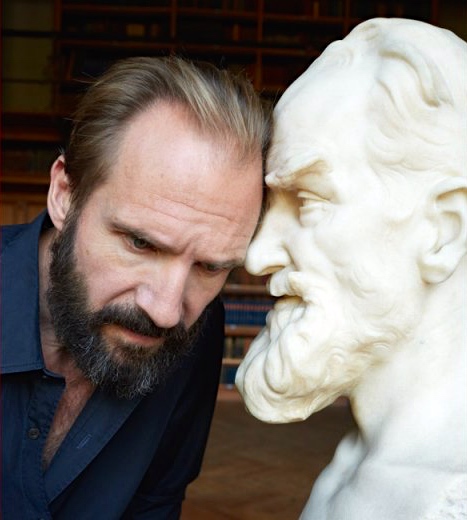
It is brave of the National to stage a full version of George Bernard Shaw’s epic comedy prior to the impending introduction of all night tubes. Even when the play premiered in 1905, the middle section, known as Don Juan in Hell, was omitted, as it has been many times since, but Simon Godwin’s glorious revival includes it and poses the question as to how it could ever be cut. Coming in at exactly three and a half hours, the performance is some ten minutes shorter than word from early previews suggested and this seems to have been achieved by speeding up delivery of lines; as a result, we are often denied the time to savour the constant flow of Shavian wit, but the compensation is a production which is zestful and bubbling almost throughout and how amazing it is to hear a 21st Century audience frequently laughing out loud at Shaw. The central character, John Tanner, is modelled on Don Juan, whom he becomes in the middle section; He is super rich, with anarchist and socialist leanings and a confirmed bachelor with profound misgivings about womankind. Upon the death of a friend, he is appointed a guardian to Ann Whitefield, a young woman in whom he meets his match. Tanner becomes the mouthpiece for all Shaw’s irreverent, non-conformist ideas on English society, expounding on sexual and social politics, hypocrisy, tradition and religion. Shaw’s Irish perspective is similar to that of Oscar Wilde, but his satire is much more ferocious and wide-ranging. This play begins and ends like a lightweight Wilde comedy, with elements of a gender-reversed Taming of the Shrew thrown in. Ralph Fiennes is a marvellous Tanner; this actor’s earlier screen parts and his stage appearances in classical roles gave him an image of stiffness and gravitas which would not have suited Tanner at all, but film triumphs in In Bruges and The Grand Budapest Hotel have shown him to possess the skills of a consummate performer of comedy, skills which are evident throughout this production. He could be several years older than Shaw intended, but it matters little, nor do other details of dates and times in Godwin’s version. The director seems to realise that so much in this sprawling play – its absurd length, its self-indulgent diversions – breaks the rules of theatre and he opts for more of the same. The plot and much of the writing has an Edwardian flavour, but the characters wear modern dress, receive text messages and drive around in a gleaming sports car (seen on stage in its full glory), getting from Park Lane to Richmond in under 10 minutes, something that surely would not have been contemplated at any time later than 1905. Fiennes is matched by Indira Varma as Ann, steely and cunning yet so charming that it is no surprise when Tanner speeds off to the French Riviera to escape her clutches. He ends up in the Sierra Nevada (faulty sat-nav?), kidnapped by brigands led by the worldly Mendoza (Tim McMullan), a former waiter at the Savoy. Now comes the Don Juan section, staged as a surreal dream sequence on a brightly-lit, near bare stage; Don Juan and the Devil (McMullan again, now with a deep, silky voice and slouching posture) exchange philosophies about life and afterlife, brutally lampooning the influence of religion on the structure of society. If this is too amusing to ever be excised justly, the same cannot be said for the beginning of the final Act where Shaw dwells for too long on a superfluous sub-plot involving an American father and son; by attacking the American obsession with wealth, he is opening fire on one front too many and Godwin’s production also slows up at this point. This could be because it is the only time when both Fiennes and Varma are absent from the stage for a long spell and their return for Tanner’s inevitable capitulation brings sheer joy, tempered only by slight disappointment that Shaw is himself capitulating to the conventions of romantic comedy. Christopher Oran’s dazzling set designs add to the rich mix as do top-notch supporting performances from Nicholas Le Provost, Elliot Barnes-Worrell and others. Divine comedy indeed.

Performance date: 24 February 2014

beautiful

Here we go again! With more recycled pop songs and what is, in essence, the same plot as countless previous showbiz bios, the tired old “juke box musical” formula is back. Yet, much as I rant on about cheap and lazy theatre, insisting that anyone wanting to listen to pop classics would do better downloading Greatest Hits albums or going to see tribute artists, even I sometimes have to succumb. The publicity for shows like Jersey Boys, Sunny Afternoon and this often describes them as “the soundtrack for a generation” and, as the generation of all three is my own, I am as inclined as anyone else to sit tearfully wallowing in nostalgia. That said, surely we are entitled to look for more in terms of original creativity from a Broadway/West End musical than is offered here. The show tells the story of Carole Klein, a talented teenage songwriter in 1950s New York, who changes her name to King and, to prove a point to her mother, takes a song to top music publisher Donnie Kirshner. When that song is It Might as Well Rain Until September, it is hard to understand why she then decides that she needs to work with a lyricist, but she teams up with Gerry Goffin, becomes pregnant by and marries him and, in the wake of a painful separation, goes on to write and perform one of the greatest albums of the 1970s. Playing King, Katie Brayben faces a challenge, because not only is the role huge, but, as written, the character is completely uninteresting – a boring, motherly, stay-at-home stick in the mud; it is to Brayben’s credit that she makes King’s sheer ordinariness somehow endearing. However, Alan Morrissey struggles to convince as Goffin, a restless wannabe playwright who suffers from bouts of severe depression. The introduction of friendly rivals – the chic, confident Cynthia Weil (Lorna Ward) and the hypochondriac Barry Mann (Ian McIntosh) – at least brings some sparkle to the spoken scenes and it also allows the producers to raid another catalogue of classic songs (rather greedy in view of the Goffin/King treasures already at their disposal). Glynis Barber as King’s mother and Gary Trainor as Kirshner contribute well-judged comic cameos. Director Marc Bruni gives us a big production, much bigger than it really needs to be; apart from routines by groups such as The Drifters and The Shirelles, there is little choreography and little spectacle, making the show not much more than a small human drama with songs thrown in. Autobiographical material from Tapestry comes late on, but, otherwise, the lyrics rarely relate to the drama and add little insight to Douglas McGrath’s rather colourless and sometimes clunky book. However, it is the songs, whether Goffin/King or Mann/Weil, that everyone comes to hear and, time and again, they explode like party poppers to bring the show to life. With their perky or lilting melodies and poignant or optimistic lyrics, these compositions are, still today, some kind of wonderful.

Performance date: 19 February 2015

little_light_orangetreetheatre_yolanda_kettle_lorna_brown_photo_richard_davenport_

For all the eloquent pleas, nothing can speak louder in support of Paul Miller’s Orange Tree keeping its public funding than the quality and variety of recent productions. Here again, we have an imaginative new work, lacking obvious commercial appeal but perfect for the theatre space, being given an immaculate production. If its writer, Alice Birch, goes on to fulfil her obvious potential, this premiere of her debut play could well be looked back on as quite a landmark. Birch delves into the fertile territory of dysfunctional family life in a play that is easier to admire or be intrigued by than to like. Clarissa (Yolanda Kettle) travels from London to visit her sister Alison (Lorna Brown) who lives with her partner Teddy (Paul Rattray) on the Devon coast. A meal is carefully planned, adhering to family rituals and the three quickly begin to pick away at barely healed wounds from the past until they are fully re-opened. Birch represents with considerable insight the ways in which family members (or groups of friends for that matter), who reconvene after time apart, always relate the same stories from their shared history and always home in on things that give each other the most embarrassment or pain. The arrival of Simon (Paul Hickey), Clarissa’s new partner, gives an outsider’s perspective on proceedings that often seem bizarre or surreal. What is most interesting in Birch’s writing is the way in which she uses language to evoke moods and tensions – ranging from short, staccato exchanges when characters are pushing their own agendas oblivious of each other, to long, lyrical passages such as Teddy’s emotional heart pouring which ends the play. The actors in David Mercatali’s tight production are all tuned in perfectly to the flow and rhythm of the dialogue, giving the play a terrifying grip as it slowly reveals its back story. Offering the characters no sight of redemption, Birch’s harsh and bruising writing often results in uncomfortable viewing, but nonetheless this production is fascinating.

Performance date: 20 February 2015

DVR_Groupshot

I resisted this play during its run at Hampstead Theatre and for the first few weeks of its West End transfer, fearing that a grouchy old man could have some difficulty in connecting with what appeared to be the sisterly equivalent of a bromance or Britain’s answer to Beaches. In fact, it can be described fairly as both those things and the opening scenes, filled with girly humour and playing like a limp sitcom, do little to allay fears. However, writer Amelia Bullmore (aka Kay Hope in 2012) shows remarkable skill in developing her three characters and, by the middle of Act I, I was completely hooked. The quirky details incorporated into the dialogue at first seem to be there just to generate cheap laughs, but they accumulate to create a composite picture that is revealing and truthful. Only Tamzin Outhwaite, as the stubbornly independent lesbian Di, has moved with the play from Hampstead. Samantha Spiro is now the frigid workaholic Viv and Jenna Russell is the naive and casually promiscuous Rose. The play begins in the early 1980s with the trio sharing a house whilst studying at Manchester University and covers a period of almost 30 years. More than half of it takes place during the student days and the obvious casting might have been young actors who could have been aged with make-up, but the casting of actors in their 40s turns out to be a masterstroke. The minor incongruities of seeing mature women behaving like teenagers are by far outweighed by the depth and richness that is added to the characters; it is said that people themselves never change, only other people’s perceptions of them and this is a play which demonstrates the point amply. Progressively, the jokes become thinner and the themes darker, as the characters encounter life’s ordeals and challenges and Anna Mackmin’s production is always sympathetic to the changes in tone. Ultimately, Bullmore sets out to examine the nature and worth of lifelong friendship, asking what friends can give to each other and what they should expect to receive in return. Funny and often moving, this is not a play to be appreciated and enjoyed only by women; it has universal resonance.

Performance date: 13 February 2015

Dracula* (Lion & Unicorn Theatre)

Posted: February 13, 2015 in Theatre

Dracula_DigitalThis review was originally written for The Public Reviews: http://www.thepublicreviews.com

Two centuries before Anne Rice and Stephenie Meyer, Bram Stoker was terrifying readers with his story of the vampire Count Dracula, which has gone on to inspire countless films over the years and a few stage versions too. This latest adaptation by Simon James Collier, who also directs, attempts to scale down Stoker’s work for a small fringe theatre, whilst retaining the essential ingredients of horror, mystery and rather weird romance. The story begins with a young lawyer, Jonathan Harker (Mark Lawson) being despatched to Transylvania to make arrangements for the Count, an Anglophile perhaps intending to spearhead the first influx of Romanian migrants, to buy property in London. A sign that all will not be well comes with news that a previous emissary, Renfield, was driven to madness by his experiences and now resides in an asylum. Waiting at home are Harker’s fiancee Mina (Josephine Rattigan) and her friend Lucy (Connie Jackson), two coy maidens so irritating that the coming bites to their necks seem deserved. In Act I, the cast all give earnest performances, however difficult the script may make it for them, but special mention must be made of Grant Leat, playing the crazed Renfield; any actor who can deliver the line “my spiders are essential to me, they are not giving me as great a nuisance as my flies”, whilst keeping a straight face, is worthy of praise. Cristinel Hogas is a camp Count, his long, straight, black hair and flowing black robes giving him a passing resemblance to Morticia Addams. A first sight of him leads to hopes for a hilarious spoof, but Collier’s writing is prosaic and stodgy and any risibility that follows is not of the sort that would have been intended. For the second act the action moves to Whitby in Yorkshire and vampire slayer Professor Van Helsing (Mitch Howell) arrives on the scene, which serves as a cue for titters to start rippling around the audience. Howell overcooks his performance shamelessly, seemingly ignoring the fact that he is out of step with the rest of the cast who are still playing it straight. Running for little under three hours (including interval), this is a laboured and pedestrian affair, far too occupied with irrelevant detail. When one actor races through a long speech at such speed so as to make it virtually indecipherable, it is a sure sign that even the writer/director himself recognises this problem. Occasional puffs of smoke to create a fog effect and a soundtrack of gusting winds and howling dogs are all the special effects offered to evoke an ambience of fear. It has to be accepted that a small fringe production would have neither the space nor the budget to match a Hollywood movie, but, if the creators of the show were not capable of re-imagining the piece as a unique theatrical experience more thrilling than this, it is difficult to understand why they embarked on the project at all. Frights are few and mild, consisting typically of someone asking “is anybody there?” whilst the Count is hiding behind a curtain. The only really scary moment is the very last one, but, up until then, this incarnation of Dracula is in desperate need of a stake through its heart.

Performance date: 12 February 2015

thepublicreview_hor_web copy