how to hold your breath

It may well be that the sternest test of great actors is not how they perform in good productions, but in bad ones. Maxine Peake, prolific on television, here makes a rare appearance on the London stage, arriving some distance behind her soaring reputation and it is her presence alone which lights up this abstract mess of a play. On stage for the entire 115 minutes, her cropped, blonde, boyish hairstyle the same as for her Hamlet in Manchester recently, she exudes strength, vulnerability, joy and pain in a performance of supreme authority and she is simply mesmerising throughout. She plays Dana, a business consultant peddling customer service theories, who beds Jarron (Michael Schaeffer) and refuses to accept his insulting offer of 45 Euros in payment for her “services”; this turns out to be a bad move when marks appear on her body and she concludes that Jarron is in fact the Devil. So, phase one of the play sees a light romantic comedy turn into a supernatural thriller. In phase two, Dana, still haunted by reminders of the refused 45 Euros, embarks with her pregnant sister (Christine Bottomley) on an overland trek across Europe with the local librarian (Peter Forbes) in tow, dispensing self-help manuals to meet every need. This phase sees a road trip drama, spiked with touches of absurdism, added to the mix. In phase three, a major banking collapse results in the whole of European civilisation disintegrating in a matter of days and we now have a post-apocalyptic nightmare, culminating in the savage irony of European refugees escaping by boat to Africa. So what messages is writer Zinnie Harris trying to convey in this mishmash of genres? Is she saying that the stability of European society depends entirely on the servility of women? Or is she pointing out the slenderness of the thread that supports the richness of modern European lifestyles, separating the First World from the Third? Her play has a plethora of interesting ideas, but they all seem to hover in mid air without ever landing on any specific targets. It is a play that never rings true as serious drama and all attempts at surreal comedy are thwarted by writing that lacks both wit and invention and by a leaden production, directed by Vicky Featherstone. Chloe Lambert’s jumbled sets do not help either, supporting little that seems relevant to the happenings on stage. This is a production that will remain memorable only for its luminous star performance, but, as Peake herself would have informed Manchester audiences last year, “the play’s the thing…” and, sadly, not even she can do enough to salvage this one.

Performance date: 11 February 2015
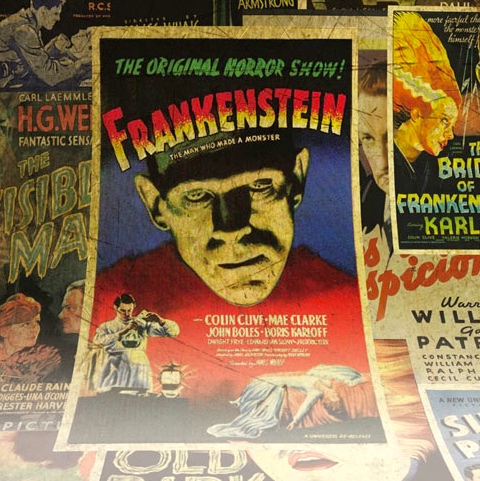
GAM We talk today of British invasions of Hollywood, but when was it ever different? In the mid-1950s, Dudley-born James Whale was one of many British imports parading their cinematic talents on America’s West coast and playing host to the likes of Princess Margaret. By then, he was nearing 60, on the fringes of Tinseltown’s elite and its gay sub-culture, but still revered for directing classics such as ShowboatThe Old Dark HouseThe Invisible Man and, most famously, the first two Frankenstein films. He had suffered a stroke and, although not physically impaired, was left with bouts of serious depression, passing the days in his mansion, with just a Hispanic housekeeper for company. Russell Labey’s play, which he directs himself, is adapted from Christopher Bram’s fact-inspired novel Father of Frankenstein, filmed in 1998 also as Gods and Monsters. The play shows the lonely figure of Whale (Ian Gelder), tormented by confused memories and taking consolation in homoerotic visions from past and present; he befriends Clayton Boone (Will Austin), a gardener with the appearance of an Adonis, knowing that he is unattainable, as would be anything else that he might wish for in his declining years. His life has taken him from a childhood of poverty and a diet of beef dripping sandwiches, through the trenches of World War I to relative luxury in the perpetual Summer of California. It is a journey which he does not want to see diminished by him being remembered only for a couple of horror movies. Jason Denvir’s set, an unusually large and sparsely furnished room, augments an atmospheric production, which creates the sense that this isolated man has been transplanted and marooned here physically, whilst his soul lies buried in Black Country grime and the mud of European battlefields. Labey’s beautifully literate writing and Gelder’s haunting performance are spellbinding throughout, well supported by Austin, Lachele Carl as the housekeeper and Will Rastall and Joey Phillips, who share the roles of the young Whale and young men who feature in his life. Boone, perhaps of necessity, remains a hollow character, denying Act II some dramatic impetus and leading to a climax that is not wholly convincing. However, taken in its entirety, Labey’s play is a profoundly moving study of a life that is nearing its end.

Performance date: 9 February 2015

She Loves Me**** (Landor Theatre)

Posted: February 10, 2015 in Theatre

She Loves MeHungarian writer Miklos Laszlo’s 1937 play Parfumerie has inspired no fewer than three Hollywood films as well as this 1963 hit Broadway musical, so it is best to take care before dismissing any version of it as just trite and sugary nonsense. Robert McWhir’s production always treads a thin line between the delightful and the yucky, but stays on the right side of it, largely due to the strength of its performances. The quaintness of the story’s setting helps to distance it from the modern world – in Maraczek’s, a grand Budapest perfumery in the inter-war years, things were done very differently and everyone was so much more innocent. Heaven knows, central Europe in the 1930s was no bed of roses, but the illusion that it was as such mists reality throughout the show. Joe Masteroff’s book follows the original play fairly closely – a young couple, Amalia and Georg, meet through a lonely hearts advertisement and exchange romantic letters anonymously without knowing that they are in fact feuding colleagues working in the same store. As Amalia, classical style singer Charlotte Jaconelli, out to prove that there can be life in showbiz after losing a television talent contest to a dancing dog, is making her professional debut in musical theatre. It is a brave plunge into the deep end and, happily, she carries the role off with ease; she gives an enchanting performance and her singing is heavenly. John Sandberg is equally affecting as her suitor, the shy, awkward Georg; the vocals may stretch him a little, but he knows how to sell a song and, in particular, he nails the best-known one (that of the show’s title) emphatically. This is a musical with little dance and few major scene changes, thereby suiting McWhir’s Landor well. Maraczek’s is evoked cleverly in David Shields’ period designs and in the bustle of well-to-do ladies parading in and out, being fussed over by staff. The store has an array of (with one exception) too-nice-to-be-true characters, all perfectly cast – Ian Dring is a kindly Mr Maraczek (he also doubles up as a flamboyant maitre d’hôte); Emily Lynne and David Herzog are chirpy sales clerks; Joshua LeClair is delightful as Arpad, the ambitious delivery boy and, in the not-so-nice role, Matthew Wellman makes a slimy Lothario. The songs (music Jerry Brock, lyrics Sheldon Harnck), in typical 1960s Broadway style and accompanied here by just piano and cello, are generally no better than so-so, but, most importantly, they slot into the narrative seamlessly and help the show to flow. This is a musical which needs to be sold on charm and there is enough of it in this production to thaw even the coldest of hearts. Book early for St Valentine’s Day!

Performance date: 7 February 2015

IMG_9904This review was originally written for The Public Reviews: http://www.thepublicreviews.com

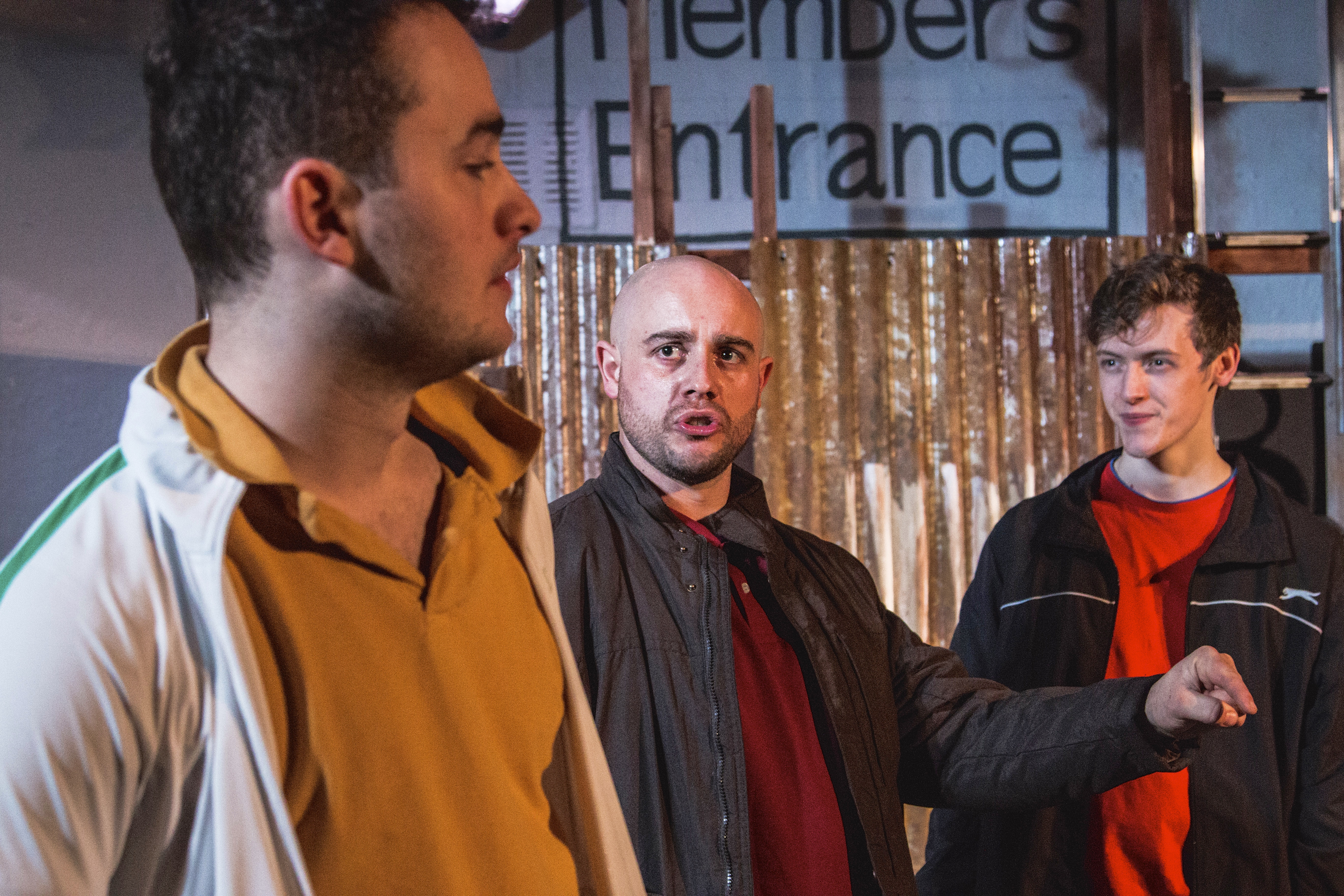
“When two tribes go to war…” blares out from a loudspeaker to open Adam Hughes’ new play which takes us back to the days of Frankie Goes to Hollywood, the Miners’ Strike and football hooliganism. In 1984/85, Leeds United had an indifferent season in football’s second tier, but the gang of thugs which affiliated itself to the club was all-conquering. The play centres on Yorkshire football “supporters” of that era and there is some irony in seeing it pitched up in gentrified Arsenal territory in 2015. The passing of 30 years has seen what sports journalist Brian Glanville once described as “a slum game for slum people” go from being neglected and impoverished to, at top levels, pampered and rich. Happily the world seen in this play is all but gone, although, sadly, inner city gang violence persists in different forms and Hughes’ purpose may be to teach the lessons of the past to new generations. Macca (Adam Patrick Boakes) is released from prison, having served three years for thuggery, to find his former gang mate Jono (Jim Mannering) having moved on to family responsibilities and his own position as gang leader now occupied by the younger Nathan (Alex Southern), a crude bully. He is sucked back into the sub-culture of tribal warfare mainly because other doors are slammed shut in front of him – no employment opportunities and an unforgiving partner (Donna Preston) who denies him access to his son – and he mentors Tommy (Joshua Garwood), a new recruit to the gang. Hughes’ dialogue has an authentic feel, as have all the performances and there are interesting insights into a gang mentality which creates a sort of mini-Mafia, with its own unwritten codes of loyalty and honour. Boakes’ powerful central performance shows Macca as a man unable to control his violent instincts but also gives glimpses of his softer side and his frustration at the hand which life has dealt him. Corrugated iron fences and abundant graffiti in Max Dorey’s set design evoke the austerity of football at that time, probably a factor contributing to the gang activity. Joshua McTaggart’s production is raw and gritty, with strong suggestions of violence, rightly eschewing sentimentality and nostalgia for the 1980s. Although the Miners’ Strike was concurrent with the events depicted, it has only a peripheral bearing on the drama, as does the game of football itself, which is hardly mentioned at all. Hughes’ play could benefit from some tightening up to lessen repetition and it also needs clearer references to connect it with a modern audience. As it stands, it serves mainly as a reminder of a chapter in our history that some would not have known and most others would rather forget.

Performance date: 5 February 2015

Photo: Tania van Amse

thepublicreview_hor_web copy

Bad Jews**** (St James Theatre)

Posted: February 5, 2015 in Theatre

bad jewsA bold title, particularly in view of recent events, and delicate subject matter too, but, as Book of Mormon has demonstrated emphatically, it is possible for a show to get away with almost anything if it is funny enough. So, no problem, because Joshua Harmon’s depiction of dysfunctional Jewish family life, already a big hit in America, is laugh-out-loud funny for nearly all of its 100 minutes. Jonah and Liam are brothers, Daphna is their cousin and the three are temporarily sharing Jonah’s New York studio apartment to attend the funeral of their grandfather, a Holocaust survivor. Daphna brandishes her Jewishness like a medal of honour, Liam is more respectful towards Japanese culture than his own and Jonah just wants to be left out of it. The opening is slow; it takes a few minutes for it to register just how much of a horror Daphna (Jenna Augen) is – self-righteous and using tactless, acid put-downs to bulldoze over everyone, she is the Jewish matriarch of countless New York comedies, except that she is at least 20 years younger than those stereotypes. “Pappy” left a family heirloom and she wants it, but Liam actually has it, paving the way for total warfare. Liam (Ilan Goodman, son of Henry) is a picture of smouldering rage until Daphna exits to the bathroom when he lets rip with a marathon rant, one of the play’s great set pieces. Another follows when Melody (Gina Bramhill), Liam’s demure, non-Jewish girlfriend, defies her name with an excruciating rendition of Gershwin’s Summertime. Underneath all the hilarity, Harmon is questioning the places of faith and tradition in the modern world and showing us how Daphna and Liam are equally in the wrong – she flaunting hollow values, he denying his heritage yet secretly clinging to it. In a beautifully poignant ending, it is the seemingly passive Jonah (Joe Coen) who shows us a better way to balance conflicting forces. Michael Longhurst’s production, sharp and often raucous, elicits a quartet of superb performances each with impeccable comic timing. It will be bad news if Bad Jews does not make its way to a longer run somewhere in the West End.

Performance date: 4 February 2015

The WaspThis will be a very short review. If too much were to be written about Morgan Lloyd Malcolm’s skilfully crafted little thriller, spoilers would be unavoidable. Two thirtysomething ladies meet in a coffee bar for the first time since schooldays, 20 years earlier. Carla (MyAnna Buring) is heavily pregnant with her fifth child, impoverished, chain-smoking and wearing a track suit, whilst Heather (Sinead Matthews) is childless, affluent and swathed in an expensive pashmina. What follows is a little like a new version of Sleuth, but these protagonists are female, the setting is modern and the twisting storyline is occasionally close to credible. Implausibilities are inevitable, but the writer has mastered the art of papering over cracks in her plot with engaging dialogue and just the right measure of wry humour. She also incorporates themes of serious social concern, but it would be a sin to reveal what they are, except to mention that the title refers to some ghastly tropical insect which is used as a metaphor for the actions of one of the characters. Under Tom Attenborough’s crisp direction, the two principal actors are both frighteningly believable. Thrillers are a little out of fashion in modern theatre, so this boost to the genre is very welcome. An absorbing and refreshingly different 90 minutes.

Performance date: 2 February 2015

Hard_Problem_poster_notitle

A dissertation on the definition of consciousness may seem more suited for a university lecture theatre than a stage at the National, but, when its writer is Tom Stoppard, there can be no other place for it. Sir Tom’s new play, discussing the unfathomable enigmas of human existence, is partly a collection of profound thoughts and partly a critique of profound thinkers. Hilary (Olivia Vinall) is a doctor of Psychology who takes in all the science, but holds space for belief in the metaphysical, much of which science cannot explain; she prays nightly, without knowing why or to whom and she is haunted by maternal feelings for the daughter that she has given up for adoption. Spike (Damien Moloney), her former tutor and occasional lover believes that the brain is no more than a machine made up of living cells and he eschews talk of emotions. These two make the most unromantic stage couple in recent memory, but, as both have the looks of models for glossy fashion magazines, it is not difficult to guess what, other than healthy argument, brings them together. Therein lies this play’s hardest problem – it is so absorbed in being dispassionate that it neglects to develop a human drama that would have drawn in the audience. This problem has beset some of Stoppard’s earlier plays, but not all; The Real Thing is real, The Hard Problem is just hard. Stoppard tries valiantly to weave the drama and the underlying themes together, but the relationships between the characters remain sketchy and the plot devices used are often clumsy – interesting story lines are introduced to illustrate key pointa and then abandoned almost immediately; “is it in human nature to be altruistic or egoistic?” the play asks and it then shows Jerry (Anthony Calf), the apparent philanthropist sponsoring the Institute of Brain Science for which Hilary works, to have egoistic motives; a discussion on wildly improbable coincidences incorporates the first hint of a wildly improbable coincidence that will come later in the play. This all jars for being creakily obvious, but the deeper problem may be that there are just too many diverse themes to be incorporated into one drama. As a result, a profusion of characters, stories and ideas that do not gel properly and are not fully developed makes the play an unsatisfying experience. All that said, there are many worse ways of spending 100 minutes than listening to Stoppard’s eloquent dialogue, peppered with typically witty flourishes, and Nicholas Hytner’s slick and polished production with a fine cast is never less than entertaining. If writing this play has helped Sir Tom to figure out the meaning of life, he is keeping it from the rest of us, but at least he has hit one bullseye by showing us yet again that nobody really knows anything.

Performance date: 30 January 2015

taken at midnight

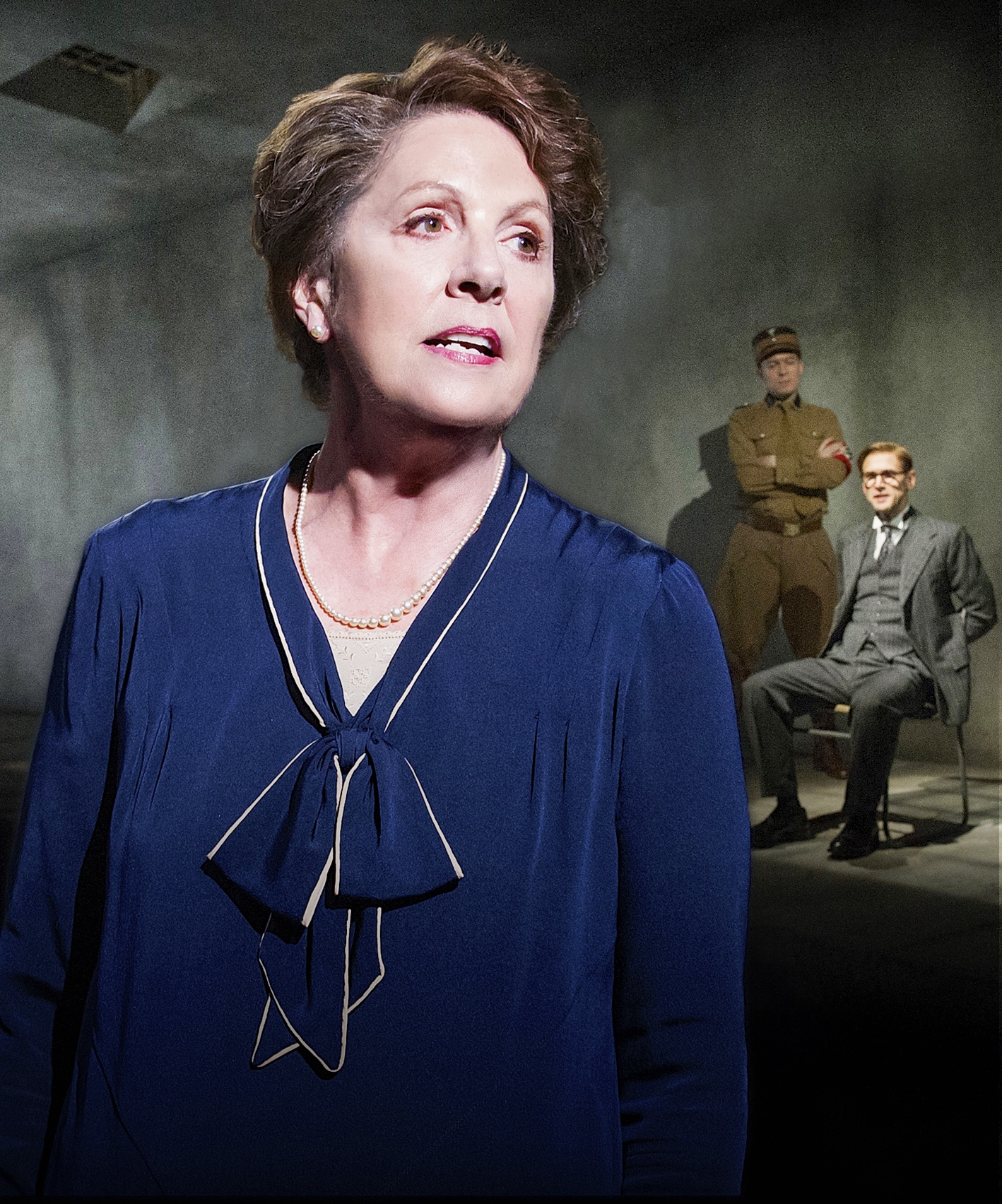
There are times during Mark Hayhurst’s play when impassioned pleas in defence of human rights and freedom of speech seem so obvious that they almost insult us. But surely that is the point of the play – to shake our complacency and remind us that vicious oppression does not just exist in distant states or at the hands of foreign terrorist groups, but, potentially on our own doorsteps. The play revolves around the true story of Hans Litten (Martin Hutson), a free-thinking and talented young lawyer in Berlin who, in 1931, called to the witness stand and there humiliated Adolf Hitler. In 1933, at midnight on the day of the revolution which brings the Nazis to power, he is arrested “for his own protection” and sent to a concentration camp, held at the whim of a fledgling regime that is sensitive to all criticism; when a fellow inmate refers to the subversive power of satirical cartoons, the play gains added topicality from when it was first performed at Chichester last year. Litten’s mother, Irmgard, takes up his cause, battling against intransigent authorities to secure his release. It is a big ask of Penelope Wilton to convey both Irmgard’s steely will and intelligence, using reason, sarcasm and irony in sharp exchanges, and her maternal warmth; only in the play’s final scenes does the icy exterior melt. It is a central performance which contributes to making this production easier to engage with intellectually than emotionally. There is coldness too in Robert Jones’ sets and Tim Mitchell’s lighting – a grey prison area lies at the back of the stage, the outside world at the front, and beams of light break through large and small windows to cast long shadows. Most chilling of all are the words spoken by collaborators and appeasers – a Gestapo chief (John Light) and a British diplomat (David Yelland) – offering logical explanations as to why Hitler’s Nazis were able to sustain their grip on power. Jonathan Church’s precise, unfussy direction and impeccable acting provide the perfect showcase for a play which is beautifully written and always absorbing.

Performance date: 28 January 2015

the ruling class

Maybe we have a government dominated by ex-Public School boys, but director Jamie Lloyd’s claim (see my article: http://www.thepublicreviews.com/preview-all-change-for-trafalgar-transformed/ ) that Peter Barnes’ 1968 play is filled with modern relevance seems just a little tenuous. Nonetheless, this revival does not need to be justified on any grounds other than that it is still a thoroughly enjoyable black comedy in the best self-mocking British tradition – a sort of Kind Hearts and Coronets on acid. The opening scene – the 13th Earl of Gurney, a judge, dies, wearing a tutu, in an S&M ritual that goes wrong – sets the tone for what is to follow, one of of total irreverence. The 14th Earl is to be Jack (James McAvoy), a paranoid schizophrenic who believes himself to be God, forcing his uncle  (Ron Cook) to plot to get him sectioned, but only after marrying him off to his own mistress, Grace Shelley (Kathryn Drysdale), so as to produce an heir. Barnes’ play hits its targets head on, not going in for subtlety, and it suits Lloyd’s established style. He gives us a high energy production and McAvoy again proves to be his perfect leading man. In reviewing Macbeth, the first play in Lloyd’s Trafalgar Transformed seasons, I likened McAvoy’s performance to a “hyperactive brat”, adding that he was very strong when insanity begins to set in. Exactly the same comments apply here, except that he is playing for comedy and (supposedly) Jack grows saner as the play progresses. Leaping onto a cross to take a nap, unicycling around the bedroom on his wedding night, this is an all-action performance which drives the production and an English-accented McAvoy meeting Jack’s nemesis in the form of a Scottish rival God provides a particularly neat joke. In fact, McAvoy seems to be having a whale of a time with the physical comedy throughout and he is well-supported by Cook, Drysdale, Joshua McGuire as Jack’s dim-witted cousin (an aspiring Tory MP of course) and Serena Evans as his lusty, promiscuous aunt. However, Anthony O’Donnell, riotously funny as Tucker, the contemptuous, drunken manservant and Russian spy, comes close to stealing the show. Inevitably with this type of surreal comedy, there are times when the humour dries up and Lloyd’s production is, generally, less sure-footed in the darker second half. However, for the most part, laughter abounds and we are left with several memorable images, such as a fusty, cobweb-covered House of Lords front bench, screeching for the return of flogging and hanging.  At a time when some West End producers seem to find it hard to see beyond repeated revivals of Hay FeverThe Importance of Being Earnest and the like, Lloyd has to be congratulated for unearthing a neglected play that is very different and has real bite. The passage of time has certainly blunted the satire in The Ruling Class, but its comedy is as sharp as ever.

Performance date: 20 January 2015

Hello/Goodbye*** (Hampstead Theatre)

Posted: January 27, 2015 in Theatre

hello-goodbye

Memo to self: never again consider leaving a play at the interval! It is hard to remember an occasion when a first act so irritating has been followed by a second so utterly captivating. Peter Souter’s romantic comedy first appeared in the studio theatre downstairs here in March 2013 and it takes quite some time for the reason why it has been deemed worthy of elevation to the main house to become clear. Alex (Shaun Evans) and Juliet (Miranda Raison) first meet when an estate agent’s blunder results in them both moving into the same flat at the same time; he is a nerdy collector of anything collectible, a loner, agoraphobic and possibly autistic; she is outgoing, selfish and spoilt. The dialogue in the opening exchanges is all creaky one-line comedy, nothing like true-to-life conversation. Evans endeavours to make Alex’s diffidence appealing, but all that Raison can do with Juliet is to stomp around in a childish strop and she quickly becomes the sort of insufferable woman that some might like to catapult from the stage into the centre of Hampstead Heath. Act I ends, predictably, with the warring pair in a clinch, born out of carnal lust rather than deeper emotion. Act II takes place in the same flat, with the the same couple, still at odds, meeting again to divide up property at the end of a ten year marriage. So what happened during the interval? Surely there must have been some displays of tenderness and mutual affection, some reason why a pairing of opposites would last for a decade. We get no clues at first, but, slowly, through subtle, perceptive writing and two wonderful performances, filled with insight, it is all there and no further explanations are needed. Now we can see two real human beings, the introvert and the extrovert, struggling to work out what has existed between them and secretly yearning to find a way in which they can stay together. Out of very little, Tamara Harvey’s production conjures up real magic, which may leave the audience trying to figure out how what begins as one of the worst comedies seen around for quite a while could ultimately turn out to be one of the very best.

Performance date: 26 January 2015