This review was originally written for The Public Reviews: http://www.thepublicreviews.com

On an evening of bright sunshine and heavy showers, a rainbow appeared above the Landor as the audience entered for the opening performance of this one-woman show. If the Heavens were signalling their approval, they were right to do so. Sharon Sexton has played Liza Minnelli in this monologue with songs, both on tour and at the 2012 Edinburgh Fringe Festival, but she is bringing it to London for the first time, taking a break from her role in The Commitments in the West End to do so. Telling the story of Minnelli’s life, focussing primarily on the early years, the show begins with black and white footage of Judy Garland introducing her teenage daughter to a television audience, followed by a medley from Gypsy and then Broadway Baby. There is a fair amount of name dropping – Frank Sinatra visited her in hospital on the day she was born, etc – but this is not a simple riches to riches story, as we hear how Liza entered showbiz in the face of opposition from her mother and how she was forced to clamber down the ladder before climbing back up. She tells of sleeping rough in Central Park and of being rejected for roles, most ironically for the lead in the Broadway production of Cabaret. After that, broke and desperate for work, she consoled herself by buying a Cartier watch, exemplifying her philosophy that “reality is something you rise above”. Sexton does not impersonate Minnelli, she becomes her, digging deep to find the real person beneath the flamboyant, glitzy facade. Her exaggerated movements, her nervous giggle, her self deprecating humour all reveal a woman who is caught by the limelight, yet strangely vulnerable, living the life that she leads because she has never known any other way. She apologises for not being able to volunteer bad news about her childhood, recalling idyllic moments when her playtime was directed by Vincente Minnelli and she causes howls of laughter when she describes a show at the London Palladium in which she and her mother battled to upstage each other. As she sang her solo, she saw a proud mother standing in the wings and, then, when it finished, she saw not her mother but Judy Garland, a fierce rival, standing on stage. At Garland’s funeral wake, Liza took her first valium, to begin a downward spiral of pills to counter other pills and so on, the anguish of which is expressed in a rendering of Sondheim’s Losing My Mind, bringing tears to the eyes of both the performer and the audience. Otherwise, regretful glances from Sexton are enough to tell of the drug and liquor problems and of the failed marriages. This is essentially an upbeat celebration of the life of a survivor and Sexton proves it with her glorious versions of the big numbers from Minnelli’s biggest success, the film version of Kander and Ebb’s Cabaret. Carefully written and with well chosen songs, this is a production which makes 80 minutes just fly by. Above all else, it is a triumph for Sharon Sexton’s performance, a real tour de force and even Liza Minnelli herself would be hard pressed to top it.

Performance date: 12 May 2014

thepublicreview_hor_web copy

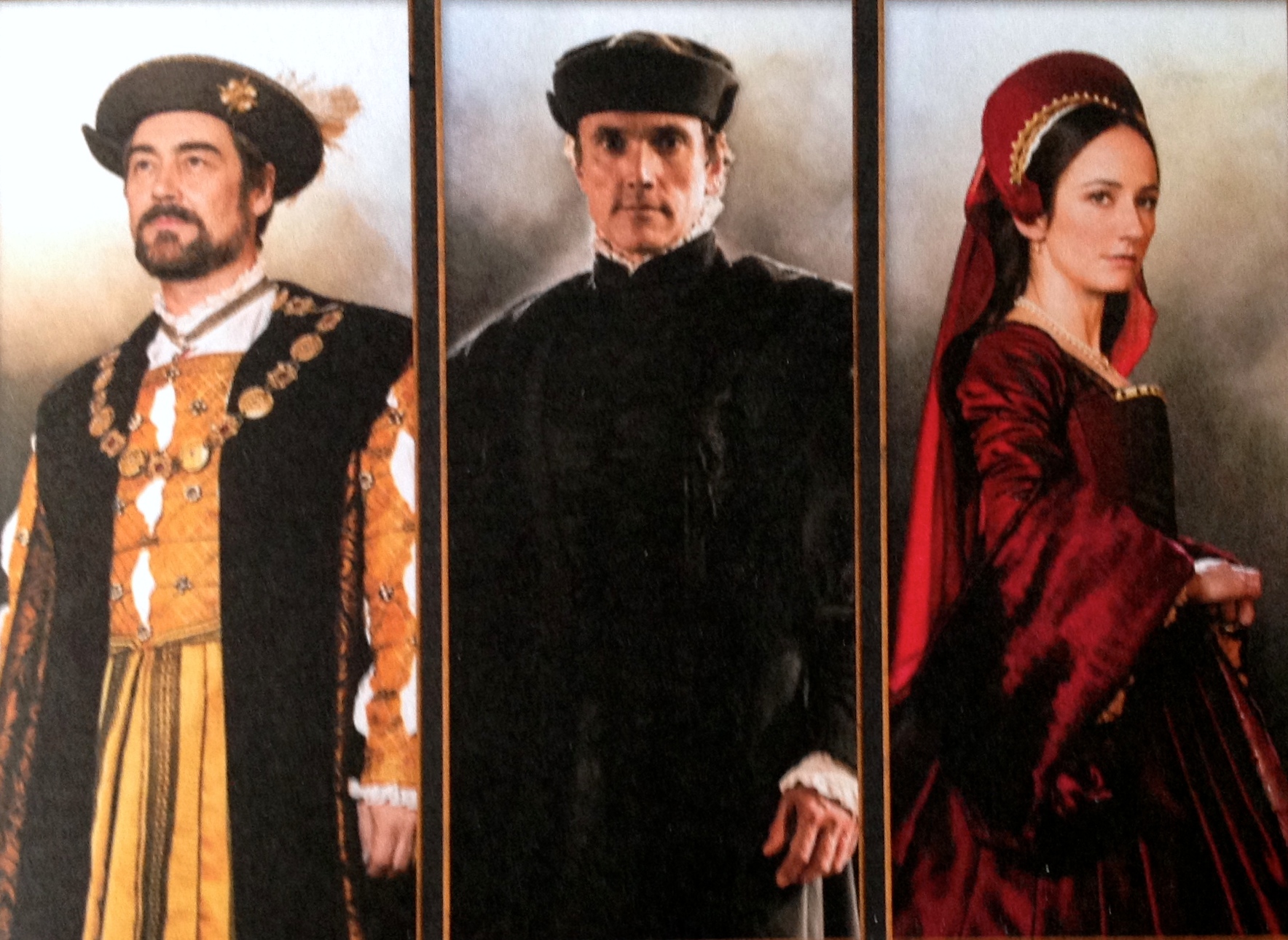
photo-64It is now over 30 years since the Royal Shakespeare Company performed their revolutionary and now legendary adaptation of Charles Dickens’ Nicholas Nickleby on this same stage and nothing like it has been seen since. Until now. In the intervening years, the Company has had an unsuccessful spell in the Barbican followed by a prolonged absence from the capital, so it is fitting that a return to their spiritual London home should be marked by another massive adaptation from a novel, actually two novels by Hilary Mantel, both of them winners of the Booker Prize. Together, the plays, adapted by Mike Poulton, run for almost six hours, so they are huge in every sense, a vivid and detailed examination of political manoeuvring in the Court of King Henry VIII. The history of this period is well known and there have been many dramatised versions, but Mantel is more concerned with the characters than the history, interweaving fact with fiction and making the people of Tudor England very modern in their language and behaviour. Their conversations include moans about the British weather and ideas about what to eat for dinner as well as discussions over Court gossip and plots for their next moves. Thomas seems to have been a very popular name in these times and, at the centre of the plays is Thomas Cromwell (Ben Miles), a blacksmith’s son who has been a mercenary, a financier, a lawyer and is now emerging as a politician. At first, he is a “fixer”, a sort of Tudor Arthur Daley, for Cardinal Thomas Wolsey (Paul Jesson), who is depicted here as avuncular and with an acerbic wit. When Wolsey falls out of favour with the Court, he moves on and eventually becomes right hand man to the King himself. Whilst being streetwise and ruthless, Cromwell is also a devoted family man and unswerving in his loyalty to his friends, particularly Wolsey. Thus Mantel paints a picture in which decency and honesty co-exist with intrigue and betrayal. It is these contradictions in the story, but more specifically in the character of Cromwell, that make the plays so spellbinding and Miles’ performance is awesome in both the intimate and the epic (he is rarely off stage for the duration) senses. Other characters also defy conventional portrayals: Henry (Nathaniel Parker) is given much more depth and complexity than usual; Sir Thomas More (John Ramm), far from being the saint of A Man for All Seasons, is a near-demented religious zealot; and Anne Boleyn (Lydia Leonard) is no innocent victim, more a manipulative power-seeker who cares for her dog more than her husband or her (allegedly) many lovers. The performances are all so strong that Hilary Mantel has stated publicly that the characters as played here are now fixed firmly in her head as she writes the next sequel. Revisionist history this certainly is, but there is never any doubt that these plays are intended to be entertaining more than educational and they almost always succeed with that aim. That parts of the second play are less gripping than the first could be due to the novelty of their presentation and structure having worn off slightly, or to events seeming repetitive, or maybe just to audience fatigue. Nonetheless, the two plays do not stand well alone and no-one having seen Wolf Hall is likely to be able to resist its sequel. The actors are lavishly costumed, but the open stage is uncluttered with props, allowing Jeremy Herrin’s production to flow smoothly throughout. After so many positive comments, it is sad to end with a complaint, but £6 is excessive for a theatre programme and separate programmes for the two plays (completely unnecessary as the casts and production teams are the same) is pushing it much too far.

Performance date: 10 May 2014

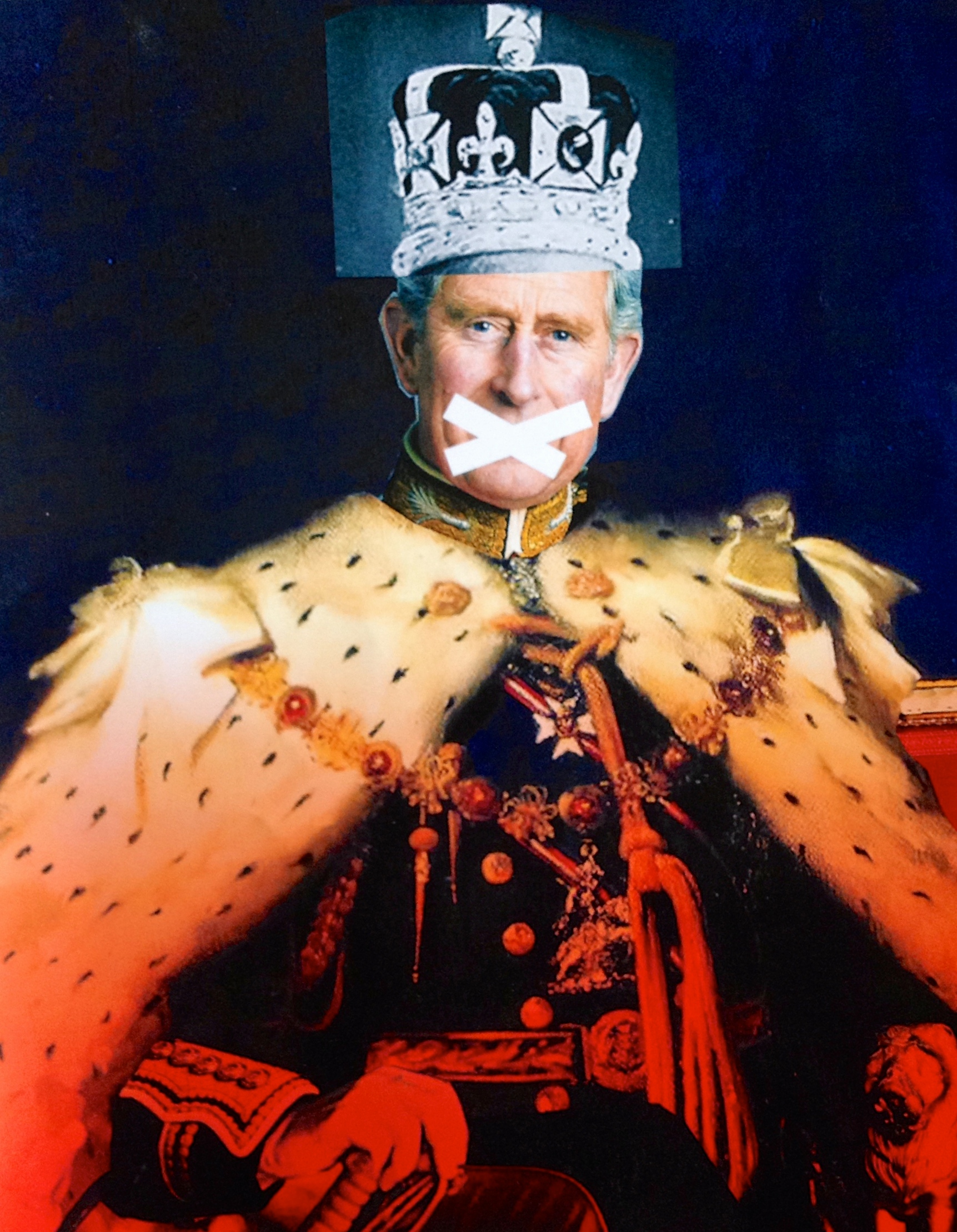
photo-63Describing his work as a “future history play”, Mike Bartlett explores a time in which our beloved monarch of more than 60 years will no longer be with us, a time of confusion for the nation and of collective loss of identity. Daringly, he adopts the structure of a Shakespeare history play and writes in verse, moulding several of the characters to resemble those in the Bard’s plays – Charles (Tim Pigott-Smith) begins as a dithering, well intentioned Richard II, miscalculating his power base, and then progresses to become a half-mad Lear; the wayward and dissolute Harry (Richard Goulding) is, obviously, Hal; most tellingly, Katharine (Lydia Wilson) is Lady Macbeth, plotting and scheming the path to the throne for her upright and ultimately ruthless husband, William (Oliver Chris). A not so merry wife of Windsor, Camilla (Margot Lester), looks on aghast and there is even a Palace ghost (Diana of course). The monarchy begins to unravel when the as yet uncrowned new King refuses to sign a Press Regulation Bill as a matter of principle, notwithstanding the fact that, as the (Labour) Prime Minister points out, he has, throughout his life, been one of the greatest victims of the rampant Press. Although he knew it all along, the King is now faced with the reality of the job which he has waited for more than half a century to take up, not being a job at all. He is just a meaningless, powerless figurehead. Inevitably a constitutional crisis ensues. Although plenty of good jokes are thrown in, this is not a comedy, but a serious examination of a quirky system of Government and a constitution that does not even exist. It is played out with all the dramatic force and pageantry associated with Shakespeare’s histories and, at just under three hours, it is of similar length. All that is missing are the bloody battles. Rupert Goold mounts a grand and impeccably acted production, buoyed by the confidence of knowing that neither he nor his Almeida seems capable of doing anything wrong right now. This is another significant hit for them, bold, different and riveting. The play paints an alarming and plausible picture of what could lie ahead in, hopefully, the not too near future. God Save the Queen!

Performance date: 9 May 2014

YesterdaysTomorrow1-Photo-by-Invisible-DarknessThis review was originally written for The Public Reviews: http://www.thepublicreviews.com

Gene David Kirk never quite gets round to explaining the significance of the title of his new one act play. Does he mean “today”? If so, it is good to report that the obliqueness in the title is not replicated in the writing, which is vivid, descriptive and, at times, even poetic. The writer draws on his own experiences in the military and bases his play on actual events, a collection of memories and feelings which he binds together not to tell a single coherent story, but to convey haunting images and contrasting emotions. The setting is an unspecified far away trouble spot where Britain is part of a United Nations peace keeping force. Ian (Ben Carpenter) is a young officer and John (Matthew Schmolle) belongs to the lower ranks. We first meet them as they both describe to the audience the same horrific incident as they would have seen it, interrupting and talking over each other. This proves to be a very effective device for establishing the characters, their backgrounds and their differing perceptions. Ian is middle class, well educated and sensitive, John is working class with a more down-to-earth outlook. The performances of both actors fit the profiles perfectly. What we do not realise at first is the connection between the two, but fleeting touches and affectionate glances begin to reveal the nature of their friendship and then, in the play’s most moving scene, Ian finds a letter amongst John’s belongings in which he expresses feelings that he cannot bring himself to speak. Ian does not reveal that he has seen the letter, but simply writes at the bottom of it “me too and then some”. The subtlety with which the relationship is developed magnifies its impact immeasurably. Institutional homophobia in the military is touched upon in the character of Simon (Nicholas Waters), who callously demeans local women for his own gratification and boasts about it to Paul (River Hawkins), a rookie that he takes under his wing. However, this is not a play with a political agenda and exposing bigotry is incidental to its purpose. It becomes clear that the writer’s real aim is to contrast the tenderness of the affection between his two central characters with the dehumanising brutality of modern warfare. The contrast is stark and, helped by imaginative staging, the play achieves its objectives fully. This production delivers a riveting 70 minutes of theatre. In choosing his own play to begin his tenure as Artistic Director of the Drayton Arms, Gene David Kirk has done well. Good luck to him for the future.

Performance date: 8 May 2014

thepublicreview_hor_web copy

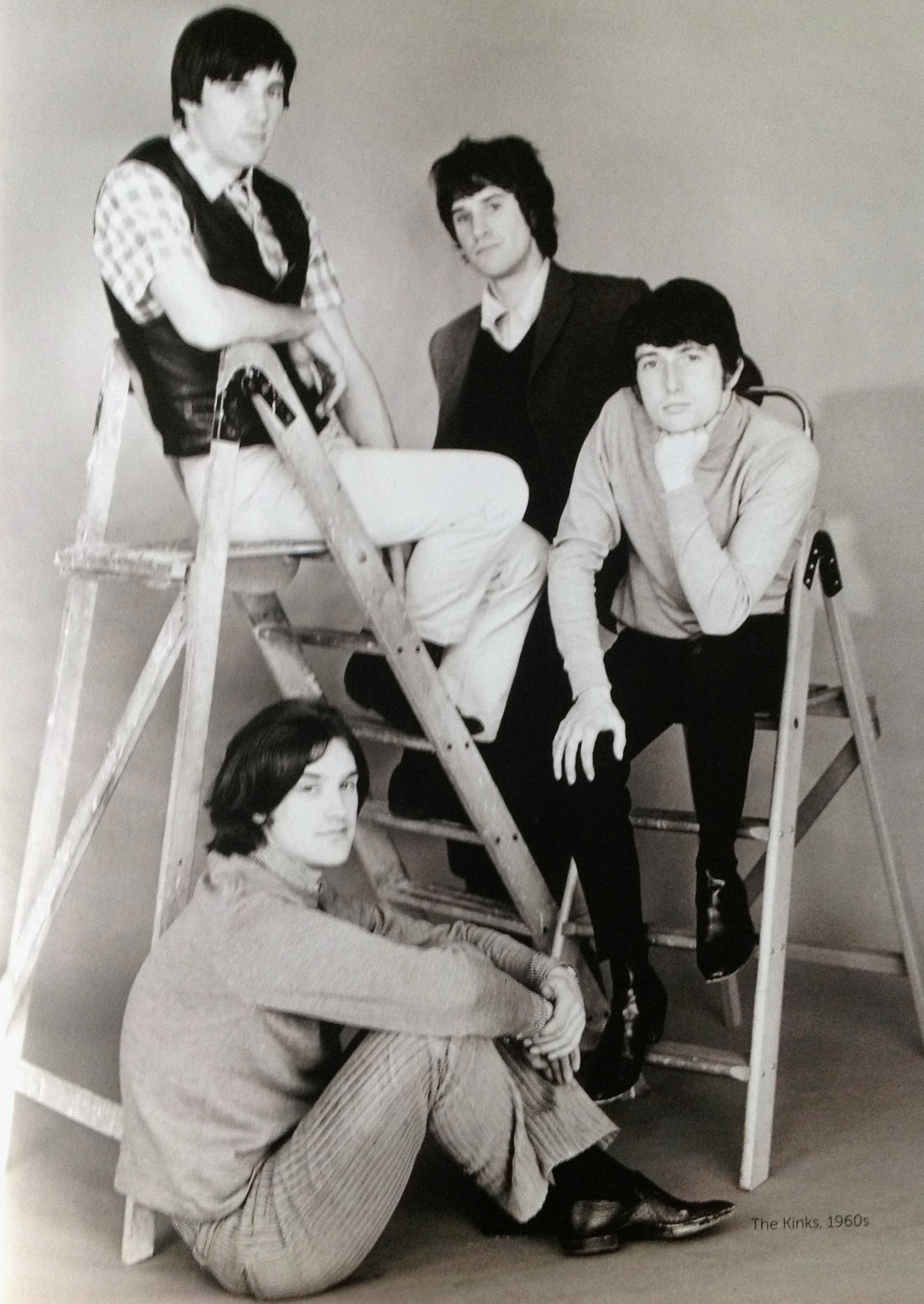
photo-69With new British musicals dropping like flies in the West End lately, surely the last thing needed to replace one of them is yet another so-called juke box show, regurgitating old hits that the audience can hum as they enter the theatre. Well actually, if that show is this one, it is exactly what is needed. Sometimes you go to the theatre knowing beforehand that you are going to love what you see and here we have an example of that which never disappoints, not for a single second. The Kinks may have fallen a little way behind the Beatles, the Rolling Stones and the Who in the Premier League of 1960s bands, but when it comes to stage adaptations of musicians’ lives and music, Sunny Afternoon is up there vying for the title alongside Jersey Boys. Yes, it really is that good! The secret lies in the songs’ lyrics, written, along with the music, by Ray Davies (played brilliantly here by John Dalgleish) who, we are told, thinks in songs; thus, his lyrics, often satirical and very amusing, form a commentary on life as he sees it and the songs fit naturally into the show’s narrative. The rags-to-riches story contains little that is new, but it is told with such freshness and verve that it feels new. Four working class lads from Muswell Hill jump onto the 60s pop bandwagon, make it big, get exploited by management, music publishers and record companies, have a disastrous tour in the US which results in them getting banned from the country, argue and fight with each other and eventually come to terms with their success. In another life, Ray could have been an office clerk, more the stay-at-home type, but he is haunted by the sudden death of his sister Rene when he was 13, on the same day that she gave him his first guitar and he is determined to make it as a musician for her sake. His younger brother Dave (another great performance by George Maguire), just 16 when it all starts, is the polar opposite – a wild partygoer with a fondness for cross dressing (although not, apparently, the inspiration for Lola). Pete (Ned Derrington) and Mick (Adam Sopp) make up the band. A ramp stretching right into the centre of the stalls sends out a clear message that these guys belong to the people and extends an already large stage to give plenty of room for Adam Cooper’s inventive choreography, which often features a troop of girls who might be the Davies sisters, screaming groupies or Pan’s People at various times. The book, written by Joe Penhall from Ray Davies’ own original story is concise and witty and Edward Hall directs with aplomb. Most of the familiar hits, many of which sound better now than when first released, are included and performed superbly, but, in case any were missed, a five minute medley of ones that might not have fitted into the narrative comes after the cast have taken their bows and gets the entire audience (many in the same age group as the Kinks) onto its feet, jigging around and clapping. As well as telling the story of a rock band, the book and the songs’ lyrics also describe a unique decade of massive change and they paint vivid pictures of a city (London) in which dedicated followers of fashion strolled on sunny afternoons, heading for Waterloo at sunset. For those of us who can remember such things and probably also for those who can’t, this is a joyous show.

Performance date: 7 May 2014

This review was originally written for The Public Reviews: http://www.thepublicreviews.com

The lounge room of the Leicester Square Theatre has a performance area of little more than 9ft by 6ft, with the audience seated on three sides and a hard wooden bench on the fourth. This is a prison cell in which a single prisoner, Oscar Wilde, paces back and forth, sits, kneels and bemoans his confinement and his fall from grace. Paul Dale Vickers has adapted and set to music the letter written by Wilde from his prison cell to Lord Alfred Douglas (“Bosie”), his former lover and the cause of his downfall. Essentially it is a self-pitying lament, as Wilde bemoans his loss of status, liberty, dignity and respect. He has faced ridicule on a corner of Clapham Common whilst being transported to gaol, his mother has died during his confinement and the courts have ruled him an unfit father for his two beloved sons. All this for the sake of “the love that dares not speak its name” and for a man that he regards as vain, selfish and holding a talent for being coarse, a man who reciprocates by treating Wilde like a trivial plaything. Bearded and wearing a denim jacket over a t-shirt, Alastair Brookshaw makes no attempt to look like Wilde, but he acts and sings this piece beautifully, giving what is, in effect, a 50- minute chamber recital, with the accompaniment of a single piano. He shows us a man filled with bitterness and resentment, railing against those who have betrayed him and at the hypocrisy of late Victorian society. The wit for which Wilde was renowned is absent from the letter, which is consistent in its angry, pessimistic tone. However, there is little anger in the rich, melodic score which soothes more than enrages. It encourages quiet contemplation of injustices in our country more than a century ago and injustices that still persist in Russia, Uganda and scores of other places across the World today.

Performance date: 6 May 2014

thepublicreview_hor_web copy


Bullets_6501This review was originally written for The Public Reviews: http://www.thepublicreviews.com

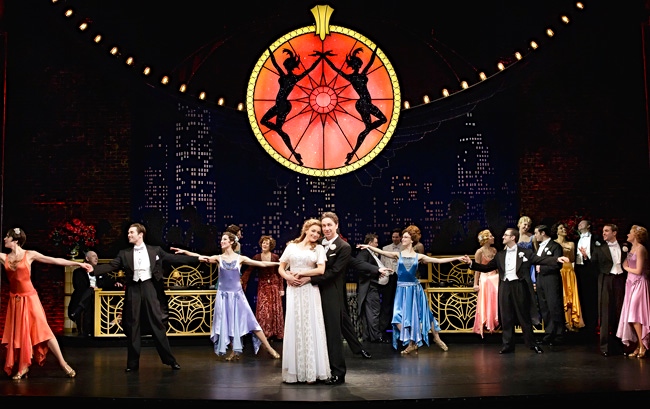
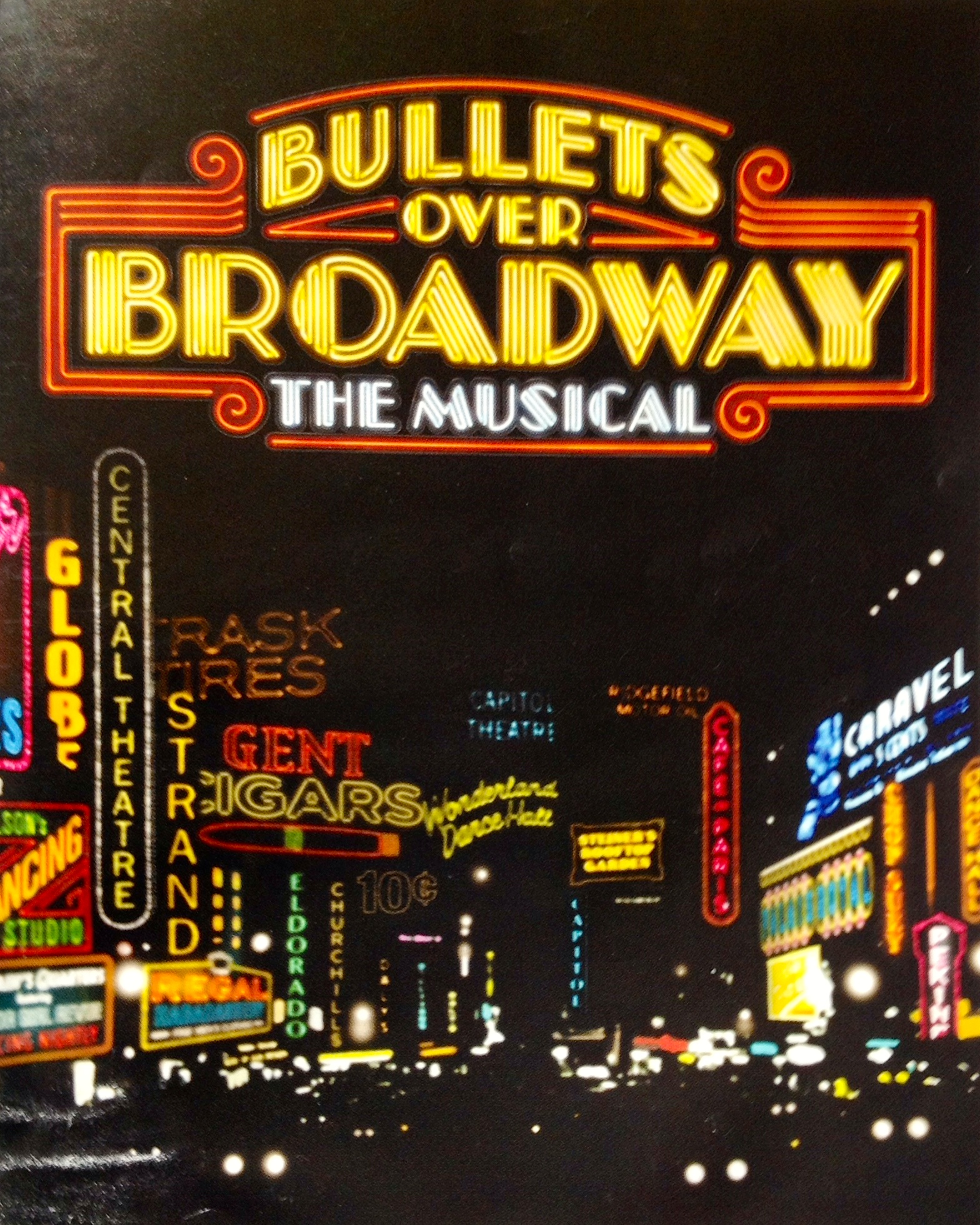
Some things are so obvious that it is a mystery why they have never happened before. It has always seemed natural that Woody Allen’s lifelong love affair with New York and his passion for the music of the golden age of the 1920s and 30’s would come together to create a Broadway musical and, at long last, here it is. Purists may argue that a real musical needs an original score, but, when a show incorporates standards by Cole Porter, Hoagy Carmichael and a host of others from the same era, who can possibly complain? The book is adapted from Allen’s screenplay for the film which he made in 1994, during his own golden age. It concerns David Shayne, a struggling young writer (a character clearly identifiable with Allen himself) who, desperate to get his play performed on Broadway, agrees to have the production financed by a gangster; in return, the gangster’s girlfriend Olive, a hooker and a truly awful actress whose only previous stage experience has been in striptease shows, will get a starring role. The gangster assigns Cheech, a seemingly brainless thug, to chaperone Ellen, but Cheech becomes so absorbed in the project that he begins to re-write the play and eventually reaches the point where he is prepared to kill or be killed for the sake of his art. In essence and tone, the show occupies the same territory as Mel Brooks’ The Producers, affectionately satirising the murky links between the art of theatre and the financing of it. Allen delivers a piercingly funny gag in his very distinctive style for every few seconds of dialogue and who better than Susan Stroman (also director of The Producers) to keep it all moving along? Featuring possibly the most overworked chorus line in the recent history of musicals, the whole company, from the lead actors down, join in the singing and dancing. Zack Braff is a lot more animated than the writer himself might have been in the role of the put-upon and bemused David Shayne, but his style of delivery and Allen’s lines are a perfect match. Helene Yorke is a delightful Olive, performing the very risqué The Hot Dog Song to howls of laughter. As Cheech, Nick Cordero is made up to look like a near relative of Frankenstein’s monster and he gets to lead his gang of hoods in the big showstopper, a fabulous tap dance routine to ‘Tain’t Nobody’s Biz-ness If I Do. Amongst a top notch cast, other stand-outs are Marin Mazzie as a fading Broadway star who proudly proclaims herself to be “a dipsomaniac, a nymphomaniac and a kleptomaniac” and Brooks Ashmanskas as a leading man with the king of all eating disorders, whose waistline expands almost as we look at him.! ! The first half, a whirlwind of comedy, music and dance, is at times blissful and the question at the interval is whether it can possibly get any better. The answer is that it can’t. There is still loads more to enjoy, but, as the second half progresses, Braff’s excessive physical clowning, great at first, starts to grate, the running gags run out of steam and Allen’s musical choices go from inspired to, in the final routine, insipid. Surprisingly, Yes! We Have No Bananas does indeed originate from a Broadway musical, but, by closing his show with it, Allen seems determined that his last gag is to be at the expense of the audience. However, it feels churlish to nitpick over details at the end of an evening packed with so much entertainment. It feels as if Woody Allen has found a home here where he belongs.

Performance date: 3 May 2014

thepublicreview_hor_web copy

photo-60This review was originally written for The Public Reviews: http://www.thepublicreviews.com

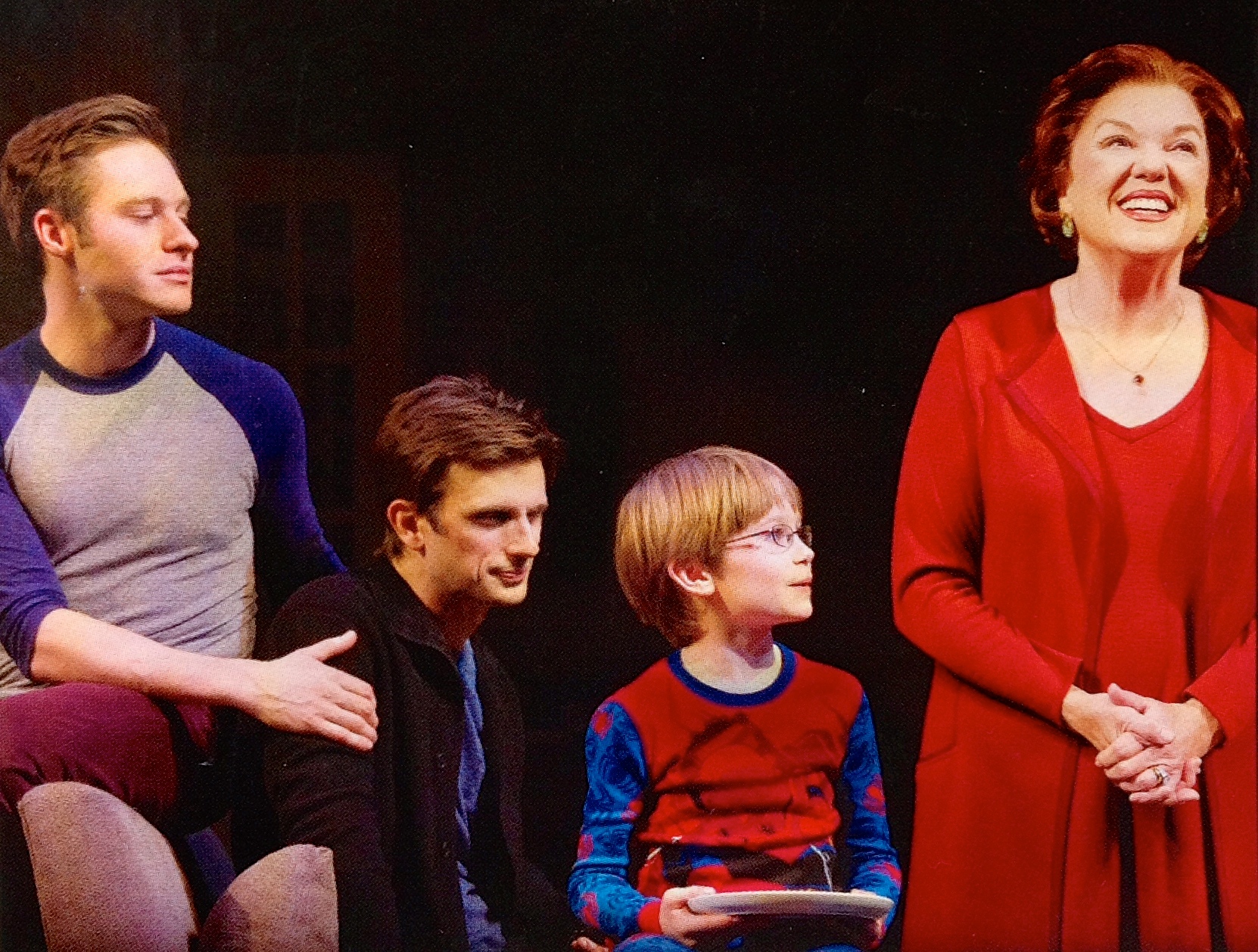
In a career spanning half a century, this is Terence McNally’s 20th play to be staged on Broadway and, having already secured a Tony Awards nomination for Best Play, it could be amongst his finest. Amidst the bright lights and deafening noise of the Great White Way, it comes as a surprise to find something as small and gentle as Mothers and Sons, a subdued conversation piece involving three adults and a child. Yet its location emphasises McNally’s precise point – that, in a world in which everything moves so fast, changing in ways that we can never expect and maybe not understand, we need occasionally to stop to take stock quietly and learn to cherish our links with past times as we move towards a better future. Katherine (Tyne Daly) drops in unexpectedly at the New York apartment of Cal (Frederick Weller), who had been the lover of her late son Andre. They had neither met nor spoken in the 20 years since Andre’s death from AIDS and Cal regards her as a coldhearted gorgon. He is now married to Will (Bobby Steggert) and they have a six-year-old son, Bud. Katherine is in her 60’s, Cal in his 40’s and Will is 15 years younger than him. The views of the four generations represented here vary widely, each of the individuals having been deposited in a different place by the shifting sands of time, carrying their own baggage and looking at life from their own perspectives. Katherine can neither use the internet nor comprehend the nature of a two-father family. Cal had never imagined that he could marry or have children, whilst Will had never imagined that he would not do both. The two men may occasionally use politically incorrect terms such as “Indian” or “Eskimo” and then instantly correct themselves, but Bud is not even allowed to hear the words. Daly’s portrayal of Katherine is haunting, her large round eyes often staring in bewilderment as she struggles to understand the younger generations, but is unable to shake off her own background and prejudices. The loss of Andre and changes in society have made her question her own role in life and led to her wondering whether there is any point in continuing. She is desperate to reach out to this family and keep alive her own connections with Andre, but she has absolutely no idea how to do so. Weller’s Cal is kindly and forgiving towards Katherine, yet he is also confused by changes that he has seen and disbelieving of his fortune to belong to a blessed generation for a gay man. He proudly gloats over being able to call Will “husband”, insisting that it is the only correct word. Steggert’s Will is certain that the modern way is the only way, but he is suspicious of a woman who cannot bring herself to shake his hand when offered and wary of the long shadow cast by Andre. These are three magnificent performances and Grayson Taylor’s brief appearances as the precocious Bud are very affecting too. Running for little more than 100 minutes with no interval, Mothers and Sons is a sharply intelligent exploration of the human condition, filled with tender emotions and astute observations. A small but sparkling gem.

Performance date: 3 May 2014

thepublicreview_hor_web copy

maxresdefaultThis review was originally written for The Public Reviews: http://www.thepublicreviews.com

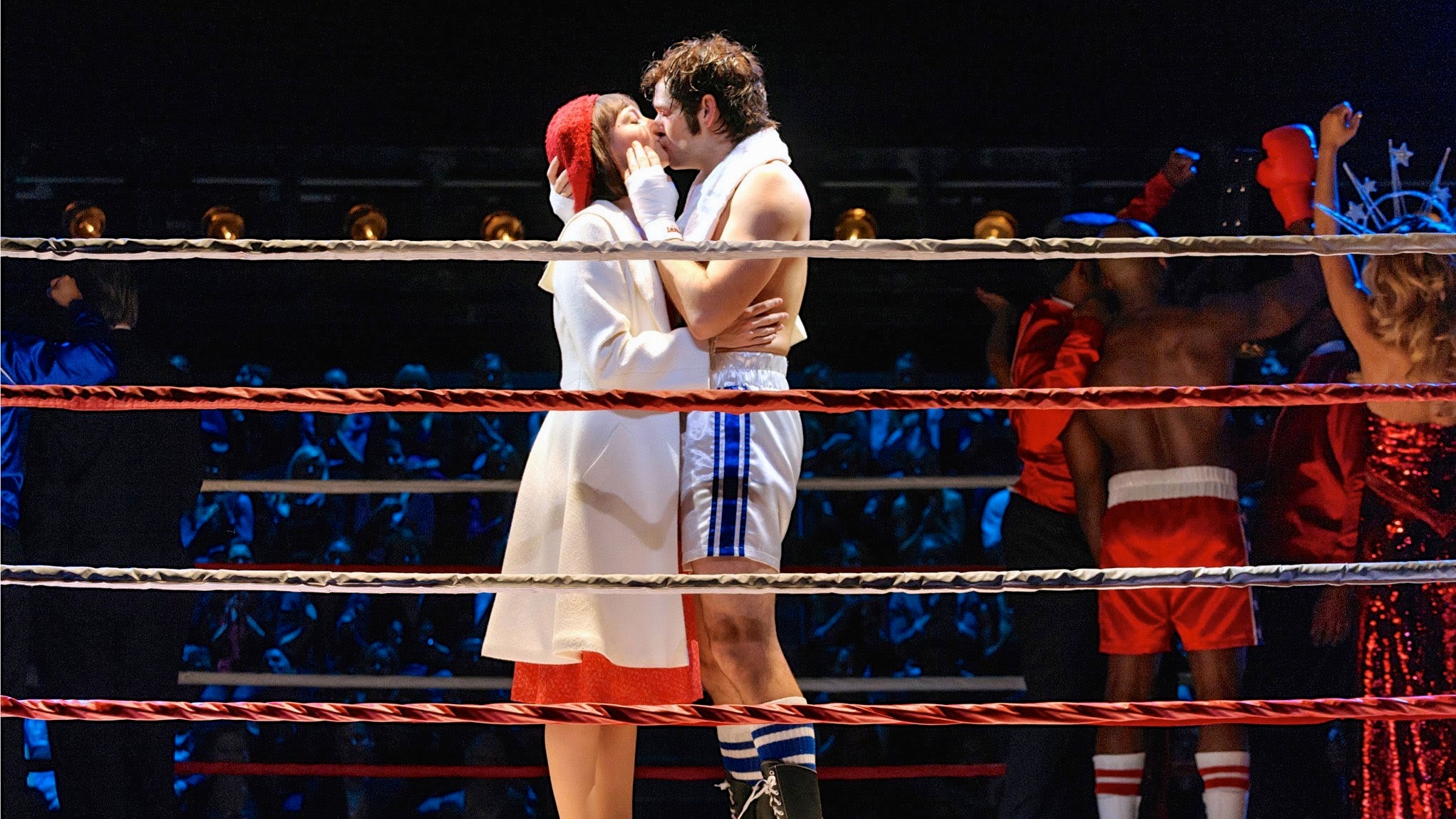
In the blue corner we have musicals, traditionally romantic, emotional and more than a little bit camp; in the red corner there is boxing, traditionally brutish, blood-spattered and very macho. A mismatch for sure, but the fact that this show’s two key elements never feel as if they belong together is just the start of its problems. What audiences could the producers have been aiming for? Perhaps they saw great cross promotional opportunities with a lover of musicals bringing along a sports fan or vice versa. If so, the likely outcome would be each of them screaming to the other at the interval “what the hell did you drag me to this for?”. The 1977 film Rocky was a huge success, spawning five sequels (those less charitable might label them re-makes) and now this. Sylvester Stallone and his collaborators sure know how to stretch out a franchise. The slight story involves Rock Balboa (Adrian Aguilar at this performance), a 29 year old down and out Philadelphia boxer who, by unlikely chance, gets a shot at the World Heavyweight Title, held by Apollo Creed (Terence Archie). At the same time, he is stumblingly embarking on a relationship with Adrian (Margo Seibert), a shy girl from the local pet shop. It is classic triumph of the undergo stuff of the sort that fuels the American dream. Stephen Flaherty’s score incorporates the most famous theme from the films and also imports Eye of the Tiger to provide the show with by far its best song and dance routine. Otherwise, the melodies are pleasant but unmemorable, not helped by Lynn Ahrens’ frequently bland lyrics. The earliest sign that Rocky could be on a rocky road comes when our eponymous hero begins with My Nose Ain’t Broken. The songs get better but not by much. A talented company of actors/singers do their best, but the script never allows them to develop their characters beyond replications of the portrayals seen in the films. The main purpose of transferring a piece to theatre from another medium should be to add a further dimension that only the live experience can bring. However, in this case, all that is achieved during at least 80% of the show is making everything smaller. The use of filmed segments projected onto huge screens, increasing as the show progresses, can be seen as an admission of defeat by the creators, effectively saying that this always worked better as a film and should have stayed as one. However, there is light at the end of the tunnel. As the climactic fight draws near, a boxing ring appears on stage and audience members sitting in the front half dozen or so rows are ushered to take their places in tiered seating behind it. The ring then thrusts forward into the auditorium, coming to rest above the vacated seats, and the spectacle of the fight commences amidst blinding lights and a cacophony of noise. Brilliantly choreographed (as a simulated fight, definitely not a dance), we are treated to a dazzling display that could probably only be bettered by having a ringside seat for real boxing. There is even tension for those of us who cannot remember whether the show is based upon a film in which Rocky wins or loses. In truth, this is a throwback to the 1980’s when all big musicals seemed to need expensive stunts – a chandelier falling, a helicopter landing, etc – but they tended to be better shows than this one. As for the outcome of the bout between musicals and boxing, the last round ensures a win for boxing by an emphatic knockout. Alas, this is not a good result for musical theatre.

Performance date: 2 May 2014

thepublicreview_hor_web copy

photo-57This review was originally written for The Public Reviews: http://www.thepublicreviews.com

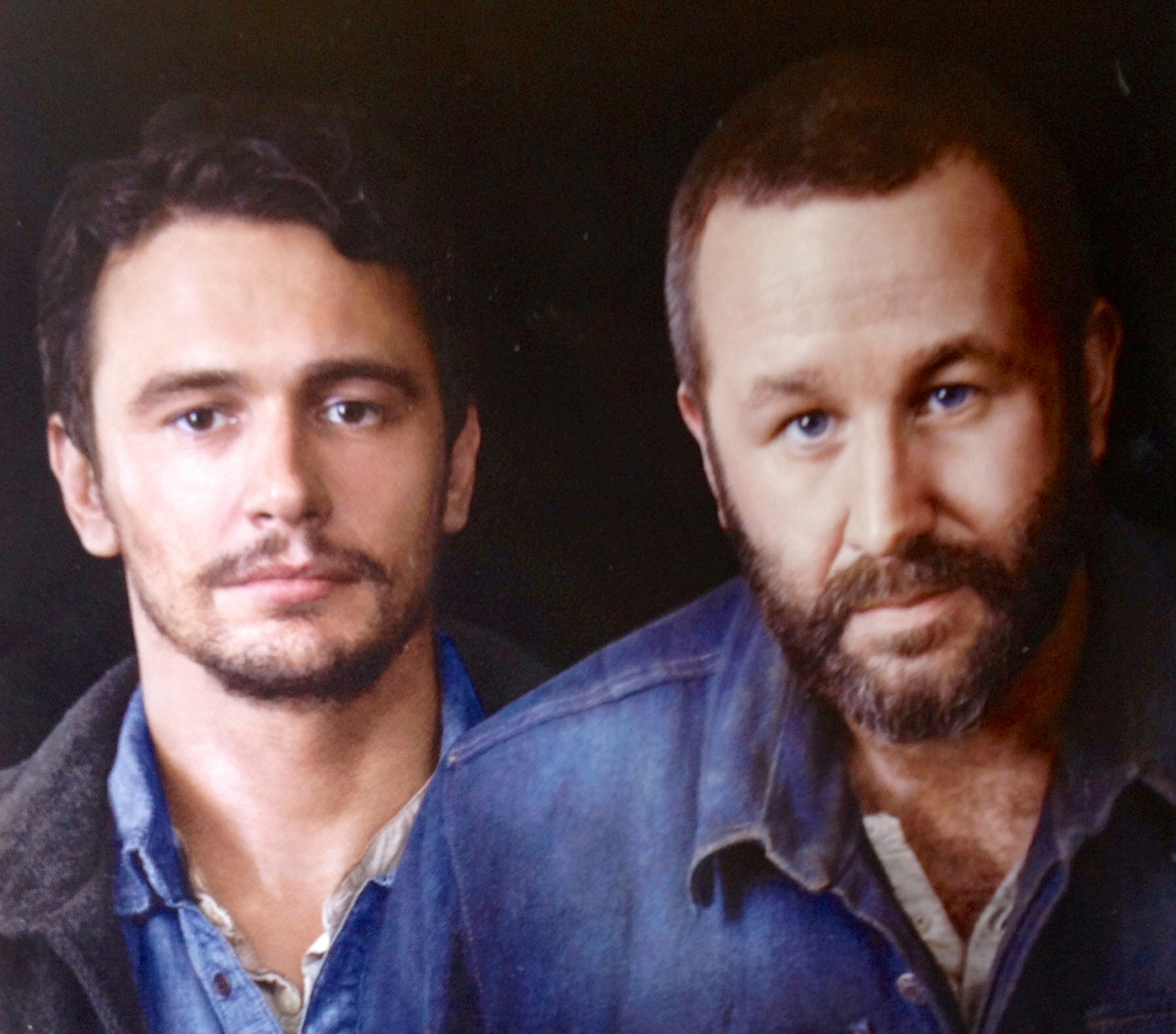
Set in California during the depression era of the 1930s, John Steinbeck’s classic tale (a novel which he adapted into a play) about yearning and despair is a parable, near Biblical in its nature. Anna D Shapiro’s revival is handsomely mounted, using four elaborate sets, and features star names, better known for their film and television work, perhaps hoping that their presence will draw audiences to a play in which any trace of a feel good factor stays firmly in the wings. George and Lennie are peripatetic ranch hands and we first meet them as they are preparing to bed down for the night in the open air, prior to starting work on a new ranch the following day. George is solid and practical, but Lennie, a giant of a man with immense physical strength, is a simpleton with faltering memory and an obsession for small animals – mice, rabbits, puppy dogs – which, not knowing his own strength, he literally loves to death. They arrive in the bunk room of their new workplace intent on staying out of trouble and earning the dollars that they need to fulfil their distant dreams. They meet Candy (a deeply moving performance from Jim Norton), an aged, part disabled worker who clings forlornly to his dying dog, knowing that he too faces a future of further decline, but without the hope of someone putting him out of his misery. It is in Candy’s words that Steinbeck’s pleas for a more benevolent society, one which cares for its sick and needy, are heard most eloquently.  James Franco’s George is a dreamer, but also a realist. He instantly recognises the boss’s flighty daughter-in-law (Leighton Meester) as trouble waiting to happen and carefully resists temptation. However, the other characters all question why George hangs around with Lennie and Franco’s performance does not really explain this to the audience either. The big revelation in this production is Chris O’Dowd. In less skilled hands, Lennie could be just a grotesque ogre, a one-dimensional imitation of Charles Laughton’s Quasimodo, but here we have a real human being, deserving of sympathy and compassion even at his most wayward. O’Dowd draws on his grounding in light comedy to bring out the humour in the character, but then demonstrates how fine a dramatic actor he has become by making every gesture and every facial expression speak of Lennie’s inner turmoil.  The supporting performances are also strong. Alex Morf as the boss’s oafish son rants in jealous rage as he seeks his potentially unfaithful wife and Ron Cephas Jones, as the only black ranch hand, consigned to separate living quarters, is dignified and defiant in his isolation. As is common when a novel is adapted into a play, there are times when the drama feels over-plotted and contrived, with events seeming to move too quickly. However, Steinbeck’s vivid and unforgiving writing always surmounts such problems. Laden with metaphors and making extensive use of animal imagery, this is a stark and discomforting work, building to a tragic, if inevitable conclusion. The impact of the shocking climax is diminished just slightly by Franco not quite finding his character’s emotional heart, but Steinbeck’s messages come through strongly. In a country still fiercely debating welfare, health care and criminal justice, this potent play has plenty to say more than 80 years after it was written.

Performance date: 1 May 2014

thepublicreview_hor_web copy