Archive for the ‘Theatre’ Category

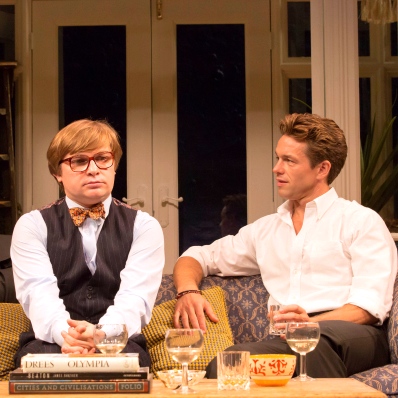
my night with regKevin Elyot died on 7 June 2014, shortly after the Donmar had announced its plans to revive his best known play. This sad event meant that questions as to whether or not this part-subsidised theatre ought to be reviving a play which had a decent West End run relatively recently were replaced by references to a “timely tribute”. However, first thoughts were that maybe it is not such a tribute to stage a revival which could be seen to label this gifted writer as a one-hit wonder and maybe a play the specifics of which are rooted in gay lifestyles of the early 1990s would not do justice to a genuine groundbreaker of British theatre. A stage adaptation of Elyot’s 2007 television work Clapham Junction, still up to date, provocative and challenging to any audience, could perhaps have proved a more appropriate tribute. In contrast, My Night With Reg is a staid parlour piece, rather fitting with the current branding that the Donmar seems to have opted for, but, as soon as this production gets going, two things become clear – firstly, that all of the details which date the play are irrelevant and secondly, that it is not simply a “gay play”, its themes are universal and all that is needed to identify with it is to be alive. Guy (Jonathan Broadbent) is the type that everyone likes and confides in but no-one fancies and he has been infatuated with John (Julian Ovenden) since University days; John is having an affair with Reg (never seen), partner of Daniel (Geoffrey Streatfeild), whilst two other friends, Benny (Matt Bardock) and Bernie (Richard Cant) are bound loosely together in a rocky relationship. They are all so self-absorbed that they are incapable of recognising what is going on around them. We first see the group at a party to celebrate Guy moving into a new flat with a conservatory just being finished off by Eric (Lewis Reeves) a young builder from Birmingham. These are all characters yearning for unattainable happiness, just like those in a Chekhov play, but, whereas in Chekhov the looming cloud was revolution, here the unmentioned elephant in the room is HIV/AIDS. They hold on to feelings, unable to express them until opportunities have passed them by; their relationships are undermined by deception, their friendships are built on top of lies and they find fleeting solace in the form of the poisonous Reg. Elyot writes these characters not as if they are people that he has known, but as if he has been them all himself and the performances of the actors in bringing them to life are perfection. Notwithstanding its underlying bleakness, the play is essentially a comedy with blisteringly funny dialogue and Robert Hastie’s unhurried production brings out all the humour and all the despair. It adds up to the Donmar doing what the Donmar does best and, whilst I have criticised the theatre recently for sitting on the sidelines whilst its rivals embrace exciting new work, this is a production which leaves no room for such criticism, only for celebration.

Performance date: 7 August 2014
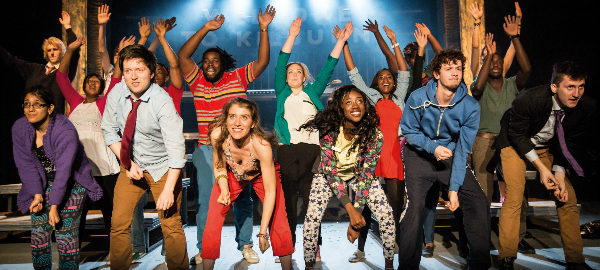
articleimage-Kilburn-PassionKilburn, passion – an oxymoron? Well not as seen in Suhayla El-Bushra’s play, back here for a second run and performed by the company of eighteen 19-25 year olds who inspired it. This is a vibrant and colourful celebration of everyday life in a multi-cultural, multi-ethnic, multi-everything, modern day London NW6. Told in short, mostly comedic sketches, the play introduces us to a collection of identifiable characters, all beautifully played, as they cope with the trials and tribulations of existing in an urban pressure cooker. Laughs are plentiful, but we are always aware of tensions bubbling beneath the surface – racism, homophobia, marital strains, drug addiction, isolation and many more themes appear, but are tackled skilfully with the lightest of touches.  The raw energy of the company is enough to steamroller the cruder elements of Emily Lim’s production, which flows from one short scene to another seamlessly. It all leads to (mostly) happy endings and, in true Passion Play style, the emergence of the unlikeliest Saviour. An entertaining and uplifting 80 minutes.

Performance date: 5 August 2014

epstein_playThis review was originally written for The Public Reviews – http://www.thepublicreviews.com

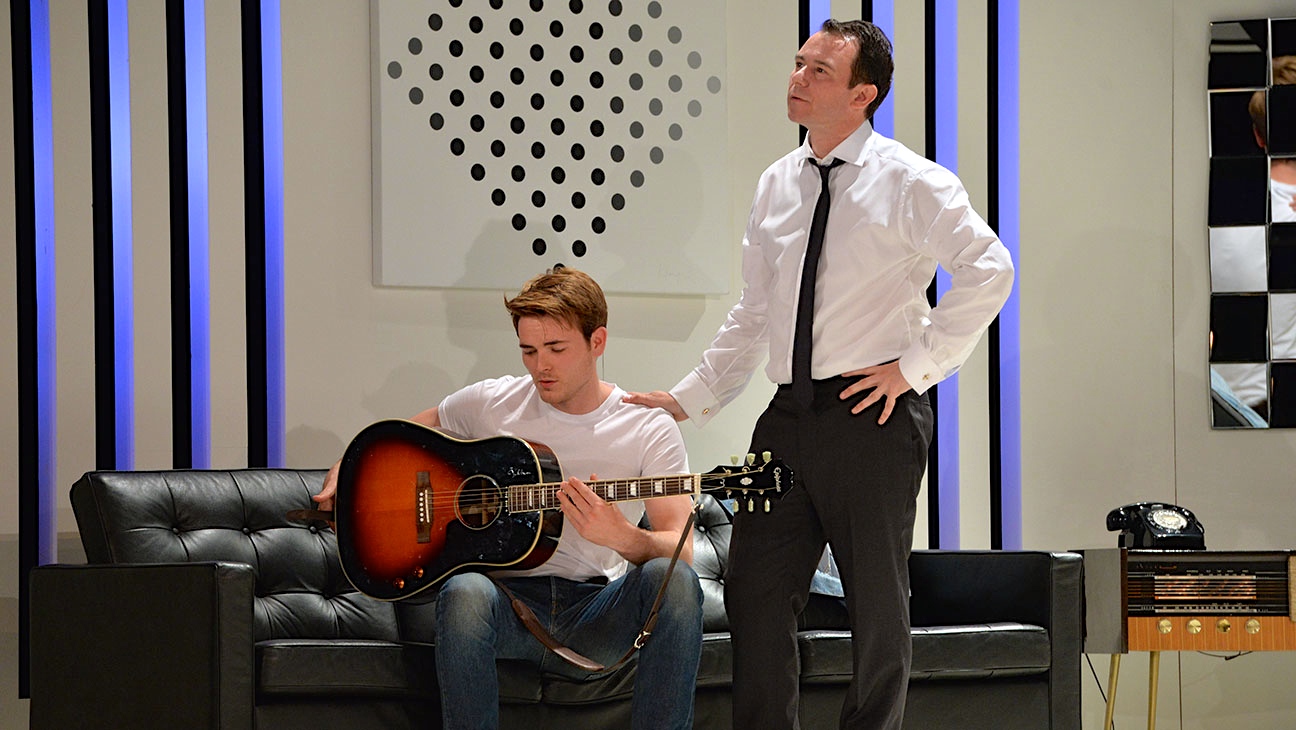
Known as the man who discovered, packaged, stylised, branded and sold The Beatles, Brian Epstein may indeed have “made” the group; that is made everything except their music. Andrew Sherlock’s play, first seen in Liverpool in 2012, attempts to uncover the private man behind the figure who, it could be argued, moulded the 1960s and influenced every generation that followed. Epstein was a gay, Jewish Liverpudlian who, during a period in London trying unsuccessfully to become an actor, had been convicted on indecency charges. ! At first, he is seen here as a resilient outsider, commenting at one point that he can handle rejection because he has never known anything else. However, the desire to be on stage reveals a need for the limelight which his management role could never satisfy; he recalls with bitterness the occasion when Princess Margaret shook his hand whilst still looking at and talking to John Lennon. The play takes place in 1967 in Epstein’s Belgravia flat. He brings home a young man, known only as “This Boy” (one of several references to Beatles lyrics that creep into Sherlock’s script), who turns out to be an aspiring journalist looking for a story. Sexual chemistry between the two is hinted at throughout, but this proves to be a red herring, as the play adopts the format of an interview. It is a format which sometimes creaks, leaving us wishing that more about Epstein could be revealed through the drama of the two characters’ interaction, rather than by straightforward questions and answers. Where this production scores most is with two compelling performances. Andrew Lancel is outwardly stylish and arrogant as Epstein, but he is clearly a bruised and brittle man. He speaks in the affected manner that might be adopted to conceal an accent, he is capricious, quick tempered and addicted to pills and alcohol. Lancel shows us a man who has achieved success beyond imagination, but is disintegrating before our eyes. Will Finlason deserves more to work on in playing the nameless young man who Sherlock leaves as something of an empty shell. This is one of the play’s weaknesses, but Finlason does a great job in building the character into a sexually ambiguous, cocky Scouser who is in awe of and genuinely concerned for the man that he sees as a genius. Brian Epstein died from a drug overdose, aged 32, on 27 August 1967, exactly a month after the Act legalising homosexuality received Royal assent; the World was moving on rapidly and strains with The Beatles and other performers that he fostered had by then begun to show. Sherlock suggests that, at this point in his whirlwind of a life, Epstein was no longer equipped to cope with further change. As the play is dealing with the private life of a very private man, it can never offer more than interesting supposition, but, as such, it is often very convincing.

Performance date: 4 August 2014

thepublicreview_hor_web copy

photo-142In late 2007, the National Theatre unveiled its show for the Christmas season of that year, a play adapted from a then little known children’s book. It was an unlikely production that asked us to imagine that puppets were real horses, but that production has now toured all around the World and is still playing in London’s West End. In the long-term, the story of War Horse may do more than anything else to connect new generations to the horrors of World War I, which makes it fitting that it should have been chosen as the centrepiece for this concert to mark the centenary of the commencement of British involvement in that conflict. The concert began with a traditional song and then the Military Wives Choir, reassembled for the Proms, massed onto the stage to perform pieces by Holst and Elgar, conducted by Gareth Malone. Then followed a performance of Adrian Sutton’s War Horse Suite, during which the solitary figure of Michael Morpurgo, writer of the original book, sat at a front corner of the stage, watching an enactment of the horse Joey’s birth, his deployment to war, the ravages inflicted upon him and his survival (after all these years, surely it is no longer a secret). The adult Joey emerged for the first time from the central Promenade area and he is now even more majestic and lifelike than I remember him – one of the greatest creations of theatre. Tributes were paid to the fighters, the fallen, the roles played by women in the War effort and, most poignantly, to those executed by their own Army, including conscientious objectors and sufferers from shell shock. The performance of a hymn written in 1914 by Sir Henry Wood, founder of the Proms, linked the concert more closely to its theme as it moved towards its climax, an audience singalong to It’s a Long Way to Tipperary. The music, sombre yet uplifting throughout the concert, was played beautifully by the BBC Concert Orchestra, conductor David Charles Abell. A memorable occasion.

Performance date: 3 August 2014

photo-141The annual concert by the John Wilson Orchestra has become a highlight of the Proms Season. The Orchestra’s unique mission is to recreate the authentic sounds of the Golden Age of Broadway and Hollywood, but this is the first occasion on which it has brought a semi-staged version of a single musical to the Proms. In this case, “semi-staged” means a full company of actors/singers/dancers, fully costumed, performing in the area in front of the Orchestra, without a set and with minimal props. Of course, the nature of the Proms and the venue dictate that the emphasis is placed firmly on the music. Cole Porter’s Kiss Me, Kate was last seen in London at the Old Vic in 2012/13 and such is its stature as a musical comedy that further revivals are never likely to be far away. However, conventional theatre productions have their limitations in terms of orchestra size. There are no synthesisers in this version. The leading roles are sung by Ben Graham (Fred/Petruchio), Alexandra Silber (Lili/Kate), Tony Yazbeck (Bill/Lucentio) and Louise Dearman (Lois/Bianca) and all are faultless. James Doherty and Michael Jibson chip in with a suitably droll Brush Up Your Shakespeare, which, as always, stops the show. Dancing, choreographed by Alistair David, is an additional delight, but the biggest problem with this staging is that acting out the scenes in full simply does not suit the vast Albert Hall nor the musical purpose of the performance. Yes, it is beneficial to be able to put the songs into their context, but that might still have been achievable if several spoken scenes which fall flat had been trimmed or, in one case in the second half, cut out altogether.  That said, this evening is all about the glorious sound that fills the Albert Hall and allows us to close our eyes and imagine being in Radio City Music Hall in the 1940s. We may see versions of Kiss Me, Kate that are better than this, but it is very unlikely that we will ever hear one that is better.

Performance date: 2 August 2014

(The performance was recorded by BBC television for transmission in December)

The Crucible***** (Old Vic)

Posted: August 2, 2014 in Theatre

Richard Armitage in The Crucible at the Old VicThey say that lightning never strikes twice in the same place, but that is certainly not true for Arthur Miller in The Cut, London SE1 this year. In May, after seeing A View From the Bridge at the Young Vic, I wrote “if London theatre sees anything better than this production during 2014, it will have been a truly blessed year.” And so, a truly blessed year it is. The ground-breaking South African director, Yael Farber,  has taken Miller’s play, arguably the finest written in the 20th Century, and transformed it into an experience of extraordinary physicality and shuddering visceral power. Most of the actors must nurse bruises at the end of each performance, not to mention strains to their vocal chords. Atmospheric and slow-paced at times, Farber pays attention to every detail of the staging and every actor’s individual performance; it does not seem to concern her that the running length exceeds three and a half hours, but nor should it when her production is so compelling that no-one thinks about the time. Performing the play in the round is also a big bonus; The Crucible centres on a community whose members have turned against each other, so how effective it is to be made to feel at the heart of that community. Miller’s subject is the infamous 17th Century witch trials in Salem, Massachussetts, although there can be no doubt that, at the time of writing the play in the early 1950s, his mind was on the Communist “witch hunt” of the McCarthy era in America. This matters little nowadays, because the metaphors to be drawn from the play have become even stronger and more relevant to the modern age. Miller’s genius is in showing how ordinary human failings – adultery, greed, racism – can fuel the drive to mass hysteria and lead to persecution of the innocent in the name of religion. Abigail Williams (Samantha Colley) is vengeful following the end of a brief affair with the married John Proctor; Giles Corey (William Gaunt) is a litigious landowner, bent on protecting his own material interests; Tituba (Sarah Niles) is a Jamaican servant and a ready scapegoat. Natalie Gavin as the gullible and confused Mary Warren, Anna Madeley as the virtuous Elizabeth Proctor and Christopher Godwin as the zealous Judge Hathorne are all excellent and Adrian Schiller is outstanding as Reverend John Hale, the man who sets the witch hunt in motion, but is himself broken as he sees the scale of its unstoppable destruction. Richard Armitage is a star name from television and film, but he has done relatively little work on stage, so it is a giant leap for him to tackle one of the greatest roles in theatre; however, he is a towering John Proctor, tormented by guilt, torn between what the church and law tell him is right and what he himself knows to be right, this is an heroic Mr Everyman. Underlying it all is, of course, Miller’s wonderful writing, but the achievement of Farber and her faultless company is to have made what was already a masterpiece, immeasurably better.

Performance date: 1 August 2014

Edges*** (Tabard Theatre)

Posted: August 1, 2014 in Theatre

BsMNMNkIcAAmZr_.jpg-largeThis review was originally written for The Public Reviews: http://www.thepublicreviews.com

The next few weeks promise big things for the American songwriters Benj Pasek and Justin Paul. Their show Dogfight, a fully-developed musical, is about to have its UK premiere at Southwark Playhouse, but, here, as an appetiser, we get the chance to see a performance of their earlier hour-long song cycle. The linking theme of Edges is the joy and pain of being twenty-something and living in New York. We see four friends, two men, two women, who are on the edge of new careers, romance, commitment, or break-up. If that sounds familiar, well, yes, perhaps someone could write the book for “Friends – the Musical” one day and these songs would be ready to slot in. The show’s tone ranges from comedy to heartbreak, as the four begin by singing Become, describing their dreams and ambitions and explaining that each needs to conquer “the fear to become who I am”. In their romantic lives, they pass through an addiction to Facebook, begging Be My Friend to all who cross their paths, and end by declaring themselves Ready To Be Loved. The four young performers may not be the greatest of singers, but they all have that vital talent for interpreting lyrics with sincerity and selling them to an audience. In One Reason, Luke Street pleads to his father to explain why he deserted the family; Christina Modestou (fresh from a leading role in In the Heights) spits out In Short, cutting out the pleasantries to vent her ire at the man who walked out on her, but Thomas Henson reflects more ruefully on a similar situation by lamenting that he is Dispensable; Rebecca Jayne-Davies is more resilient, shrugging off the fact that her boyfriend is gay, by declaring him still Man of My Dreams. Adam Philpott’s simple staging always places the emphasis on acting out the lyrics, rather than achieving vocal excellence. Humour and bitter-sweetness are well balanced in the collection of songs, which have engaging lyrics and catchy melodies. Of course, the absence of a book to hold the songs together and flesh out the characters makes the production feel more like a work in progress than a completed show, but, nonetheless, it passes a pleasant hour and there is plenty of emerging musical theatre talent to enjoy.

Performance date: 31 July 2014

thepublicreview_hor_web copy

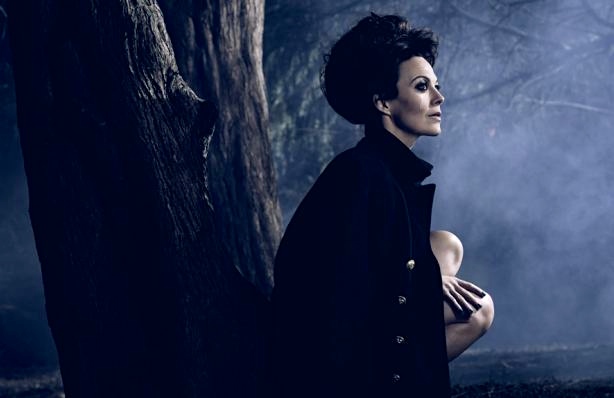
MedeaNEW_poster_notitleGiven the acres of space on the Olivier stage to work with, Carrie Cracknell has decided wisely that her production of Euripedes’ play, centring on a woman who is, in effect, an ancient Grecian serial killer, could never be an intimate character study. Instead, she uses the space to paint a vivid, sometimes balletic, picture of insanity and its consequences. The time is vaguely modern day, the two-level set is the interior of a palatial mansion which is vaguely art deco period in style, there is a chill in the air from the onset and the audience are distant onlookers who are never meant to be drawn too closely into the drama.  Consistent with this interpretation, Helen McCrory gives a technically accomplished performance as Medea, but allows us little insight into her character’s emotional turmoil. Like many women through the ages, she has been kicked out by her husband in favour of a younger model, but the disproportionate nature of her revenge and the knowledge that she is already a double murderer forbid us to sympathise with her, only to pity her madness. Michaela Coel and Danny Sapani give excellent support, but where this production scores most is with its visual impact. As the heinous deed approaches, the two innocent children sit playing on swings in front of an idyllic forest, waiting for their mother to appear behind them. Often, an all-female chorus appears to heighten the tension, at one point gyrating together to the sound of pounding drums as if at a rave party.  Also memorable is the atmospheric music, composed by Will Gregory and Alison Goldfrapp. Ben Porter’s new version of the play is lucid and concise, spanning just 90 minutes, but the Greeks always knew how to deliver intense drama without diversions. In all, this is a production which, if not exactly moving, is always impressive.

Performance date: 25 July 2014

Enoch_Powell_6_Allan_WarrenThis review was originally written for The Public Reviews – http://www.thepublicreviews.com

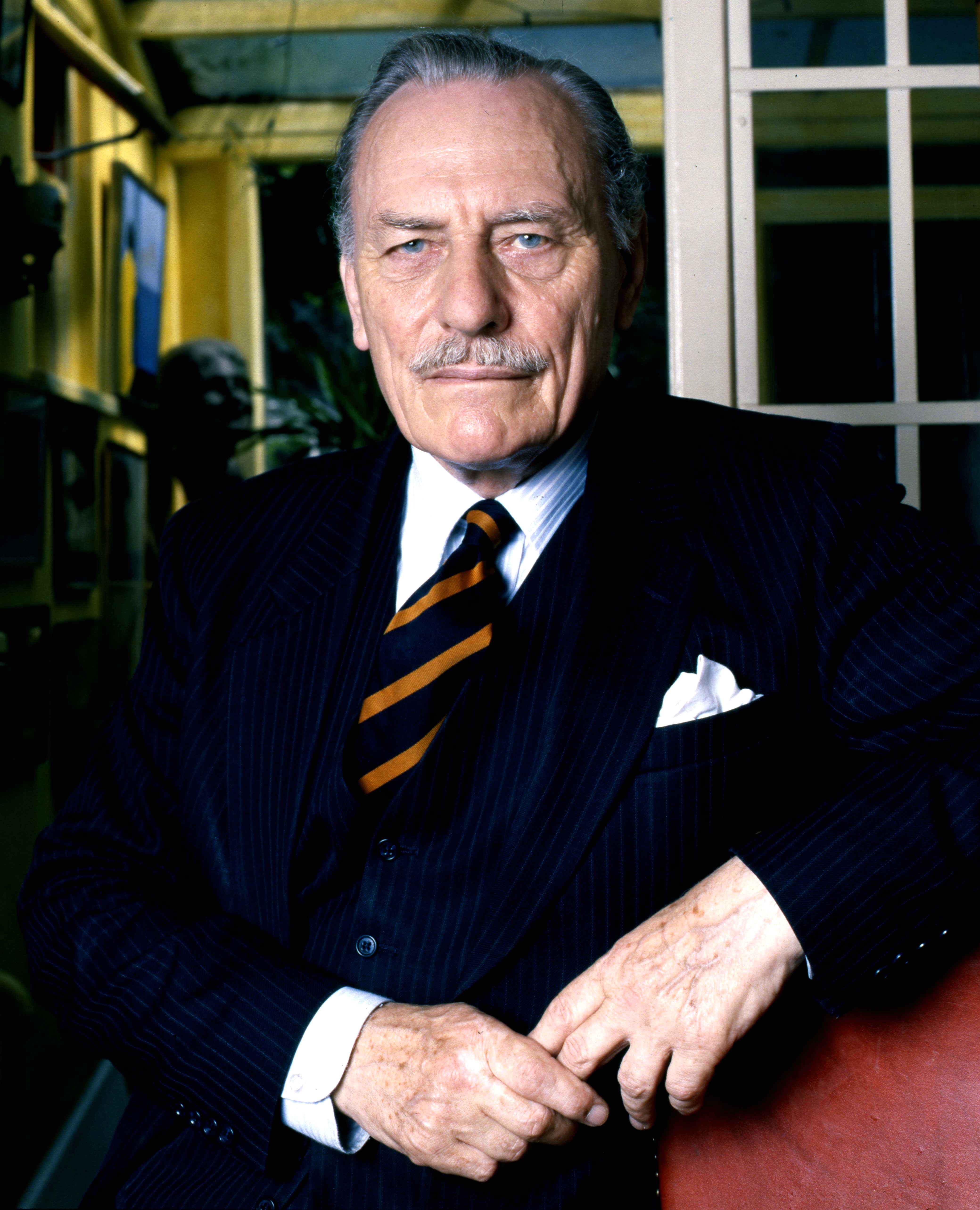
History has not been terribly kind to Enoch Powell. Half a century after he was prominent in British public life, if he is remembered at all, it is for his inflammatory “rivers of blood” speech, denouncing immigration. As the memory conjures up images of a dour, grey, humourless man, impassioned only by politics, it comes as a surprise to be told that, behind the stern exterior, there was a poet and a romantic. Oliver Michell’s 50 minute drama is previewing here prior to a run during the Edinburgh Fringe Festival in August. It takes place in the early 1950s over a hunting weekend on the estate of Sir Patrick and Lady Kennedy. Powell, with a glittering academic and military career behind him and now an MP marked down as a future Prime Minister, is a guest. The snooty Lady Margaret (Sue Parker-Nutley) looks down on him as a “Grammar School boy”, but he is smitten by her daughter, Barbara (Sophie Gajewicz), who does not reciprocate and is destined to marry one of her own class. Alexander Shenton’s Powell is an uncomfortable outsider, talented at almost everything except the art of living. He claims: “my folly is unique, only the best minds can aspire to it”, acknowledging his own ineptitude, as exemplified when he presents Barbara with a gift of a book written in Greek and is bewildered by her look of disappointment. He comes across as a wet fish, preferring to read and write poetry rather than to join his contemporaries in less cerebral pursuits. The play suggests that Powell’s inability to connect fully with the real world led to him going on to make serious misjudgements in later life. However, the assertion which it makes that Barbara’s rejection of him was linked directly to his infamous speech is less than convincing. ! ! Well written and confidently performed, the play is quiet and reflective, the central metaphor, which relates to a threatened tree, giving it a melancholic Chekhovian feel. This in an interesting and worthwhile production.

Performance date: 23 July 2014

thepublicreview_hor_web copy

700x650.fitTaking a leap into the near future where the internet has expanded to become “the nether”, Jennifer Haley’s play is an all too credible detective thriller which explores a parallel universe of infinite possibilities. Morris (Amanda Hale) is an officer policing the nether and she is first seen interrogating Sims (Stanley Townsend), the creator of a role-playing site which offers “a world without consequences” where killers and paedophiles can indulge their grim fantasies unimpeded. He argues that he is providing an outlet for harmful practices and removing them from society; she counters that the site will nurture tastes and experiences which will inevitably filter back to hit the real world. The interrogation room is grey and unadorned, furnished with just a table and two chairs and then stunning computer-generated images appear on a huge screen and they lead us into the nether, which lies above and behind the room. An interior set resembles a Tenniel drawing, complete with a not so innocent “Alice” and an exterior set is a garden at the edge of a forest, which, with the aid of mirrors, appears to go on into infinity. Es Devlin’s incredible designs create a virtual world that is, at the same time, breathtakingly beautiful and horribly sinister. The play goes on to reveal who are the real figures behind the avatars that we see in the nether and to analyse the moral and ethical issues affecting modern society as it becomes increasingly dependent upon the internet, but seems incapable of keeping it under control. Haley’s writing is intelligent and suspenseful, Jeremy Herrin directs a production that is taut and brisk. The play, which is spellbinding throughout its 80 minutes, delivers something like a short, sharp shock.

Performance date: 22 July 2014