At a mountain vacation spot in New York State, a young man with a vague past becomes involved with a younger woman and her domineering and manipulative Jewish mother (a star turn from Diana Quick). This is a story of characters deceiving each other and maybe themselves and of unachievable ideals. Set in the 1960s, parallels are obviously being drawn with American society in general, but the focus of the play is never completely clear; this could be due to there being just too many sub-themes which do not always sit well together, some of them under-developed. The writer’s concerns with the wider resonances also seem to detract from the core human story, leaving the audience feeling detached and emotionally uninvolved. The production is handsomely mounted and always interesting, but, ultimately, it is rather unsatisfying.
This review was original written for The Public Reviews: http://www.thepublicreviews.com
On one of the hottest nights of the year, the Park’s pleasantly cool studio theatre provided a welcome contrast to the streets outside. Yet little more than an hour after entering, as bows were being taken, the same space resembled a steamy Turkish bath and there had been no noticeable air conditioning failure. The heat generated by the script and the actors in this intense two-hander might have been sufficient to start a thaw at the South Pole. As a prelude, soft piano music plays and nostalgic photographs appear on a screen, showing a couple enjoying happy times together; at opposite corners of the stage, the actual couple are positioned statuesque, looking away from each other, thereby providing a glimpse of what is to follow. The music stops, the pair dash towards each other, collide and, for several minutes before any word is spoken, they exchange blows, throw each other to the ground and engage in a brutal battle that is interrupted occasionally and briefly by tender kisses and embraces. It is a truly stunning opening, so completely convincing that there are genuine fears for the safety of the participants. When this savage assault by the two people on each other and on the senses of the audience gives way to dialogue, we learn that the pair are Elizabeth and Tom, former lovers reunited to examine what brought them together and what tore them apart. In the sparring that follows, they are at one moment playful, then resentful, amorous, bitter, melancholic, angry; each mood and emotion blends naturally into the next, finding both verbal and physical expression. The story unfolds gradually and, as the layers are peeled away, it culminates in heartbreaking revelations. Playing the couple, Angela Bull and John Schumacher are magnificent, bringing the characters touchingly to life and expending extraordinary amounts of raw energy. The playwright, Gary Henderson, is a New Zealander and, although he locates his story in his home country, his themes are universal. The lyrical qualities in his writing offset the play’s starker aspects beautifully, as does the stage design which evokes a rural setting, bathed in the fading light of late afternoon. It cannot be often in a small production like this that credit needs to be given to a fight director (Dan Styles) and movement director (Clare McKenna), but, along with Jemma Cross, they contribute to making everything brutally realistic, riveting and visually startling. So this gets a strong recommendation to grab a ticket, with the added advice that, whatever the weather outside, it would be best to wear light clothing.

The Three Musketeers by Barbershopera**** (St James Studio, 13 July 2013)
Posted: July 15, 2013 in TheatreThis review was originally written for The Public Reviews: http://www.thepublicreviews.com
Razor-swishing and foam-buckling, the three plus one Musketeers take the St James stage by storm; these characters have been seen many times before, but never have they combined to defend their king in such perfect harmony. The union of Barbers’ Shop Quartet singing and Alexander Dumas’ quartet of heroes is so natural that it is surprising that no-one seems to have thought of it before. The story begins in the small French village of Pissypooville, where the economy is being ruined because of a jam roly-poly embargo by the dastardly English. The young villager D’Artagnan decides that she (yes, she) will venture to Paris to rescue the situation and achieve her dream of joining the legendary Three Musketeers. Meanwhile, King Louis is attempting to repair Anglo/French relations in a rather intimate way with the Duke of Buckingham and he gifts the Duke with his treasured golden plums. Our four heroes are duly despatched to England (land of “hazards and over-cooked vegetables”) to retrieve the plums before the evil Cardinal Rich Tea can use their absence to discredit and de-throne the King. It is all unashamedly bawdy and camp, bearing only a passing resemblance to the Dumas original. The very likeable and exuberant Quartet are Pete Sorel Cameron (Aramis), Laura Darton (D’Artagnan), Harry Stone (Porthos) and Russell Walker (Athos); they all double up to play the other characters. Their a cappella singing exemplifies “all for one and one for all”, with splendid tones and harmonies, but they also turn out to be very accomplished comedy performers. This is definitely not a case of four singers standing static at centre stage; the whole show is directed (by Sarah Tipple) and choreographed (by Russell Smith) with considerable flair. The original tunes lean towards the ordinary, but the lyrics are excellent and the script is packed with very funny jokes. It is an evening of continuous jollity, interrupted only by the interval, and it deserves a wider audience. So, a note to cost-conscious theatre producers – this is a crowd-pleasing musical that will not require paying an orchestra. There really is something here to please everyone.
 As Martin McDonagh has now become best known for writing and directing cult crime films, it is particularly interesting to look again at his early bitter-sweet and wistful comedy. It tells of a small Irish community in 1934 and how the arrival of a Hollywood film crew raises hopes and dreams of a better life. McDonagh’s script creates a rich group of characters and is peppered with very amusing lines and eloquent pleas for understanding those with disabilities. Daniel Radcliffe in the title role captures perfectly his character’s resilience, frustration and optimism; this is more than just star casting, he is genuinely good. However, it seems unfair to single him out because this is an ensemble piece in which all the characters are fleshed out beautifully by superb acting. This is the third in Michael Grandage’s star-studded season; it shares the high production values of its two predecessors and maintains the very high standard.
 Spanning the period between the two World Wars, Eugene O’Neill’s epic yet intimate play centres on a lady named Nina and her relationships with three men; they are all obsessed with her and she regards them as husband, lover and substitute father. All of the characters speak both to each other and directly to the audience, giving the play a structure that is at first disconcerting but, as we get used to it, offers greater insight into their complexities and even provides opportunities for humour. After half an hour or so there seemed to be a pressing need for an interval exit; the dialogue sounded impossible for the actors to interpret realistically, the action took place on a very odd set compressed into a quarter of the Lyttelton stage and there was nothing happening that we could become even slightly involved in. At this point it looked like yet another in the line of recent Lyttelton productions that fails to connect with its audience and another example of the wonderful Anne-Marie Duff (as Nina) being the only shining light in a dud, just as she was in the Donmar’s woeful “Berenice”. However, slowly and almost imperceptibly, the production begins to take hold and, once it has gained its grip the rest of the running time of over 3 hours just flies by; the characters become believable, the story intriguing and, in the second half, the stage opens out to reveal some marvellous sets. This is a challenging play that defies accepted norms, extends the boundaries of what is possible in theatre and delves deep into aspects of the human condition. It is never easy for the audience, but superb acting and bold direction contribute to making it a highly rewarding experience.
I saw this during its first West End run, but having been offered a Press Night freebie, I could think of no reason not to see it again upon its return from a national tour. Originally, I thought that the brand of quaint British eccentricity transferred well from screen to stage, the set was wondrous and the visual gags were well choreographed; however I could not understand why a brisk 91 minute film needed to be stretched to over 2 hours plus interval, particularly as it so obviously ran out of steam well before the end. All of these comments apply equally to this re-cast version which contains some very strong performances, except that John Gordon Sinclair seems wrongly cast as the criminal mastermind; he is a skilled and experienced comedy actor, but there is absolutely nothing sinister or menacing about him and, robbed of the darker undertones which this character can bring to the piece, a black comedy is diminished to being just light grey. It might have been expected for the production to be a little more polished by this stage; prop malfunctions can be unavoidable, but Angela Thorne, in the not too challenging role of the old lady, repeatedly fluffed her lines and Ralf Little seemed much too aware that he could get bigger laughs by corpsing than from his material. All that said, this is still a fun show and there is far more to enjoy than there is to dislike.
This review was originally written for The Public Reviews: http://www.thepublicreviews.com
The year is 1951, and this is clearly established by newsreel clips (mostly genuine, but with a few additions) at the beginning of this production and between scenes. We see the Korean War, rationing, political debate and, most clearly, we see a world that is changing rapidly and irrevocably. This could have been interpreted as a routine, typically frothy Noel Coward comedy but, by emphasising the play’s themes of class inequality and social change, director Trevor Nunn has made it far more interesting and, in so doing, he has not sacrificed any of the humour. A widowed countess awaits in her palatial home for the return of her only son with his bride-to-be, a Hollywood film star, who happens to be the estranged sister of her maid. The maid insists that she has to leave the house because of the embarrassment that her lowly social status would cause, but the Countess cannot accept this, realising that she is devoted to the maid who has become her closest friend. Together with the butler, the pair devise a plot whereby the maid’s social status will be elevated. It becomes apparent that these three, countess, maid and butler are, in effect, a close-knit family whose affection towards each other is much stronger than the class system that divides them. The 1951 setting is specific, but the message is that it matters more who people are than what pigeon hole they have been placed in and this resonates just as strongly today. At first sight, Patricia Hodge as the Countess seems like typecasting, but, in fact, she develops the character to become much more than just a class stereotype. Her timing and delivery of Coward’s witticisms are immaculate, particularly in early banter with Steven Pacey, playing her nephew. But this is a countess who, although outwardly snobbish, controlling and scheming, has great warmth, making it wholly believable when she confesses to being torn between her instincts and her sense of reason when it comes to class issues. Caroline Quentin is also excellent in the more broadly comic role of the maid, becoming ever more uncomfortable as she feigns her new social status. Rory Bremner, sounding rather like his famous impersonation of John Major, is a constant delight playing the butler, a man who can talk expertly on social and political issues yet professes that, like most people, he “knows nothing and just pretends to know a great deal”; most intriguing are the contradictions in this character’s ideals – he claims that being conservative does not mean having to be Conservative (or perhaps he means it the other way round) and, despite being lower class himself, he is a firm disbeliever in social equality. The nephew comments that he and the Countess would make perfect partners, except of course that they were prevented by birth from ever becoming so. The action all takes place in the library of a country house, which is realised by Stephen Brimson Lewis’s very grand set. Coward’s trademark one-liners appear in abundance and, in a play that is about change, he takes some delightful swipes at changes in the theatre – “a comedy of manners becomes obsolete when there are no longer any manners”. Many bright directorial touches add to the laughter as the show bubbles throughout. Overall, this is a superior production of Coward’s play and it is difficult to imagine it being staged much better.
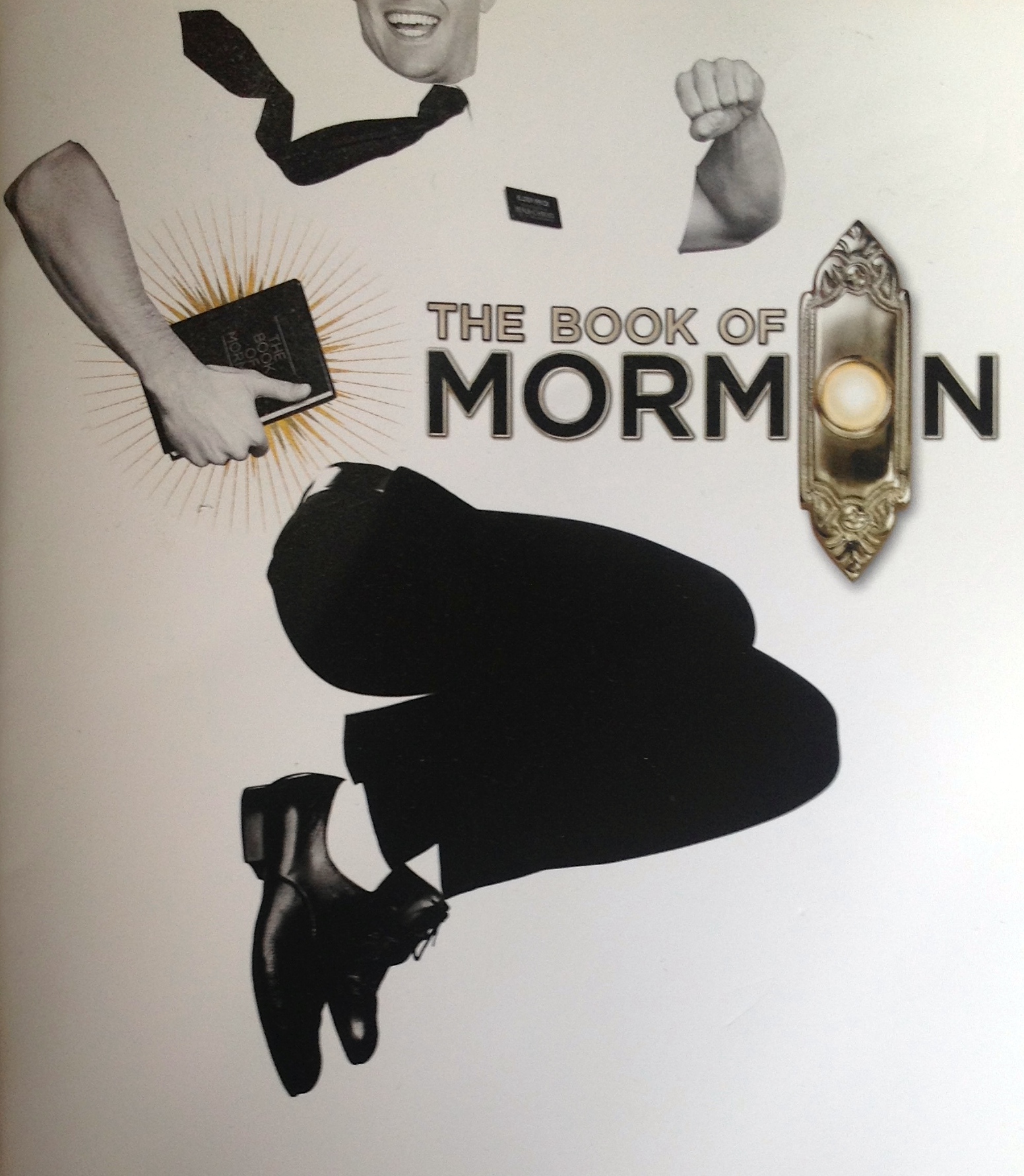 Bucketsful of money have been splashed out on this new musical, which is reflected partly on the stage and partly all over the London Underground, as it is is surely the most aggressively promoted West End Show in living memory. Already a massive Broadway hit, it tells of a group of Mormon missionaries in Uganda and does so with excesses of profane and irreverent humour, covering every taboo subject imaginable and even making light of the plight of poverty-stricken Africa. That no-one seems to take offence (not even Mormons) is little short of a miracle, but this may be due to the fact that the show as a whole has the charm and innocence of a Christmas pantomime. The biggest problem is the sameness of the tunes, but the lyrics are sparklingly witty, the performances are spot-on and each half includes one dazzling song and dance routine that is out of Broadway’s top drawer. Occasionally during the first half, the vulgar jokes become repetitive and the show flags, but the second half is an uninterrupted pleasure, carried through by the sheer exuberance of the brilliant cast. It may not live in the memory too long but this is an occasion to enjoy the moment and remember that, after all, tomorrow is a latter day.
Performance date: 4 July 2013
This review was originally written for The Public Reviews: http://www.thepublicreviews.com
The King’s Head has gained a recent reputation for scaling down major operas to fit into its small space and it now plays home to this new work which could hardly be scaled down any more than it already is. Played on a bare stage, often littered with corpses, and accompanied by just a piano and improvised percussion, it is a minimalist musical, but it showcases some very promising emerging talent. The subject is the murderous rampage of Jack the Ripper, focussing not on the killer but on his five victims. Two pathologists discuss the gory details of the mutilation of each woman as she stands centre stage and recounts her personal story in words and in song. The most obvious musical influence is Sondheim’s Sweeney Todd, particularly in the grizzly lyrics of Bones in which the pathologists lead the company, but there are also distinct touches of early Lionel Bart throughout. The overall tone is even more sombre than Sweeney, as is appropriate with the story being drawn from real events. The standard of the music and lyrics is surprisingly high and a uniformly excellent company, in which the two writers themselves appear, does full justice to all of the songs. In the ballad One in a Million, Gemma Brodrick sings of the man she loved and lost; Emma Hook gives a rousing rendition of the catchy A Lady’s Life; Stephanie De Whalley and Carla Turner duet in perfect harmony on the haunting Streetlights; and Sarah Anne Cowell almost stops the show singing the achingly beautiful lullaby Too Alone to her unborn child, building to a crescendo of despair as she realises the hopelessness of its future. In the spectrum of musicals, RIP is about as far removed as it is possible to get from the sort of show designed to pack Drury Lane for a decade. Yet, rated as an hour or so of fringe theatre, it is lovingly crafted, superbly performed and all rather splendid.
This review was originally written for The Public Reviews: http://www.thepublicreviews.com
The most frequently staged play other than those by Shakespeare and one that has been performed somewhere in the United States every day since 1938; these are the impressive and somewhat surprising statistics for a work that, despite being a Pulitzer Prize winner, has rarely been seen on this side of the Atlantic and is by a writer who is now half-forgotten here. This is its official 75th anniversary UK production. Set in the fictional New England town of Grover’s Corners – population under 3,000, a single-track railway and a twice-weekly newspaper – in the early years of the 20th Century, the play is split into three acts, depicting daily life, love and marriage and death. It uses the device, novel in 1938, of a Stage Manager (or narrator) to introduce the townspeople and guide us through the action; he tells us that the history we are taught in schools is of rulers and wars, but that this play will be placed in the cornerstone of a new building so that future generations can learn about ordinary lives at these times. The play’s format and core themes were later emulated in Under Milk Wood by Dylan Thomas who added richly descriptive and poetic dialogue; there is little evidence of such flourishes in Wilder’s writing, except possibly in the closing meditations. The role of the Stage Manager has previously been filled by such larger-than-life personalities as Orson Welles, Frank Sinatra and Paul Newman. They are almost impossible acts to follow, but Simon Dobson goes in the opposite direction by offering a deliberately low-key and laid back interpretation and, in so doing, he may have robbed the production of one of the play’s key dynamics. In a cast of 14 which, for no obvious reason, has been assembled from 10 different countries, only Zoe Swenson-Graham is American and she gives the most moving performance as the daughter of the Newspaper Editor who marries her childhood sweetheart. None of the others even attempts to sound American. Whilst accepting that badly faked accents can be extremely jarring, the inconsistency of accents in a play with a setting that is absolutely specific, severely undermines authenticity. There are no other outstanding performances and, sadly, a few of the actors are defeated by the burden of serious miscasting. As in the premier production, the play is performed with no set, using just chairs, tables and ladders and the actors mime actions without the use of props. The nature of the material, particularly as it is American, is such that it could easily drift into excessive sentimentality, which a British audience might find unpalatable. Director Tim Sullivan seems wary of this pitfall and de-sweetens the pill wherever possible, but, in the process, he often leaves it rather flavourless. This is the small town America of It’s a Wonderful Life, but lacking the gripping central storyline, the deft touches of Frank Capra and anything nearing the charisma of James Stewart. Students of theatre history could be fascinated by features of the play’s structure and staging which were groundbreaking 75 years ago. However, these features have since become commonplace and many of the rest of us will find the success and durability of Our Town difficult to comprehend. The statistics are irrefutable, but the biggest disappointment with this production is its failure to explain to us any of the reasons for them.
 The Beast's Pen