After a dramatised reading of the full novel last Summer and the recent Baz Luhrman film, maybe we have had enough of Gatsby, but this musical version was around on the fringe circuit before both and is still worth a look. In different ways, both the other versions set out to expand on the original, but here we see it distilled – very small stage, streamlined narrative, etc. Inevitably with such a multi-layered novel, much is left out, perhaps too much, but most surprisingly, the show ditches Nick Carraway’s narration. The biggest advantage that this version has over the film is that Jay Z has no involvement whatsoever, which means that the music is rather pleasant and actually evocative of the 1920s. Sid Phoenix as Nick is the highlight of the evening; Michael Lindall makes a striking Gatsby but Matilda Sturridge’s Daisy is a little too insipid. The show sags towards the end, but so does the book and every other adaptation of it. All in all, a decent effort.
Archive for the ‘Theatre’ Category
To summarise the plot, a Brummie builder (specified as bald, so presumably wearing a wig) sends his ne’er-do-well Cockney son to be taught by the philosopher Socrates, who looks a bit like Demis Roussos, so can pass as Greek. Three ladies also pop up occasionally as muses and in various other guises. As there are frequent mentions of German bankers, accompanied by expletives, it might be assumed that some parallels are being drawn with Greece’s current economic calamity and the consequent stifling of one of the world’s oldest cultures; if so, it is difficult to decipher any relevant or coherent messages from this mishmash of random ideas. More serious political comment could be found in a Tom & Jerry cartoon, more satirical humour in a funeral sermon. As each scene ends, the lights dim and the ladies enter to shuffle some white blocks around the stage; unfortunately, this process is so protracted each time that the “scene changes” are reduced to being only marginally more entertaining than the scenes themselves. Everything we see and hear is lazy and amateurish – witless writing, sloppy staging, half-hearted acting; the short running length would be a redeeming feature except that it provides us with no opportunity to leave at the interval. There is some elementary educational content about the natures of democracy, debate, etc, so maybe this production was devised to tour primary schools, in which case it could be fine. However, it is now occupying a central London stage less than a minute’s walk from Piccadilly Circus and, judged at this level, it is hideously awful, the worst evening in the theatre of 2013 so far.
This review was originally written for The Public Reviews: http://www:thepublicreviews.com
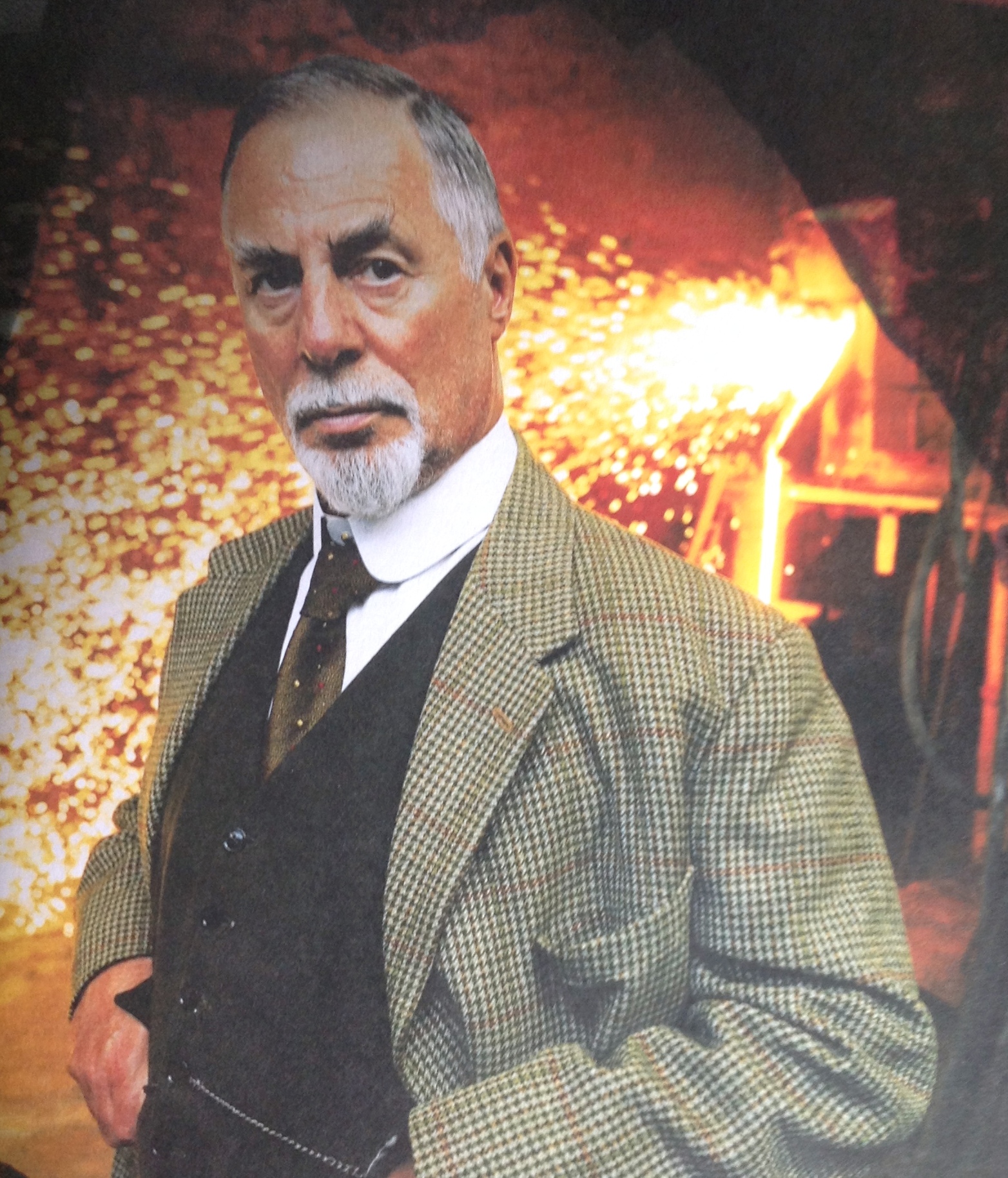
Less than a year after first opening its doors, the St James has already established itself as a regular destination for discerning theatre-goers. Its policy of providing a Central London stage for the cream of productions from regional and fringe theatres is yielding rich dividends. There will be few better examples of the value of the policy than this Northern Broadsides revival of a play that was a big hit in London when first staged in 1912, but has rarely been seen since. Interweaving themes of family and business, Githa Sowerby’s play has similarities with the works of her contemporary Harley Granville-Barker. A character asserts that “no-one is good enough for the Rutherfords and the Rutherfords aren’t good enough for the other kind”, describing a family that seems marooned on an island created by the rigid class structure of post-Edwardian Britain; their wealth and power set them apart from the working class from which they have risen, but they face rejection from the upper class to which they might aspire. Thus the three younger family members are effectively held prisoners, hampered in building independent lives and unable to make suitable marriages. The family is presided over by a bullying, tyrannical patriarch, who has founded his manufacturing business in an industrial Yorkshire town and now ruthlessly deploys brute force and cunning to keep it going so as to pass it on to succeeding generations; he defines life as only work and then “six feet of earth”. One of his sons has joined the clergy and is therefore seen as no use to him, the other has half-formed plans to make his own way, but, having married beneath him, fathered a child and fallen ill, is forced to take refuge back in the family home. There is also a daughter, now 35 and facing a lifetime of subservience and spinsterhood. As the father, Barrie Rutter gives a giant performance, growling and barking like a caged pit bull terrier, determined to defend his empire against a tide of family dissent and outside financial pressures. Sara Poyzer is outstanding as the daughter, almost retching in disgust as she is made to remove her father’s boots on his return from work, venting her pent up anger and ultimately facing up to her true fate. Catherine Kinsella as the young wife also gives a particularly moving performance in what is generally a very impressive cast. However, the production arrives at this intimate venue after a national tour and the actors occasionally seem not yet to have realised that they no longer need to play to the upper circle; less shouting could have made more noise. Jonathan Miller’s direction is exemplary, pacing the action to perfection and building up tension for key moments, as in a thriller. Particularly notable is the placing of female characters, sometimes sitting centre stage, powerless to intervene as other characters engage in heated discussions around them. Sowerby was a prominent feminist and Miller ensures that this is not forgotten even at points when the plight of women of the era is not mentioned explicitly in the script. With the action taking place on a December evening and the following morning, the lighting by Guy Hoare gives the effect of a room lit only by candles and the reflection from a coal fire, whilst Isabella Bywater’s simple, uncluttered design gives the correct period feel. The stage here is the perfect size to contain this single-room drama and the steeply-raked auditorium entices the audience to become fully involved. Most of us will have had little previous knowledge of Githa Sowerby. Her writing is economical and purposeful, yet still full of beautifully literate lines which show a real understanding of the different dilemmas facing each of her characters. At the end comes the warm glow of satisfaction that always follows the discovery a rather fine play.

Saturday afternoon in Docklands is becoming something of a habit; this time it is a promenade performance of John Milton’s epic poem. Milton can be a hard pill to swallow but here it is nicely sugared and rather enjoyable. The battle between good and evil is played out by an enthusiastic troupe of tomorrow’s Shakespeareans, giving it their all as if auditioning for one of the Bard’s great tragedies. Angelic young ladies, draped all in white, usher us around, offering us rather tasty angel cakes; one minute we are in Hell, the next in the Garden of Eden; both are rather cheaply realised, but it is the performers that matter more than the sets. Good fun.
This review was originally written for The Public Reviews: http://www.thepublicreviews.com
Early in this one-act play, a leading character asserts that marriage is much stronger without love and this sets the tone for a dissection of relationships that is always interesting, but rarely emotionally involving. Running at under an hour, it is one of Strindberg’s lesser known works and Serendipity Productions takes credit for rediscovering it and bringing it to this small West London venue. Director Anna Ostergren sees the play as very modern in its language and themes and, accordingly, she sets her production in the present day. Kerstin and Knut are a young married couple spending the Summer on a Swedish island when they are joined unexpectedly by Axel, a friend who had departed, suddenly and without explanation, the previous Summer. Also present are Kerstin’s parents, estranged from each other, and a young girl who becomes a focus for the admiration and/or jealousy of all the other characters. However, it is the rivalry that develops between Knut and Axel for the affections of Kerstin that is at the heart of the play. Strindberg’s hypothesis is that love both generates and feeds off jealousy. As the two men spar with each other, it becomes clear that jealousy is their prime motivation and that true feelings for Kerstin are secondary. Playing Knut and Axel, Andrew Wilson and James Heatlie struggle with dialogue that, in this rather prosaic translation, sometimes sounds stilted, but their cool detachment is consistent with the writer’s themes. They play games because they need to assuage their jealous feelings towards each other and this need becomes more important to them than the prize that awaits the winner. As the others parade around in smart Summer casuals, Tallulah Sheffield as Kerstin is set apart and deliberately made to look dowdy, her hair dishevelled, wearing a loose-fitting cardigan and long dark skirt. Yet she is the only character able to remind us that love also involves passion and pain. Whilst her two suitors play with fire, fittingly, it is only she who gets burned.
John Van Druten’s play, here given a splendid revival, looks at a group of women working in the London offices of a law firm in the early 1930s. They are paid a pittance, have zero prospects for advancement and are viewed as ready prey for lecherous bosses. Inevitably the production invites us to consider how things have changed and what, if any, fragments of these attitudes and practices continue today. However, it is not an overtly political or campaigning play, it is simply showing us how it was in the era when it was written and entertaining us at the same time. A strong ensemble cast and smart staging deliver an absorbing drama, laced with bright comedy and touching romance. The audience, at least half of them women, were thoroughly entertained and left with smiles on their faces.
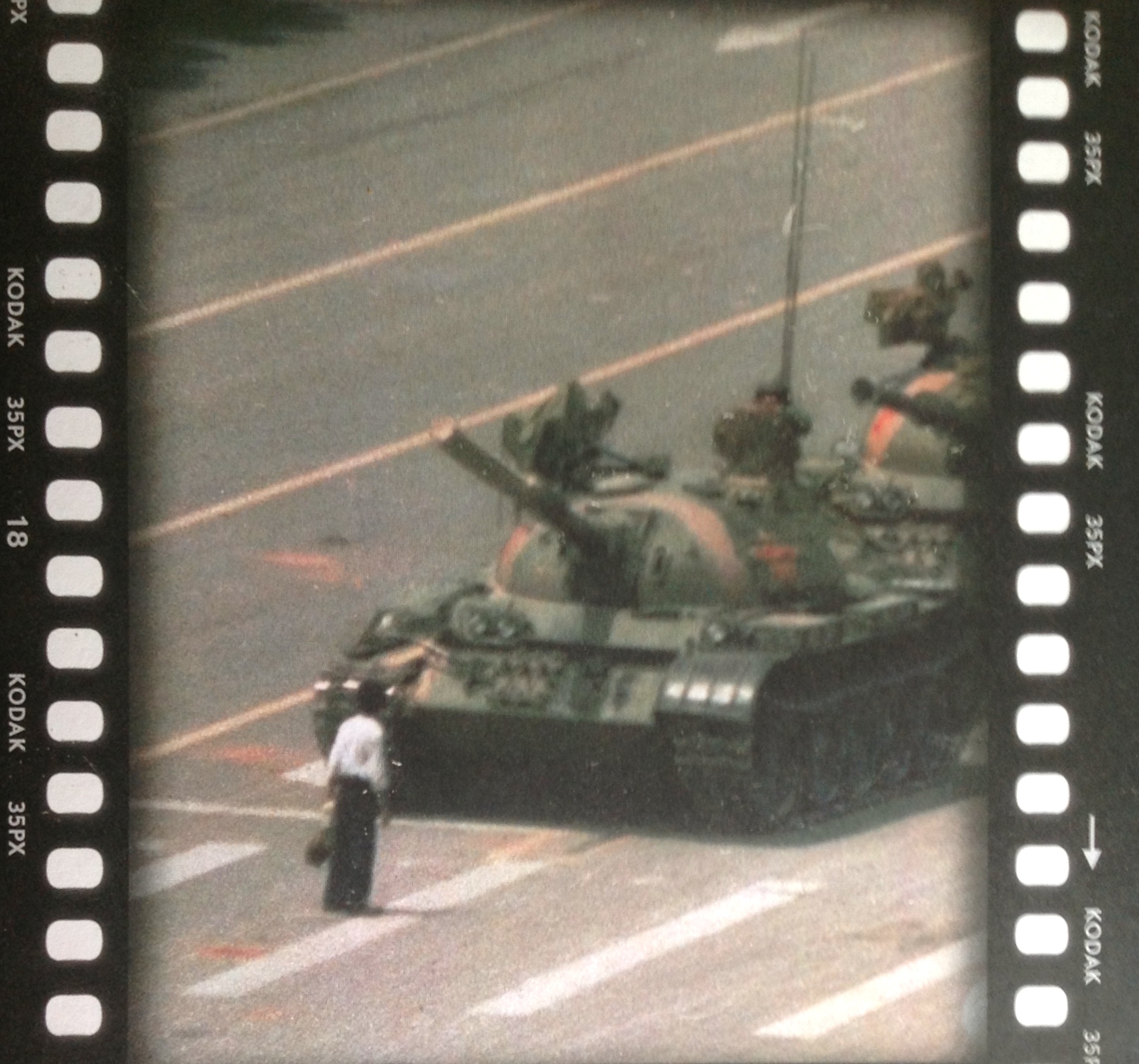 Centring on an American photographer who was present at the Tainanmen Square massacre of 1989, this play charts how China and America have developed from then to the present day and examines the relationship between the two countries. Lucy Kirkwood’s writing is uneven, blurring the lines between fact and fiction, and, at just over three hours, it badly needs pruning. At times the dialogue is sharp and witty, at other times it is bland and awkward. When focussing on the main theme, which illustrates the power and shortcomings of photo-journalism, the play is absorbing, but too many irrelevant narrative strands lessen the overall impact. Notwithstanding these failings, it is still an interesting piece and the production is raised to a higher level by simply superb staging.
Graham Greene’s story of Henry Pulling, a timid, retired banker and his adventures around Europe and South America pursuing his outrageous Aunt Augusta is adapted here with the twist that three actors (Jonathan Hyde, David Bamber and Iain Mitchell) alternate playing Pulling and also play most of the other parts, including the women. They are assisted by Gregory Gudgeon. At first, this is great fun, but, as the story becomes ever more far-fetched, the novelty wears very thin and the production cries out for Maggie Smith to walk on as Augusta (she is now near the right age, having been 40 years too young when she played the part in the disappointing film version). It is set in the 1950’s but has the feel of being much earlier, exhibiting all the values of traditional Englishness. Not outstanding, but, for the most part, pleasant, nostalgic entertainment.
Nothing is the End of the World (Except for the End of the World)**** (Finborough Theatre, 23 May 2013)
Posted: May 24, 2013 in TheatreThis review was originally written for The Public Reviews: http://www.thepublicreviews.com
Set in the near future, the full title of this play is Nothing is the End of the World (Except for the End of the World). A New York High School is preparing for the admission of two new students. Both are androids who have been set the mission to integrate fully with the other students and watching the events unfold is an ever-present reality television crew. This sparkling new comedy is specifically futuristic, but the central theme – merging people who are judged to be different into established social groups – is timeless. Whilst the novelty of the scenario gives rise to much amusement, the play’s great strength is that it presents situations that are current and universally recognisable. The androids’ attempts to get to grips with teenage language and culture result in many hilarious moments, as one faux pas follows another, but the laughs are as much at the expense of the “normal” kids’ behaviour as at the awkwardness of the newcomers. The androids watch in curious bewilderment as their angst-ridden schoolmates display a typical range of the problems that affect youngsters everywhere, at any time. Adding the absurdities of reality television to the mix, the writer has gifted herself with a goldmine of targets for satire, perhaps too many to achieve a 100% hit rate, but she succeeds with several bulls eyes. Playing the androids, Dan Crow and Lisa Caruccio Came are outstanding, sporting vacant smiles that mask inner uncertainties and displaying robotic coldness that gradually gives way to emerging human emotions. The “normal” kids are also brought convincingly to life: Skye Lourie as the student body president confused by her boyfriend’s indifference to her; Christopher Webster as a star at sports who is coming to terms with his sexuality; Sheena May as a daughter of fervent Christians, struggling to reconcile her parents’ beliefs with her own role in the modern world; Natalie Kent as a free spirit, embarrassed to have contracted a sexually transmitted infection; Robin Couch as an aspiring actor, always over-playing to the cameras; and Amanda Hootman as a shy girl empathising with the androids’ desire to integrate into the group. Bekah Bunstetter is a Playwright in Residence at the Finborough and this play, which was originally commissioned by the Professional Performing Arts School in Manhattan, is here receiving its first fully-staged professional production. It has a vibrant energy, for which credit must go to the young cast and the Director, who is assisted by a Movement Director, Lucy Cullingford. Angus Macrae’s lively music also helps to create a futuristic, yet lightly comic atmosphere. Managing to be relevant, truly original and highly enjoyable, this production marks another feather in the cap of the Finborough, for bringing new work to the stage. Far from being the end of anything, it looks like marking the start of a number of promising careers in the theatre.
Moira Buffini’s very black comedy takes place in the 50th floor flat occupied by the architect of the block, now blind and dying, his son and two daughters; only one of the four ever ventures outside and the action begins when she brings back a doctor whom she has met at the foot of the building. Slightly surreal and embracing elements of mysticism, the play begins promisingly as a sharp and perceptive satire on modern urban lifestyles. Sadly, it gradually loses focus and purpose, as the underlying messages become muddled, and eventually it stumbles to a conclusion that is contrived and unconvincing. The five strong cast in this cramped production all do well, creating an edgy and unpredictable feel that holds the interest even when the text is failing to do so. They deserve applause; the only thing wrong with the evening is the play.
 The Beast's Pen