Archive for the ‘Theatre’ Category

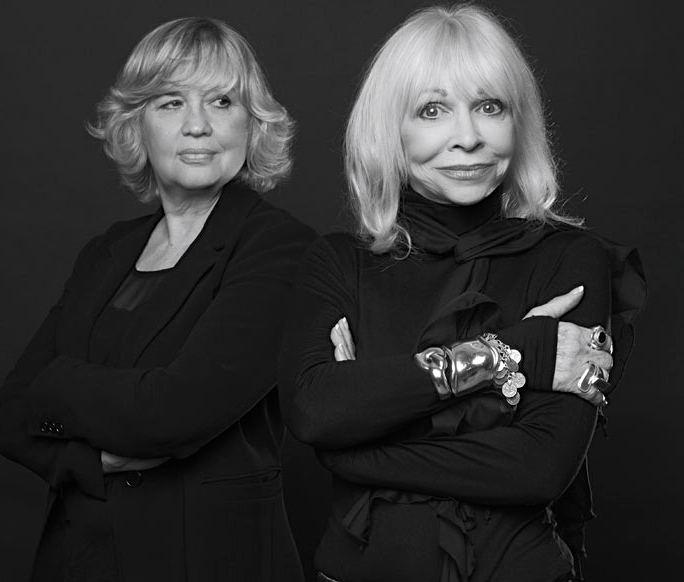
keeping up with the joansOn a rest day for many of the shows in Edinburgh, this is one of the few that ploughed on, maybe hoping that the absence of competition would boost ticket sales. Coming from Greenwich Theatre, Philip Meeks’ new play stands out for all the wrong reasons in a Fringe Festival that is packed with innovative work. It looks like something that has been exhumed from the graveyard of theatre, an antiquity that might possibly go down well at a midweek matinee in Eastbourne, but can only arouse derision here. It is set in a care home where two elderly ladies, both fighting the onset of dementia, are reunited many years after having been rivals for the lead role in Shaw’s St Joan with an amateur dramatics group and also rivals for the friendship of a fellow member of the group, a gay man. Each of them claims to have played Joan on the night that Dame Sybil Thorndike (for whom the role was written) was in the audience, but, with memories fading, which of them was it? It would be too unkind a barb to suggest that playing amateur actresses seems to come naturally to Susan Penhaligon and Katy Manning, because both do all they can with what is, at best, very mediocre material. In fact the play is more geriatric and demented than its characters, ambling from one unbelievable sequence to another and, on the few occasions when it promises something interesting, retracting at record speed. Even if the absurdities of the plot could be overlooked, it would still be unforgivable that large sections of the play are sleep inducingly boring. This one is best lost in the memory very quickly.

Performance date: 11 August 2014
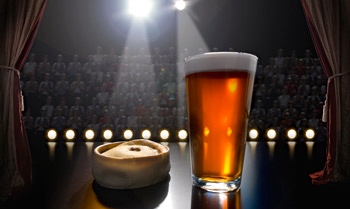
Play-pie-pintMy perfect day? Well, maybe two-thirds of it. The pie is tasty (don’t ask what is in it) and the pint is refreshing, but, after that it is time to look at the Trades Descriptions Act. The “entertainment” consists of a lady named Joyce Falconer flagrantly flaunting her Scottishness to a degree that might embarrass even Alex Salmond. She treats us to a few Scottish songs, accompanying herself on piano accordion, interminable extracts from Robert Burns and a version of her nation’s history that could have been written by Mel Gibson. It is utterly ghastly and it all leaves a Sassenach such as me praying even more that the Scots vote “Yes” on 18 September; sadly, the presence of possible voters in the audience could have lessened the chances of that happening. Next year, I will happily settle for a salad (hoping that Scotland will have finally discovered them by then) and a mineral water, if the organisers can put on a real play. In the meantime, it is half a star each for the pie and the pint, with a big fat zero for the rest.

Performance date: 11 August 2014

small-warOriginally staged at the Drum Theatre in Plymouth, Small War is written and performed by the Belgian theatre maker Valentijn Dhaenens. The play is developed from testaments given by participants in wars, ranging from Atilla the Hun to a soldier in the recent Afghanistan conflict and it adopts an unflinching approach to describing the human costs. Dhaenens appears live on stage as a female nurse tending to casualties of war. Behind him, we see him again on a screen as a limbless torso; he cannot speak, but we hear his thoughts and, then, rising from the bed, on another screen, we see and hear from four life size images of the same soldier, able bodied. It is a technically impressive feat to have Dhaenens interacting with up to five different images of himself. However, as might be expected from its sources, the language of the play is prosaic, with none of the poetry of, say, Brooke or Owen and monotone delivery backed by droning and repetitive music does not help to bring it to life. Even the technical virtuosity of the staging seems to add to the overall coldness of the piece. Perhaps the familiar message that war is ugly and brutal cannot be repeated too often, but, personally, I found this production too relentlessly depressing to be able to connect with it fully.

Performance date: 10 August 2014

luke_kempnerLuke Kempner has been taking this one man show around the country for some time now, including a run at the Trafalgar Studios in London, but it does not seem to be running out of steam. He is an impressionist who can amaze with his dexterity in switching quickly between characters. Fairly obviously, the centrepiece of this show is impersonations of the entire cast of Downton Abbey. His Maggie Smith and Jim Carter are fairly precise, some of the others less so, but, if you have never seen Downton, you will find little point in it. The “plot” involves the impending wedding between the Dowager Duchess and Tom Daley (a cruel impression) and it manages to incorporate spoofs of several other popular television shows. An hour of harmless fun.

Performance date: 10 August 2014

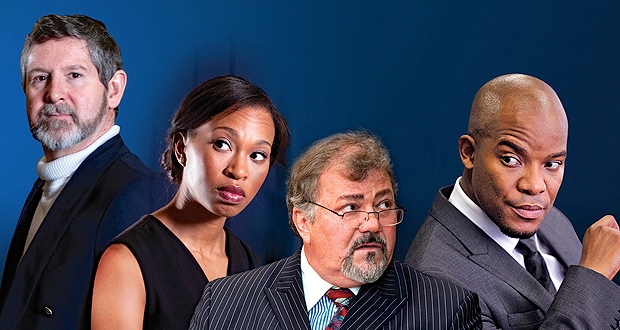
race-by-david-mamet-lst143346David Mamet’s probing examination of attitudes to race in modern America is here given an exemplary production by a South African company. The setting is the offices of a leading law firm which is being hired to defend a rich white man (Michael Gritten) who is accused of raping a black woman. Two partners, one black and one white (Peter Butler and Andre Jacobs) and their associate, a young black woman (Nondumiso Tembe), proceed to argue the issues of race which surround the case between themselves and with the accused. They play Devil’s Advocate to each other, ask questions to which it seems there are only wrong answers and conclude that a fair trial and a correct verdict will be impossible to achieve. The four performers get the staccato delivery of Mamet’s short, sharp lines just right and the arguments presented are fascinating, albeit sometimes confusing and maybe contradictory. However, the problem with this, as with some other Mamet plays, is that the characters are no more than mouthpieces for the writer’s thoughts and it is impossible to connect with them emotionally. The result is something more like an engrossing lecture than a drama.

Performance date: 10 August 2014

bottleneckJames Cooney races around the stage, marked out as a square school playground, as if a wild animal caged inside it. He gives a high energy performance as a 15 year old boy in late 1980s Liverpool, hero worshipping John Barnes and longing to grow a moustache. He rants at his authoritarian father, a single parent, and mouths adolescent obscenities, boastfully recounting mischievous escapades and petty lawbreaking as he and a friend try to raise the cash to pay for tickets to a football match. Written by Luke Barnes, the first half of this monologue is moderately amusing, if over familiar and seemingly lacking in purpose. It holds the interest only because of Cooney’s performance, but then it is revealed that the football match is to be played in Sheffield and the tone changes instantly. All the lack of respect for authority and disregard for others shown by the teenager are now put into perspective and seen in a new light. The play does not examine causes of or attribute blame for the events that followed, it simply describes them and tries to evaluate the cost in terms of young lives permanently scarred or extinguished. A poignant hour.

Performance date: 10 August 2014

Monologues featuring well-known showbiz personalities are standard fare for the Edinburgh fringe and this one is par for the course. Set in a Sydney hotel room, it shows the tragic clown swigging neat vodka direct from the bottle and recounting anecdotes from his life during that last half hour (more 50 minutes) of his life. Hancock had enjoyed enormous success on radio and television in the 1950s and 60s, even breaking into films, but a series of disastrous career moves had put his career on the skids and brought to the fore all his underlying insecurities. Written by Heathcote Williams and performed by Pip Utton, the play brings to mind Hancock’s own groundbreaking television monologue, being peppered with the same Galton & Simpson style humour, but it tells us little that is not already known from other written and dramatised works.

Performance date: 10 August 2014

lippyBeginning with a post-show discussion of a production which the audience has not seen, this play by Bush Moukarzel and the Irish company, Dead Centre, takes us on a journey from absurdist comedy to surrealist tragedy. The central theme is lip reading, but the play extends this to become an exploration of all communications between human beings, demonstrating how we understand or, more often, misunderstand each other. An unconventional structure leaves us never knowing what to expect next and creates an unsettling effect which helps to keep us gripped, at least until an overlong final filmed section which appears to owe a great deal to Samuel Beckett’s Not I. Well acted and imaginatively staged, the production gives plenty of food for thought.

Performance date: 10 August 2014

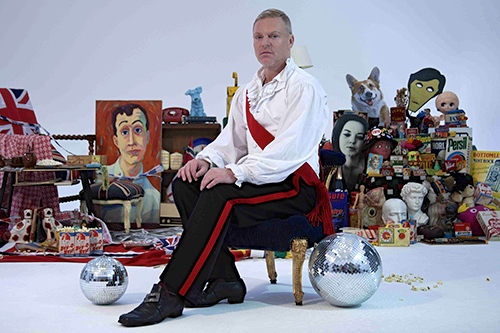
torstenThe best way to describe this show is to quote from the accompanying notes: “A theatrical pop-song cycle of ‘musical postcards from the hotspots of memory’ from a semi-immortal polysexual sensualist’s life”. Devised and written by Barney Ashton with music composed by Christopher Frost, the cycle is performed by Andy Bell (half of the pop group Erasure), firstly in a dinner suit and later getting down to glittering underwear. Torsten is recalling his life in Britain of the 1970s and 80s, time spent in depressing places such as rainy seaside resorts and Bingo halls. Film footage from the period backs up the images created in the stark and vivid lyrics of the songs. Bell sings them with passion, accompanied by synthesiser and, occasionally, a saxophone. An hour listening to Bell is an hour well spent, but how we yearn for just a glimmer of joy in Torsten’s miserable life. Definitely not a show to be recommended to the suicidal.

Performance date: 9 August 2014

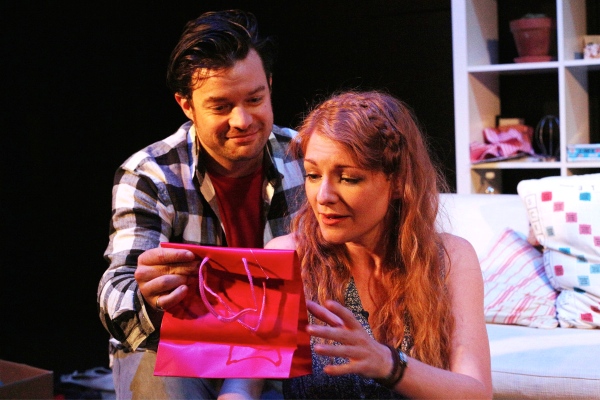
marry me a littleA musical made up of Stephen Sondheim songs, but not a Sondheim musical. Craig Lucas and Norman Rene have devised this lightweight hour long confection, performed here in a cabaret setting, by taking songs written for a wide range of shows to tell a simple story of two New Yorkers, known just as “Man” and “Woman”.  Beginning as singles, they date over pizza and diet Coke, move in together, unpack the cds, contemplate something serious, re-pack the cds and part. There is no spoken dialogue and the song which gives this show its title is easily the best known; interestingly, it was once cut from Company and later reinstated. Many of the other songs have also fallen onto the cutting room floor at some stage and others come from obscure early works. Bang, a raunchy number, sung here when a date goes extremely well, was cut from A Little Night Music. When the couple enjoy a round of golf together, they chant Pour  Le Sport (“I got a birdie, I wasn’t trying…..never occurred to me the bird was flying so low”), from a never-produced show. Simon Bailey and Laura Pitt-Pulford are likeable performers who carry the show well. A mellow and undemanding entertainment.

Performance date: 8 August 2014